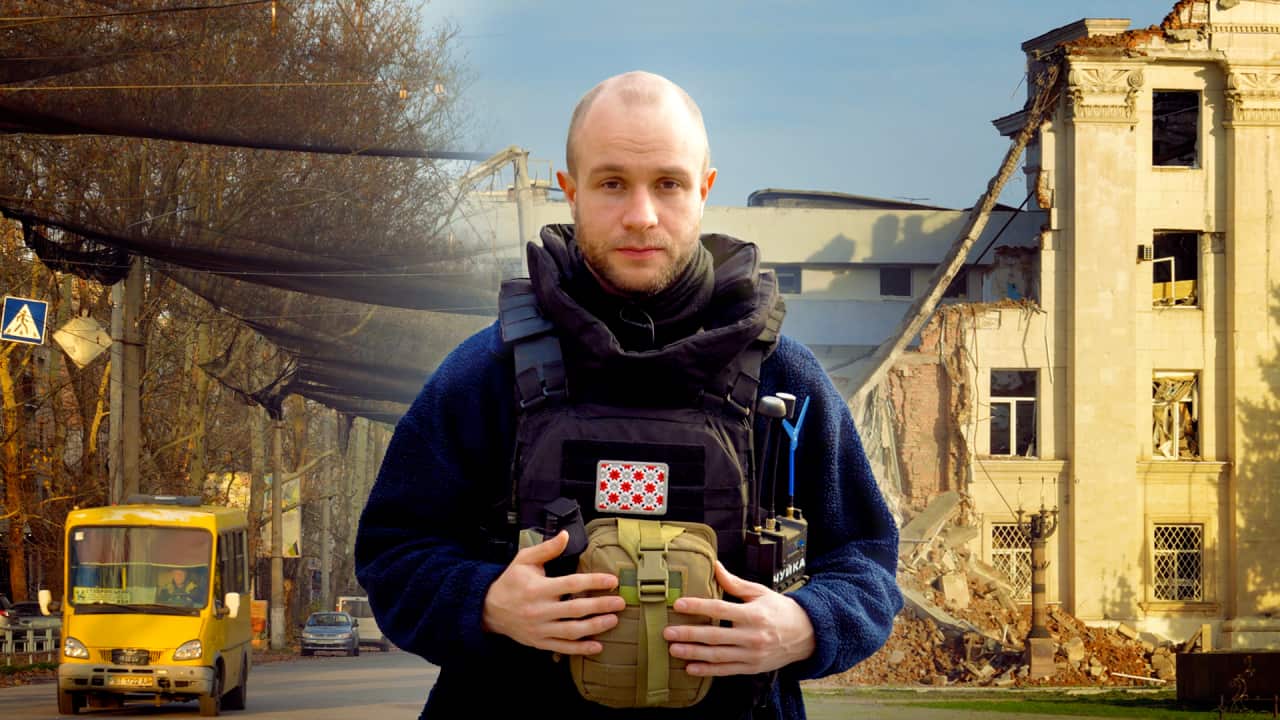
Russian drones are targeting Ukrainian civilians in what's become known as a "human safari". Residents of Kherson now live under anti-drone nets, constant surveillance and the daily threat of attack. Watch Francis Farrell's full report by the Kyiv Independent, Kherson: Hunted by Drones on SBS On Demand.
Warning: Distressing content
Paramedic Ilona Osadcha knows well the haunting pain of holding a child while feeling their warmth of life fade.
News that makes sense
Your trusted source for staying up-to-date with the world around you. Get free daily news updates and analysis, straight to your inbox.
It has become an all-too-familiar experience for frontline emergency workers in one of Ukraine's most dangerous cities, Kherson.
"More than one child has died in my arms. More than one child has been mutilated. It's hard," she says.
The regional city sits on the strategic Dnipro River just north of Crimea, which Russia annexed from Ukraine in 2014, making it one of the first targets for a push forward.
As a result, residents here live with the near-constant threat of attack.
Speaking with Australian journalist Francis Farrell, Ilona recalls the last child she couldn't save.
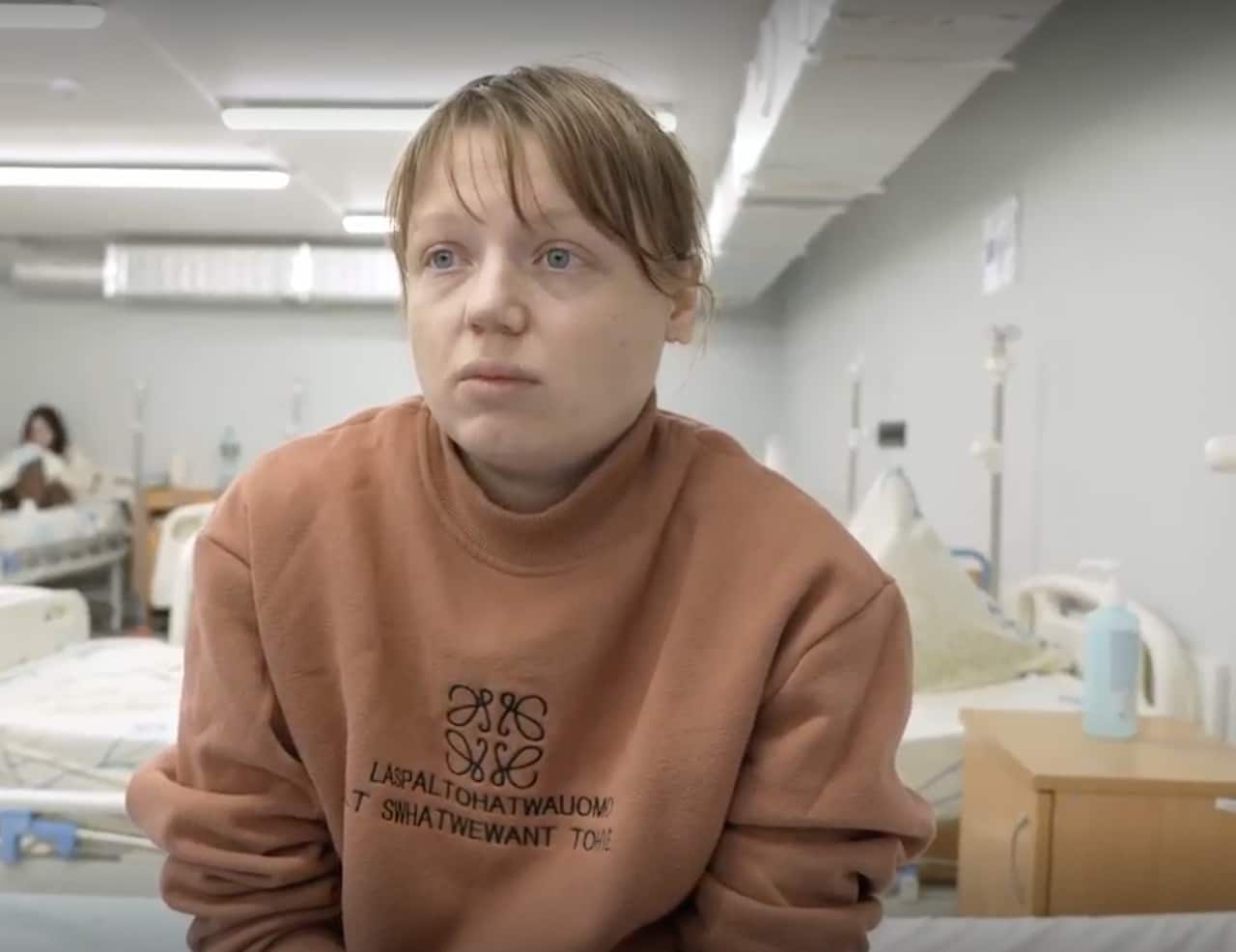
The child had been playing in a yard in a quiet village with their grandmother.
"A Lancet drone came in and killed a small child. It took one fragment [to kill the child]," Ilona tells Farrell.
It's one of the many grim stories that Farrell has documented as a frontline reporter for online news website, The Kyiv Independent.
The journalist from western Sydney relocated to the war-ravaged country a few months after Russia launched its full-scale invasion of Ukraine in February 2022.
"Reporting for years here, you get used to this world of darkness to some extent," Farrell tells Dateline.
"But sitting right across from Ilona, hearing her talk about kids was pretty heart-wrenching.
"When people tell their story in such a way, it still hits you."
Survivors of the 'human safari'
After Ukrainian forces liberated Kherson in November 2022, causing Russian forces to retreat across the river, Farrell watched as residents celebrated in the main square.
They had suffered eight months of Russian occupation, during which human rights organisations documented allegations of widespread torture and sexual violence.
Russia has consistently maintained that its forces have not committed war crimes.
"Being there and seeing tens of thousands of people walk the streets for days with Ukrainian flags and smiling without fear for the first time was one of the most powerful experiences of my life," Farrell says.
But it wasn't long before terror returned to the city.
Today, Russian troops are still positioned just across the river, armed with camera-equipped drones that carry explosives while stalking their targets and sending video of them in real time back to pilots.
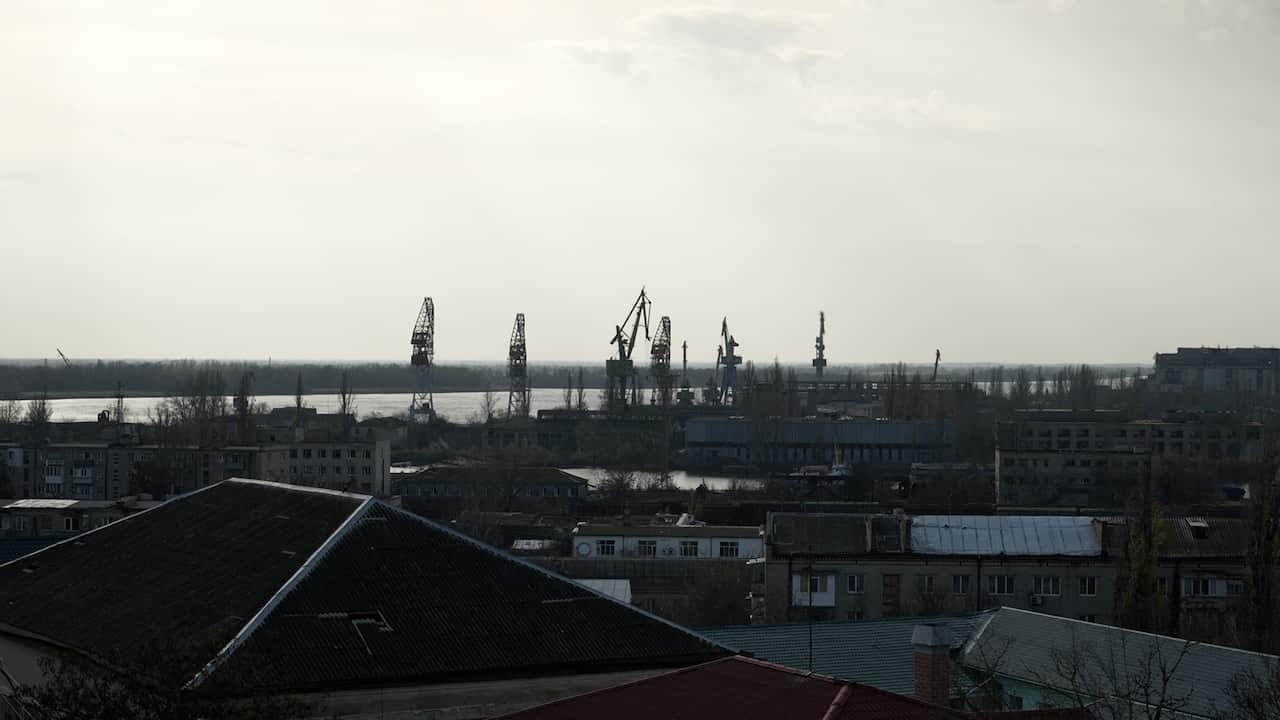
In Kherson's once-vibrant riverfront suburbs, life has all but disappeared.
The city is informally divided into 'yellow' and 'red' zones, with the red zone considered the most dangerous and susceptible to drone strikes.
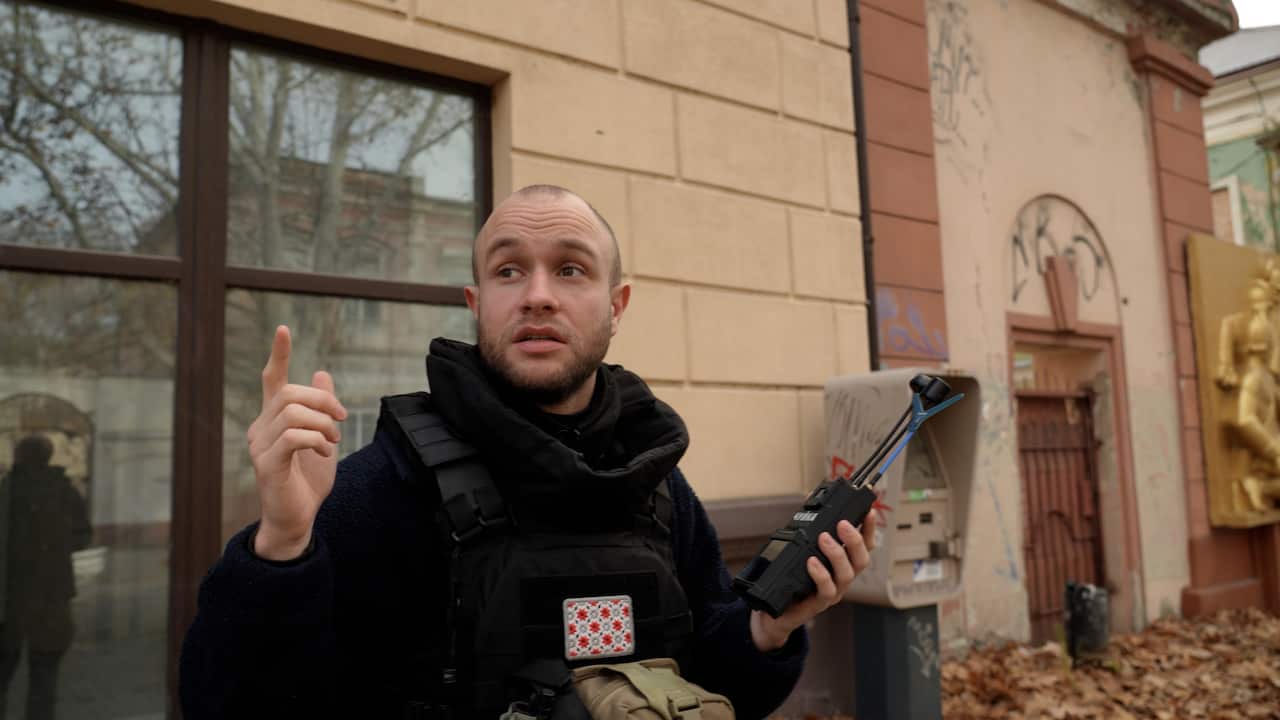
"People don't hang around too long in the red zone. They know what it means," Farrell says.
"It's almost like a suicide mission to drive in there."
Nowhere in Ukraine is safe. In recent weeks, Russia unleashed one of its largest aerial assaults of the war. A wave of 70 missiles and more than 600 drones across the country killed at least 11 people and heavily damaged a UNESCO world heritage-listed cathedral.
In Kherson, civilians have become victims of ongoing drone strikes that have killed hundreds of people since the start of the war.
Farrell says the streets are "particularly eerie".
"You're listening out for anything in the air. You're always looking for what cover you're going to run into if a threat does arise."
The number of drones being deployed weekly throughout the Kherson region has more than doubled compared to a year ago to around 5,500.
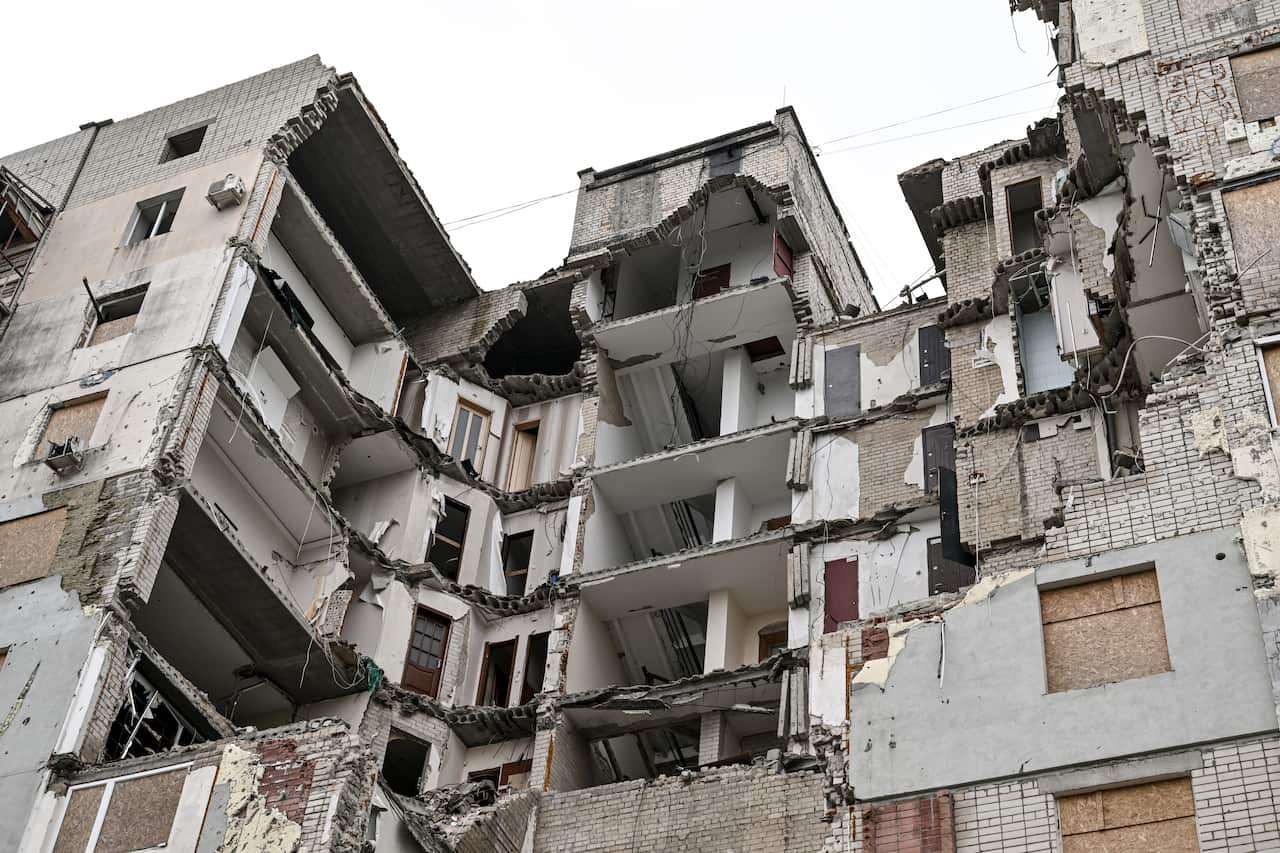
On 16 June, a drone attack on a passenger bus in Kherson killed a man and hospitalised three others. Hours earlier, an ambulance was hit in a separate incident.
Such attacks have become routine.
The United Nations has labelled the Russian forces' drone attacks against the people of Kherson as 'crimes against humanity of murder'.
Here, residents and officials have a different name for what's happening. They call it the 'human safari'.
Russia has not publicly responded to the UN claim. Its officials insist its armed forces do not deliberately target civilians.
But a Human Rights Watch report has documented how Russian drones are scattering new landmines in residential areas across the city.
Volodymyr Baidarov was one of their victims.
Farrell met him in a hospital, where he was walking on crutches after losing his leg.
"I was walking along the main street with a cart. I couldn't see the mine in the grass ... I stepped on it and that was it," Volodymry says.
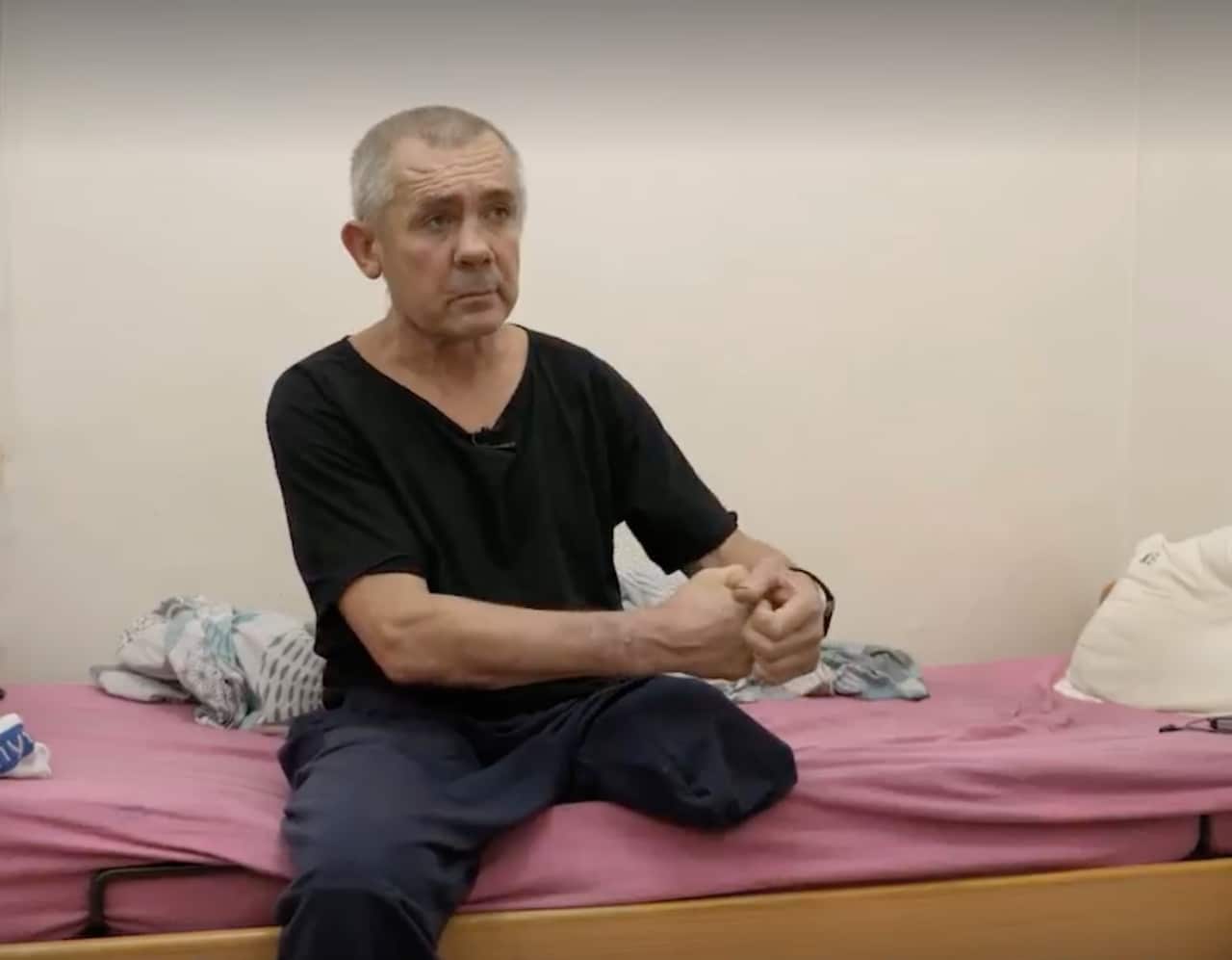
The daily threat of dying in Kherson has caused many residents to flee the southern Ukrainian city. Its pre-war population neared 300,000. Today, it's estimated only a quarter remains.
Many who stay feel they have nowhere else to go, explains Farrell.
"People who stayed in Kherson are often people who don't have any savings or support network around the country. Many don't really see a world beyond the home where they were born and grew up.
"People like Volodymyr are just trying to get by. Now he's in a hospital and it's not really clear where his life would go from there.
"I didn't see much hope in his eyes."
Protecting residents in frontline areas
Closer to the Kherson region's frontlines, a low-tech defensive shield has reshaped the landscape.
A web of more than 200km anti-drone nets has been hung from poles and buildings, left suspended above key roads to catch drones and their explosives before they reach their intended ground target.
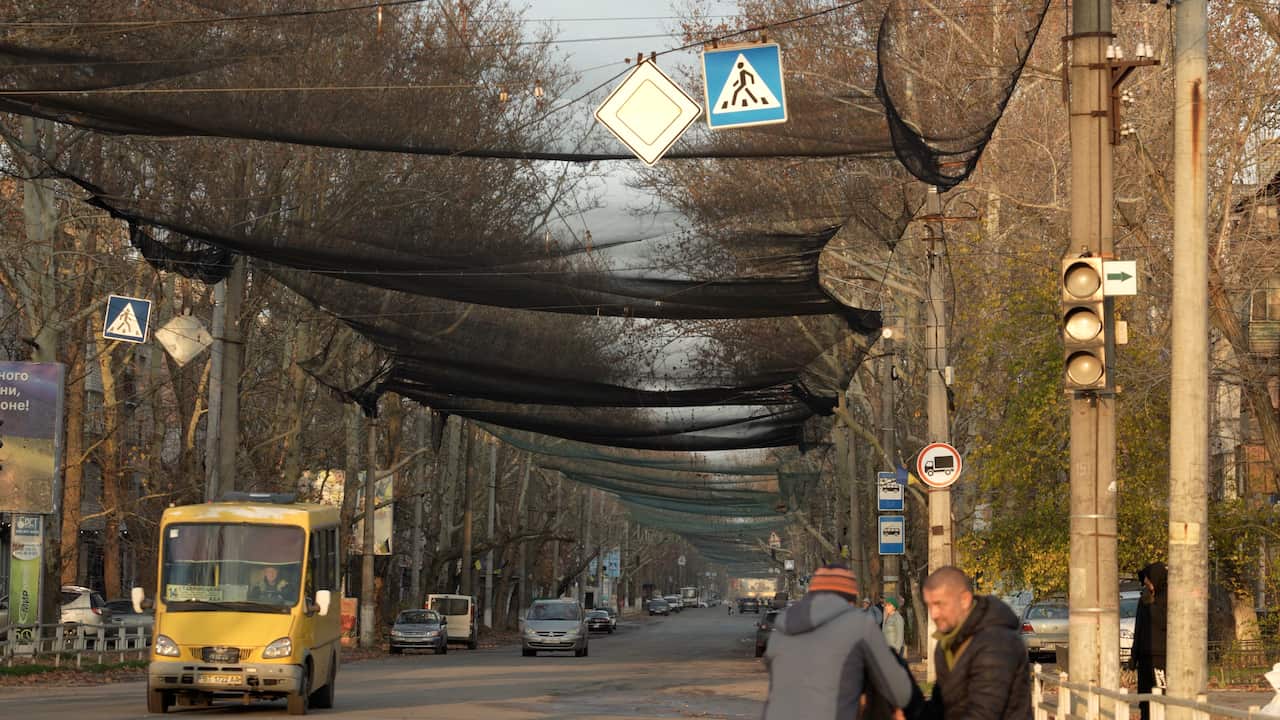
Beneath them, people have become accustomed to seeing the sky through mesh.
For Farrell, who regularly travels into frontline zones, the sight is both reassuring and unsettling.
"Along important roads and places where people might need to get around, especially in a vehicle, more of those are being covered by nets every month," he says.
"They do give a little bit of peace of mind. It also reminds you of the danger, so it's kind of spooky at the same time."
Ukraine's defence minister, Mykhailo Fedorov, has announced plans to cover 4,000km of roads in the country's most dangerous areas with anti-drone nets by the end of the year.
But in a war where drones are major killers on both sides, it's hard to eliminate the dangers of attacks.
"Those putting up the net can be targeted. If there's a break in the net, it needs to be repaired and once again that becomes a target," Farrell says.
It's a constant challenge, even around places such as hospitals.
"They might use a drone that drops a little bomb from the top. The entrance, the carpark — they all need to be completely netted up to prevent that from happening."
Keeping hope alive in a warzone
For Farrell, devastation and terror aren't Kherson's only defining features.
Further back from the Dnipro River, there are signs of life as people adapt to their new normal.
Friends gather in bars while stallholders sell flowers on street corners.
"Once you get into the areas where drones hunt people every day, you do enter a state where you're just barely holding onto life. But that doesn't mean that those who stay won't be looking for sources of joy, pleasure or escape," Farrell says.
For children who haven't stepped foot in a physical classroom for years, a football field is a rare refuge of fun.
Coach Viacheslav Rol trains them as explosions ring out in the distance.
Unless a drone is nearby and forces them to hide, they keep training.
"They see everything, understand everything. You don't need to scare them. Indeed, you need to take the pressure off," Viacheslav tells Farrell.
"It's better to talk about something else. To joke, to laugh."
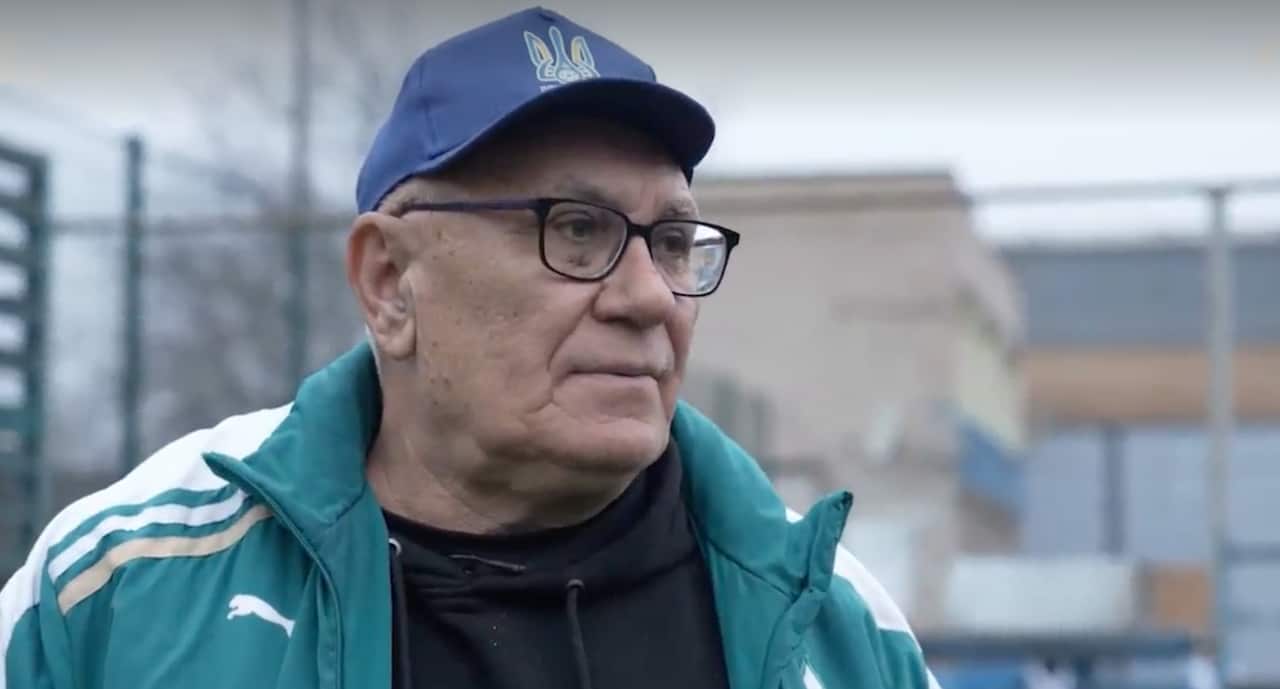
Farrell says people are looking for ways to thrive despite the war.
"I think that was really important for the kids' football team. A lot of children have been through pretty traumatic experiences. Maybe they have parents fighting somewhere on the frontline, but they're still kids growing up and time is passing.
"They need to live."
As residents rediscover small moments of joy, others are bringing new life into the world.
When Farrell met paramedic Ilona, she was days away from giving birth to her first child.
While some expectant mothers are optimistic that better days will soon come to Kherson, Ilona has decided her child's future lies elsewhere.
"It's hard to live with this," she tells Farrell.
"To say that I would have a child and stay here … that would be a bit selfish."
But for Farrell, her pregnancy captures the essence of life in Kherson.
"Even though this city is defined by images of war, death and drones in the sky, it's important to understand that it's still a city. People are still being born," Farrell says.
"The population is a lot smaller than it used to be, but many people still live here and see their future here."
SBS News digital coverage of the Russia-Ukraine war
Readers seeking support with mental health can contact Beyond Blue on 1300 22 4636. More information is available at beyondblue.org.au. Embrace Multicultural Mental Health supports people from culturally and linguistically diverse backgrounds.
Watch your favourite Dateline episodes around the clock on SBS On Demand's dedicated Dateline channel. For the latest from SBS News, download our app and subscribe to our newsletter.
For the latest from SBS News, download our app and subscribe to our newsletter.

Dateline is an award-winning Australian, international documentary series airing for over 40 years. Each week Dateline scours the globe to bring you a world of daring stories. Read more about Dateline

Have a story or comment? Contact Us







