Watch Dateline's latest episode, Cook. Killer. Cartel, on 8 September at 9.30pm AEST on SBS or SBS On Demand.
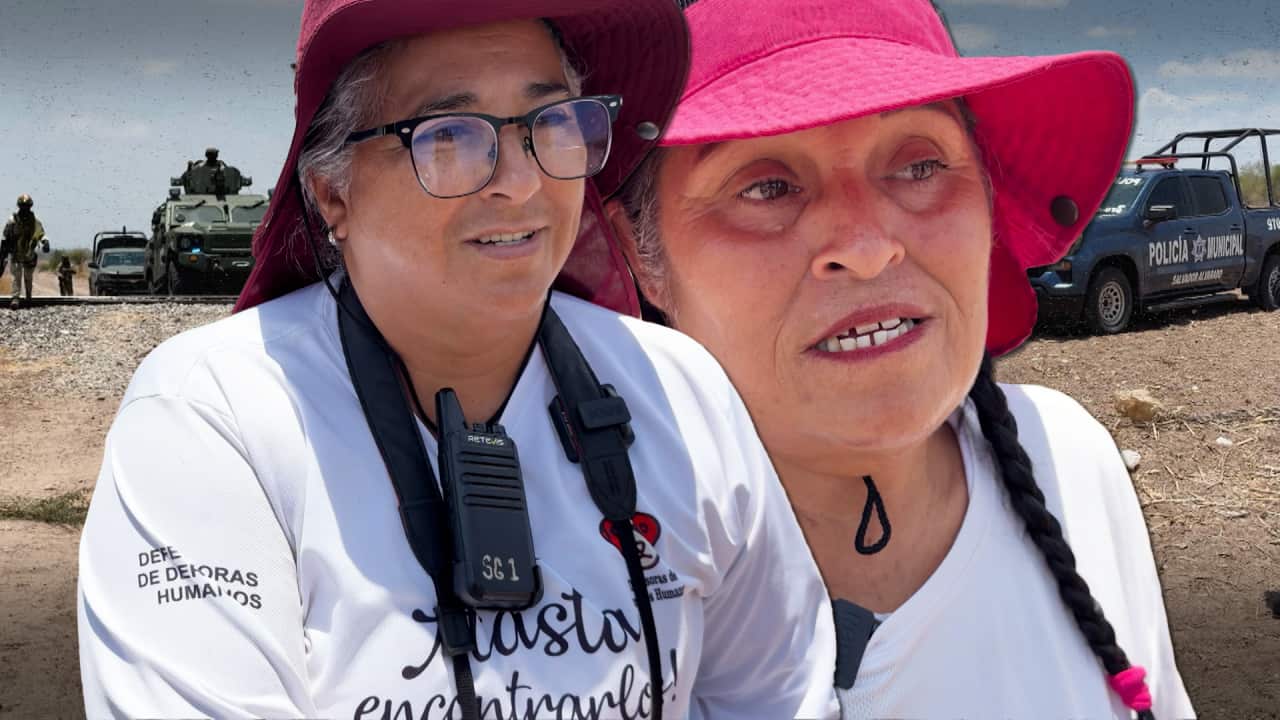
Maria Isabel Cruz Bernal plants a hearty kiss on one of the other mother’s lips. It’s a joyful atmosphere among the women — chowing down on breakfast in the near-empty shopping mall carpark. Except this is no ordinary road trip — the camaraderie comes from heartache.
This is Culiacán, Mexico, and on the back of the sweatshirt of each of the women is a photo of a missing loved one. Such is the danger, we are heading off under the protection of the Mexican Army. The assignment: to search for human remains.
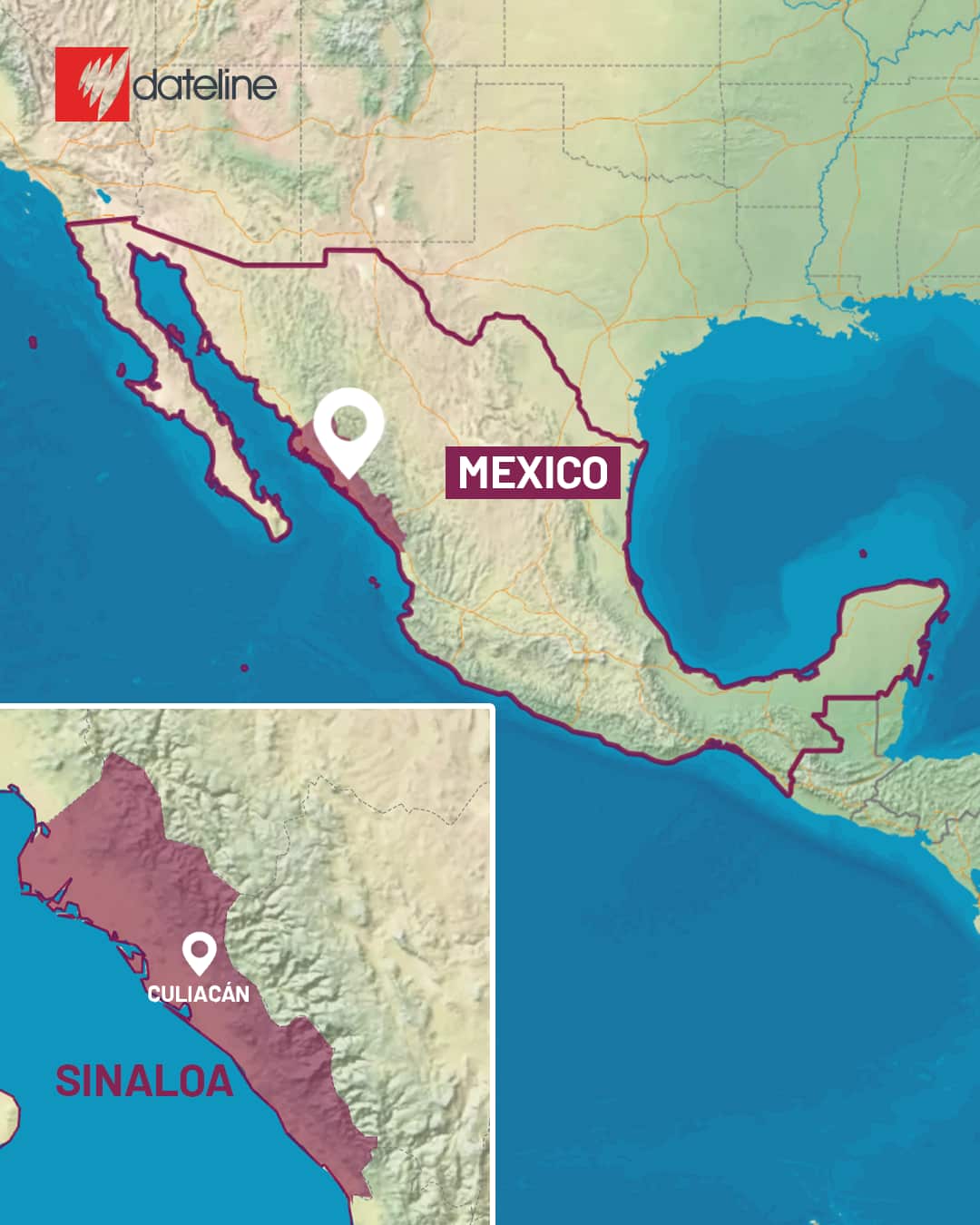
Culiacán is the capital of Sinaloa state in north-west Mexico. Its most famous and feared entity is the Sinaloa Cartel that is, in the words of the US Drug Enforcement Administration (DEA), "one of the world’s oldest and most powerful drug cartels".
News that makes sense
Your trusted source for staying up-to-date with the world around you. Get free daily news updates and analysis, straight to your inbox.
In November 2024, the DEA determined that the Sinaloa Cartel and another Mexican cartel, the Jalisco New Generation Cartel, are increasingly targeting illicit drug markets in Australia and New Zealand.
Maria Isabel checks off the names of the mums as we head off. About a dozen women present. Lipstick, earrings, and pure grit.
Maria Isabel’s son Yosimar was 28 when he went missing in 2017.
"He was a municipal police officer," she says, before swiftly correcting herself. "Well, he is a municipal police officer."
In 2017, Maria Isabel founded the Sabuesos Guerreras (Warrior Hounds), a group dedicated to tracking down the disappeared in Sinaloa.
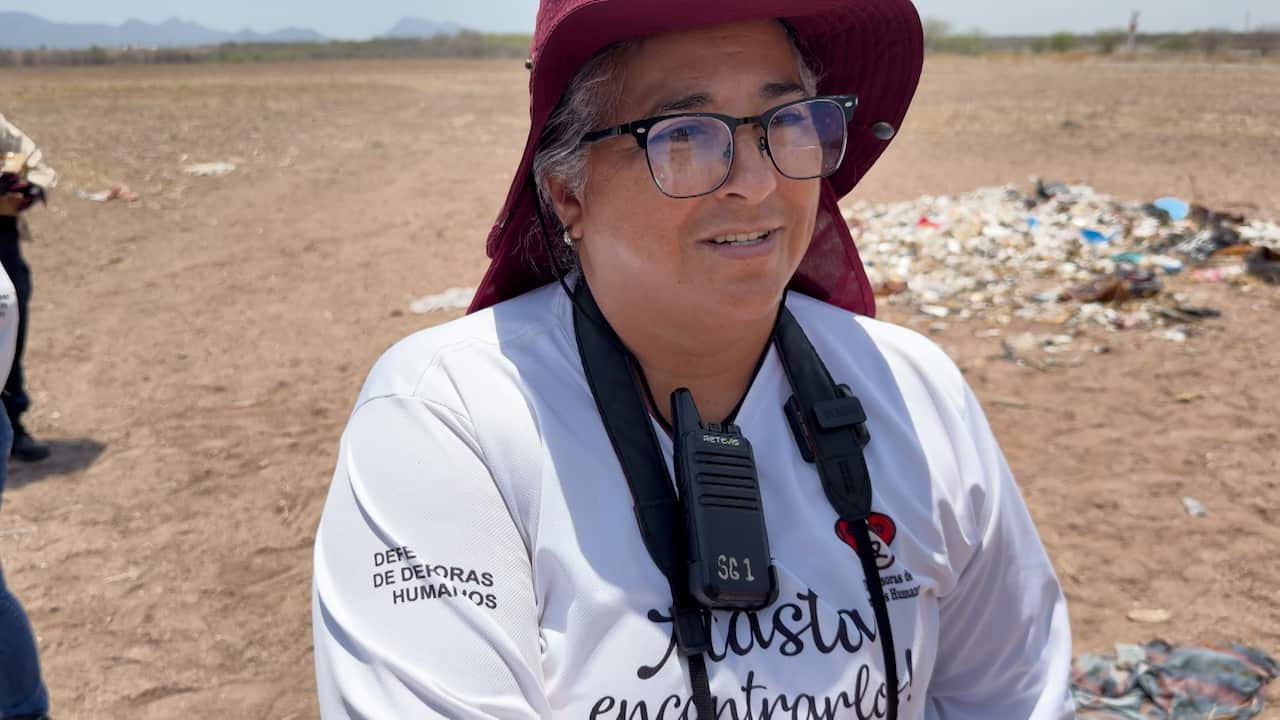
The scale of the issue is massive. According to Mexico’s National Registry of Missing Persons, there are more than 130,000 people registered as missing in Mexico. The rising toll goes hand in hand with cartel violence.
National policy toward the cartels has flip-flopped. In 2006, then-newly elected Mexican president Felipe Calderón launched Mexico’s war on drugs, whereas Andrés Manuel López Obrador, president from 2018-2024, adopted a different course: "Hugs, not bullets."
The well
The mums don’t talk politics or policy. Today they are on the hunt for another mother’s son. We head north in a convoy under brilliant blue skies, stopping twice to add military reinforcements.
By the time we turn off onto a dirt track near Guamúchil, a city 100km north of Culiacán, it's close to midday and scorchingly hot. A farmer ploughs a nearby field. I wonder what he makes of the heavily armed soldiers and armoured vehicles as they take up their positions.
Soldiers are everywhere in Sinaloa — it’s easy to become blasé. Still, I wasn’t prepared for what would unfold.
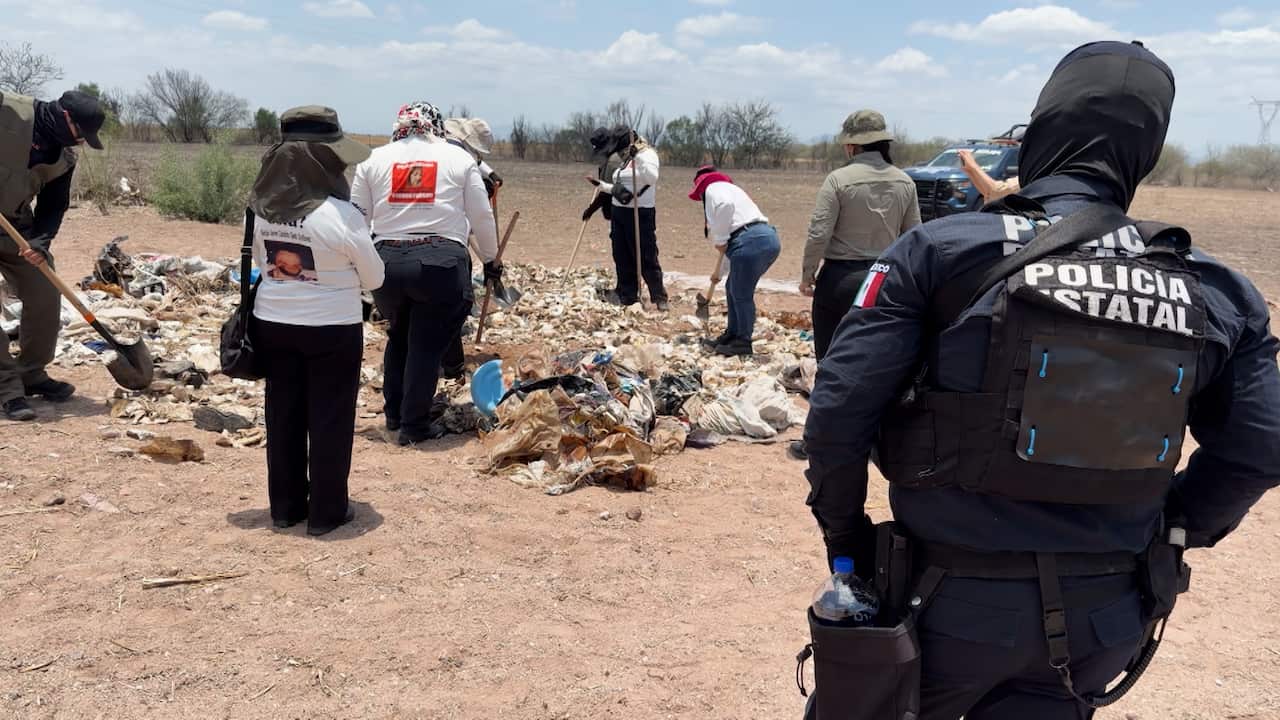
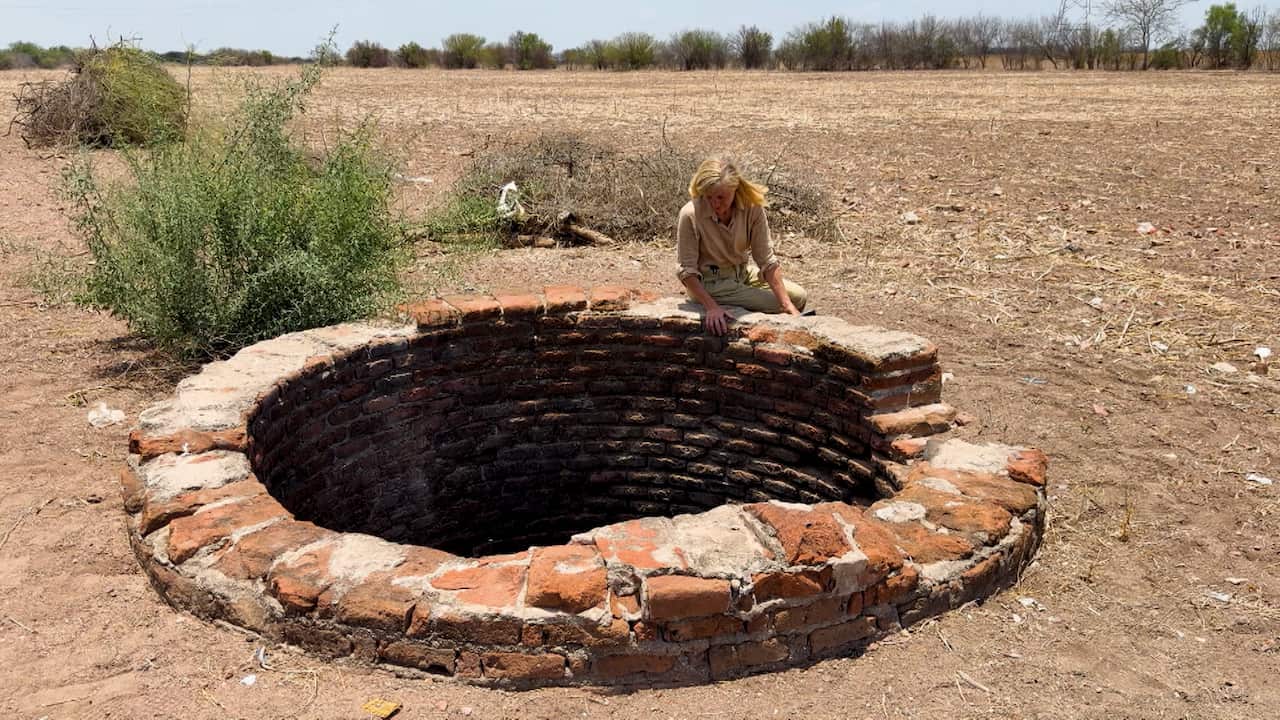
The women walk slowly across a parched field, seemingly strewn with rubbish, then pull up by the side of a deep well.
Maria Isabel says that her group asked the authorities to excavate this well for four years after receiving a tip. Last December, the remains of two bodies were discovered but they believe the well could hold many more.
"We don’t know who they are, but we suspect that the son of our colleague is there," she says.
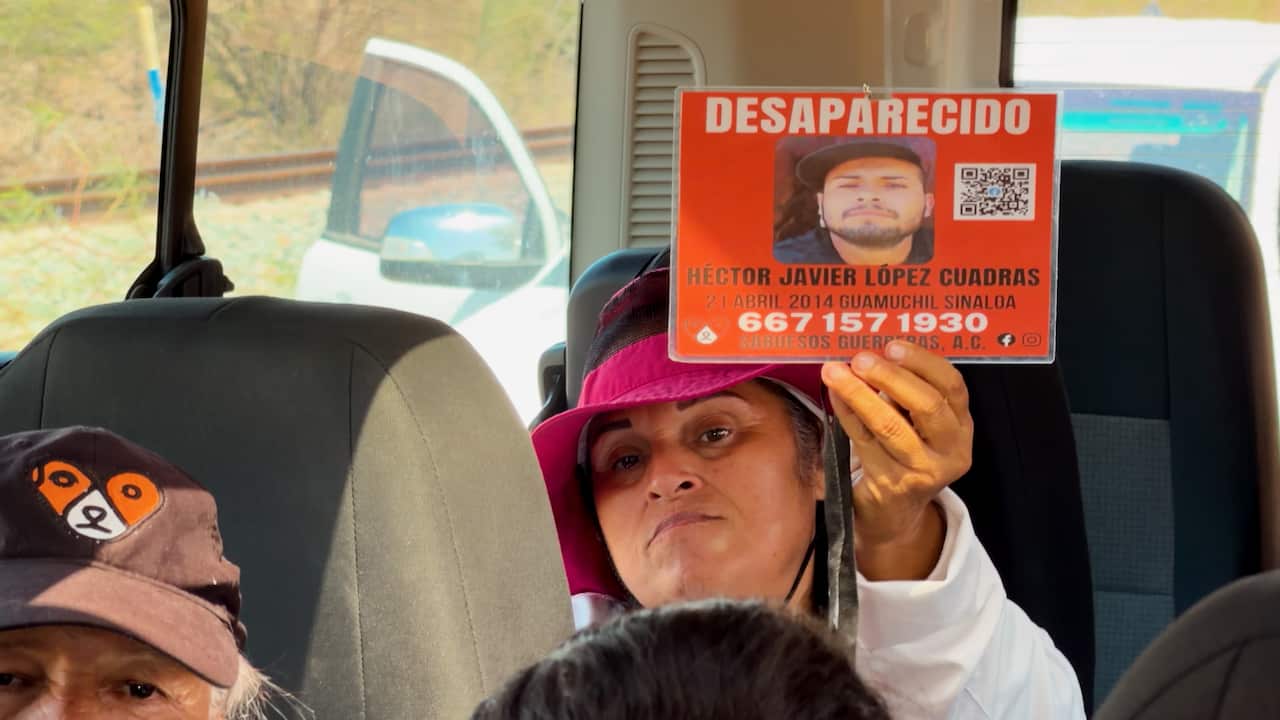
The colleague she refers to is Sylvia (surname withheld), who sports the photo of her missing son, Hector Javier, on her back.
"He was a hard worker; he liked to work. And, well, I won’t lie, he was a bit lost but really, he didn’t deserve what they did to him. To make him disappear. No one deserves to disappear. No one," she says.
Only one body has been identified from the well, and it wasn’t Hector Javier’s, which is where the shovels come in. Piles of rubbish were hauled up from the well. The women get to work, raking, shovelling, and uncovering some bones as the military guards the perimeter. The women search for any sign of Sylvia’s boy. Any clues will be handed to the authorities.
I wonder what Sylvia would say to the cartel, if she could.
"That they give him back to me or tell me where he is. I’m not looking for problems either."
The internal war
The issue of disappearances is not abating in Sinaloa. In fact, the opposite.
Both Maria Isabel and Sylvia’s sons’ disappearances pre-date the current war within the Sinaloa Cartel that broke out two years ago between the factions of its founders Joaquín Guzmán Loera (El Chapo) and Ismael Zambada García (El Mayo).
El Chapo has been serving a life sentence in a US prison since 2019. The internal war erupted in late 2024 after one of his sons, Joaquin, betrayed El Mayo, landing him in US custody. In July this year, El Mayo was sentenced to life in prison.
Violence in Sinaloa has skyrocketed. Executions and disappearances are routine. Maria Isabel says more than 5,000 people have disappeared since late 2024.
Ernesto Martinez is a veteran Culiacán crime reporter. One night he calls me to the scene of a nighttime murder. A person was shot and killed inside one of the houses on a property.
Do these crimes ever get solved, I ask.
"No, they don’t get solved," Ernesto replies. "That’s very rare, because the authorities classify them as score-settling killings."
"Once they label a case that way, they basically shelve it, as we say, and it isn't investigated any further."
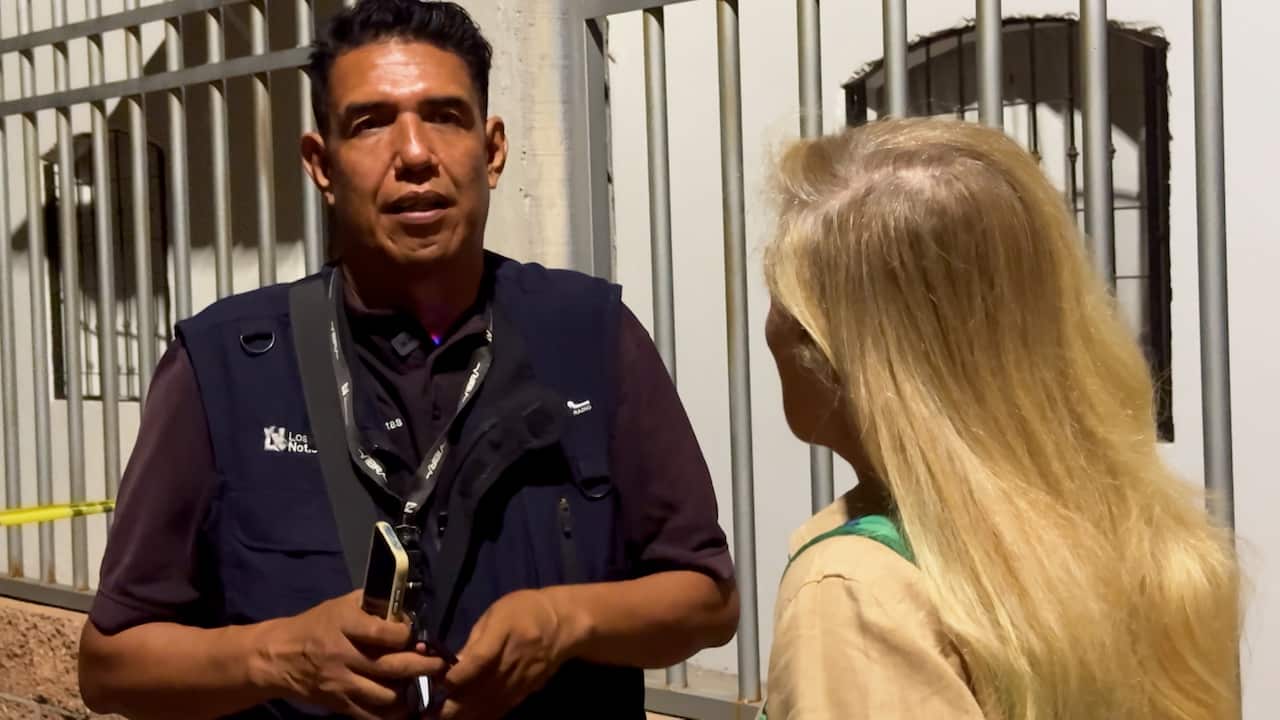
Ernesto explains that he’d always meant to leave Culiacán before the violence came for his family. But how to judge that? A week after the cartel war broke out, his 20-year-old son was kidnapped along with two friends. They were all ride-share drivers for platforms like Uber and Didi, who the cartel was targeting at the time.
"Just imagine what I was thinking, because I knew that when those people kidnap someone, that it was to kill them, beat them up, question them, torture them to get information," he says.
Ernesto’s son was released after several hours. One of the other young men was eventually released but the third did not make it.
"They killed him two days later, cut his hands off and dumped him along with two other bodies. Three of them ended up under a bridge at the southern exit from the city."
After the incident, Ernesto’s son left the city.
It’s another story that makes me realise just how extraordinarily brave the searching mothers are.
The shovels packed away, Sylvia climbs back on board the bus undaunted in her search for Hector Javier. "I know I will find him; I am not losing hope," she says.
For Maria Isabel, whose son has now been missing for almost a decade, it’s different.
"I know that I won’t find him in this life. Maybe I’ll find him in another life, and this gives me strength. And at least each body or remains I find are like little bits of him, and I will keep putting pieces together until the last day of my life."

Dateline is an award-winning Australian, international documentary series airing for over 40 years. Each week Dateline scours the globe to bring you a world of daring stories. Read more about Dateline

Have a story or comment? Contact Us







