I can tell you what an abandon ship alarm feels like at 3AM, in the Southwest Indian Ocean: black skies, faces full of terror, the overwhelming adrenalin, thousands of kilometres from land, on one of the oldest research ships in the world.
I can tell you what it feels like to be on the high seas chased by, literally, never-ending cyclones in the Western Wind Belt; what 10-metre swells feel like; vomiting every day for 5 weeks; losing almost 9 kilograms.
I can't tell you too much about eating chicken hearts and pigs trotters, as I was mostly too sick to eat at all. (I did feel a little like Uma Thurman in Kill Bill living solely on a diet of boiled rice and the odd potato – hands shaking as I tried to gather momentum to get the chopsticks from the bowl to my mouth).
I had no phone. Limited internet. And certainly no way out.
This was no luxury cruise liner. The Xiangyanghong 9 is a serious deep sea research ship built in China back in the 1970s. Everyone on board was there to work and it was their duty to their country to work hard. I was the only Westerner among 95 Chinese: 91 men, 4 women… and me.
News that makes sense
Your trusted source for staying up-to-date with the world around you. Get free daily news updates and analysis, straight to your inbox.
Our mission was to explore the ocean’s deepest corners with the hope of making discoveries to support life on earth in the future; minerals for mining, biology to inspire new medicine, even secrets as to how life on earth began billions of years ago.
I'm a tough chick. I love a challenge and an adventure. So why did I hit breaking point on day two of this deep sea mission? How did I sustain myself for the remaining 33 days? And, why oh why, didn’t I learn to speak some Mandarin before I jumped on board?
My time on the Xiangyanghong 9 wasn't all doom; despite the language barrier, the people I met on board the ship — their wholesome stories and amusing tendencies — got me through.
In fact these people, some of the world’s top engineers, scientists and submersible pilots, have made my memories of this time a pleasure to revisit.
Like all wondrous things, it takes all types.
One of my favourite scientists is Professor Xiao: a microbiologist who believes speaking to his growing collection of minute deep sea organisms on a daily basis is beneficial to his research. He believes these microorganisms, invisible to the naked eye, found in dark depths of our oceans, live in a world similar to our own. He believes family units hang out in playgrounds while watching their offspring play the equivalent of soccer. And he believes through studying the extreme boundaries of existence he’ll find answers to the basic questions of life.
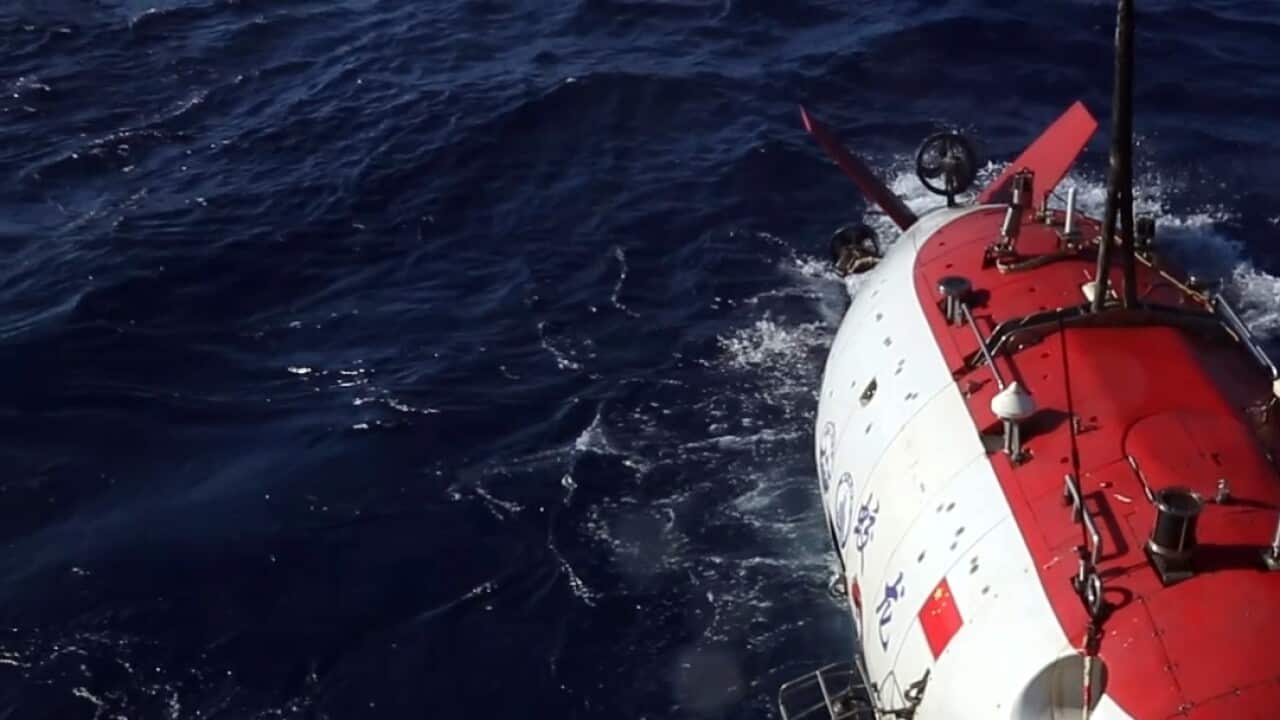
There was Fu Wentao. One of only two men on the planet who could drive the Ocean Dragon, a scientific manned submersible that goes deeper under the sea than any other machine on earth. Fu talked with me about the burden he carries from his responsibility in the deep sea. He talked with me about missing the birth of his son, about missing his son’s first words and about not being by his sick father’s bedside to care for him. All in the line of duty for his job and his country.
Then there was the young female pilot in training, Zang Yi. Like me, she’d never been to the high seas before and, like me, struggled with being seasick. Desperate to graduate as a deep sea submersible pilot, Yi left home a student in training and is destined to return home, having travelled deeper under the ocean that any other woman on earth, famous.
And the ocean warrior who worked around the clock to keep me safe was the ship’s Captain Chen Cuben. 30 years at sea he’s battled it all, from our earth’s wildest storms to dangerous pirates. Together, we battled a tragic language barrier as we shared heartfelt moments singing my favourite childhood songs from the Disney classic The Little Mermaid, my next closest experience to life in the deep sea.
I did ponder often, why am I here? Why the hell was I chosen? What is my deep purpose? (I was secretly hoping to have some kind of spiritual epiphany out there). I can now be proud of the privilege I had witnessing, first hand, the hard work and wild ways of some of the world’s greatest explorers.
I lived amongst pioneers who risked their lives to break boundaries of human experience in the hope of a brighter future.
Click Here to watch the full episode: Exploring the Abyss

Dateline is an award-winning Australian, international documentary series airing for over 40 years. Each week Dateline scours the globe to bring you a world of daring stories. Read more about Dateline

Have a story or comment? Contact Us







