Insight asks members of the trans community whether we have the balance right as medical pathways for trans youth become restricted in some parts of the world and Australia. Watch Insight episode Trans Medicine on SBS On Demand.
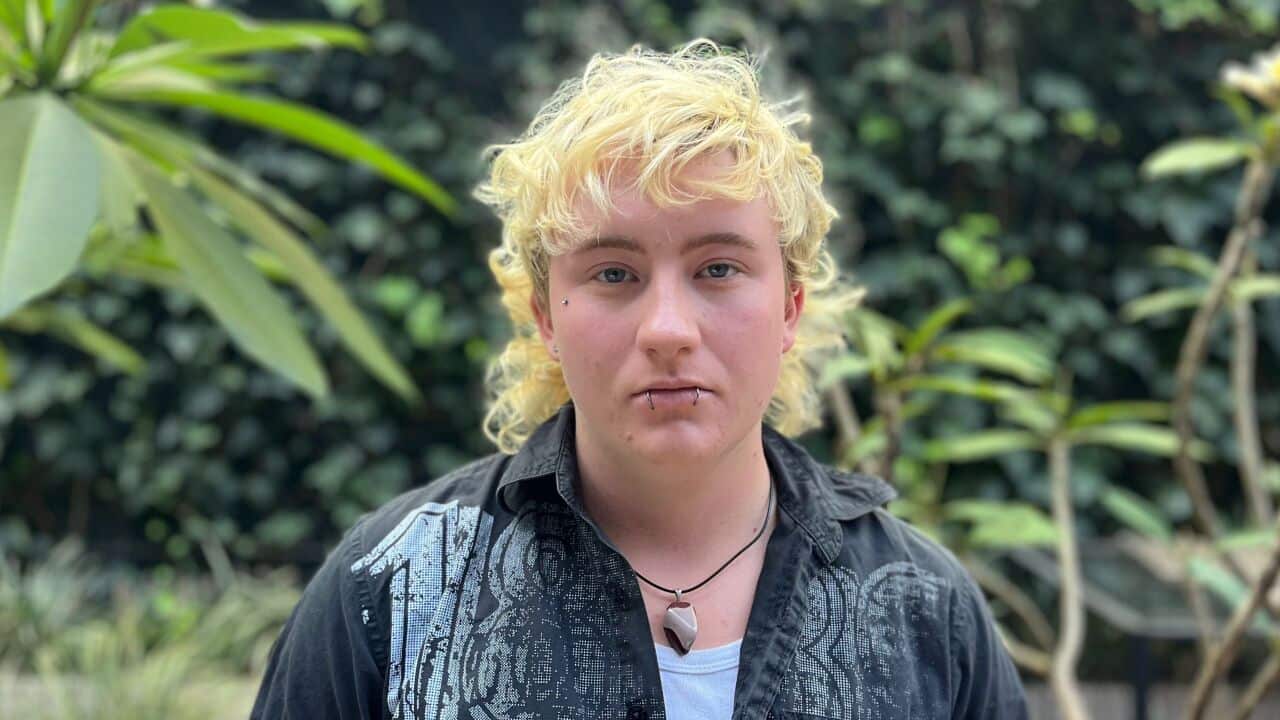
When Kyro was 16 years old and asked his mum Sandi if he could access gender-affirming care, she told him he had to wait until he was 18.
"It was very hard having that one person who I thought was the closest to me, tell me how I felt wasn't really real," Kyro, who was assigned female at birth, told Insight.
"I felt very isolated. It was just that constant feeling of, 'Well, no one's taking me seriously'."
News that makes sense
Your trusted source for staying up-to-date with the world around you. Get free daily news updates and analysis, straight to your inbox.
Sandi wanted Kyro to wait until he was 18 as she felt that her son, now age 19, was too young at the time to make the decision.
"It was really sad and hard ... We thought 'What have we done wrong? Why is Kyro going through this sort of stuff?'" Sandi told Insight.
"We doubted ourselves as a family."
Sandi is not alone as a parent in Australia who has been in the position of deciding whether to consent to their child receiving gender-affirming medical treatment.
An estimated 2 to 3 per cent of people aged 10-24 in Australia identify as transgender or gender diverse, according to Murdoch Children's Research Institute, Australia's largest child health research institute.
Puberty blockers, hormone therapy and top surgery
In Australia, people under 18 generally require guardian consent and a diagnosis of gender dysphoria (also referred to as gender incongruence) for medical practitioners to provide gender-affirming treatments.
However, legislative changes in Queensland and the Northern Territory mean doctors in the public system can no longer prescribe gender-affirming medication to new trans patients under 18. Patients already accessing this care can continue their treatment.
Not all trans and gender diverse people experience gender dysphoria, and the term itself is contentious due to the concern it stigmatises trans healthcare as a mental health condition.
In 2019, the World Health Organization approved changes to its ICD-11 manual (effective 2022) to declassify transgender health issues as mental disorders and reclassified "gender incongruence" under sexual health.
"Gender dysphoria" still appears in the American Psychiatric Association's diagnostic manual (DSM-5) as a diagnosis of distress that can help provide access to medical treatment and support.
Gender-affirming medical treatments currently available in Australia to trans youth include puberty blockers, gender-affirming hormone therapy (GAHT), typically from age 16, and in rare cases, gender-affirming chest surgery (more commonly known as 'top surgery').
Puberty blockers, administered in the early stages of puberty, are a medication that temporarily suppresses sex hormone production to delay puberty and its physical changes, such as breast development or voice deepening.
Teens usually around age 16 and adults can be prescribed GAHT, which is the medical administration of estrogen or testosterone to help align a person's secondary sex characteristics (such as body fat distribution, voice pitch and body hair) with their gender identity.
'I didn't have to watch my body morph into a man'
Grace, 25, was assigned male at birth but knew she "did want to become a girl" at age 12. The thought of having to wait until she was 18 to access gender-affirming care was a scary one for her.
"I knew that I was going to transition. I knew it in my soul, and so I was able to save myself a world of further trauma."
With the support and consent of her parents, Grace started puberty blockers when she was 13 years old and was able to start GAHT two years later under Victorian laws.
"Just knowing that, biologically, I would be able to progress in a way that really felt like me, was something of almost a miracle," Grace said.
"I now have the privilege of being able to walk through my life, and not having people just know that I'm trans by looking at me ... I didn't have to watch my body morph into a man during my adolescence."

How accessible is gender-affirming care for trans youth?
There are currently no national clinical guidelines for gender-affirming care for trans and gender diverse youth in Australia.
The Australian Standards of Care and Treatment Guidelines for Trans and Gender Diverse Children and Adolescents, developed in 2018 by the Royal Children's Hospital Gender Service in Melbourne, is used widely used in public services and has been endorsed by the Australian Professional Association for Trans Health. The federal government has not formally endorsed these guidelines.
The Australian government requested last year that the National Health and Medical Research Council, the country's primary statutory authority for medical research and funding health develop guidelines on trans healthcare for young people.
Looking internationally, there have been several reviews that have led other countries to limit the use of medical treatment for trans youth.
Britain's National Health Service (NHS) commissioned the Cass Review in 2020, which gave its final report in April 2024.
The review, led by Dr Hilary Cass found that the evidence base that had been historically used to support medical interventions for trans youth was weak. England subsequently banned puberty blockers for patients under age 18 in both the private and public systems.
Other European countries, including Sweden, Denmark, Norway and France, have also adopted a more cautious approach by limiting the use of puberty blockers.
However, peak medical bodies in Australia — including the Australian Medical Association and Royal Australian College of General Practitioners (RACGP) — have not endorsed the Cass review due to the belief its findings could be used to restrict and reshape youth gender-affirming care.
"Data is currently limited because trans healthcare research was not given the funding it deserved until relatively recently, but to then use this as a reason to deny trans people access to certain treatments is cruel and unethical," said Dr Michelle Dutton, RACGP's Specific Interests Transgender and Gender-Diverse Healthcare Group chair, in 2024.
'They told me that I needed to educate myself'
Michelle (not her real name) says her daughter, who has questioned her gender identity, has a complex medical history and has “experienced psychosis, hallucinations, anorexia — all things that are distorted beliefs".
She says the clinic they went to overlooked these pre-existing conditions and focused on gender-affirming care. Michelle says she then tried to question this approach with the clinic's medical professionals.
“They would not enter a conversation about it with me, other than to tell me that I needed to educate myself," Michelle told Insight.
Michelle's daughter will be able to access gender-affirming medical treatment when she turns 16 without guardian consent in the state where they live.
Michelle says that some effects of hormone treatment are irreversible and if her daughter "does medically transition, there's a possibility of infertility".
Differing care approaches from psychologists
Queensland-based psychologist Vanessa Spiller believes that a gender-affirming approach for trans and gender diverse youth is problematic — due to what she says is limited evidence.
"We now have these systematic reviews that have been conducted around the world by independent countries and organisations that have really found that there isn't a good evidence base for gender-affirming care," she told Insight.
Spiller believes that it is better to pick from a range of different models rather than adopting a gender-affirming approach.
"Once I've got to know the person ... I then pick the model that's going to work best for that individual," she said.
"And this is quite different with the directions from the [Australian Psychological Society]. They say you must use a gender affirming model."
Olivia Donaghy, a founding clinician at the Queensland Children's Gender Service at the Brisbane Royal Children's Hospital and is contemplating resigning because of the state's ban on puberty blockers in the public system.
"If you don't have enough money to go to private care, you don't have [gender-affirming] care in Queensland anymore," Donaghy told Insight.
"You can access puberty blockers and hormones privately, but of course you have to pay. It's created this real inequity."
Donaghy, who is currently completing a PhD that examines the satisfaction of people who have received gender-affirming medical treatment, said that many of her adult patients who didn't have puberty blockers were negatively affected.
"One of the things that I hear over and over from young adults who come to see me is a real sorrow that they didn't have access to puberty blockers.
"And that they now have to look at surgery if they're wanting to make changes."
'You don't become the person you think you will'
Kev transitioned when he was 26 but he doesn’t think people under 18 should go through a medical transition.
"You have adults in positions of authority over kids telling them that they can actually change sex, which they can't," Kev told Insight.
"You can alter your physical experience. You can present as the opposite sex, but you can't actually become the opposite sex."
Kev, who is now 50 years old, has lived most of his adult life as a trans man.
"Almost half of my life has been spent transitioned, and the way I feel about it now is quite different than what I did before," he said.
"You don't become the person that you think you will when you're 20 years old or 25 years old."
Life after accessing trans healthcare
After starting GAHT last year, Kyro feels more confident in himself and is planning his top surgery in the next 12 months.
"I can go into the bathroom without being looked at weirdly," he said.
"I like my body more."
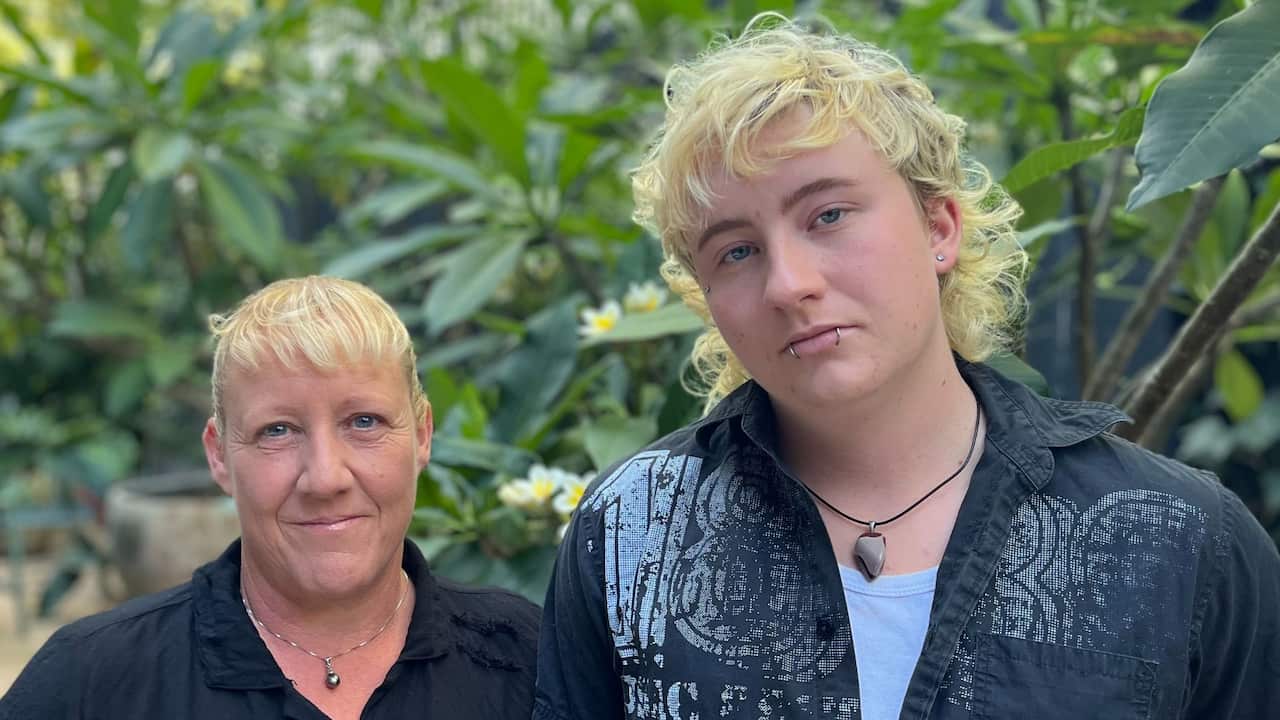
Seeing Kyro's wellbeing improve has helped his mum better understand his decision to transition.
"I'm still saying 'she' a lot, and I know I've got to change that," Sandi said.
"But as I've seen him change, I'm starting to feel like it's more him."
Readers seeking crisis support can contact Lifeline on 13 11 14.
Watch your favourite Insight episodes around the clock on SBS On Demand's dedicated Insight channel. For the latest from SBS News, download our app and subscribe to our newsletter.
This article was originally published on 23 March and updated on 24 March.

Insight is Australia's leading forum for debate and powerful first-person stories offering a unique perspective on the way we live. Read more about Insight

Have a story or comment? Contact Us







