
This audio is voiced by AI and may occasionally mispronounce words.
Share your feedback and help us improve this feature. Read more about how we use AI at SBS here.
DNA testing technology has become more accessible, affordable and sophisticated, and more than 26 million people worldwide have willingly shared their genetic information with private companies. But are we giving up too much information? Watch Insight episode DNA and Deception on SBS On Demand.
On the 10th anniversary of her dad's death, Vikki's mum revealed a secret she'd held for over eighteen years.
Vikki's dad wasn't her biological father.
News that makes sense
Your trusted source for staying up-to-date with the world around you. Get free daily news updates and analysis, straight to your inbox.
"She said, 'Of course, dear, you do realise he wasn't your real father?'" she told Insight.
Vikki, who was 18 at the time, says she had no idea — noting that she and her siblings were all blonde with blue or green eyes.
She says the news broke her.
"My life fell apart for a while. And I think that was just my way of coping.
"I made poor choices. I was really unsettled."
A decade later, Vikki and her sister were looking through a photo album when they came across a photo of a man their mum said was Vikki's father.
Her mum insisted that she shouldn't go searching for him, but Vikki felt that she had to reach out.
She contacted him, and he revealed he had kept diary entries about his relationship with her mum and that he might be her dad.
However, something didn't feel right.
"I remember him opening the door when I arrived … I thought I would be seeing my eyes, and I didn't," Vikki says.
"I saw a man with very dark hair, very deep brown eyes and I thought, 'um, no'."
I saw a man with very dark hair, very deep brown eyes and I thought, 'um, no'.Vikki
'Everything around me imploded'
Despite the difference in appearance, they developed a father-daughter relationship over the next few years.
Eventually, they decided to do paternity testing, and it was revealed what Vikki had long suspected: that they weren't related.
"I had to show up for work the next day. I had to excuse myself to go and vomit several times," she says.
"And my marriage imploded. Everything around me imploded. It absolutely unsettled me once again."
Feeling deceived by her mum for the second time about who her father was, she didn't speak to her for three years after this.
"I just thought, how could someone do this to another human being?
"And so many people asked me, 'Oh, why don't you ask her again?' Do you think I'm going to back up for another deception?"
Wanting anonymity
Ian has no interest in taking a DNA test from an online genealogy platform.
He was a sperm donor in the 1970s, and he donated thinking he would always remain anonymous, in line with his agreement with the clinic.
"I was young — didn't think terribly much about it," he says.
"But thought, 'yep, if I can help out, I will'."
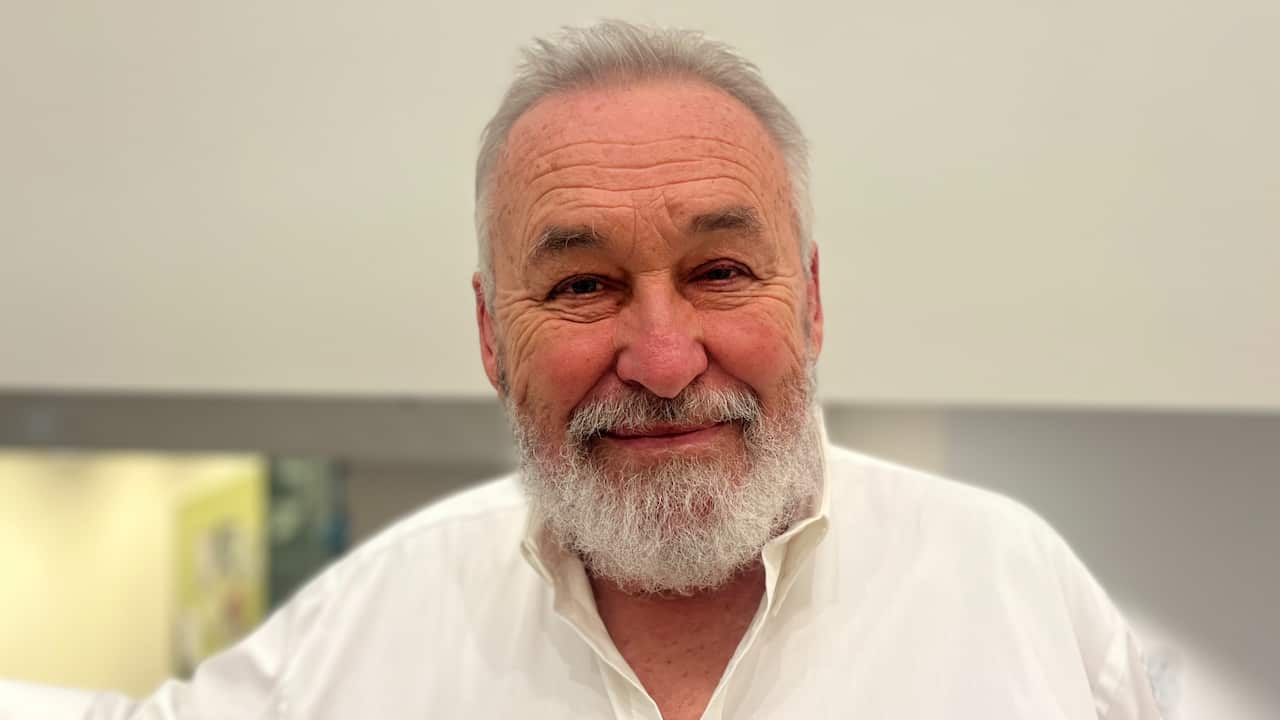
Victoria has since introduced a law that retroactively removes egg and sperm donor anonymity. It's now mandatory for sperm donors to be identified if donor-conceived offspring ask for details, and if those records exist.
Ian, who believes he could have over 30 donor children, was not happy with this law reform.
"You know, I signed an agreement. And [anonymity] was the agreement.
"And that should stand."
Ian has made further arrangements for his estate so that his two children by marriage, whom he raised, are the beneficiaries. However, he is still open to having his donor children contact him.
"I would treat them as they would like to be treated," he said.
"I have no issues with them personally — and if any of them approach me, I'd be happy to talk to them."
But he is adamant about not taking a DNA test linked to an online genealogy platform — as that could make him more easily found by donor-related relatives. He has spoken to his family about this concern and says they are aware of the potential consequences of submitting their details to such private companies.
Are family secrets safe anymore?
Chris Lean is a research fellow at Macquarie University who specialises in life sciences and ethics; he believes that the potential impacts a DNA test could have on a family should also be considered before taking a test.
"You may think of [DNA] as being your own private property in some way, but it's not really — it's shared across your family," he told Insight.
"The more genetic information is out there, the more you can infer about the people around you."
The bioethics philosopher says that some cases of sharing genetic information may be justified, but it is "worth reflection" in other cases — as once the information is out, it's out.
"There have been serious leaks of millions of people's genetic information ... These aren't like password or email address leaks.
"These are things that are immutable. You can't change your DNA ..."
Lean says there are also questions about whether this data could be used for targeted advertising.
"Your information is valuable ... Some of these companies are worth billions of dollars," he says.
"You need to ask yourself: 'why is that information valuable?'"
It's estimated 26 million people worldwide have undergone genetic ancestry testing with private online genealogy companies, according to a 2021 US study in the US' National Library of Medicine.
In Australia, there are a range of DNA tests available, including legally admissible tests suitable for court, immigration, or a birth certificate amendment; "peace of mind" home tests; genealogy tests and health screenings.
The Australian government passed legislation in April banning life insurers from using "adverse" genetic testing results to deny or limit life insurance cover.
Assistant Treasurer Daniel Mulino said that "genetic testing saves lives" in a 2026 Treasury media release.
"Australians should not be discouraged from undertaking genetic testing out of fear it may have an impact on their ability to get insurance or make that insurance unaffordable."
Secret siblings
In 2017, Katrina did a genealogy DNA test to learn about her and her five siblings' English and Croatian heritage and didn't find any surprises in her results.
However, a few years later, when the 45-year-old's sister died — and she looked back at their ancestry to distract herself — she found something that changed how she viewed their father.
"I logged in [to a genealogy website], and I saw that I had a DNA match of 29 per cent shared DNA," Katrina says.
"The match was showing on my paternal side, so I knew immediately by looking at the results that that was a half-sibling."
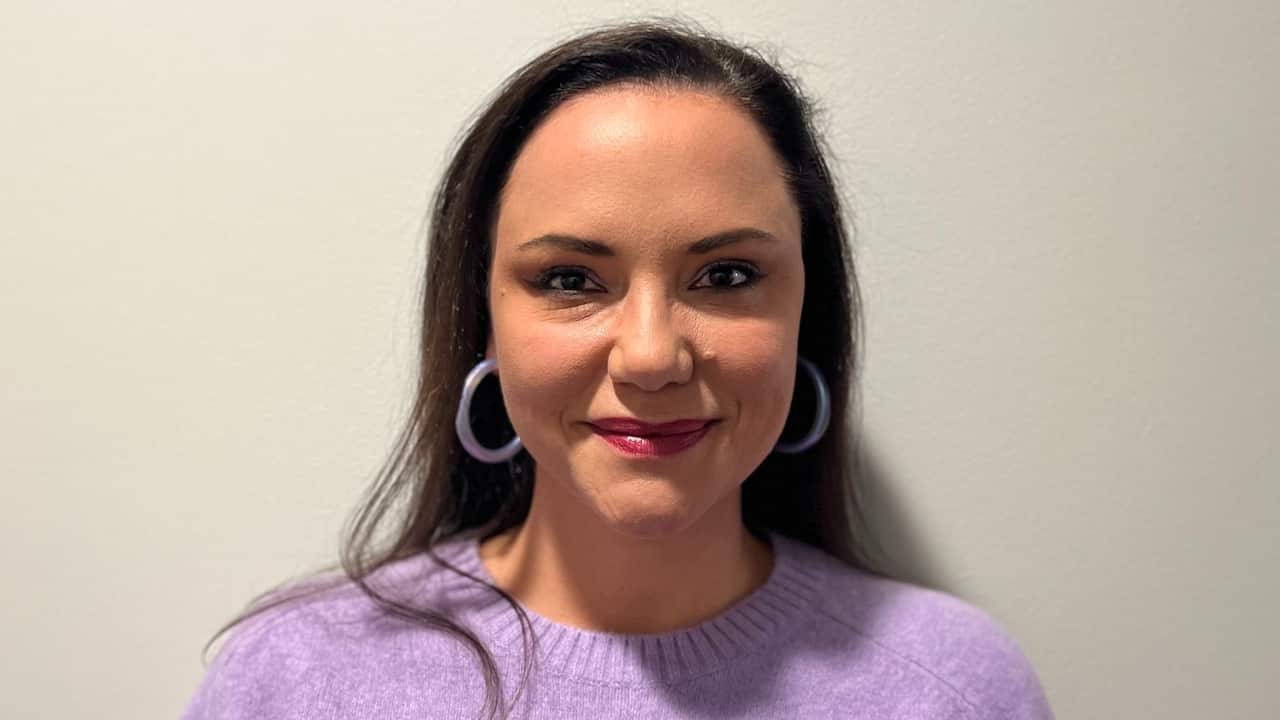
Katrina looked up the DNA match on Facebook and discovered that she lived in Southampton, England, which is where her parents had lived decades earlier.
About a year later, she discovered that she had another half-sister in Australia after she matched with her daughter. She then made a group chat with them both and all her full siblings.
Katrina says her dad tried to "walk out and abandon" her mother when they had two children together; and he also admitted to her mother that he left his pregnant girlfriend before her.
Because her dad died before she knew about her half-siblings, Katrina never had the opportunity to speak to him about her recent family discoveries.
"It's strange because I grew up with my father and I got to know him and experience him — with his faults and his good sides as well.
"I think what makes me feel uncomfortable is the impact that it's had on the mothers of my half-sisters … I feel a lot of guilt about that because I didn't have to have the trauma that they did."
Completing the puzzle
For nearly 20 years, Vikki says she needed to tell herself every day that she was enough and that she didn't need to know who her father was.
"It didn't matter who my parents were," she says.
"I had to be happy with who I was."
However, after her husband suggested she should do an online genealogy DNA test, everything changed.
It didn't matter who my parents were. I had to be happy with who I was.Vikki
With the DNA results and the help of a 'search angel' she contacted in a Facebook group helping others find their long-lost family, Vikki found the name of her biological father on her 53rd birthday.
She had a friend reach out to the man named Tim to see if he had any memories of Vikki's mum, and he confirmed that they had a dalliance many years ago.
A subsequent private laboratory test confirmed that he is her father. The two then had a phone call lasting four hours.
Tim says: "I knew at the end of it that she was a really nice person and I wanted to get to know her more."
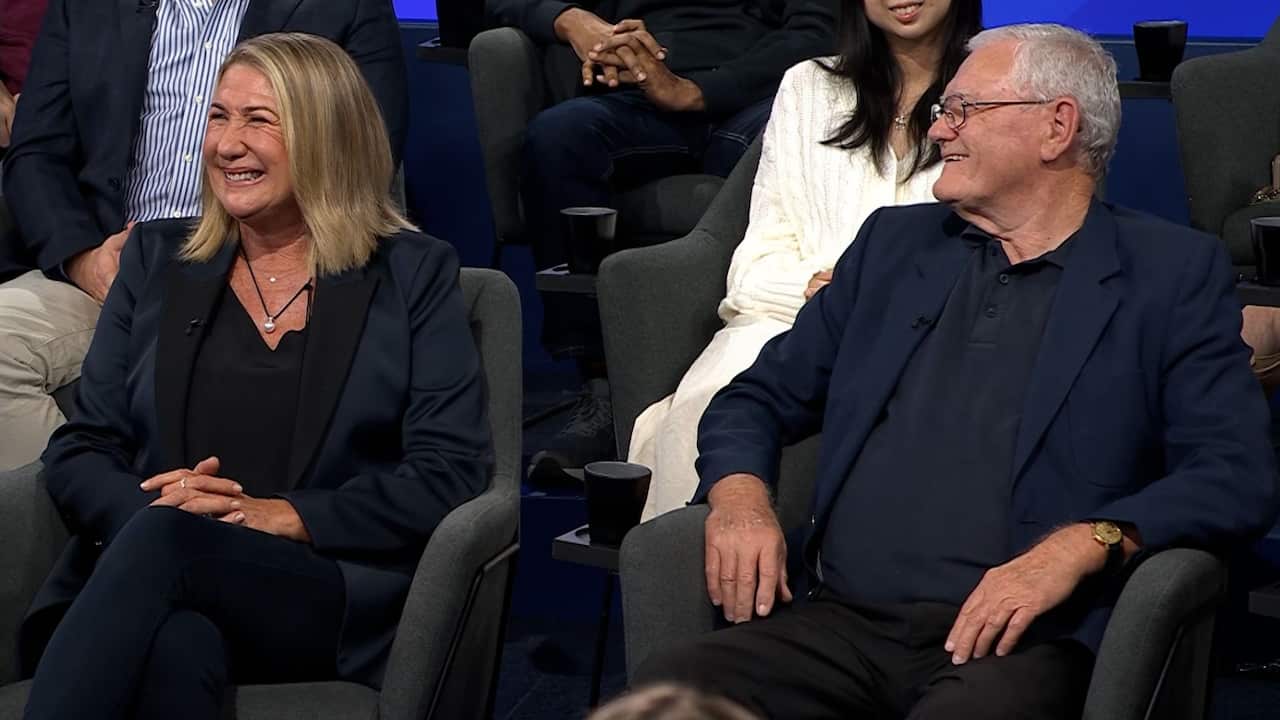
The two have since developed a close bond, which Vikki says has "pulled everything into place".
"My daughters and I went to celebrate [Tim's] 50th wedding anniversary.
"My daughter walked in, and she said, 'Mum, this is where you belong'."
Watch your favourite Insight episodes around the clock on SBS On Demand's dedicated Insight channel. For the latest from SBS News, download our app and subscribe to our newsletter.

Insight is Australia's leading forum for debate and powerful first-person stories offering a unique perspective on the way we live. Read more about Insight

Have a story or comment? Contact Us







