
Thanks for joining us
Thanks for joining Miles Proust and me today as we covered the government's long-awaited unveiling of its migration shake-up.
Today:
- Home Affairs Minister Tony Burke unveiled a suite of migration changes, including tighter rules on visa-hopping, tougher action against visa overstayers, and a crackdown on rogue migration agents
- The government said the measures will reduce net overseas migration to 245,000 this financial year and 225,000 by 2027-28, while continuing to prioritise workers in key sectors
- Construction workers, healthcare staff and educators will be prioritised under the migration system, with Burke arguing migration remains critical to housing construction and essential services
- Burke rejected claims Australia is experiencing "mass migration", arguing the debate has been distorted and warning that deep migration cuts would damage the economy
You can find out more about the migration changes on SBS World News at 6.30pm AEST and via OnDemand, including analysis by SBS News' chief political correspondent Anna Henderson.
SBS News will also publish more stories in the coming days to help you understand how these changes may affect you and your community.
You can also download our app and subscribe to our newsletter. It's the best way to stay across our updates, explainers and analysis as we continue covering these changes.
Until next time.
— Alexandra Koster
A 'dark day for multicultural Australia', asylum seeker advocate says
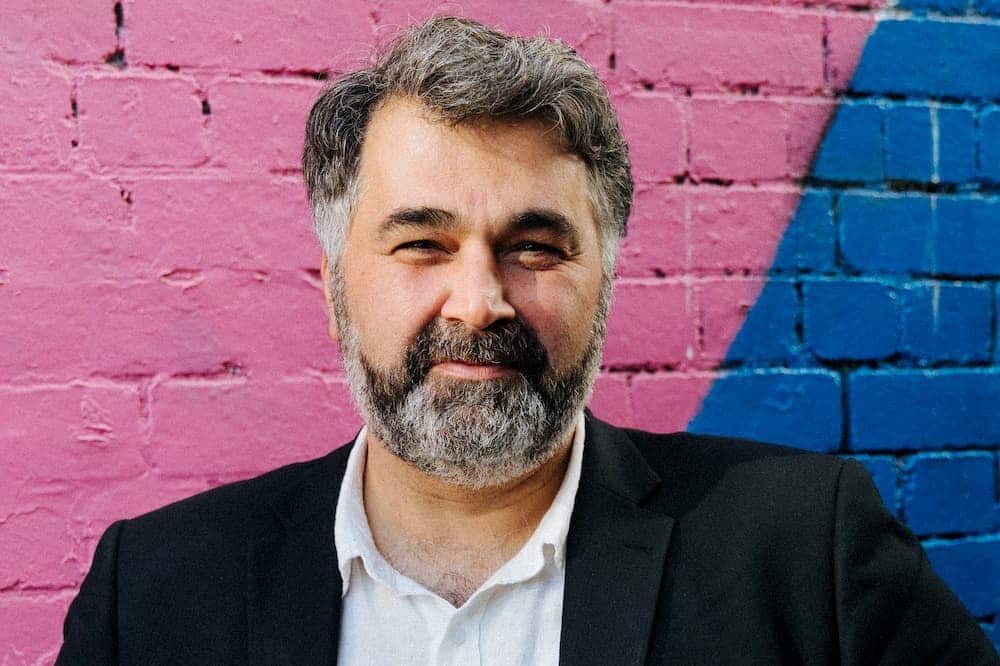
Kon Karapanagiotidis, CEO and founder of the Asylum Seeker Resource Centre, says the changes announced today mark "a dark day for multicultural Australia".
"Today our government chose to turn on migrants, international students and people seeking asylum who have built lives here, contributed to this country and asked for nothing more than the chance to belong," Karapanagiotidis said in a statement.
He was particularly concerned about how the changes would affect those seeking asylum, as well as plans to ramp up detention centre use for those overstaying their visas, saying they were reminiscent of US President Donald Trump's ICE immigration raids.
"Minister Burke went to great lengths to reassure Australians this would not look like Donald Trump's immigration raids.
"But look at what is actually being planned: 500 more compliance officers tasked with finding people, 1,250 more detention beds including plans to turn former COVID quarantine facilities in Victoria into detention centres, and billions more for removals."
He said the changes would double Australia's immigration detention regime and argued they would make Australia "smaller, meaner and more divided".
"We will not stand by while migrants and refugees are used as political punching bags," he added.
"We will fight any attempt to take away the right to work or shut people out of seeking protection."
— Alexandra Koster
What you might have missed
Here's a look back at some bits you may have missed from today's eagerly awaited migration plan.
Working holidays
A ballot system will be introduced for second and third-year working holiday-makers, who are required to work regionally.
Only 45,000 working holiday-makers will be able to stay in Australia for a second year, and just 5,000 for a third year — down from 57,000 and 31,000 respectively.
British citizens will remain exempt from having to work regionally in their second and third years, with the government honouring a free trade agreement between Australia and the UK.
Overstayers crackdown
People who overstay their visas will be taken into detention, reviving a policy that was in place before 2015.
The government will also seek more facilities, compliance officers and beds to prepare for the crackdown.
The Department of Home Affairs estimates there are around 77,000 unlawful overstayers.
International students targeted
A suite of changes will target international students.
International students and those on graduate visas will no longer be able to bring their family members to Australia, though there are some exceptions, including for PhD students.
The only way foreign students will be able to extend their visas is by transferring to higher-level courses, like a bachelor's to a master's.
— Alexandra Koster, with additional reporting by Australian Associated Press.
Chalmers asked how the government can be trusted
Nationals MP Kevin Hogan asked Treasurer Jim Chalmers how Australians can trust the government after Prime Minister Anthony Albanese said the refugee intake would remain at 20,000.
His question was in reference to Albanese confirming the intake would not change, despite reports the government was planning to slash the figure by a third.
Chalmers said migration was a force for good, reiterating some of the points Tony Burke made during his National Press Club address.
"The difference between this side of the House and that side of the House is our migration policy is determined by cabinet ministers in the cabinet room. The Liberal Party's migration policy is determined by One Nation in the cockpit of a plane donated by a billionaire [a reference to mining magnate Gina Rinehart] ," he said.
— Miles Proust
Question Time kicks off in parliament
Question Time in parliament has begun with Opposition leader Angus Taylor.
He started by saying there are 1,100 people arriving in Australia each day under Labour, which amounts to a new person every 78 seconds.
"Labor is in denial, why were there no cuts to immigration today?" Taylor asked.
Home Affairs Minister Tony Burke responded:
"If you make cuts too deep, too hard in the immigration system, you trash the Australian economy. That's what happens."
He asked if Taylor had listened to his own backbenchers and farmers, who want backpackers to work in the regions.
But he acknowledged migration needed to be tempered to "give housing a chance to catch up".
— Miles Proust
Key points from Tony Burke's NPC address
If you're just joining us, Home Affairs Minister Tony Burke has used a National Press Club (NPC) address in Canberra to announce changes to Australia's migration system.
It comes after weeks of heated political debate about migration.
These are the major points from his speech:
- The suite of measures includes removing unlawful non-citizens, cracking down on "visa-hopping" and "rogue migration agents", introducing a ballot system for second- and third-year backpackers, restricting family applicants for most student visas, and prioritising processing for key sectors, such as healthcare, construction and education.
- The measures aim to reduce Australia's net overseas migration (NOM) figure to 245,000 this financial year, and 225,000 in 2027-28. The NOM in the year to March this year was 292,000.
- Burke addressed "absurd" migration claims, saying Australia was not experiencing "mass migration". He also rubbished claims that the government had been letting in yoga teachers over construction workers.
- He said the housing crisis was not caused by immigration, but immigration could be part of the solution. Construction workers will earn more points under the skilled migration pathway to boost housing construction in Australia.
- He acknowledged visa-hopping was a "genuine problem", with the government to introduce a qualification scale. It means a bachelor's degree student will only be able to move "up the scale" to a master's degree.
- Processing of working holiday visa applications has slowed. Faster processing times will be restored for those in their second or third year who are required to work regionally.
- A "no further stay" provision will be applied to visitor visas, only applying to future visas.
- There will be tougher sanctions for visa overstayers. The government will return to a pre-2015 model in which visa overstayers will be detained. An additional 100 compliance officer roles and 250 beds will be made available. The government will also consider repurposing a former quarantine facility in Melbourne.
- Burke rubbished reports that Prime Minister Anthony Albanese didn't want him to give the speech at the NPC.
- He said One Nation and the Coalition's plans to cut migration would "trash the Australian economy".
— Miles Proust
'It'll send the message that they aren't welcome here'
Young high school students Shubhangi Parihar and Nuri Jung have told SBS News they're worried about the government "targeting" migrants in their city of Perth.
"I think [migrants] offer better community and cultural values, which I think is important in Australia, where immigrants come here so much," Jung told SBS' Christopher Tan.
"I don't know why the government is planning to reduce that, because they were immigrants themselves at one point in time."
She was worried in particular about the loss of Asian food, less representation of people like her, and what sort of message it sent to migrants.
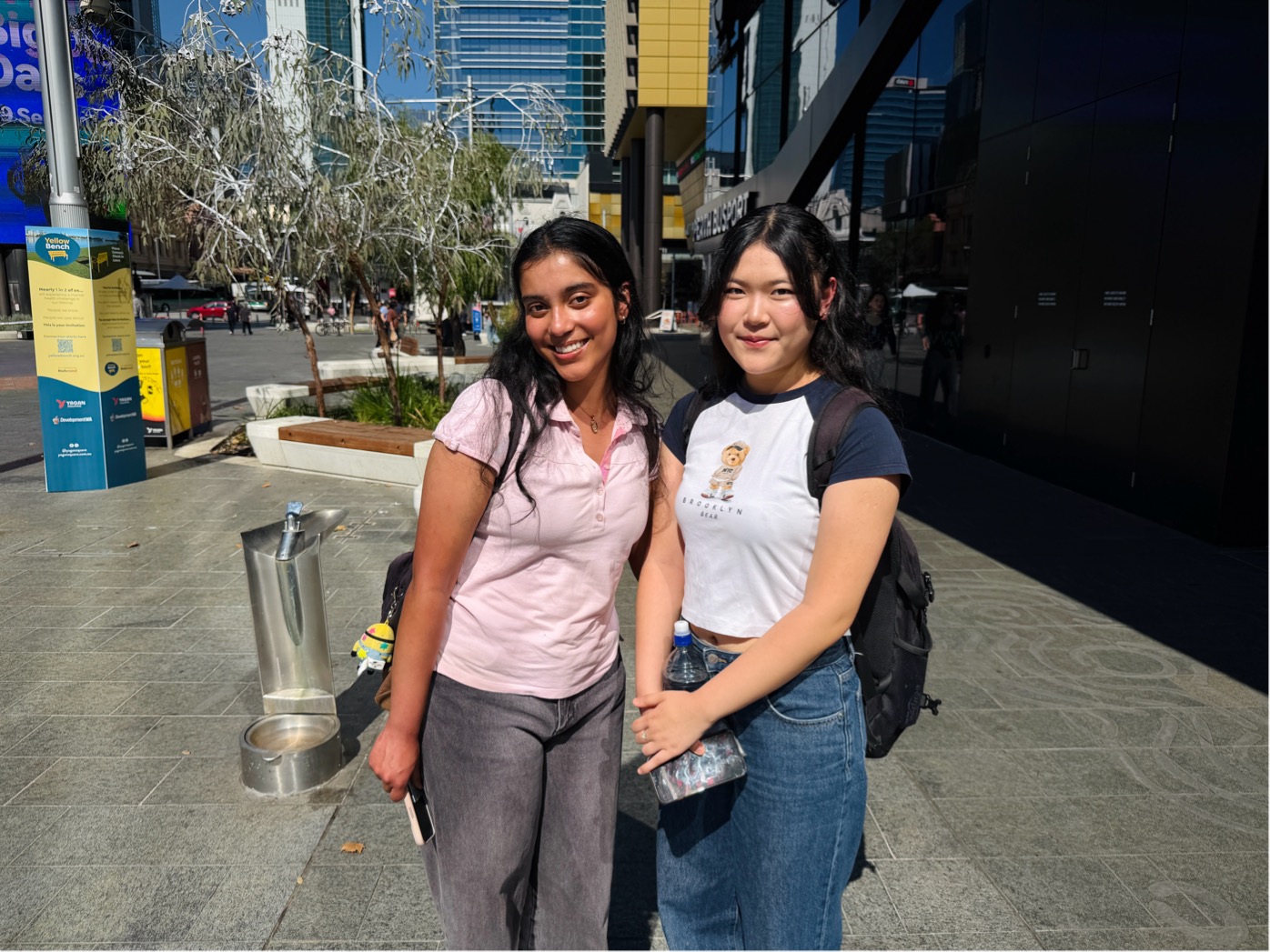
"I think it'll send the message that they aren't welcome here when in reality Australians are pretty welcoming," Jung said.
Her friend questioned the rationale for targeting migrants.
"A lot of them do stay in Australia afterwards, which is good, but a lot of them are just studying so they can get a better job back home," Parihar said.
"I don't see why they are targeting them."
— Alexandra Koster, Christopher Tan
Burke asked how government will win over the public
Burke was asked about how the government expects to win over the public when One Nation and the Coalition have lower migration targets.
One Nation has announced it will reduce temporary migration by 750,000 places over three years.
Last month, Opposition housing spokesperson Andrew Bragg said the Coalition would bring the net overseas migration levels under 180,000 people per year on average.
That compares to the federal government's aim of 225,000 by 2027-28.
"Lower levels will trash Australian services and trash the Australian economy. That's what they'll do," Burke said.
"Imagine half of the construction workers who we have to build the houses that we need not coming. Imagine two-thirds of the people who we rely on in aged care or nursing not coming. That's the impact of those policies."
But he acknowledged the concerns held by Australians when they see lines of people waiting to inspect a rental property.
"We have a shortage of homes, and people want to make sure that we guide the immigration system so that we soften our numbers to be able to allow housing to catch up," he said.
"But it would be a complete own goal to say the way we're going to do that is to trash our medical system, trash our aged care system, and not get the construction workers to build the homes that would actually help with the problem."
— Miles Proust
Single Perth international student Rui not concerned about visa changes
On the streets of Perth, international students have shared their perspective with SBS' Western Australian correspondent, Christopher Tan.
International student Rui Lin Zhang, 26, said that the changes may mean students head elsewhere.
"For people with enough money to do international learning, I think they might choose another country, like America or the UK," Lin Zhang said.
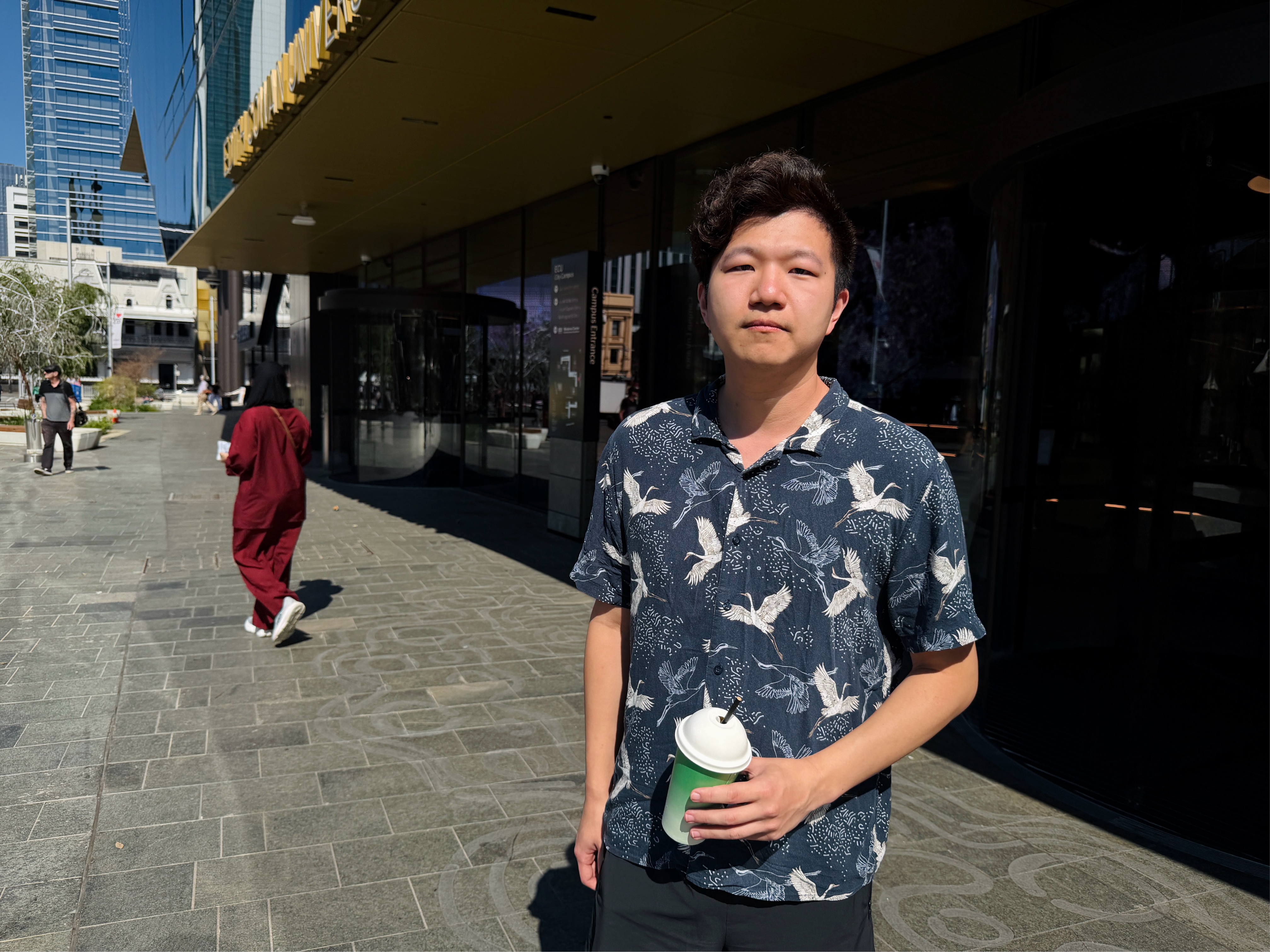
But he said he would still pick Australia to study in, despite new rules preventing student visa holders from bringing family members to Australia.
"Some people from other cultures will have family reunions and want to get together," he said.
"But for me, I’m quite fine ... At least for now I'm single, so I'm not quite worried about the new policies."
— Alexandra Koster, Christopher Tan
A tense exchange between Burke and SBS' Anna Henderson
During questions, SBS News' own Anna Henderson asked Burke about migrant communities feeling silence from the government during the migration debate, resulting in a tense exchange.
"Do you acknowledge that while you've been in government, there are points in this debate that have been extremely harmful to migrant communities where Labor was either quiet or, according to those communities, felt there was a silence?" Henderson asked.
Burke pushed back, asking: "Can you give me an example of when I've been silent on that?"
He added that he had spent his "entire political life" standing up against hate speech.
"We've spoken here about mass migration," Henderson responded. "You've today declared that to be absurd.
"The feedback from migrant communities is they haven't felt like the government has had their back to really loudly push back against that.
"So it's not my view. It's the view I'm getting from the community groups who feel that demonisation."
Burke said the "emphatic" speech he had just given proved that wasn't the case.
"The issues of making sure that people, no matter what their their heritage is ... that they are 100 per cent part of the Australian community," he responded.
"It's something that I would be saying on a platform somewhere pretty much every day, and have devoted my political career as much to that," he said, adding that he has contributed more to that cause than any other.
— Alexandra Koster
Burke rubbishes reports PM didn't want him to give speech
Burke was asked if Prime Minister Anthony Albanese, who reportedly didn't want Burke to give the speech at the National Press Club, had been convinced to change his mind.
Burke said that report came a day after he'd spoken with Albanese, confirming that he would give the speech at the forum.
"If I were to spend my whole life dealing with stories that have been written that were untrue, that's all I'd spend my time doing," he said.
— Miles Proust
Burke says he 'never leaked against the cabinet'
Burke was asked about reports that the government was considering changes to asylum seeker protection visas, such as changes to the time frames for applying, or the removal of work rights for temporary visa holders whose asylum protection claims have been rejected.
"A lot's been written over the last six weeks, and I can assure people that not one single media drop came from me," he said.
"I've never leaked against the cabinet, and I never will."
He said the government was working with the Opposition and it wanted to prioritise genuine claims.
"I don't think there's much public appetite for people who know they don't have a valid claim, being able to game the system," he said.
"I'm not going to go any deeper than that."
— Miles Proust
'I better say football or I'll get in trouble'
There was also a brief moment of levity as Burke caught himself committing a World Game sin.
Speaking about "disingenuous" asylum protection claims, Burke emphasised that having a protection system for asylum in Australia was critically important.
He then referred to the decision earlier in the year regarding the Iranian women's football team, in which visas were granted for two players.
"There have probably been few issues that I've been involved with where I've had more support and thanks from people on the street than the decision that was taken earlier this year with respect to two elite Iranian soccer players," Burke said, before quickly correcting himself.
"Sorry, I better say footballers or I'll get in trouble."
Visa hopping was then brought up again, with Burke saying there are some exploiting the protection system.
"To give a sense of the gravity of this, if we took the people who apply from countries where more than 85 per cent of the applications fail, that constitutes 80 per cent of our caseload," he said of visa claims under the protection system.
"This is an issue I'd like to be able to deal with ... I want to deal with it in a way that does not, in any way, create problems for the genuine asylum seekers."
— Alexandra Koster
Burke says he's not afraid of using the word 'sovereignty'
Moving into questions, Burke was asked whether he was comfortable with the reforms being compared with former prime minister John Howard's approach.
Howard said at the start of the 2001 federal election campaign: "We will decide who comes to this country and the circumstances in which they come."
Burke said he wasn't afraid of using the word "sovereignty".
"The sovereignty of Australia matters, and people want to know that there's a system," he said.
"What we need to make sure of now as we go to the next layer where people do come on a visa but try to effectively work around the visa system to deliver outcomes that Australia would never intend. And that's what I want us to be able to do."
— Miles Proust
Tougher sanctions for visa overstayers
Burke said the government will impose tougher sanctions on visa overstayers, returning to a scheme in place before 2015.
Before 2015, Burke said visa overstayers would be taken into detention, and within a few weeks, they'd organise their own flight and leave.
"That didn't just affect them. It had a behavioural impact," he said.
"The whole lot of other people who were overstaying thought, 'yeah, it's better that I just get on a plane and leave'."
He said that would not involve "the sort of operation that some people have seen on TV happening in other countries".
The government is also looking at alternative places for detention, including at a former quarantine facility in Melbourne.
He said there will be an additional 100 compliance officers and 250 beds.
"Effectively, what we are going back to doing is simply being able to make sure that if you overstay, you will not be able to say, 'Well, there's no consequences, as if they're ever going to make sure that I leave'," he said.
The code for migration agents will also be changed, with those who encourage claims without merit to be sanctioned and de-registered.
"It's something that should have happened some time ago, and we cannot have people with some sort of official formal status using that official formal status to encourage people to make something which, by any definition, is an unacceptable abuse of the system," Burke said.
He said the reforms were about making sure the system was "working as best as possible for the Australian economy".
— Miles Proust
Changes to student and visitor visas
Burke also addressed new rules targeting visitor visas and student visas.
Visitor visas will also have a "no further stay" provision.
Again, this change will not affect those already in Australia and applies for future visas only.
Burke also addressed student visas more in depth.
He said there are legitimate reasons for why some people may change courses or need to extend their visas, but there is a problem with "progression" in the context of "visa hopping".
"Someone finishes their course and where do they go to next? And one of the classic areas of visa hopping is people finish a course, hop to the next course, hop to the next," he said, also pointing to "illegitimate" educational providers enticing visa holders to stay longer.
To address this, the government will set up what it says is a "qualification scale".
"What we'll be doing is setting a very simple rule: you can go up the qualification scale, but only up the qualification scale," Burke said.
In practicality, that means that at the end of a bachelor degree, those on a visa will only be able to move "up the scale" to a master's degree.
"So, at the end of a bachelor degree, if you want to then do a master's, that's up the scale.
"But to hop around, up and down, to different institutions and claim what is actually just seeking a migration outcome as part of Australia's export of international education will come to an end as a model."
— Alexandra Koster
Changes to points system, backpacker visa processing
Burke said the reforms are split into three parts: who arrives, who stays and who leaves.
Changes will be made to the points test, a scoring system used to rank and select skilled workers for visas, with those with housing trade qualifications receiving the same number of points as a university qualification.
Construction, agriculture, fisheries, resources, and teaching will also be prioritised.
"The fact we are doing that allows us to restore the normal processing speed that we were previously at for primary applications for working holiday-makers," he said.
Working holiday maker visa approvals have slowed, and Burke said faster processing will be restored for those in their second or third year who are required to work regionally.
He said that the remote work requirement does not apply to working holiday-makers from the United Kingdom under a free trade agreement, noting the number of UK backpackers has exploded.
"Just to give you a sense of the pace of the growth, at the time that the free trade agreement was signed, the number of UK backpackers we had here in Australia was in the order of 17,000," he said.
"Now that's a little bit on the low side, so that was the end of the pandemic. But the previous peak had been around 35,000. It's now just shy of 80,000 in terms of numbers of people here in Australia.
"It's a level of growth that means we are just at the moment going to continue to be processing that one slowly."
He said the federal government was having conversations with UK counterparts about it in a "constructive way".
— Miles Proust
International students no longer able to bring family members
The government will be banning new international students from being able to attach family members to their visa.
"We will no longer be allowing the attaching of family members for international students or for graduate visas," Burke said.
But he said those already here with their families would be permitted to stay.
"We're not going to be breaking up families on shore," he said.
"The ones who are already here, that'll stay as is until whatever point they leave Australia, unless they they end up being entitled to a permanent visa.
"But we will no longer be adding to the stock of students automatically being able to bring family members over."
— Alexandra Koster
Burke acknowledges visa-hopping is a 'genuine problem'
Tony Burke has acknowledged visa-hopping is a "genuine problem".
But he said people on student visas who then get a graduate visa, start work in an area with a skills shortage, and are sponsored by an employer, were not the problem.
"They get an employer-sponsored temporary work visa in an area of skill shortage, they then apply to the permanent program," he says.
"Once they've been a permanent resident for more than 12 months, given the years that they've already been here, they then become an Australian citizen. That is not visa hopping. That is the system working at its absolute best."
He says the issue is individuals who would never have met the qualifications for permanent residency effectively jump from visa to visa, using the appeals process to stay as long as possible.
"It eventually becomes absurd to not just let them stay, because at that point they have Australian citizen children, and at that point they are so integrated into a local community," he says.
— Miles Proust
Housing shortage not caused by immigration, Burke says
Migrants skilled in construction and housing trades will earn more points under the skilled visa format in an effort to boost Australia's housing construction.
Burke also addressed debates claiming migrants were linked with the housing crisis.
"A genuine problem is the concept of what we do with respect to housing," he said.
"Now, I start with this: housing and the housing shortage we have is not caused by immigration, but immigration needs to be part of the solution for the housing crisis."
He emphasises that immigration is "not putting further pressure on housing", but says that the government needs immigration to "soften enough" so that housing has a chance to "catch up".
Other industries, including agriculture, fisheries, resources and teaching will also be added to the priority list alongside construction.
— Alexandra Koster







