
Burke addresses 'absurd' migration claims, references yoga teachers
Tony Burke has addressed what he says are some "pretty absurd claims".
The first claim is that Australia is a nation of mass migration.
"There are parts of the world where mass migration is something that they are dealing with," he said. "It's not something we're dealing with in Australia."
He referred to the latest net overseas migration figures released this morning by the Australian Bureau of Statistics.
Those figures showed net overseas migration dropped to 292,000 in the year to March 2026, down marginally from 299,000 in December.
Burke said Australia is now 47 per cent below the peak of post-pandemic migration.
The second claim he pushed back against is the debate there are some visa classes that are "irrelevant" to net overseas migration.
"No area of the immigration program is irrelevant to net overseas migration," he said.
The final — and "silliest" argument — involves a tangent about yoga teachers.
"There is an endless refrain that the government is bringing in yoga teachers and not construction workers," he said.
He compared the number of visas used for construction workers since Labor came to power — "just shy of 15,000" — to the amount of yoga teachers brought to the country — zero.
"Yet this claim is constantly made about yoga teachers," he added.
— Alexandra Koster
Burke highlights role of migration in shaping Australia
Home Affairs Minister Tony Burke has begun his National Press Club address in Canberra, where he will details of sweeping changes to Australia's immigration system.
The minister started by highlighting that today is Citizenship Day and the role migration has played in shaping modern Australia, describing citizenship as the culmination of an immigration journey.
He described citizenship ceremonies as some of the country's "most joyful and most patriotic events", where people make a lifelong commitment to Australia and are welcomed into the national community.
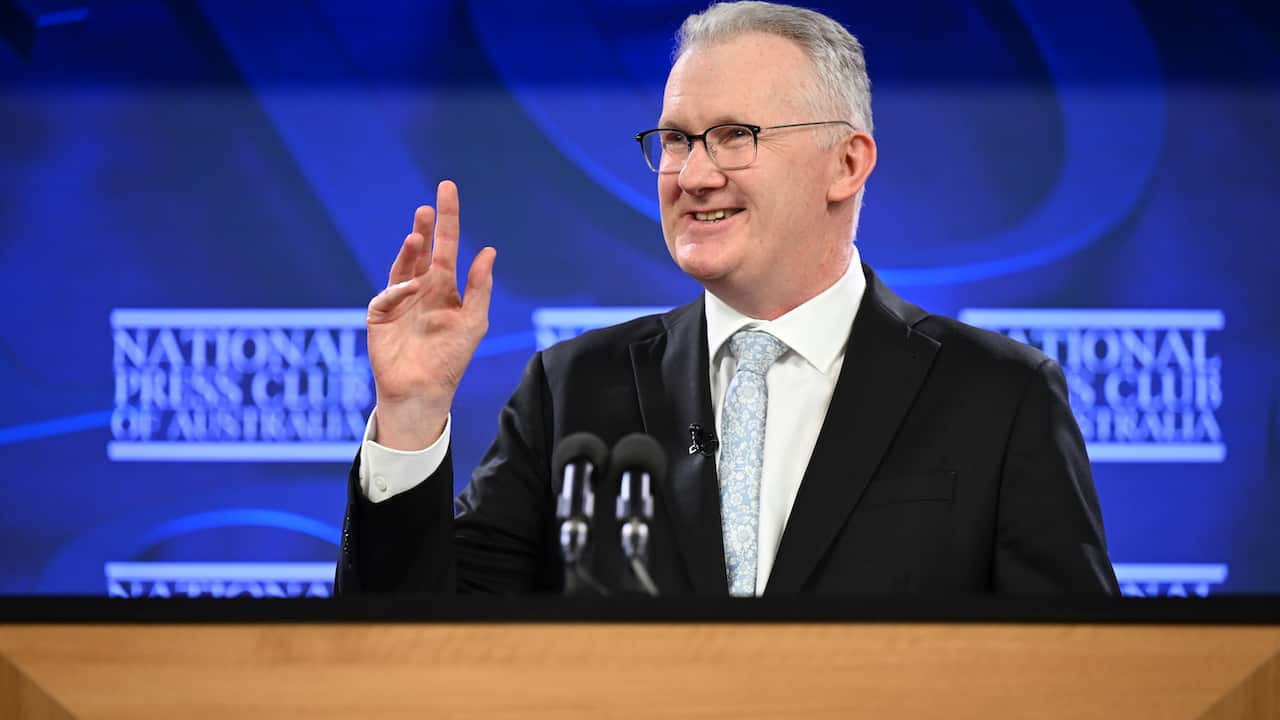
While acknowledging ongoing challenges within the migration system, Burke said it was important not to lose sight of migration's broader contribution to the nation.
"It's real nation-building," he said.
"We can never lose sight of the extraordinary strength to the fabric of our nation in what is modern, multicultural Australia."
— Miles Proust
The six groups targeted in changes
The federal government says the following measures will be implemented:
Unlawful non-citizens
- Strengthening compliance measures to ensure people without valid visas leave the country
Students
- Improving the integrity of student visas by stopping visa hopping and restricting secondary applicants on most student visas.
Tourists
- Introducing a no further stay condition to all visitor visas to ensure they are only used by genuine visitors and not as a pathway to extending a stay in Australia.
Backpackers
- Changing the Working Holiday Maker program to introduce a ballot system for years two and three where there will be a regional work requirement in support of regional Australia. The government will also stabilise processing times for Working Holiday Maker applications to three months.
Skilled migration
- Updating ministerial direction 119 to ensure the skilled migration program supports priority processing for a range of key sectors, including healthcare, construction, education, law enforcement, defence, resources, agriculture, aquaculture, and fishing.
Migration agents
- Cracking down on rogue migration agents who knowingly support visa applications without merit.
The government will also update ministerial direction 110, which combats hate and criminal behaviour, by better protecting children victims of crime, as well as victims of domestic and family violence.
Home Affairs Minister Tony Burke will provide more details of the plan in his National Press Club address.
— Miles Proust
Revealed: Raft of changes to Australia's immigration system
As Tony Burke begins his National Press club address, we now know the key details of the government's migration overhaul.
Removing unlawful non-citizens, cracking down on "visa-hopping", and introducing a ballot system for second-and third-year backpackers are among a suite of measures in the federal government's plan to reduce temporary migration.
Family applicants on most student visas will be restricted, a "no further stay" condition will be introduced for all visitor visas, and "rogue migration agents" who knowingly support visa applications without merit will also be targeted.
Priority processing will be allocated for key sectors in the skilled migration pathway, including healthcare, construction, education, law enforcement, defence, resources, agriculture, aquaculture, and fishing.
Burke said the federal government supported immigration but was "opposed to anyone rorting the immigration system".
"Almost everyone who comes to Australia is a good guest in our country. These reforms are to ensure that our migration system can be better targeted to the current needs of Australia," he said.
The measures aim to reduce Australia's net overseas migration figure to 245,000 this financial year, and 225,000 in 2027-28.
— Miles Proust
Net overseas migration fell to 292,000 in the year to March, new ABS figures show
Net overseas migration has dropped to 292,000 in the year to March 2026, down marginally from 299,000 in December.
That's according to new figures from the Australian Bureau of Statistics.
The data comes less than an hour before Home Affairs Minister Tony Burke releases Labor's new migration plan and strategy to reduce net overseas migration.
The latest figures are a decrease of 17,400 (5.6 per cent) people since the previous year.
— Alexandra Koster
What is student 'visa hopping'?
Plenty of debate has surrounded so-called "visa hopping", with the government expected to also clamp down on the practice.
"Visa hopping" refers to the practice of extending a stay in Australia by switching between visa categories, rather than leaving the country and reapplying offshore.
It often refers to temporary visa holders who apply for a new student visa to extend their stay.
The government previously targeted the practice back in 2024, banning those on visitor visas and temporary graduate visas from being able to apply for student visas onshore.
One Nation's migration plan also targets the practice.
It plans to cut 230,000 graduate visa places over three years and introduce a new annual cap of around 20,000 as part of its push to prevent so-called visa hopping.
Innes Willox, chief executive at the Australian Industry Group, told SBS News audio reporter Tee Mitchell student visas were in the spotlight because of concerns around visa hopping and overstaying.
He's concerned that students who would otherwise stay in Australia will complete their studies and go home.
"We don't get any value add from that as a country [or] to benefit from those skills and experience," he said.
— Alexandra Koster, Tee Mitchell
Australia's migration numbers visualised
It's all well and good to have numbers thrown at you, but what do those net overseas migration (NOM) figures actually look like?
Our excellent data wizards have put together a few graphs to help you understand how the system currently looks.
Net overseas migration figures over time
The latest ABS overseas migration data shows 568,400 migrants arrived in Australia in the 2024/25 financial year, and 262,800 left.
These figures are used to calculate NOM, which was 305,600.

In 2024, NOM was 340,800, falling to 301,100 in 2025.
This is substantially lower than the peak in 2023, when 547,300 people entered the country, but still slightly higher than yearly figures before the pandemic.
How many temporary migrants are included in NOM figures?
Data shows migrants on temporary visas made up 70 per cent of NOM in 2024/25.

Permanent migrants and New Zealanders also contributed to the figures.
Who are those temporary migrants?
A solid amount of temporary migrants in Australia are students, particularly those in higher education.
Another large slice are those under working holiday — or backpacker — visas.

Bringing down the number of temporary migrants would involve reducing the number of temporary visas issued each year.
— Charis Chang, Alexandra Koster
How did migration become linked to the housing crisis?
Politicians have been weighing in frequently on migration over the last few months.
The recent debate over Australia's net overseas migration figure has been dominated by One Nation, which is calling for substantial cuts to immigration.
During the debate, immigration has been constantly linked to the housing crisis by multiple parties, including Immigration Minister Tony Burke, who said migration plans should be considered alongside housing supply.
Kos Samaras, director at consulting and polling firm RedBridge Group, spoke to SBS News back in June and said migrants were being used as "scapegoats" amid a rising cost of living and housing crisis.
"It's an easy scapegoat, particularly when the economy's not travelling well," he said.
Our senior reporter, Charis Chang, spoke with experts this week who said cutting immigration would have a marginal impact on housing demand in capital cities.
"[For] people in Sydney, it would make a minimal difference in terms of their financial situation," immigration expert Abul Rizvi told Charis.
Anna Boucher, a global migration expert at the University of Sydney, said rental affordability in capital cities may improve if migration cuts targeted international students.
But cuts affecting migrant labour in the construction sector could have other unintended consequences for the housing market, she said.
— Alexandra Koster
Taylor blames 'abysmal' economic failures on migration under Labor
Opposition leader Angus Taylor spoken at a press conference this morning in Canberra, saying Australia is a "great immigrant nation", but still linking the economy to migration figures.
"I think we have a culture where this government has decided they are going to fix the abysmal failures they had on the economy by having high immigration," Taylor said.
"We are a great immigrant nation — make no mistake about it ... but this government's taken us in a completely different direction with the numbers being high and the standards too low.
"We will change both."
He was joined by Nationals leader Matt Canavan, who questioned Labor's policy on migration during the party's tenure.
"What the hell has Labor been doing for the past four years?"
— Alexandra Koster
What migration changes will be announced?
It's expected that Tony Burke will announce new strategies to help bring net overseas migration down from about 300,000 people in 2025 to 245,000 in 2026/27 and 225,000 people per year thereafter.
While no details have been confirmed, reports have suggested the overhaul will target international students in particular — primarily students' ability to bring family members to Australia and restricting working rights for those on bridging visas.
It's also expected that a plan to attract better-educated, higher-skilled and younger migrants will be hashed out.
Burke has already flagged plans to make more changes to the visa system to curb net overseas migration, with the government officially confirming in August that it would slow the processing of working holiday visa applications — a move that was met with backlash, particularly from One Nation and the Nationals.
— Alexandra Koster, with additional reporting by the Australian Associated Press.
'They are looking at us like numbers'
Today's announcement comes as debate over migration in Australia intensifies — with One Nation revealing a plan to cut 750,000 temporary visa holders from Australia over three years if elected.
Jyoti is one of the people feeling anxious about what changes to migration policy could mean for them.
She came to Australia from northern India eight years ago as an international student and is now in Australia on a work visa.
The 43-year-old teacher — whose Skilled Independent visa application has been sitting in the queue for months — worries that she will be affected by changes to migration policy if One Nation comes to power.
"I feel like the axe is going to fall on people like us before anyone else," she told SBS News.
"They are looking at us as just numbers, but there are actual lives and people behind these numbers."
You can read that story by Avneet Arora below.
— Alexandra Koster
Coalition says it was open to working with Labor on migration policy
More heat has come towards Labor this morning with Liberal frontbencher James Paterson accusing the party of refusing to collaborate with the Coalition on migration.
"If the government was actually serious about reducing numbers and lifting standards, then we could have worked with them," Paterson told News24 this morning.
"We provided a list of suggestions and ideas ... that actually would have reduced those numbers and lifted those standards, but the government wasn't interested in our ideas."
Just yesterday, Tony Burke told SBS News he had tried to find a path for bipartisan agreement with the Opposition.
"I had hoped that the Opposition would work constructively to make sure the immigration minister of the day had additional powers to be able to regulate net overseas migration," he said on Wednesday.
"At the moment, they haven't agreed to measures which they claim to support.
"I would much rather have more targeted levers available."
— Alexandra Koster, with additional reporting by the Australian Associated Press.
'Not an issue' that Coalition yet to reveal its own policy, Canavan says
Nationals leader Matt Canavan also had a chat with Radio National this morning, saying it was not an issue that the Coalition would be releasing its own migration plan after Labor's.
"I don't see that as an issue given that the election's not for 18 months," Canavan said when asked if it was a problem that the Coalition would be the last to reveal its migration policy.
"I mean, we can't obviously implement any of our policies today."

He also criticised what he called a "somewhat haphazard approach" from One Nation.
"The somewhat haphazard approach of One Nation the past month meant that they had four migration policies in four weeks," he said.
"We'll have one policy we announce as a Liberal and National Coalition, and it's something we'll be able to fight for ahead of the next election."
— Alexandra Koster
Plibersek pushes back against reports of party division
Social Services Minister Tanya Plibersek appeared on ABC's Radio National this morning ahead of the announcement, but was pretty tight-lipped about what we could expect.
She recognised migration's importance to Australia and pushed back against cabinet division over the policy.
"We want to have a sensible policy as a government that recognises that some migration is still very important to this country," Plibersek told Radio National.
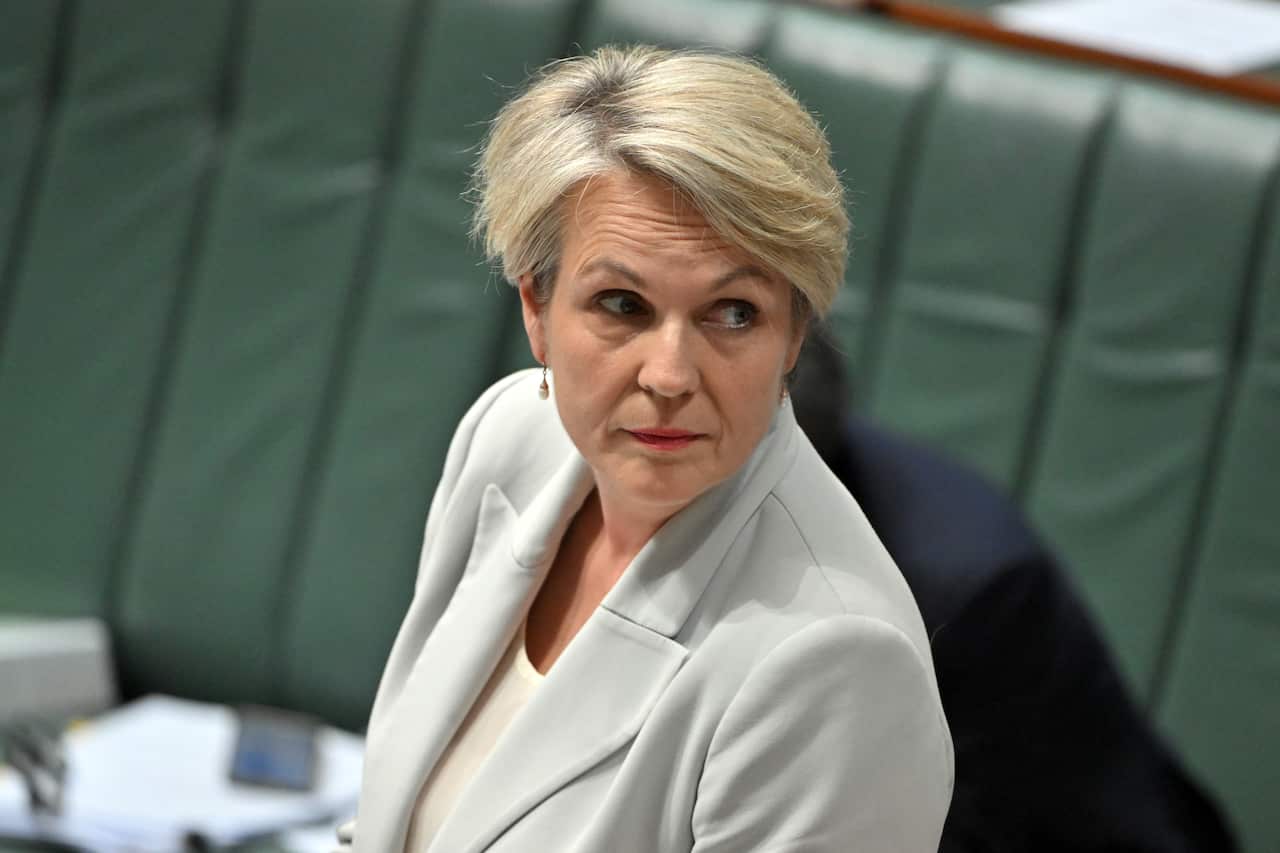
"We also … want to make sure the debate retains at its centre the reminder that Australia has been built on migration."
Asked whether an internal rupture in the party was to blame for the policy's delay, Plibersek said: "That has been reported and you can't always believe what you read in the newspapers."
Pushed on whether all members of the party agreed on the policy, Plibersek said she would not discuss what happened in cabinet, but that it was a "constructive discussion".
She also recognised the need for skilled workers — particularly in health, aged care, and agricultural sectors.
— Alexandra Koster
Latest migration figures to be released today
Another one to keep an eye on today is fresh migration data from the Australian Bureau of Statistics (ABS).
Australia's latest net overseas migration (NOM) figures will be released about an hour before Tony Burke starts speaking.
That'll cover the first three months of the year through to March.
The latest ABS overseas migration data showed 568,400 migrants arrived in Australia in financial year 2024/25 and 262,800 left.
Those figures are then used to calculate the official NOM figure — which was 305,600.
Not sure what NOM means? You can learn a bit about it below, thanks to SBS Examines.
— Alexandra Koster
Welcome to the live blog
Buenos días, صباح الخير, Guten Morgen, सुप्रभात, Buongiorno, 좋은 아침 — and good morning.
Welcome to our live blog. This morning, you've got Alexandra Koster with you. I'll be taking you through what you need to know ahead of the Albanese government's highly anticipated migration plan announcement.
Home Affairs Minister Tony Burke is set to announce the government's new immigration plan at the National Press Club in Canberra at around 12.30pm.
The speech is titled: "The work of managing the migration program: who arrives, who stays, who leaves".
Burke was initially slated to reveal the government's plan back in August, but it was cancelled at the eleventh hour after the government failed to secure cabinet agreement on the best approach.
Today, it'll hopefully come to fruition. We'll take you through that — and everything else you need to know.
— Alexandra Koster







