This audio is voiced by AI and may occasionally mispronounce words.
Share your feedback and help us improve this feature. Read more about how we use AI at SBS here.
Jyoti has called her migration agent three times this month. Each time, she asks the same question: Has there been any update?
Her application for a Skilled Independent visa, a pathway to permanent residency, has been sitting in the queue for months. It has felt like a long wait for Jyoti, who has lived in Australia for the better part of a decade. In recent months, that uncertainty has taken on a new urgency.
The 43-year-old is a secondary school teacher who lives in an outer northern suburb of Melbourne with her husband and their two children. She arrived from Punjab, northern India, eight years ago as an international student and is now in Australia on a work visa.
She asks that only her first name be used because she fears speaking publicly could affect her family's visa prospects.
I feel like the axe is going to fall on people like us before anyone else.
News that makes sense
Your trusted source for staying up-to-date with the world around you. Get free daily news updates and analysis, straight to your inbox.
"International students, temporary visa holders ... we would be the first to lose our livelihoods and our place here if Pauline Hanson comes to power, or if her party keeps gaining momentum," she tells SBS News.
Jyoti says she is watching the lead-up to Victoria's November election closely. To her, the election will be an early test of how far One Nation leader Pauline Hanson's momentum could travel and what that could mean for her family's future in the only country her children have really known. It's a fear, she says, that everyone she knows in her position is carrying right now.
One Nation wants to cut 750,000 temporary visa holders from Australia over three years. Not one of them will get a say in whether the party succeeds.
"Our fate is being decided by political parties whose fate we have no say in," Jyoti says.
Australia is home to roughly three million temporary visa holders, including students, graduates and skilled workers.
As One Nation pushes for sweeping cuts to temporary migration, it raises a harder question about political power: are people with the least ability to influence an election also the easiest to target?
Who One Nation's visa cuts would hit hardest
One Nation's plan would tighten the student and graduate visa systems, restrict family members from accompanying temporary skilled workers, and close off "visa hopping" — the practice of extending a stay by switching between visa categories rather than leaving the country and reapplying offshore.
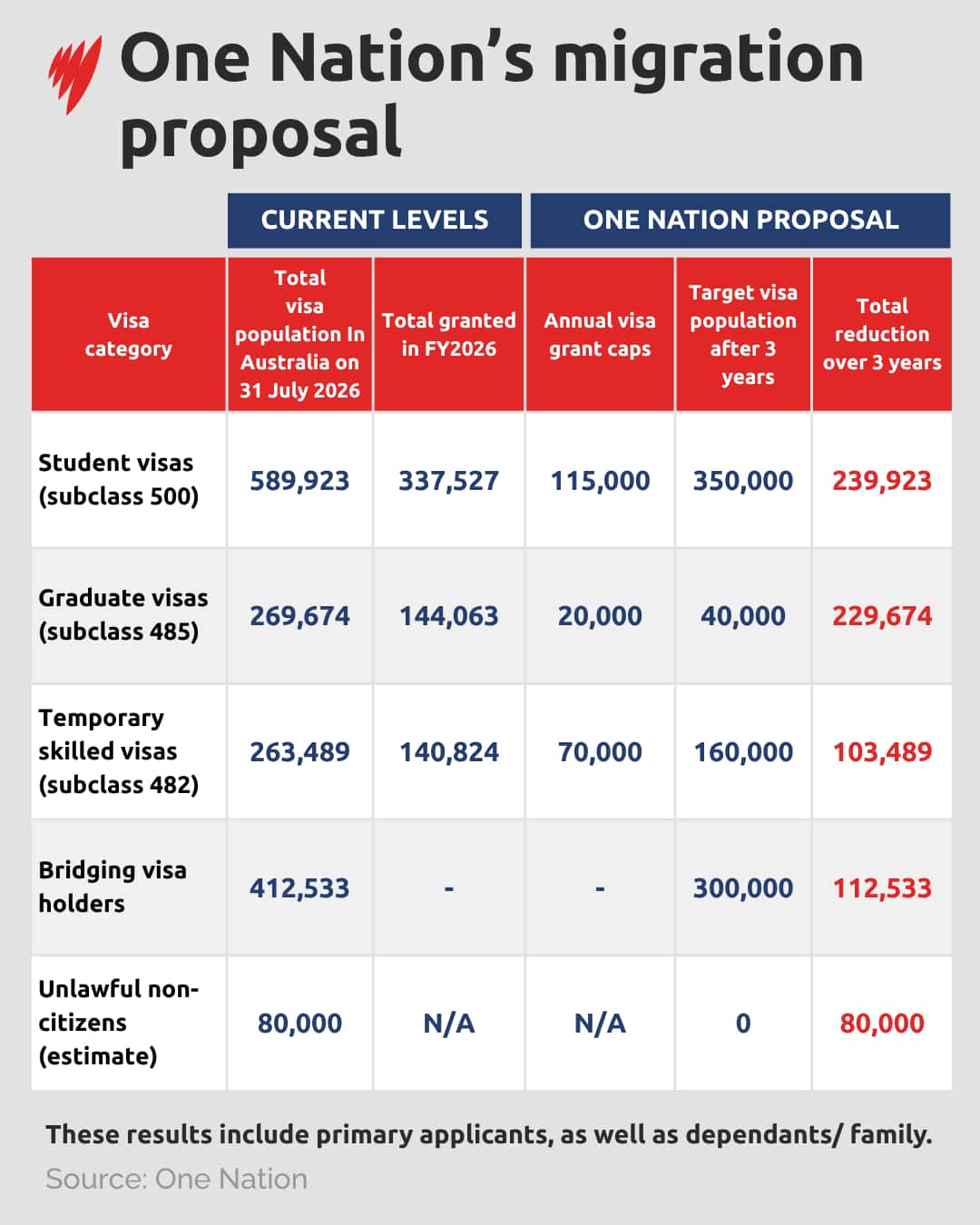
According to the policy announced on Monday, international students and graduates would absorb the biggest cuts.
The student visa population, including accompanying family members, would fall from about 590,000 to 350,000, and the graduate visa population from about 270,000 to just 40,000 over three years.
Family visas linked to temporary skilled workers would be phased out entirely, a change expected to shrink that cohort from about 263,000 to 160,000 over the same period.
"Tinkering around the edges will not fix the damage," Hanson said in the media release.
"This is about giving Australians breathing space by drastically cutting the stock of temporary migrants, restoring control and making sure migration serves Australia."
Speaking with ABC's Radio National on Monday morning, Environment Minister Murray Watt said One Nation's policy would trigger economic disruption.
"One Nation's policy is a recipe to destroy the Australian economy and drive the Australian economy into recession," he said.
For people already living that reality, the question isn't abstract. Jyoti says the proposed changes have made getting permanent residency feel less like the obvious next step in her journey and more like a race against time.
They are looking at us as just numbers, but there are actual lives and people behind these numbers.
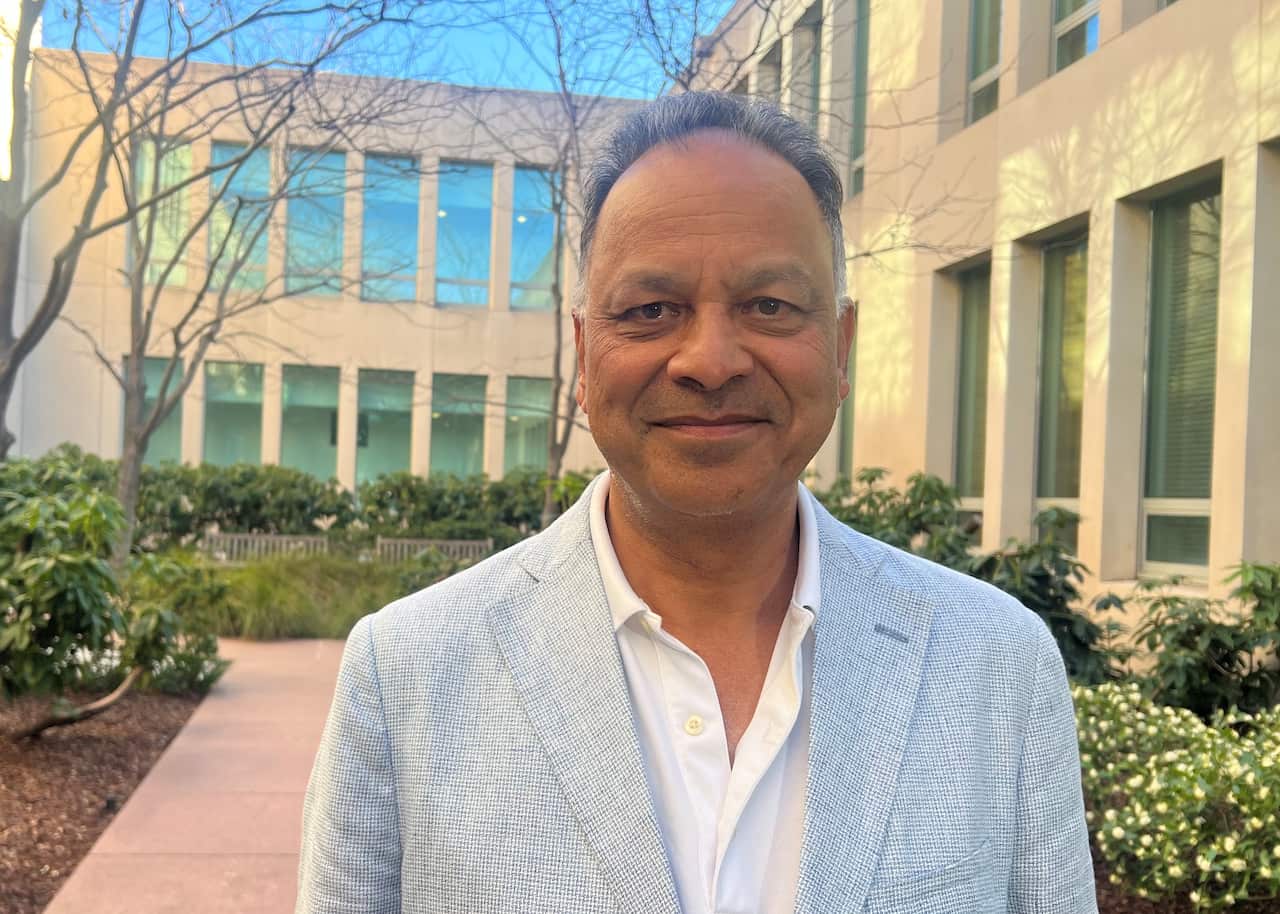
Not everyone would be affected equally, says Abul Rizvi, a former deputy secretary of the Department of Immigration. Much depends on a migrant's professional skills and experience.
"Temporary entrants with skills in strong demand tend to secure permanent residency much faster than others," he tells SBS News.
For instance, a nurse's pathway to permanent residency looks nothing like that of a graduate in a field with weaker demand. For the latter, the road can be far longer, and far less certain.
One Nation has confirmed it would maintain a net overseas migration (NOM) ceiling of 130,000 a year once its proposed three-year reset is complete.
Rizvi says that target leaves the policy with nowhere else to land.
"Taking into account the fact that One Nation has said it wants to quarantine WHMs [Working Holiday Makers] and PALM [Pacific Australia Labour Mobility] visas from any cuts; cannot lawfully reduce places for partners and dependent children; can't easily reduce numbers of NZ citizens contributing to NOM and wants to maintain a flow of tradies and health workers, it leaves no room for students and temporary graduates," he says.
Essentially, One Nation policy would mean abolishing the international education industry.
"That would have massive consequences for university budgets and staff. Possibly 50,000 jobs would be directly affected. More indirectly."
The political cost of having no vote
Temporary entrants have never had voting rights in Australia and "never will", Rizvi says.
But it's a dynamic that has shaped migration policy for longer than many realise, says Emily Foley, a postdoctoral research fellow at the University of Canberra who studies social democratic and centre-left political parties.
She says temporary migration has quietly created problems over many decades that successive governments have had little reason to confront.

"For years, policymakers and governments knew there were significant issues with the temporary migration program essentially creating an underclass of exploited and marginalised workers," she tells SBS News.
"And yet, precisely because this cohort are not voters, there was minimal political incentive to actively discuss the policy area, particularly when migration was such a salient and politicised election issue."
One Nation is not alone in pushing for tighter controls on temporary migration. Labor has already moved to amend parts of its policy, including restricting visa hopping, shortening Temporary Graduate visas, raising the income threshold for temporary skilled migration and introducing managed limits on new international student commencements.
The Coalition has also promised to reduce migration by linking NOM to the number of homes built. It has separately proposed making compliance with an Australian Values Statement a universal visa condition, with breaches potentially leading to visa refusal or cancellation.
But One Nation's proposal goes considerably further, targeting the temporary migrant population with sharp reductions in student and graduate numbers and restrictions on accompanying family members.
Foley says the party's focus is consistent with its longstanding position on immigration.
Attacking temporary migrants is therefore not surprising.
"This cohort, despite many being Australian taxpayers, are without the civil, political and economic rights and privileges of Australian citizens and permanent residents. It is easy for parties like One Nation to attack and marginalise temporary migrants precisely because they have so little recourse."
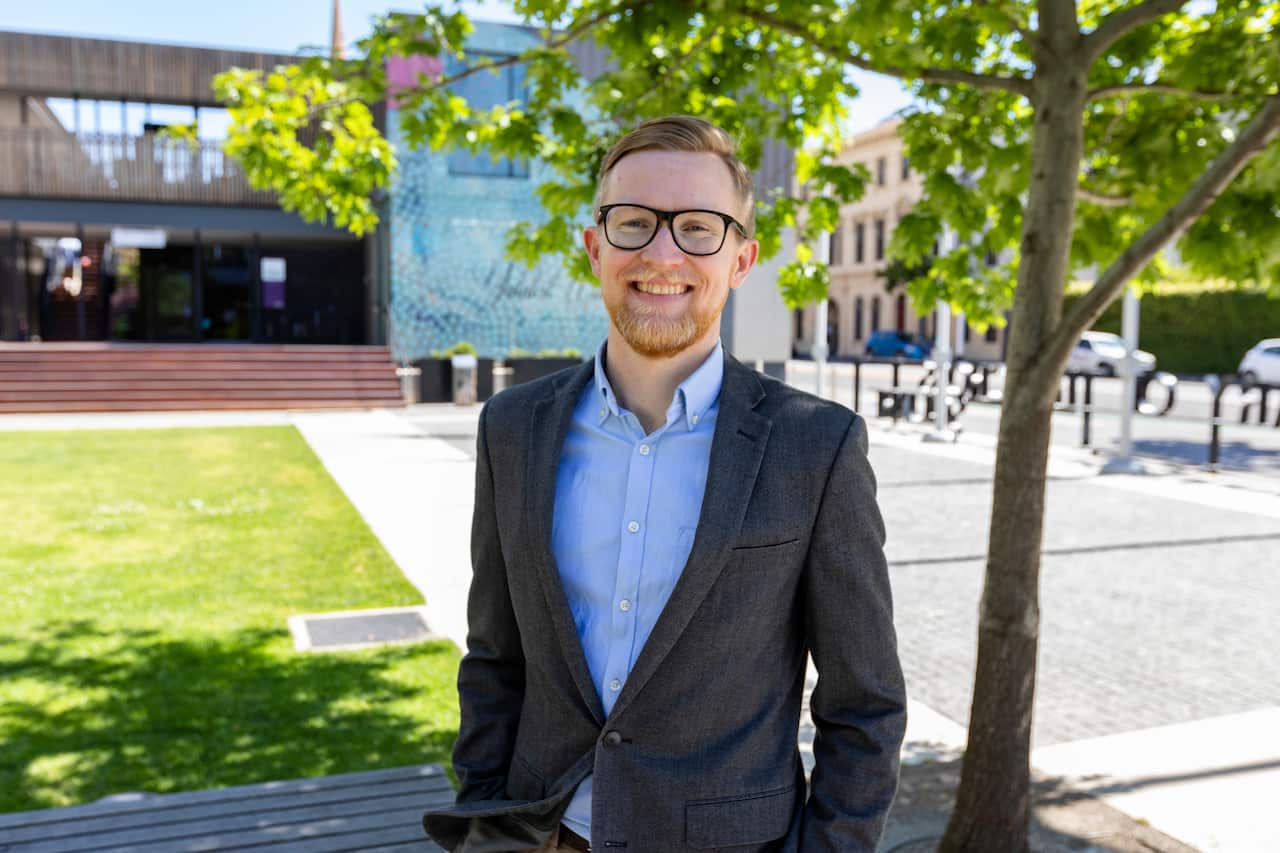
Benjamin Moffitt, a senior lecturer in politics and international relations at Monash University, is more blunt about the electoral calculus.
"It removes the one thing that usually keeps rhetoric in check: the people it hits getting a vote on it," he tells SBS News.
"Temporary visa holders and prospective migrants can't punish a party at the ballot box, so there's no electoral cost to going as hard as you like on them.
"That's true of migration policy generally, not a One Nation quirk, but it's a big part of why this is the one area where the inflammatory rhetoric can run so far ahead of the actual policy detail."
But he stops short of saying One Nation is deliberately targeting temporary migrants for this reason.
What can be established, Moffitt says, is that the groups One Nation has identified most precisely — including international students, working holidaymakers and skilled visa holders — are among those who cannot vote.
"Whether that's a deliberate strategy of picking targets who can't retaliate, or simply where the populist radical right's usual scapegoating logic lands by default, isn't something you can necessarily tell apart from the outside."
One Nation did not respond to SBS News' request for comment on whether the lack of voting rights among temporary visa holders is a consideration in its immigration policies.
What temporary migrants contribute
Temporary migrants make up a significant part of Australia's workforce and international education sector. Their contribution extends beyond the visa system, with international students alone generating almost $55 billion in education export income in 2025.
According to the Australian Bureau of Statistics, international students and their families accounted for 82.4 per cent of non-residents eligible to work in Australia in June 2025.
Andrew McKellar, CEO of the Australian Chamber of Commerce and Industry, told reporters on Monday that cutting temporary migration to the degree proposed by One Nation could have a significant economic impact.
"You know, if you're going to cut overall visa levels by 750,000 over a three-year period and drive net overseas migration into negative territory, that's a COVID-level shock to the Australian economy," he said.
One Nation has pointed to Canada's recent cuts to temporary migration as evidence that immigration can be reduced without crashing the economy.
McKellar said the focus should instead be on the potential impact of the proposed cuts on Australia's growth.
"What the debate cannot be about is it cannot be about arbitrary targets. We can't have solutions which are extreme, which would cause very significant damage to the Australian economy."
Why immigration works for One Nation
Tiziana Torresi is the program director of the School of Society and Culture at Adelaide University and studies normative political theory and the governance of migration. She says immigration sits within a broader populist strategy that divides society between an "authentic" Australian public and groups portrayed as threatening to its interests.
"Anti-immigration rhetoric has been central to One Nation's political discourse from its emergence," she tells SBS News.

Torresi says the party's appeal taps into economic and social anxieties.
"The mobilisation of fear is a key strategy of populist far-right parties, enabling them to present themselves as the only true voice and defenders of an authentic national community threatened by 'outsiders'," she says.
Moffitt says this extends to issues such as housing, jobs and infrastructure. He describes this approach as 'nativism', where social and economic problems are attributed to outsiders, particularly migrants.
"Nativism doesn't identify a housing crisis and then, separately, decide migrants are to blame; it needs a scapegoat for social and economic ills, and the migrant is the figure built to supply one," he says.
The result is a message that can speak to voters worried about the cost of living, housing and population growth, while also tapping into deeper concerns about Australia's changing social and cultural identity.
Torresi says this allows One Nation to present itself as the party willing to restore a sense of control to voters who believe established political parties have failed them.
One Nation can exploit these various anxieties by claiming that 'ordinary Australians' are being left behind or displaced.
That is where the politics of temporary migration becomes more complicated. The people most directly affected may have no vote, but the issue is being used to speak to millions of people who do.
Beyond the ballot box
Torresi says the absence of a vote does not mean migrants are politically disconnected.
"Migrants are embedded in families, workplaces, neighbourhoods, unions, community organisations, and broader social networks, creating relationships with citizens who do possess electoral rights," she says.
Those relationships can give migrants an indirect political voice through the citizens around them, who can respond at the ballot box.
"Consequently, political attacks on migrants may have effects that extend well beyond the migrant population itself."
But temporary migrants may have fewer connections to Australian citizens who can advocate for their interests, Torresi says.
"Temporary migrants may be doubly vulnerable to anti-immigration politics because they can lack both direct and indirect forms of political influence."
Back in Melbourne, Jyoti says the fear she feels is being mirrored back to her.
"It's not just me. Everyone I know in this situation feels the same fear," she says.
We've built our lives here, and none of that means we get a say in what happens to us next.
Her migration agent still doesn't have an update. She'll call again next week.
For the latest from SBS News, download our app and subscribe to our newsletter.







