We're wrapping up the live blog for the day
The tenuous two-week ceasefire between the United States and Iran has reached its second day, marred by ongoing Israeli strikes in Lebanon and mixed signals surrounding the Strait of Hormuz.
As we end our live blog coverage for the day, here are some of the biggest developments so far.
- Israel carried out its heaviest strikes on Lebanon since the conflict with Hezbollah broke out last month, killing more than 250 people on Wednesday and injuring 1,100 more
- Hezbollah said it had fired rockets towards Israel in response to "the enemy's violation of the ceasefire agreement"
- Iran's Revolutionary Guards have warned the US and Israel that it would deliver a "regret-inducing response" if attacks on Lebanon did not stop
- World leaders, including Anthony Albanese, French President Emmanuel Macron and United Kingdom Prime Minister Keir Starmer, have called for Lebanon to be included in the truce
- Israeli Prime Minister Benjamin Netanyahu and US vice president JD Vance say Lebanon is not included in the agreement
- Meanwhile, there has been confusion today about whether the Strait of Hormuz is open
- Iran had earlier said it had closed the Strait, but the Iranian Revolutionary Guard Navy has since posted a map showing alternative shipping routes in the strait to help transiting ships avoid naval mines
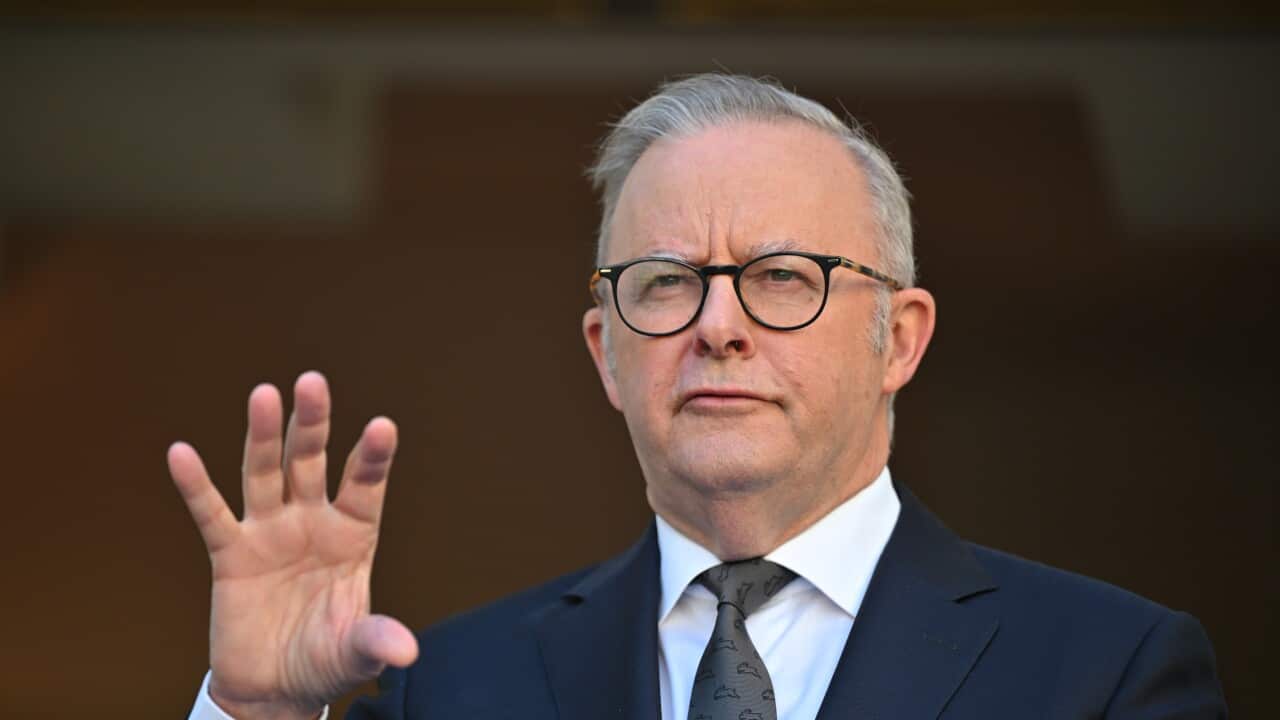
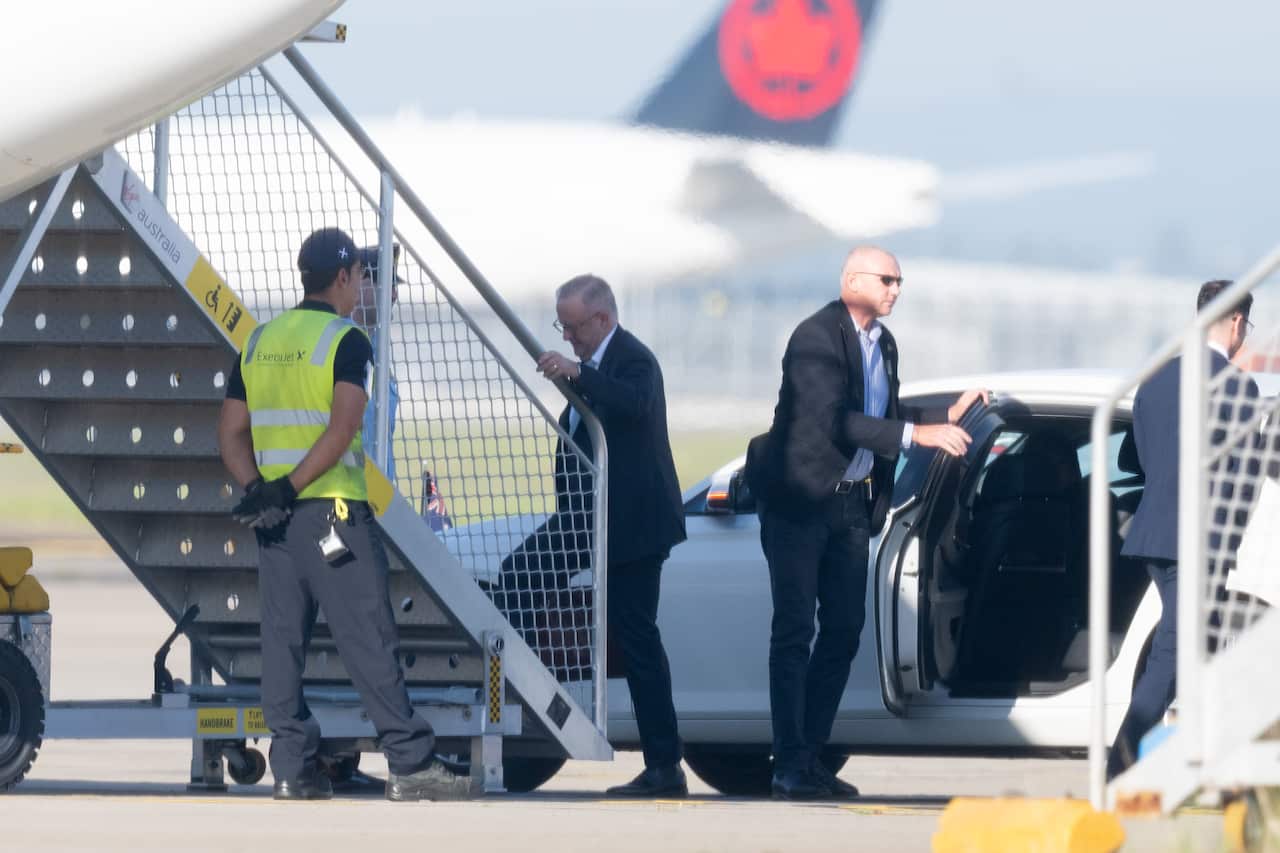
Albanese is now en route to Singapore to secure oil exports to Australia.
We are wrapping our live blog coverage for now. Thank you for joining us.
— Cameron Carr
Australians 'held hostage' by events in the Middle East, Chalmers says
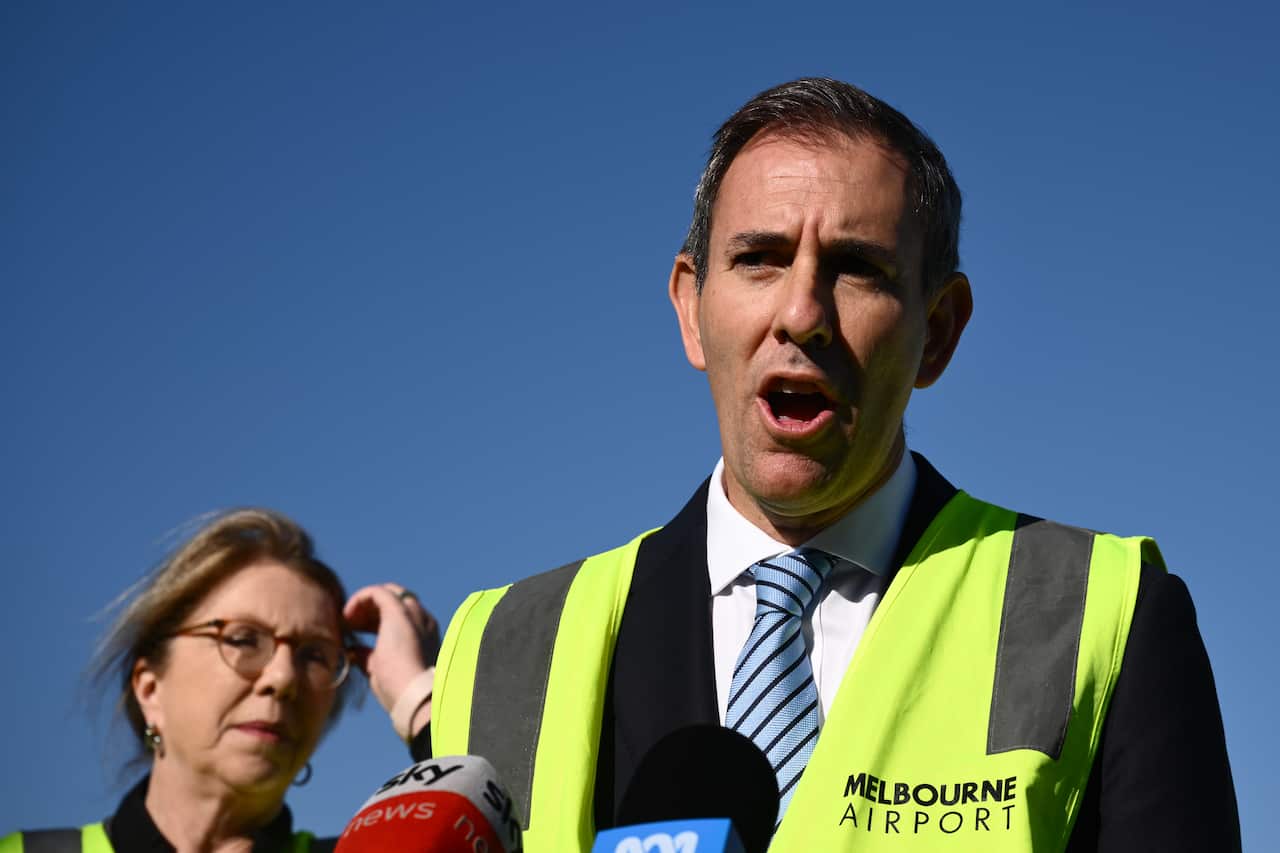
Treasurer Jim Chalmers said an end to the war "can't come soon enough" amid confusion around diplomacy and the opening of the Strait of Hormuz, and its impacts on Australian households and businesses.
The uncertainty over the two-week truce and the war's long-term future has caused oil prices to jump back up to around $US97 ($137.8) a barrel from an intraday low of $US90.60 ($128.7).
The knock-on effect, as well as disruption to other vital supply chains such as fertiliser, which affects food prices, and helium, which is essential for computer chips, could also cause a sustained increase in inflation.
Research from the International Monetary Fund released late on Wednesday suggests war could be the most damaging form of global economic shock.
The full impact on Australia, and the road to economic recovery, cannot begin until the war comes to a proper conclusion, Chalmers said.
"The Australian people are hostage to developments in the Middle East," he told reporters in Melbourne.
"The end of this war can't come soon enough."
— Australian Associated Press
Albanese heading to Singapore to shore up fuel, says ceasefire 'has to apply' to Lebanon
Prime Minister Anthony Albanese has spoken to reporters before a visit to Singapore to try to shore up Australia's fuel supplies.
Access to oil has been disrupted by the ongoing war and the closure of the Strait of Hormuz, contributing to soaring petrol prices in Australia.
Under a new deal, the government's export credit agency, Export Finance Australia, has agreed to terms with Ampol and Viva Energy to enable the companies to bring more fuel to Australia.
"This is additional supply here in Australia that they will be able to source," he said.
Albanese said Australia was "welcomed at relatively short notice", adding that it signalled a strong relationship with Singapore.
He went on to say that Australia has the "largest fuel reserves in 15 years" and that no oil refineries have closed under his leadership.
Albanese also spoke about Lebanon, saying the country should be included under the US-Iran ceasefire.
"Australia firmly believes that this has to apply to Lebanon as well," Albanese said.
"We want to see peace in this region, and it will make a difference, and I know that many Australians are concerned about the events that are occurring in Lebanon," he said.
"We want to see a ceasefire".
— Cameron Carr
Hezbollah reportedly attacks Israel
Hezbollah has reportedly fired rockets at Northern Israel in response to "ceasefire violations".
Details of this strike appear scarce, but previous air attacks on Israel during the war have been shot down by the country's defence systems.
— Reuters
Trump 'clearly disappointed' by lack of support in Iran, NATO chief says
Donald Trump is reportedly feeling let down by some of his NATO allies, whom he had previously called upon for support in the Middle East and to reopen the Strait of Hormuz.
After spending more than two hours at the White House, NATO secretary general Mark Rutte told CNN: "He is clearly disappointed with many NATO allies, and I can see his point."
"This was a very frank, very open discussion, but also a discussion between two good friends."
Rutte spoke hours after White House spokeswoman Karoline Leavitt quoted Trump as saying of NATO: "They were tested, and they failed," during the Iran war.
Several NATO countries resisted supporting the US military campaign against Iran by denying US military planes use of their airspace or declining to send naval forces to help reopen the Strait of Hormuz for energy tankers.
Without specifying the countries, Rutte said his own view was that "some" NATO countries had failed to live up to their commitments in the Iran operation but that "the large majority of Europeans" had been helpful.
The White House did not disclose details of the talks.
Trump posted on Truth Social after the meeting in capitalised letters that: "NATO wasn't there when we needed them, and they won't be there if we need them again."
— Reuters
Wong doesn't have 'confidence' Strait of Hormuz is open as maps of safe pathway released
There's been confusion today about whether the Strait of Hormuz is open.
Iran had earlier said it had closed the Strait, but the Iranian Revolutionary Guard Navy has since posted a map showing alternative shipping routes in the strait to help transiting ships avoid naval mines, citing the semi-official Iranian news agency ISNA.
White House press secretary Karoline Leavitt had earlier said Iran was sending mixed messages to the United States.
Leavitt said the White House was closely monitoring traffic in the Strait of Hormuz and that what Iran was publicly saying about its closure differed from what the US was being told privately.
Foreign Minister Penny Wong had also said the status of the Strait was unclear.
"I think the situation still is very fluid," she told reporters.
"And what I would say is that what commercial shipping needs is confidence, and as yet, we don't have that confidence."
— Cameron Carr
'Nightmare' in Beirut, as images emerge of Israeli strikes
Amnesty International Australia has circulated an eyewitness account from a woman living in Beirut.
The Lebanese capital has been targeted by Israel in the deadliest bombardment since the latter started targeting the city and Hezbollah assets last month.
Fatima, who lives in the Lebanese capital, described the overnight attacks as "a nightmare", saying a building next to her house was targeted.
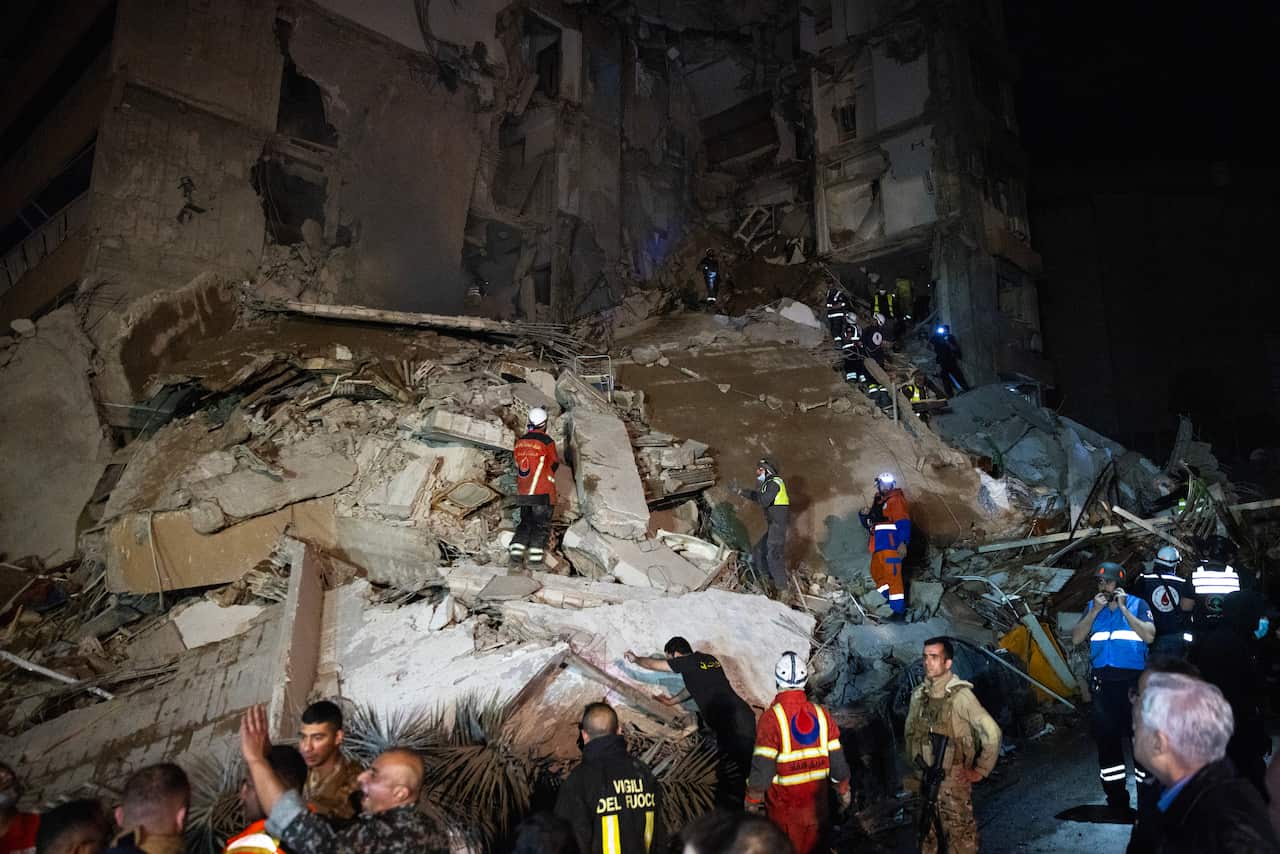
"I grabbed my laptop and rushed to the street. It was apocalyptic. Bodies on the ground. Blood everywhere. I saw countless wounded adults and children," she said.
A total of 254 people were killed in the attack and over 1,100 wounded across Lebanon, the country's civil defence service said.
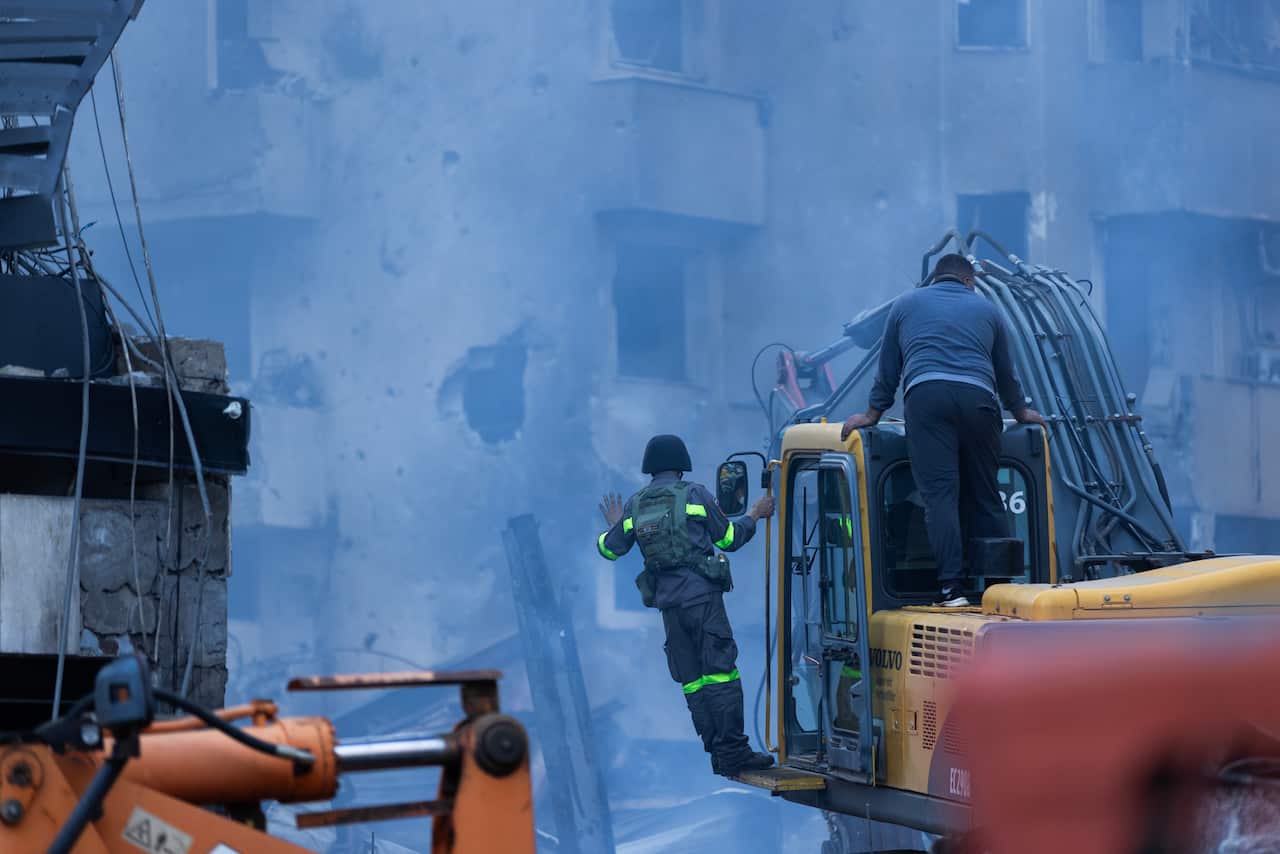
"I walked further but it was the same scene in the other neighbourhoods too. I did not know where to go," Fatima said.
"I walked aimlessly trying to get as far as possible. It was a nightmare."
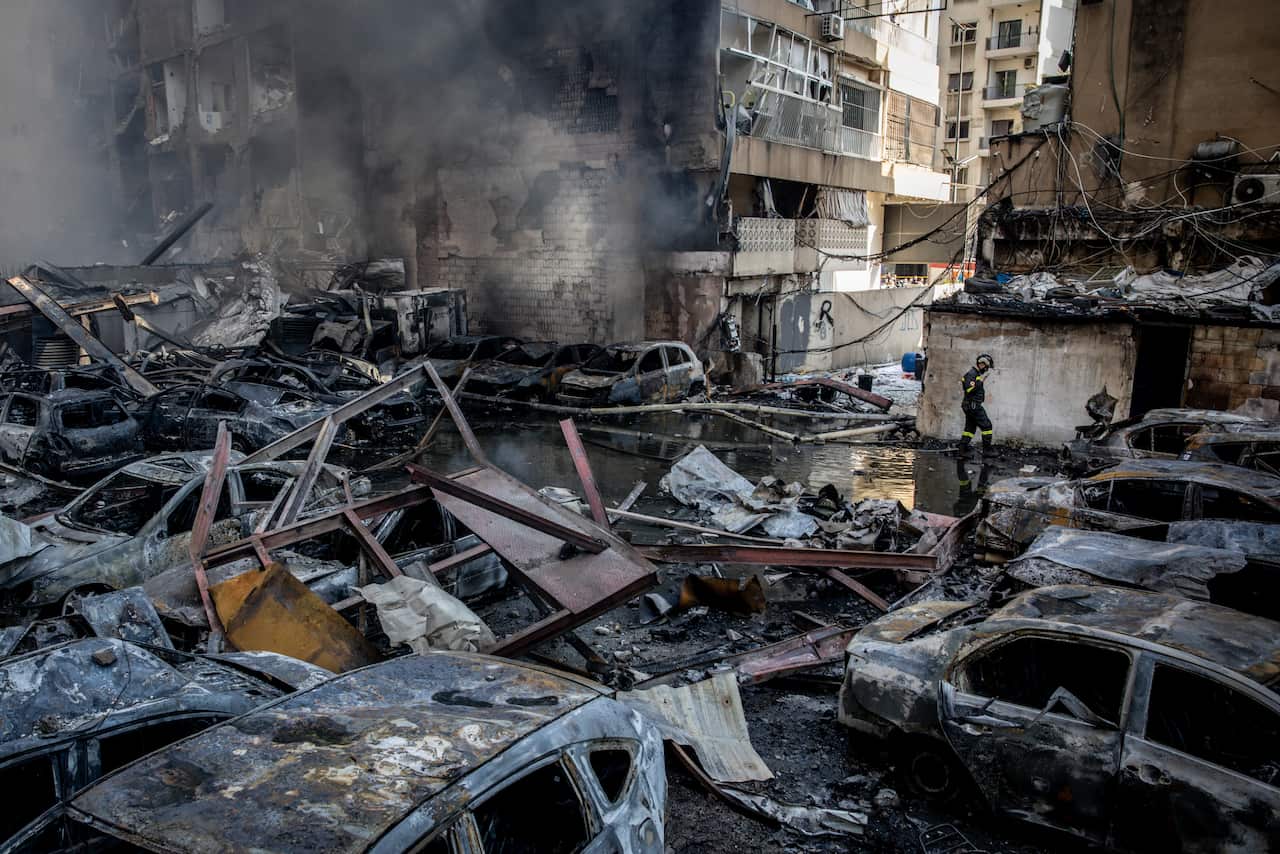
Amnesty International's regional director for the Middle East and North Africa, Heba Morayef, called for Israel to stop attacking Lebanon.
"We reiterate the urgent need for Israel to uphold its obligations under international humanitarian law and ensure civilians are protected," Morayef said.
— Cameron Carr
US violating ceasefire deal, Iranian official says
Iran's parliament speaker, Mohammad Bagher Ghalibaf, has accused the US of "openly and clearly" violating the ceasefire agreement in place between the two countries.
Ghalibaf said these violations were a drone entering Iranian airspace, the denial of Iran's right to enrichment and the exclusion of Lebanon under the ceasefire.
Iran and the deal's mediator, Pakistan, have said that Lebanon is included under the ceasefire deal, a claim the US and Israel deny.
Israel has continued to attack Lebanon and issue evacuation orders to areas of its capital Beirut.
Ghalibaf wrote on social media that Iran feels a "historical distrust" towards the US.
— Cameron Carr
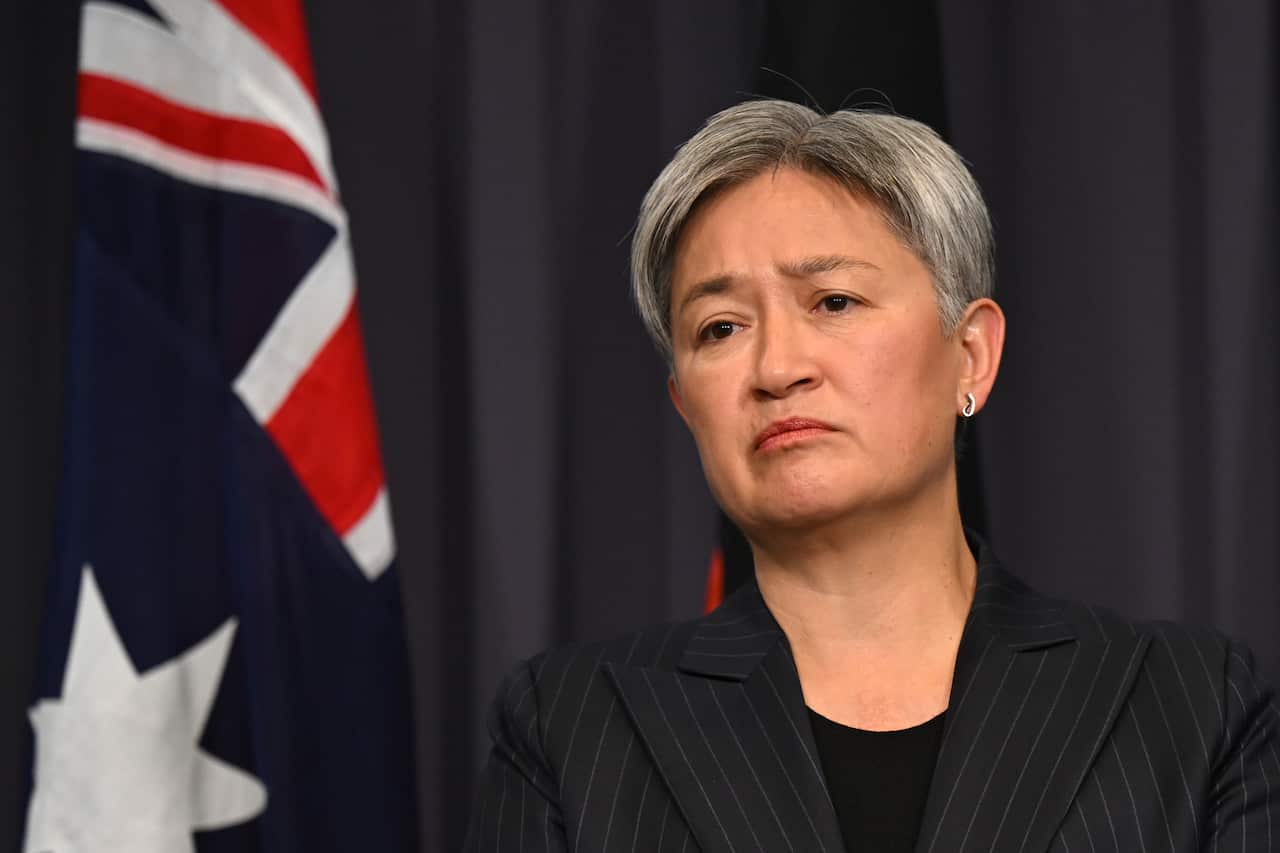
Ceasefire 'at risk' under Israel's latest attacks, Penny Wong says
Foreign Minister Penny Wong has signed a joint statement calling for an "urgent end to hostilities in Lebanon".
"Civilians and civilian infrastructure must be protected from the effects of hostilities," it reads.
"Humanitarian personnel, who dedicate themselves to protecting and assisting the most vulnerable, must be respected and protected."
Most of Israel's latest strikes on Lebanon, which killed at least 254 people, were in civilian-populated areas, Israel's military said on Wednesday.
Hours before the attacks, the military had issued warnings for some areas of southern Beirut and southern Lebanon. No such warning was given for central Beirut, which was also hit.
Speaking to the ABC after the statement was released, Wong reiterated her calls for a ceasefire.
"If fighting continues in Lebanon, if Israel continues to not observe the ceasefire, there is a risk the ceasefire across the region will be at risk. And we don’t want that," she said.
"We want the ceasefire to hold. We know it’s fragile. We know what it means for the world, and we know what it means for Australians at the petrol bowser."
— Cameron Carr
Charging a fee for using the Strait of Hormuz would be 'dangerous', Greek PM says
Greek Prime Minister Kyriakos Mitsotakis says a plan to charge ships crossing the Strait of Hormuz a fee sets a "very dangerous precedent".
Amid ceasefire talks with the United States and Israel, Iran suggested implementing a toll for ships using the key waterway should it reopen in the future.
The Strait — which facilitates around 20 per cent of global oil trade — has been largely closed by Iran since the war in the Middle East began.
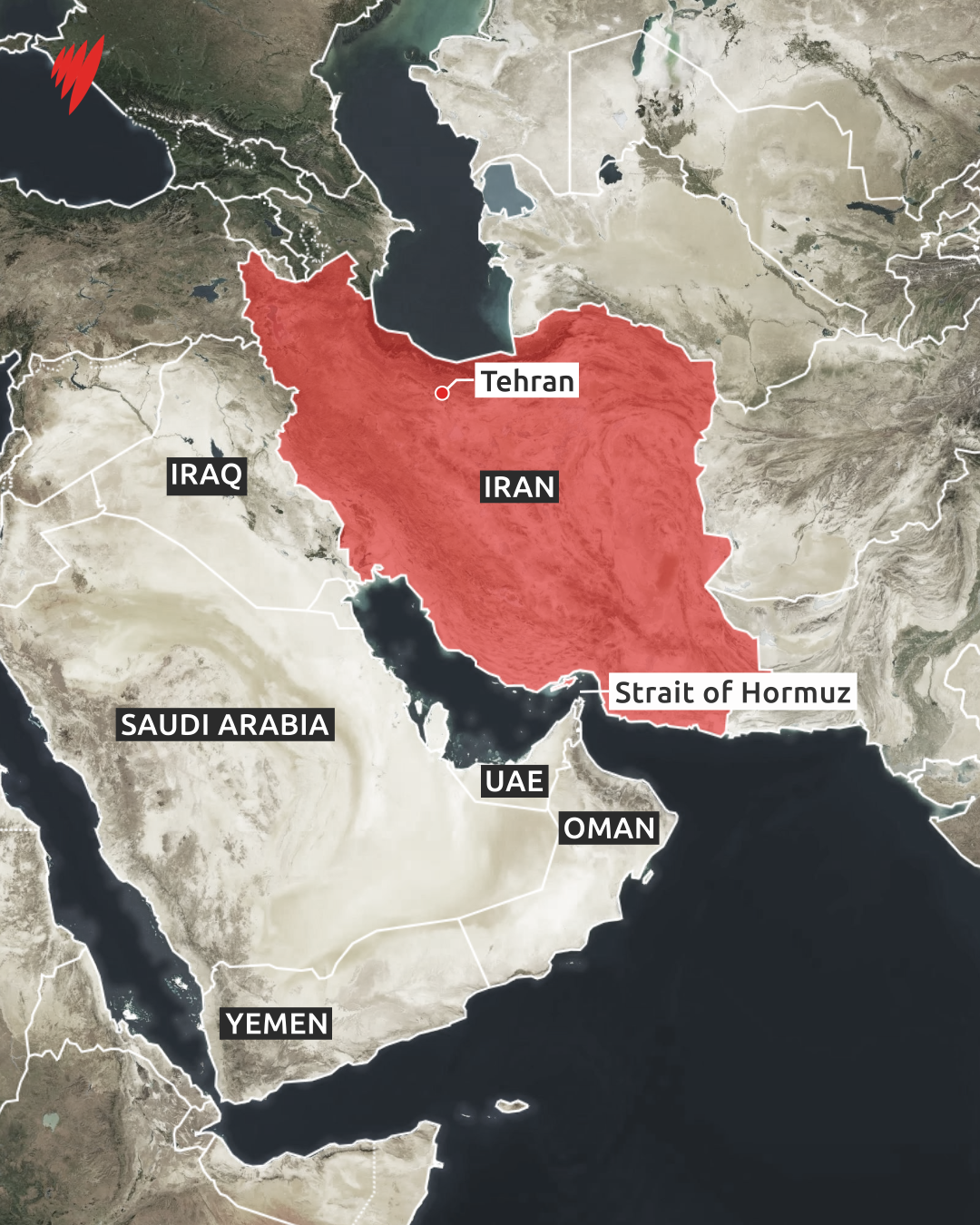
US President Donald Trump later suggested the US and Iran could collect shipping fees as a joint venture, which Mitsotakis rejects.
"I don't think that the international community would be ready to accept Iran setting up a toll booth for every ship that crosses the strait," he told CNN.
"That seems to me to be completely unacceptable."
Such a plan would jeopardise freedom of navigation, he added, saying that no toll was in place for the Strait of Hormuz before the current conflict.
"We would be setting a very, very dangerous precedent," he said.
The opening of the Strait has been a key negotiating point for both Iran and the US in their ceasefire discussions. It has been effectively closed to international shipping since the US-Israeli strikes began on Iran on 28 February, sending economic shock waves across the globe.
Read more on how the Strait's reopening could affect you by our reporter Jack Revell.
— Cameron Carr, Reuters
World leaders respond to ceasefire, attacks on Lebanon
The leaders of the United Kingdom and France have shown their support for ceasefire efforts, but have raised concerns about its fragility.
UK Prime Minister Keir Starmer has been on a pre-planned visit to the Gulf where he plans to hold talks with regional leaders.
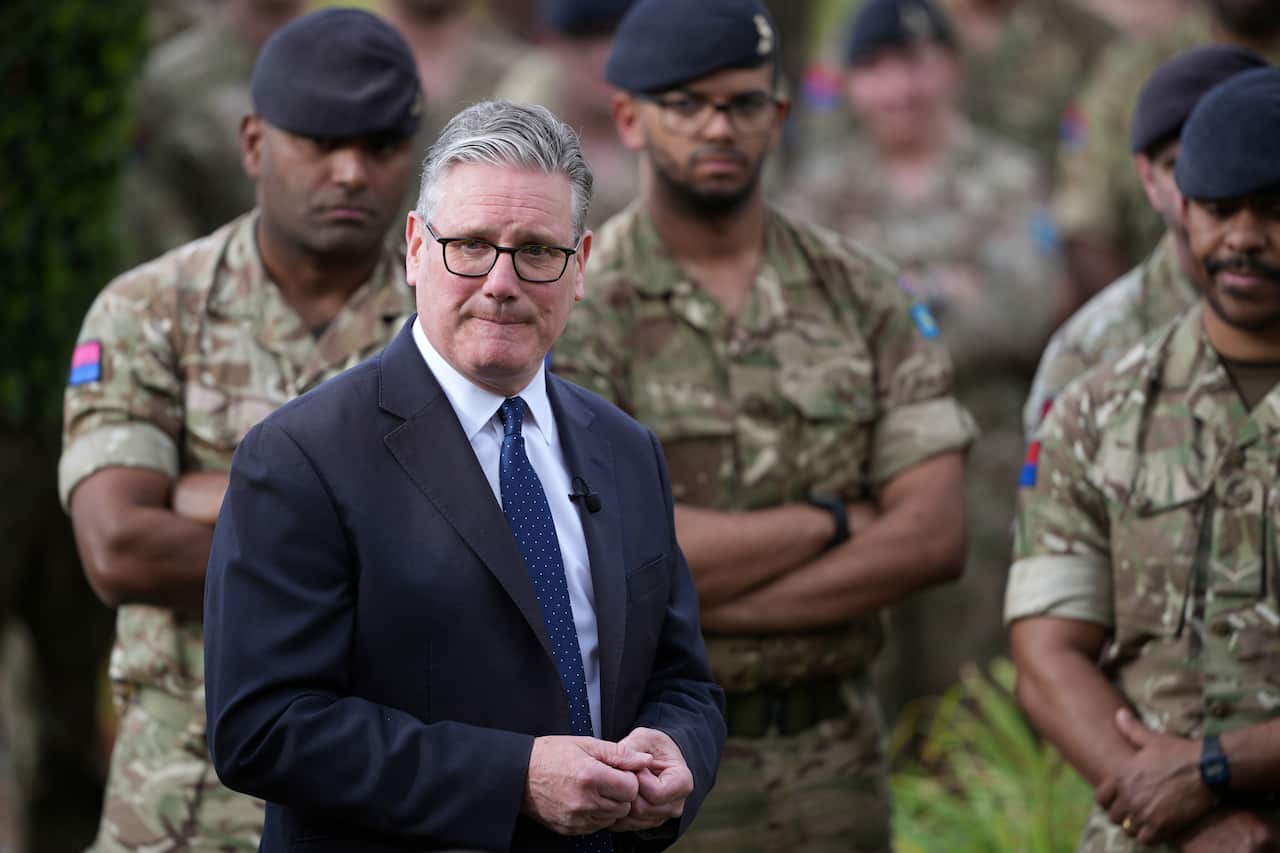
Starmer had already organised the trip before the ceasefire was announced and said in Saudi Arabia that there was "a lot of work to do".
"A lot of work to make sure that the ceasefire becomes permanent and brings about the peace that we all want to see. But also, a lot of work to do in relation to the Strait of Hormuz, which has an impact everywhere across the world," he said in a speech at a military base.
French President Emmanuel Macron confirmed he spoke with both Iranian President Masoud Pezeshkian and United States President Donald Trump and told them their decision to accept a ceasefire was the best possible one.
"I expressed my hope that the ceasefire will be fully respected by each of the belligerents, across all areas of confrontation, including in Lebanon," Macron said in a post on X.
— Cameron Carr
Iran warns a 'regret-inducing response', says attacks on Lebanon must stop under truce
World leaders are in disagreement over the purview of the temporary ceasefire and whether it included Lebanon, drawing threats from Iran.
Israel's latest bombardment of Lebanon and the Iranian-aligned group Hezbollah go against the truce, according to its mediator, Pakistani Prime Minister Shehbaz Sharif, who had said the truce would include Lebanon.
Iranian President Masoud Pezeshkian later said a ceasefire in Lebanon was core to his country's agreement with the United States.
Israel and the US disagree with Iran about Lebanon's inclusion in the truce.
Israeli Prime Minister Benjamin Netanyahu said Lebanon was not part of the ceasefire with Iran, and the Israeli military was continuing to strike Hezbollah with force.
US vice president JD Vance echoed Netanyahu.
"I think this comes from a legitimate misunderstanding. I think the Iranians thought that the ceasefire included Lebanon, and it just didn't," he told reporters in Budapest overnight.
Iran's Revolutionary Guards have warned the US and Israel that it would deliver a "regret-inducing response" if attacks on Lebanon did not stop.
— Cameron Carr
Hundreds killed, more than 1,000 injured in Lebanon
Israel carried out its heaviest strikes on Lebanon since the conflict with Hezbollah broke out last month, killing more than 250 people on Wednesday.
More than 100 Hezbollah command centres and military sites were targeted in the city, the Bekaa Valley and southern Lebanon within ten minutes, Israel's military said.
Following the strikes, Israeli military spokesperson Avichay Adraee said on X that Hezbollah had moved out of its traditional Shi'ite stronghold in southern Beirut's Dahiyeh neighbourhood to religiously mixed areas elsewhere.
He said Israel's military would pursue Hezbollah wherever it was.
Most of Wednesday's strikes were in civilian-populated areas, Israel's military said. Hours before the attacks, the military had issued warnings for some areas of southern Beirut and southern Lebanon. No such warning was given for central Beirut, which was also hit.
A total of 254 people were killed and over 1,100 wounded across Lebanon, the country's civil defence service said.
In a statement, Hezbollah condemned what it called Israel's "barbaric aggression" and said the attacks underscored its right to respond.
Hezbollah had stopped attacking Israeli targets early on Wednesday, three Lebanese sources close to the group told Reuters.
— Cameron Carr, Reuters
Deadliest day in the war yet raises questions about ceasefire – what's the latest?
Good morning and welcome to our coverage of the war in the Middle East. Lebanon has been pummelled by Israeli strikes, threatening the longevity of a two-week ceasefire between the United States and Iran.
Here's the latest:
- Israeli strikes on Lebanon killed more than 250 people on Wednesday, the highest death toll since the conflict with Hezbollah broke out last month.
- The ongoing attacks on Lebanon could undermine the US-Iranian ceasefire, the latter saying the truce needs to include Lebanon as an essential condition.
- Israel's Prime Minister Benjamin Netanyahu has said the ceasefire agreement between the United States and Iran does not include Lebanon, despite claims from mediator and Pakistan's Prime Minister Shehbaz Sharif that the US and Iran had agreed "to an immediate ceasefire everywhere, including Lebanon and elsewhere".
- Iran's 10-point peace plan is expected to underpin peace talks with the United States after more than a month of war. You can read more about that here.
- Donald Trump said in a social media post yesterday that the US will be "loading up with supplies of all kinds" and "hangin' around" to help with the Strait of Hormuz.
You can catch up on yesterday's coverage of the war in the Middle East below, and we will keep you up to date throughout the day.
— Cameron Carr







