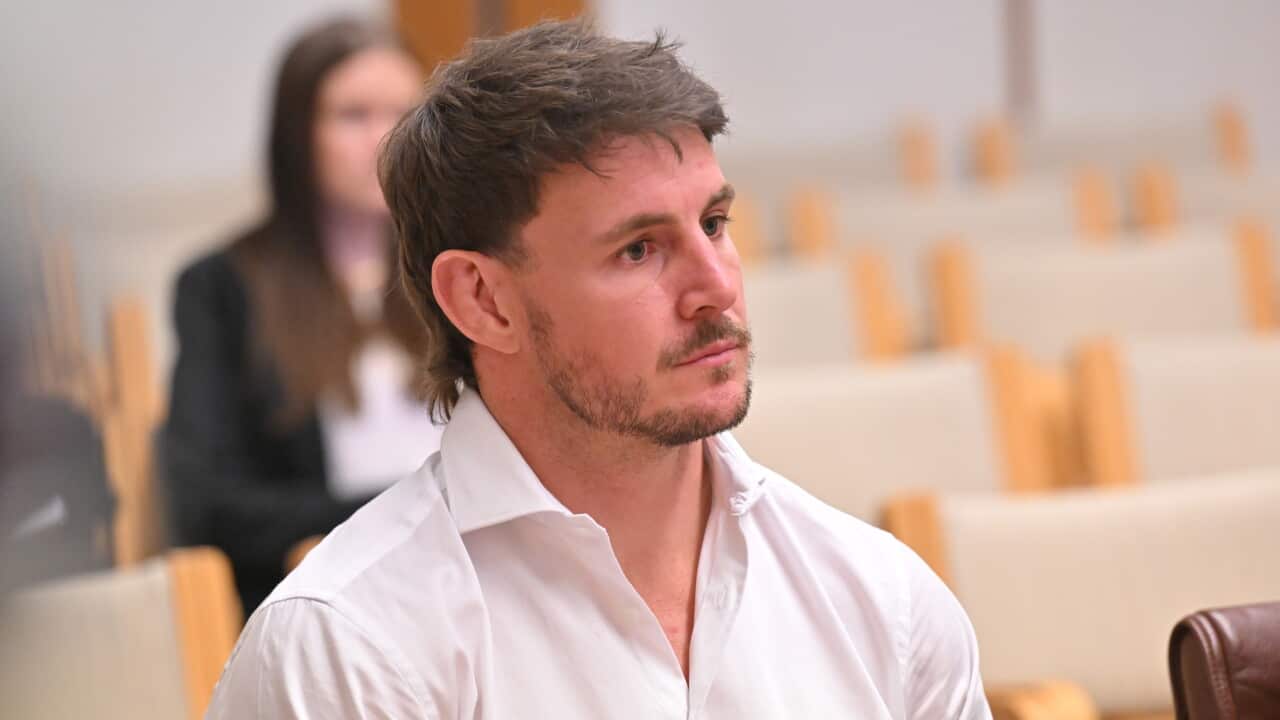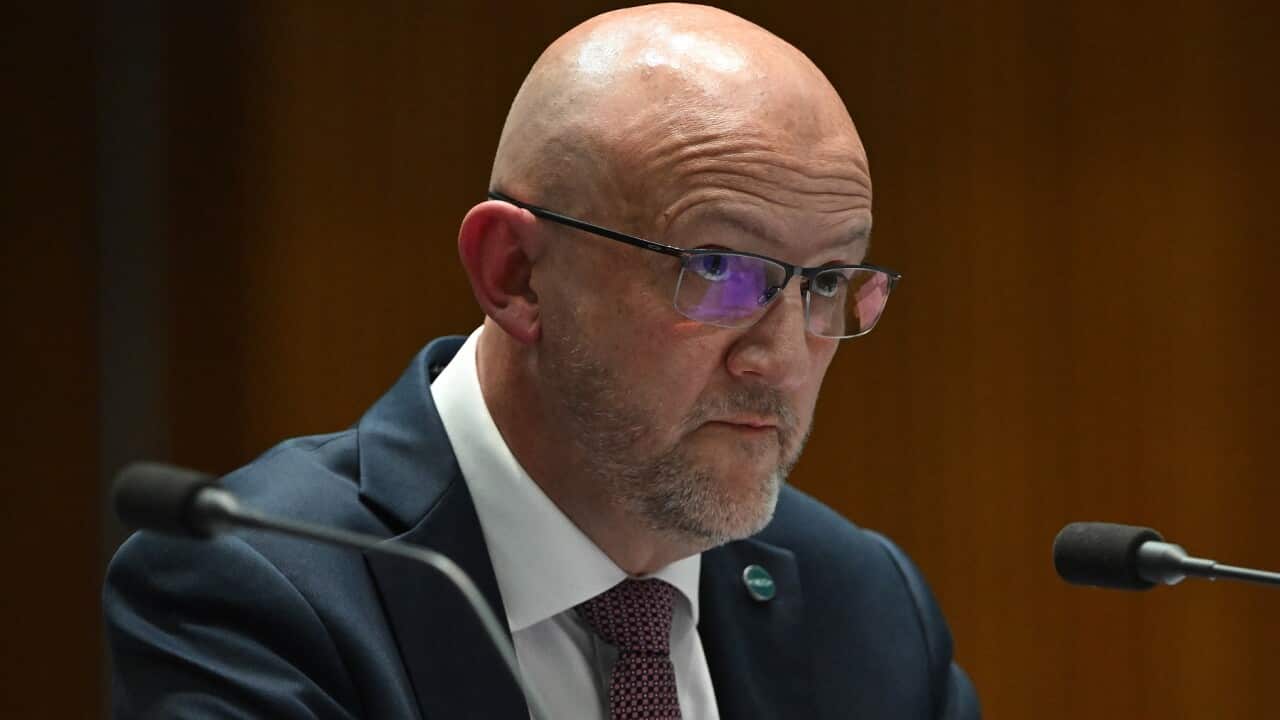

The Australian Security Intelligence Organisation and Australian Federal Police have been questioned about their actions before and after the Bondi terror attack, with Australia's top spy agency defending its failure to prevent it. During a senate estimates hearing late on Tuesday night, the AFP also warned it will take a more aggressive approach to tackling hate and extremism.
Listen to Australian and world news and follow trending topics with SBS News Podcasts.
TRANSCRIPT
In the hot seat for the first time since Australia's worst terror attack.
The ASIO director-general faced questions from senators on Tuesday night, where they said the agency had foiled 28 terrorism plots since 2014.
But Mike Burgess conceded ASIO can't catch everything or everyone.
He says the Bondi shooters, were too covert for the country's top spy agency.
"They went dark to stay off the radar, this is a matter of grave regret for me and my officers, it weighs heavily on us. But that does not mean intelligence was ignored or my officers made mistakes. The grim reality is as I've said many times ASIO is not all seeing and all knowing. We cannot stop every terrorist just as we cannot catch every spy."
Fifteen people were killed at Sydney's Bondi beach terror attack, and more than 40 injured on the 14th of December last year.
Naveed Akram - now before the courts - and his father Sajid Akram, who died at the scene, allegedly targeted a Jewish Hanukkah celebration.
Mike Burgess also revealing he ordered a review immediately after the Bondi attack, examining ASIO's investigation into Naveed Akram - the younger alleged gunman - who was on the agency's radar in 2019.
"I can say that we standby our 2019 assessment the Akram's did not adhere to or intend to engage in violent extremism at that time. In other words, many of the claims and criticisms being made about ASIO's handling of the case are baseless."
Mr Burgess says ASIO prefers to leave any judgement to the Royal Commission.
"If ASIO is found to have made mistakes, we will own them and we will learn from them. ASIO and our law enforcement partners have disrupted 28 major terrorism plots since September 2014. Tragically though we did not know what the perpetrators of the Bondi attack were planning or indeed that they were planning anything. It appears the alleged terrorist demonstrated a high level of security awareness to hide their plot. In simple terms, they went dark to stay off the radar."
The head of the Australian Federal Police was also questioned.
Krissy Barrett reveals what the force is doing to tackle a rise in radicalisation, saying most terrorism cases are driven by religious or ideological extremism.
"Too many influences and influencers are poisoning the minds of our kids and the vulnerable. JCTT teams across Australia, of which AFP and ASIO are members of all eight have charged 26 youth with terrorism type offences since 2020. Being convicted of a Commonwealth terrorism offence can mean individuals are subject to the high risk terrorist offender regime."
She says this is where offenders may not be released from prison after they have served their sentence, or that they are monitored by the AFP when released back into their community.
The AFP has established 'hate disruptor squads' targeting groups and individuals it says are harming Australia's social cohesion and eroding the country's social fabric.
Since September, 21 people have been arrested.
"The majority of these charges relate to threats towards parliamentarians, high-office holders and the Jewish community. The national security investigations team proof of concept has been successful, and they are now being expanded throughout the country to work closely with existing security investigation units across state and territory place jurisdictions."
The AFP have also been targeting white supremacists and so-called hate preachers.
Ms Barrett reveals the force will be taking an even more aggressive approach, after new laws targeting antisemitism and hate speech were passed by federal parliament.
"My advice if you are one of these groups or individuals, your life will become very uncomfortable. If anyone has information that a person holds extreme views and is mobilising to violence, please reach out to authorities or call the national security hotline on 1800-123-400."