
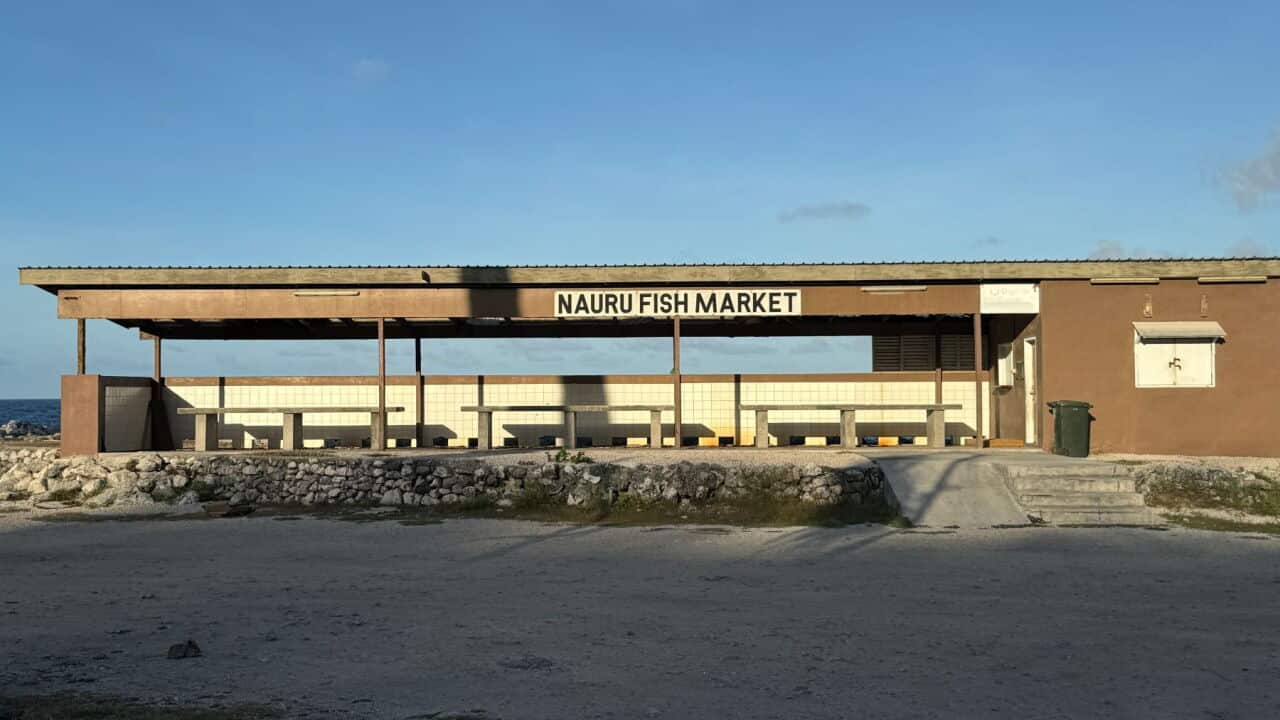

Thirteen years after Australia resumed offshore processing on Nauru, a new report has found people seeking asylum on the island are struggling to afford enough food. The findings are based on interviews with 78 of the approximately 91 people living under the regional processing arrangement.
Listen to Australian and world news, and follow trending topics with SBS News Podcasts.
TRANSCRIPT:
The policy was reintroduced in 2012 to deter people arriving in Australia by boat. Hundreds of people were transferred to the Pacific island, where many spent years in detention before later moving into the community.
Today, some remain on Nauru while they wait for a permanent future.
One of them spoke to SBS. We've agreed to call him George to protect his identity.
His comments were translated from Mandarin and voiced by another person.
George says getting enough food has become a daily struggle.
"I often skip meals. I skip meals in the morning. On some days, I have two meals a day, sometimes I have one meal a day. Today, I take half of a bag of instant noodles for lunch."
The Asylum Seeker Resource Centre says George's experience reflects the findings of its new report.
Hungry for Freedom is based on interviews with 78 of the approximately 91 people seeking asylum still living under Australia's regional processing arrangements on Nauru, as well as an audit of health records.
People seeking asylum living in the community receive a fortnightly allowance of 260 dollars.
The organisation says it no longer reflects the cost of living on Nauru, where much of the food is imported and prices are high.
The report found 99 per cent of participants couldn't afford enough food.
More than two-thirds said they rarely or never had access to fresh food, while more than 80 per cent struggled to access clean drinking water.
It also links food insecurity to worsening physical and mental health.
Deputy Chief Executive Jana Favero says the findings confirm what people have been telling the organisation.
"They are telling us they don't have enough to eat, that the health care isn't suffcient, they are telling us that they don't have enough money and that they are going hungry, so we are hearing directly from people on the ground and it's their truth and their experience that we are exposing in this report because it is absolutey shameful that the Australian government is spending a billion dollars a year in offshore processing and people are going hungry."
The findings come as Australia continues to fund offshore processing on Nauru, despite significantly fewer people remaining on the island than at the height of the policy.
The Department of Home Affairs says people on Nauru have access to accommodation, healthcare and financial assistance.
It says support payments are reviewed regularly, and Australia continues to work with the Nauruan Government while people seek permanent resettlement.
The Asylum Seeker Resource Centre says the government's assessment does not reflect the experiences documented in the report.
"We are speaking to people on the ground and they are telling us that their basic needs are not being met with people going hungry. People not being able to access water and the Australian government and department home affairs often put out statements saying oh things there are okay there's nothing to see here but because of the absolute lack of transparency and the secrecy in the way that things offshore are being conducted it is almost impossible to find out what's happening"
For George, the impact of offshore processing is reflected in everyday decisions about food.
He says he often relies on fishing because supermarket food is too expensive.
"If there's a low tide, I will go catching fish. The fish is for me, for stray cats, and for my friends. I have to catch fish every day, I don't dare to go out at night, partly because of safety concerns, partly because of hunger due to the lack of food."
George hopes Australians better understand the reality of life on Nauru.
" hope Australian listeners could learn that the tax they pay for asylum seekers in Nauru and other regions is rarely spent on us. We can't even secure basic food, drinking water and safety. There's a huge problem here."