
Donald Trump has announced a three-week extension to the ceasefire between Israel and Lebanon during a press conference at the White House. He says he hopes more leadership-level talks will take place over coming weeks, as he seeks to bring the broader conflict with Iran to a close.
Listen to Australian and world news, and follow trending topics with SBS News Podcasts.
TRANSCRIPT:
United States President Donald Trump has announced a three-week extension to the ceasefire between Israel and Lebanon.
"And we had a great meeting with the very high officials of Lebanon and very high officials of Israel. And we think that the president of Lebanon and the prime minister of Israel over the next couple of weeks will be coming here. They've agreed to an additional three weeks of, I guess no firing, ceasefire, no more firing. Let's see. We hope that happens. Not going to happen between them, but they do have Hezbollah to think about."
The extension builds on an initial 10-day ceasefire, during which lower-intensity attacks have continued between Israel and Hezbollah.
Israel has continued to occupy an area of between five and 10 kilometres into Lebanon, as part of what it describes as a security buffer.
And there's little indication Hezbollah will be willing to accede to an Israeli demand that it disarm.
President Trump has also given Israel his imprimatur to continue strikes if it's attacked.
"Israel is going to have to defend itself, if they're shot at, and they will. I would never say that they can't. It'd be nice if they wouldn't have to bother with that, but if they, if something happens, they're going to have to defend themselves, as you know, but they're going to do it carefully and they're going to be surgical, as opposed to beyond surgical, and you know there's a lot they can do."
Despite being Israel's stated military target, Hezbollah has not been directly included in the negotiations in Washington.
Hassan Fadlallah is one of the group's representatives within Lebanon's parliament.
He says Hezbollah wants the ceasefire to continue, but on the basis of full compliance by Israel.
Last week, Mr Fadlallah said Israel had continued striking houses and bombing villages in the parts of Lebanon it currently occupies.
"We communicated with Iran to raise these violations through Pakistani channels to pressure the United States. The resistance is also studying the options it may resort to. It won't allow such violations to continue. The decision will be taken based on the evaluation of the status in the battle zone."
Mr Fadlallah has also reiterated Hezbollah's objections to the recent face-to-face talks, urging the Lebanese government to withdraw from all forms of direct contact with Israel.
It's a sign of the difficulty Donald Trump is also likely to face in bringing the US and Israeli-instigated war with Iran to a close.
Negotiations continue amid reports of divided leadership in Tehran after the ceasefire between Iran and the US was extended indefinitely.
Mr Trump says he won't be hurried into making a deal.
"Well, don't rush me. Don't rush, Jeff. You know, guys like you, you want to say 'oh, so we were in Vietnam, like, for 18 years, we were in Iraq for many, many years, we were for all the — I don't like to say World War II, because that was a biggie - but we were four-and-a-half, almost five years in World War II, we were the Korean War for seven years.' I've been doing this for six weeks. And their military is totally defeated."
Key issues like Iran's nuclear program and the future navigation through the Strait of Hormuz remain unresolved, and both sides have seized commercial ships since the ceasefire started.
But despite its fragility, the truce offers some protection for civilians in Iran, where authorities say around 3,000 people have been killed by US and Israeli attacks.
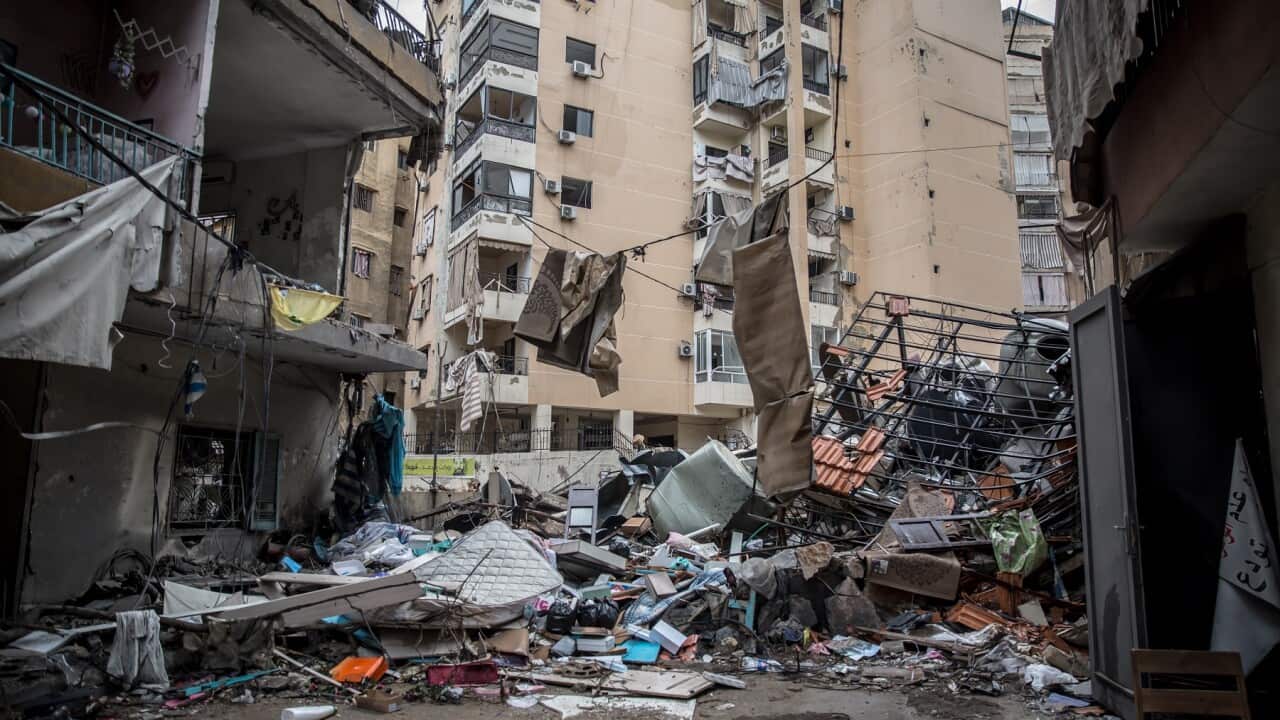
In Lebanon, authorities there say Israel has killed almost 2,500 people there since the conflict with Hezbollah escalated in early March.
Among them is journalist Amal Khalil, who was killed in a reported 'double tap' strike on April 22.
That has added to allegations Israel has intentionally targeted media workers.
This is Amal's brother, Ali Khalil, speaking on the day of her funeral.
“This is not the first time that the Israelis have threatened Amal. They threatened her house, where she lives. We have always warned her that this enemy is perfidious and may attack at any moment. Three strikes within two hours or an hour and half is evidence that the Israelis intended to assassinate Amal Khalil.”
Figures for the number of Israelis killed in the conflict so far are harder to come by.
Al Jazeera has said around 26 Israelis have died since Israel and the US launched their war on Iran.
Meanwhile, Mr Trump says more leadership-level talks will take place over coming weeks.
He's expected to meet in person with Israeli Prime Minister Benjamin Netanyahu and Lebanese President Joseph Aoun in the near future.