
Mardi Gras is an occasion for celebration - a time to party for LGBTIQ+ communities. But Mardi Gras events can also invite risky behaviours. There are higher rates of substance use in LGBTIQ+ communities compared to the general population, coupled with a reluctance to seek help from healthcare professionals. Experts are calling for stronger investment in culturally safe care to improve access to appropriate support.
Listen to Australian and world news, and follow trending topics with SBS News Podcasts.
TRANSCRIPT:
It’s a time of celebration for the LGBTIQ+ population.
"Happy Mardi Gras everyone, enjoy!"
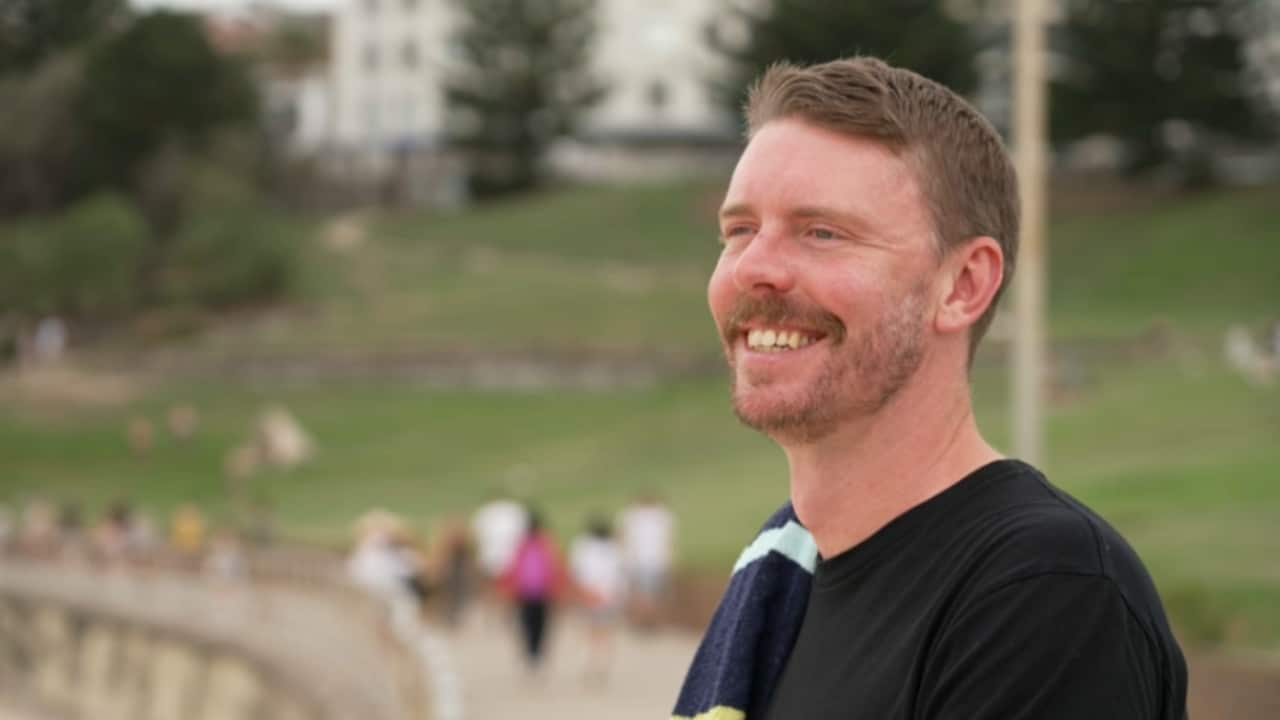
But Mardi Gras events can also invite risky behaviours - something Sydney-based Andrew Addie knows only too well.
"I was like out of control, I just would make the jokes to my friends, my colleagues, I was like ooop it's Mardi Gras."
Growing up queer in regional Queensland, Andrew was binge-drinking by his late teens, alcohol quickly becoming a way to numb the pain caused by years of discrimination and shame.
"I would say probably from the age of 16 where I was figuring out that I was queer, the alcohol of connected in, definitely I just needed that escape from what I was experiencing internally. And then of course some of the homophobic things that I was experiencing in my life as well. And I just turned to alcohol. I just found it a really quick, easy way to escape."
His alcohol reliance worsened after he was sexually assaulted at 28.
"I really didn't cope with that very well, that was an experience where things with my drinking really started to spiral. Not out of control, because I could always present in a way that was socially acceptable, I was known as the party guy, I could always find someone who would go for a drink. And I would kind of structure my week around different people, and different friendship circles."
The 39-year-old experienced alcohol use disorder for more than a decade before he sought help.
"I look back now and I think why didn't I just ask for help? What was the big barrier there? And the barrier was I was scared. I was worried if I had of said something about how much I was drinking, and even the significant amount of mental health challenges I was having, I would have felt really judged I would say."
Anyone can engage in risky substance use, but research suggests it's more prevalent in the LGBTIQ plus community.
The Australian Institute of Health and Welfare's 2022-2023 National Drug Strategy Household Survey found lesbian, gay and bisexual people are 1.2 times more likely to consume alcohol at risky levels than heterosexual people, and nearly 2 and a half [[2.4]] times as likely to use an illicit drug
Manager in Harm Reduction at LGBTIQ+ advocacy organisation ACON, Georgina Bell, says stigma and discrimination play a role in this.
"We know that LGBTQ plus people are much more likely to face discrimination, social isolation, family rejection, other minority stresses. So that's stress related to being a marginalised part of a marginalised population. Some folks are needing to hide parts of themselves from different parts of their lives, whether that's in social context at work or different places. So all of that combined adds a lot of stress and mental health concerns for folk and drives people towards alcohol and illicit drug use as a coping strategy."
But there's other factors at play.
"We know that historically LGBTQ plus people have connected in places like nightclubs or underground party scenes or different spaces where alcohol and drug use is present and that's formed a lot of social context for where some of that is hapspening. And some of those experiences we know are not just harm, but actually people find a lot of joy, social connection. There's some recent data coming out that for some people experiencing different kind of states that they get through different drug use can actually help them explore their identities and express themselves more freely. That's not to say it's not without risks, so there's certainly risks there, but there's more to the story."
There's limited specific data on substance use in the LGBTIQ+ population.
But experts like Ms Bell say it's clear culturally safe care encourages people to seek support.
"We know that judgment and stigma or fear of judgment and stigma drives people away. So the counter to that is if we are meeting people where they're at without judgment, understanding where they're coming from, so not asking people to explain parts of themselves, including their identity, why they're using or how they're using, understanding a little bit of that first means we can really meet people where they're at and then offer them something they can trust."
Andrew describes unhelpful interactions with health care professionals, where assumptions and stereotypes were made about his identity.
"Unfortunately you have these horrible experiences when you're part of the LGBTQ plus community, going to a doctor for something and leaving with a HIV test really being pigeonholed into this single track. And not to say that check for HIV isn't important, obviously really critical to be tested, that's really important, but that's not the reason that I was presenting to these medical professionals. I was there either seeking help for my poor mental health, or I hadn't quite got to the stage of asking for help for the alcohol. It was just too much. I could barely talk about my mental health. And then I was getting these outcomes that were just so subpar."
That was until Andrew booked an appointment with Dr Chris Davis, after coming across a flyer for his clinic during a routine PreP appointment.
Identifying as a gay man himself, Dr Davis says he understands his patients' specific needs.
"It's triggering. We've all had to come out and for most of us, well, for myself, I can talk for myself, I can talk for myself, coming out wasn't a particularly positive experience. And I think a lot of LGBTQI community can share that sort of an experience. And so when drug use or alcohol use is just as stigmatised as being gay, it's like coming out twice. You have to share another secret and the last time you did it, it wasn't good."
He became Andrew's lifeline back in 2019.
"I describe it as luck because I met this man that saw what was going on, and I assume that's because he'd seen it so many times before. And being a queer doctor, he just saw me and he was like, okay, you need some help here. And it was kind of like booked in, had a really good chat with him, and he was like 'I think we might need to work on this.'"
For many others, there's high demand for safe and accessible care.
Dr Davis says there needs to be more government investment in primary care so that people can more easily access support for alcohol use disorder and other addictions.
"If there is a pot of funding for me to do a heart check or a diabetes check, then that's what I'll concentrate my time on doing because that's what's going to bring money in. If there's no money for me to do what's often seen as complex and time consuming care for alcohol or drugs, then I'm going to refer that to a different service and that's where the system is broken."
A spokesperson from the Department of Health has told SBS the government recognises that LGBTIQA+ people disproportionately face barriers to accessing appropriate health care.
They say the government is committed to addressing higher levels of alcohol and drug abuse as part of the National Drug Strategy.
The government has already developed plans to tackle substance abuse and improve health outcomes for LGBTIQ+ people, including the National Drug Strategy 2017-2026 and the National Action Plan for LGBTIQA+ Health 2025-2035.
Included in these plans is upskilling health workers to meet specific community needs - but some experts say there's still a gap in care.
"The need is far greater than what we can provide for, and we want to see mainstream services receive training and education and be a safe place for our communities so that it's not all just on ACON to support our communities. So yeah, the understanding is there, a lot of the evidence is there, but we just haven't seen that investment and the necessary resourcing to get it done."
While Andrew says finding the appropriate help can take time, he insists it's never too early or late to seek help.
"There's this misconception that you've got to wait until you hit rock bottom. You don't need to do that. Get help now. It's out there. You're going to have to dig around, unfortunately, to find appropriate healthcare for you. But there's definitely options."