

Despite weeks of diplomacy and repeated claims a broader agreement is close, conflict continues across the Middle East. Israeli forces have expanded operations in Lebanon, civilians have again been killed in Gaza, and uncertainty remains over negotiations between Iran and the United States.
Listen to Australian and world news, and follow trending topics with SBS News Podcasts.
TRANSCRIPT
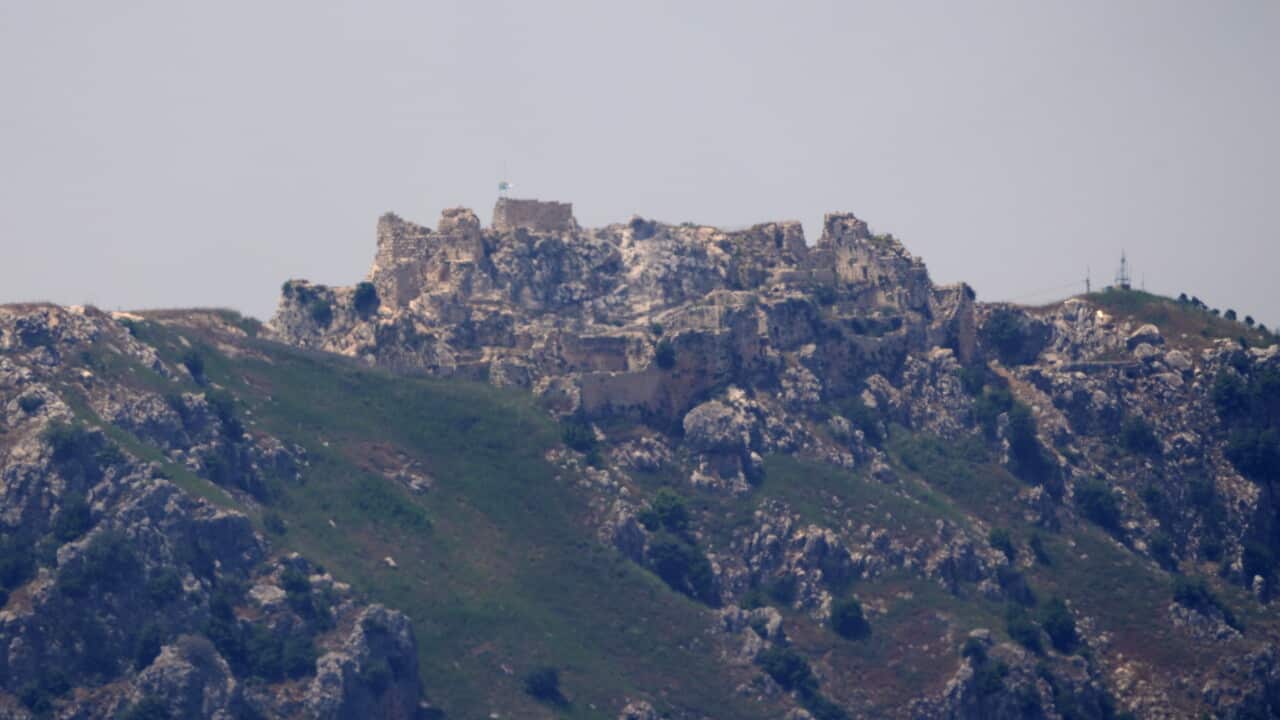
Israel has seized one of southern Lebanon's most strategically significant sites, capturing Beaufort Castle and pushing further north in its campaign against Hezbollah.
The Crusader-era fortress overlooks the Litani Valley and has long been regarded as a key military position.
Prime Minister Benjamin Netanyahu says the operation marks a turning point.
"I have instructed the IDF to expand the manoeuvre in Lebanon. The capture of Beaufort is a dramatic stage and a dramatic change in the policy we are leading. We have broken the barrier of fear. We are taking the initiative, we are operating on all fronts, in Syria, in Gaza, in Lebanon."
The operation has drawn criticism from a number of countries, including France, Germany and Britain.
France has called for an emergency meeting of the United Nations Security Council, while Lebanon's Prime Minister Nawaf Salam has accused Israel of collective punishment.
Israel says the offensive is aimed at weakening Hezbollah positions in southern Lebanon.
The fighting comes as violence continues in Gaza despite a ceasefire that remains technically in place.
Two people were killed and at least ten others injured after a strike near Gaza City's port.
Witnesses say civilians had gathered in one of the few remaining public spaces in the city.
"This camp is considered a safe area, a densely populated area. Two people came, they just came to hang out at the port, to get some fresh air, a drone targeted them with a single missile, one was torn and into shredded pieces. Where is the ceasefire? We are asking the world, where is the ceasefire when we have bloodshed every single day, and every day we are saying goodbye to one another?"
Israel has not immediately commented on the strike.
The ceasefire has reduced large-scale fighting, but both sides continue to accuse each other of violations.
At the same time, diplomatic efforts continue to prevent the conflict spreading further across the region.
Iran and the United States remain engaged in talks overextending the current ceasefire and potentially reopening the Strait of Hormuz.
Iran's Foreign Minister Abbas Araghchi says negotiations remain underway, but no agreement has been reached.
"The talks and exchanges of messages are ongoing, and until they reach a clear outcome, it is not possible to judge them. Everything being said at this stage, the speculation and conjecture that is circulating, should, in my view, be disregarded until matters become definitive."
The comments come after reports the two sides were close to a framework agreement.
The proposed arrangement would reportedly extend the ceasefire and open discussions on Iran's nuclear program.
US President Donald Trump says he still believes a deal can be reached.
"I would rather get a deal because we can open the strait immediately on signing, the one guarantee that I have to have is that there will be no nuclear weapons they've agreed to that and it's very interesting they originally said we will not develop a nuclear weapon and I said well what happens if you buy a nuclear weapon? so now it says we will not develop or in any way purchase a military weapon and that's a big difference."
But significant differences remain.
Iran insists its nuclear program is peaceful and says it will not accept conditions that undermine what it describes as the country's sovereign rights.
Adam Clements is a former Pentagon official and former US defence attaché at the American embassies in Jordan and Yemen. He says sustained military pressure could have the opposite effect.
"I think one of the risks here of this conflict, this direct US/Iran conflict or involving Israel is that any supporters of low level, any support that he Iranian regime has, is that it has the effect of that they rally around the flag effect where they have people around the sidelines, neutral or angered that they are not supporters of the regime yet they rally around the flag in the face of US military force."
Reports that Iranian President Masoud Pezeshkian had resigned have also been denied by officials in Tehran.
With fighting continuing in Lebanon and Gaza, and negotiations between Washington and Tehran still unresolved, hopes for a broader regional settlement remain uncertain.









