

The federal government has announced a major overhaul of the National Disability Insurance Scheme in efforts to cut down fraud and spending in the $50 billion program. Welcoming some aspects of the reform, disability advocates say there must be further clarity around cuts to support and eligibility, with fears that those in need will lose access to vital supports.
Listen to Australian and world news and follow trending topics with SBS News Podcasts.
TRANSCRIPT
Difficult, but unavoidable.
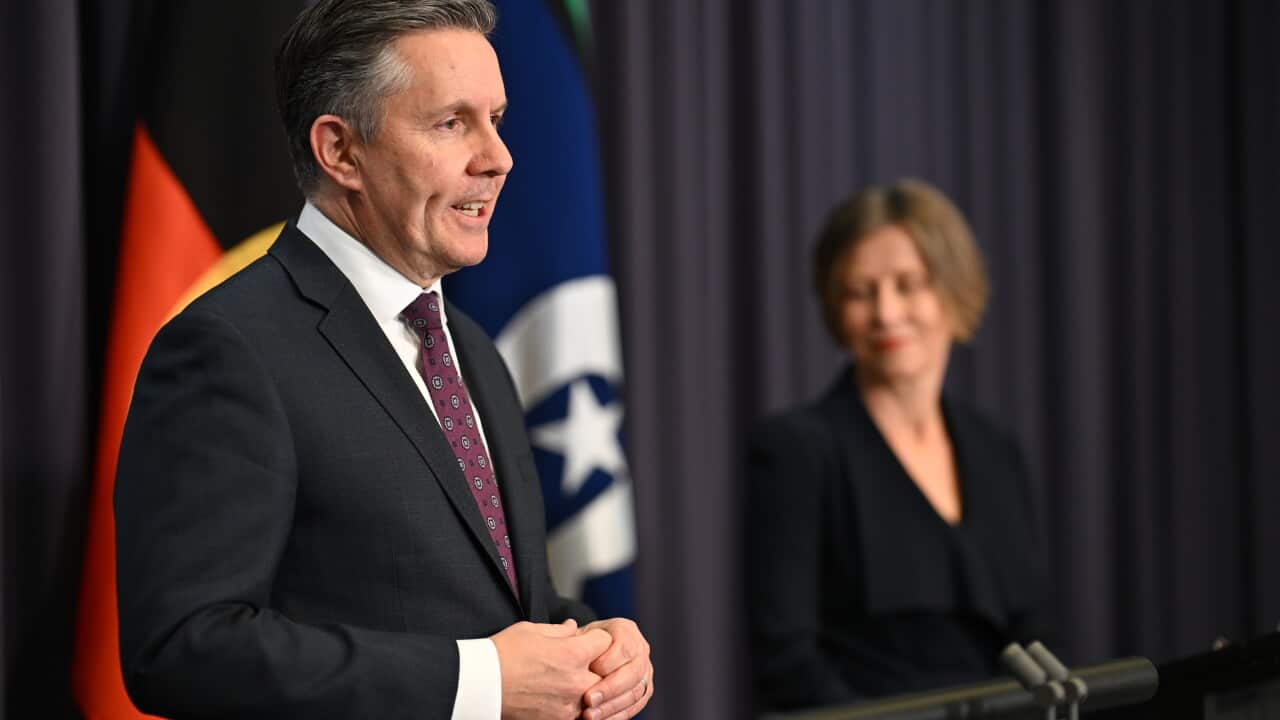
That's how Health Minister Mark Butler has described a set of sweeping reforms to the National Disability Insurance Scheme.
With eligibility tightened, financial support reduced and dodgy providers targeted, the government hopes to rein in spending of the $50 billion scheme.
Mark Butler says the future of the scheme depends on it.
"Right now, the NDIS costs too much and is growing too fast, put alongside any comparable Government program. And unless we take action to make it sustainable, it simply will not be there in the future for the Australians who need it most. We can’t afford for the NDIS to continue growing at its present rate. But far more importantly, we can’t afford for the NDIS to fail."
First rolled out in 2013, the NDIS was originally projected to support up to 400,000 Australians and cost $13.5 billion per year.
With around 760,000 participants now on the NDIS, the cost has ballooned to $50 billion per year.
Announcing tightened eligibility, Mark Butler says the government aims to cut the number of participants down to 600,000 by the end of the decade.
"Access will be based upon a significant reduction in a person’s functional capacity that impacts their day-to-day living. It will also remove the use of the lists that decide on a participant's eligibility based on diagnosis alone. These so called ‘access lists’ were put in place to get the Scheme up and running. They were always supposed to make way for an objective assessment tool. Instead, the ‘diagnosis gateway’ has funnelled people onto a Scheme that was never designed for them."
People with Disability Australia president Jeremy Hope says that with all the numbers discussed, little clarity has been provided around what this means for the 160,000 participants potentially losing access to support.
"There was a lot of information. There was a lot of talk around percentages and dollars, but there wasn't a lot of detail around the what next, and we very much want to be part of that what next? How do we make the scheme sustainable and work? How do we ensure that people have ongoing access and security, but also for other people with disability, what are we going to be telling them, and how we're going to provide assurance that when they get out of bed tomorrow, that there's still going to be support available."
In efforts to curb the rapid cost increases of plans under the scheme, the government also announced a reduction in spending on social and community participation programs.
To address potential gaps left behind by these cuts, a $200 million Inclusive Communities Fund will be established to "rebuild capability among community organisations".
CEO of the Disability Advocacy Network Australia, Emma Bennison, says measures must be taken to ensure such programs don't further segregate people with disabilities.
"I don't think that's what the Minister intends, so I think we absolutely want community based programs that are inclusive and that are integrated and include disabled and non disabled people alike. Otherwise, we'll be going backwards."
According to the government, part of the cost problem is widespread fraud infiltrating the scheme.
There are nearly 280,000 NDIS service providers across Australia, but with registration voluntary, only around 6 per cent are registered and visible to regulators.
To address this, Mr Butler says providers will be enrolled in digital payment systems to track spending, and mandatory registration categories will be expanded.
"Under the market set up by the Coalition, you need more ID to get into a licensed club than to be an NDIS provider. And that's going to change. Not every provider needs to be fully registered. We don’t need to monitor retail purchases from a chemist the same way we monitor close personal care of vulnerable people. But we will expand categories of mandatory registration to include those higher risk activities – personal care, daily living supports, and supports provided in closed settings."
Accusing the government of rushing through reforms, Shadow NDIS Minister Melissa McIntosh says there has been no proper consultation with the Coalition.
"The minister has made his big announcement reducing growth to 2 per cent with no plan. He's going to be ramming this through parliament in a couple of weeks, and he has had zero consultation with the Coalition when we have promised the government to work with them."
The largest cohort of NDIS participants is children with Autism.
The government wants to address with the new 'Thriving Kids' program - designed to provide support for some children aged 8 and under with developmental delays or autism, who will no longer be eligible for the NDIS.
While the federal government will contribute to this scheme, states and territories are expected to co-fund and deliver it.
But Queensland has already refused to commit to the program, and other states say that they may not be able to make up for the services potentially cut in the new reforms.
New South Wales Premier Chris Minns says states cannot absorb major cost increases.
"The original deal was that we would effectively pay the Commonwealth and they would chip in as well. We don't have billions to throw in.... We put a massive amount of money into our contribution to the Commonwealth NDIS, that was part of the original deal. I mean, we'll do what we can in the in the event that people are off the NDIS, but we can't provide like-for-like services, and people have got to go into this reform with their eyes wide open."
Changes to aged care were also announced, with the government backing down on a requirement that people receiving support at home pay up to $50 an hour for non-clinical services.
In changes announced in November, some recipients were required to pay extra for basic services such as showering and dressing.
While no refunds will be provided and the new changes won't come into effect until October, Ageing Australia CEO Tom Symondson says the rollback is very welcome.
"We always said when showering was chargeable that we needed to keep that policy under tight review because we did not want to see older people sacrificing showering, basic hygiene and dignity because they couldn't afford it. And we've seen too many older people doing just that, sacrificing showers, having fewer showers per week. So it's a really good outcome to make them free."
Changes to the NDIS were due to come into effect July of this year.
However, in a move welcomed by disability advocacy groups, the rollout will now be delayed until April of 2027.
Mark Butler says the next few months will see consultation with states and territories, community and advisory groups.
Without drastic reforms, Mr Butler says the scheme itself may not survive.
"The NDIS will obviously be accounted for in the Budget - but this is bigger than the Budget. The NDIS is a statement of our national values, it’s a measure of our national character. It’s more than a source of support for people with disability, it’s a source of pride. But every story about a dodgy provider rorting the system eats away at that. Every example of taxpayer money wasted on fraud erodes that trust. That’s why these reforms are about much more than Budget savings. This is about saving the NDIS itself."