
The Federal Government has announced free R-S-V vaccinations for older Australians, in a push to better protect those most at risk from the potentially deadly respiratory virus. The $445 million dollar investment means Australians aged 75 and over - and Aboriginal and Torres Strait Islander people aged 60 and over - will be able to access the immunisation for free from mid May, saving them as much as $300 dollars per vaccination.
Listen to Australian and world news, and follow trending topics with SBS News Podcasts.
TRANSCRIPT
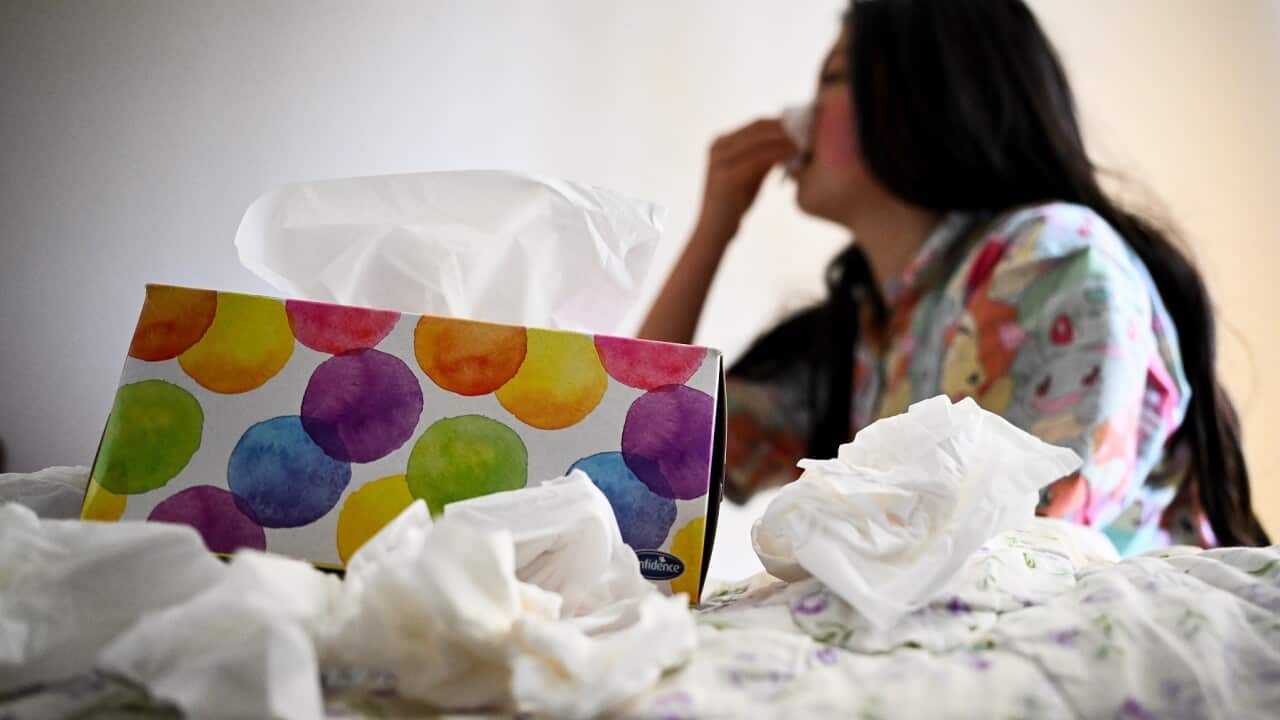
When Suzanne Duel fell ill with R-S-V a few years ago, the severity of her symptoms came as a huge shock.
"I had RSV nearly three years ago, and I've never been so sick in my life. I'd had had COVID twice before that, but this was nothing like COVID. I was, I was very sick for a couple of weeks at least, um, and, and nothing helped."
Respiratory Syncytial Virus, or RSV is a common and highly contagious respiratory virus that can be mistaken for a cold or influenza.
But, Professor Hubertus Jersmann from the Royal Adelaide Hospital says for older adults, RSV carries significant, sometimes life-threatening risks.
"This virus is more infectious, more dangerous than influenza. So it is a very serious illness and what puts these older Australians that we just mentioned at high risk is the risk of getting lower respiratory tract infection, which is the other word for pneumonia, admission to hospital, intensive care and death."
In a push to better protect older Australians from these risks, the Federal Government has announced from May 15, Australians aged 75 and over - and Aboriginal and Torres Strait Islander people aged 60 and over - will be able to access free RSV vaccinations.
Last year, the Federal Government added an RSV vaccine to the National Immunisation Program for pregnant women and infants.
Federal Health Minister Mark Butler says the government has now committed an additional $445 million dollars over 5 years to broaden this free access for other vulnerable Australians.
"Expanding the National Immunisation Program, just as expanding the Pharmaceutical Benefits Scheme, is all part of our job to ensure that Australian patients get access to the world's best medicines and vaccines at affordable prices."
The vaccine, called Arexvy, has been tested in a global clinical trial spanning 17 countries, including Australia.
Its rollout follows a record year of RSV infections, with more than 177,000 cases reported nationwide in 2025, including more than 40,000 in adults aged over 60.
Dr Jersmann says the life-saving vaccine, which usually costs around $300 a dose, offers protection for years.
"Protection of this vaccine is in the order of eighty, ninety percent from those complications, which is unheard of, better than many other vaccine, better than the flu vaccine. And the, the other good thing about this vaccine is it lasts almost three years in protection, maybe longer, we don't have the data yet, whereas influenza has worn off after five and a half months, that vaccine. So it's a really important addition to the vaccine landscape."
Professor Lucy Morgan from the Lung Foundation Australia says it differs to the vaccine commonly used to immunise children against the same virus.
"Is a vaccine that's called an adjuvanted vaccine. So this is a vaccine that's been developed with some special extra ingredients that boost the waning immunity that happens as we get older. So this particular vaccine is particularly for older people."
Among older Australians, those with chronic medical conditions including asthma, congestive heart failure and diabetes are at increased risk of severe RSV infection and hospitalisation.
Ms Morgan says the younger age at which Aboriginal and Torres Strait Islander people can access the free vaccine also acknowledges the higher burden of respiratory disease experienced by First Nations adults in Australia.
"Aboriginal Australians and those of Torres Strait Islander background are also at risk of getting very, very sick from RSV at a younger age than, than non-uh, Aboriginal and Torres Strait Islanders. And so it's recognising that they're at particular risk of getting very sick from this virus that the vaccine's being funded under the NIP for younger Aboriginal and Torres Strait Islanders."
As was made especially clear during the COVID-19 pandemic, due to living in close quarters, aged care residents are also particularly vulnerable to the spread of virus.
As are older Australians who spend time with grandchildren, who are also at high risk of catching RSV, but tend to have less severe symptoms.
Ms Morgan says it's important to recognise that many families rely on grandparents being well enough to provide care to children.
She says even for those who aren't hospitalised, older Australians can be impacted by RSV for weeks, which can result in increased care needs and reduced independence.
"It takes them out of circulation. They can't look after grandchildren. They may not be able to look after themselves, and so their, their families might need to, to, you know, step up and look after them. So, being able to protect those older Australians from a severe respiratory viral illness, helps keep our communities ticking over."
RSV and flu vaccines can be administered at the same time, and health practitioners are urging older Australians to be vaccinated ahead of winter- peak season for respiratory illness.
Those eligible will be able to receive the RSV vaccine through local GPs, immunisation clinics, participating pharmacies and Aboriginal health services.
Ms Duel says she's thankful other older Australians will be given the chance to protect themselves from severe impacts like those she experienced.
"I hope I never get it again, and I hope everybody who's eligible will take up, take up the opportunity and have this vaccine because it's, it's a, it's a life changer."