
The US has maintained for days that negotiations between US and Iran are underway, a claim Tehran denies. From escalating military attacks to high stake warnings, the situation is shifting rapidly - with global implications at stake. As tensions mount in the Middle East, the US President says he's extending a pause on Iran's energy site strikes, for ten days.
Listen to Australian and world news and follow trending topics with SBS News Podcasts.
TRANSCRIPT
“Well, we don't want anything impeded. We want ships to go through. We don't know that they've dropped any mines, by the way, because we blew up all the mine droppers, right. We blow up every one of them. They're going to have to take them out on a row boat or something. I don't know how the hell they get them out there, but we don't really know.”
The US President was questioned on his five-day deadline, and asked whether it will be shelved, with oil tankers going through the Strait of Hormuz.
It's been a whirlwind of activity.
In a short span of time following that response, Donald Trump announced in a post via his Truth Social platform that he's further extending a pause on strikes against Iran's energy sites by ten days.
Earlier, over the weekend US President Donald Trump threatened to obliterate Iranian power plants if the Strait was not reopened within 48 hours.
But he maintains talks with Iran are "ongoing" and "going very well", and that Tehran is begging for a deal - a claim they have refuted.
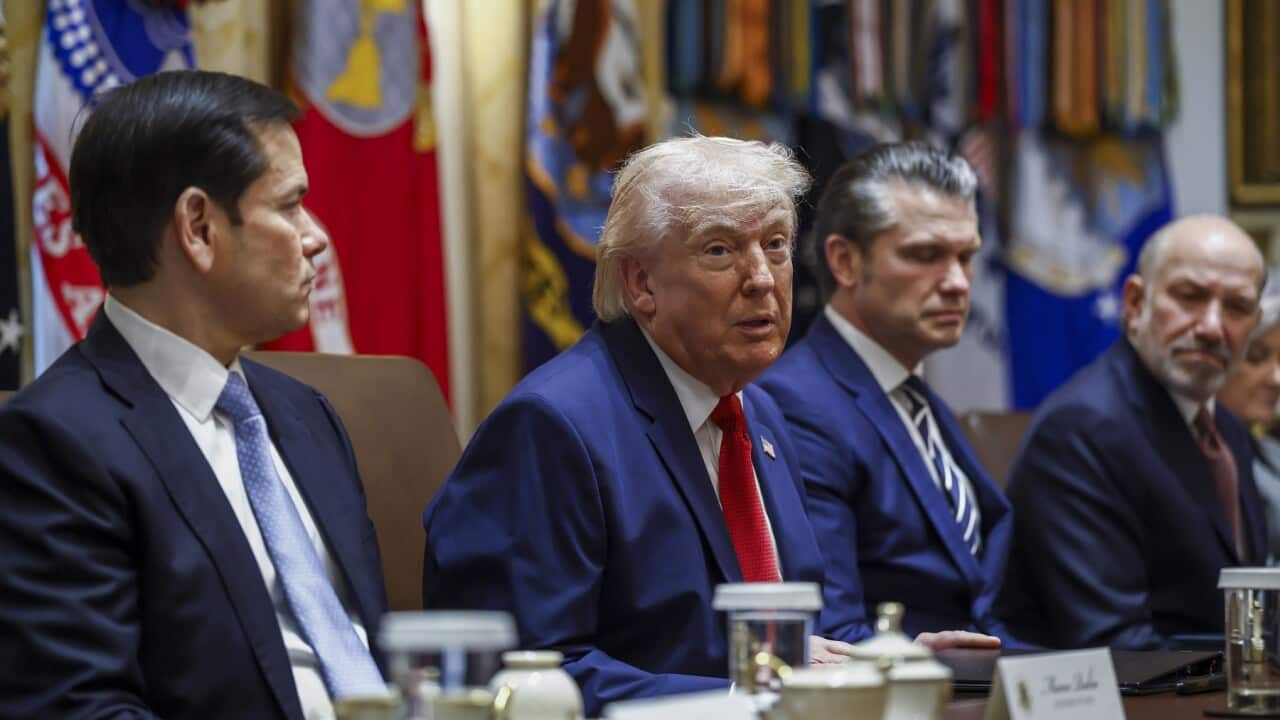
At his first Cabinet meeting since the beginning of the war in the Middle East, he went on to say the US will be Iran's "worst nightmare" if it doesn't agree to a peace plan.
“They now have the chance, that is Iran, to permanently abandon their nuclear ambitions and to chart a new path forward. We'll see if they want to do it. If they don't, we're their worst nightmare. In the meantime, we'll just keep blowing them away, unimpeded, unstopped. There's not a thing they can do about it. They can't do anything about it.”
Mr Trump says Iran has let ten oil tankers - including some Pakistan-flagged vessels - transit through the Strait of Hormuz as a gesture of goodwill in negotiations.
So why exactly is the deadline for Iran to open the Strait of Hormuz important?
The war in the Middle East has largely shut down the Strait, through which around one fifth [[20 per cent]] of global oil and liquified natural gas flow.
Estimates from the US Energy Information Administration suggests that in 2025, about 20 million barrels of oil moved through Hormuz each day.
Mr Trump admits that he may have hurt negotiations with Iran by speaking about them publicly.
“I have a feeling it's going to clean up pretty quickly. I could just say this. They (Iran) want to make it. They want it to make. I probably hurt our little negotiation. It gives them a little impetus to say, well, I wish you didn't say that. But they said yesterday... That we weren't negotiating with them, and now they admit that we were negotiating with them. So they want to make a deal.”
He's also criticised NATO, saying the alliance had provided no meaningful support and questions whether it would come to Washington’s aid in a larger crisis.
The US Treasury Secretary, Scott Bessent says the Strait of Hormuz is not a "choke point".
““The Iranians believe they are fighting a two-front war. It is the military war that our great warriors are prosecuting. But on the other side, they are trying to take control of the global economy through a choke point that we believe does not exist and that we will overcome. The historic operation at Epic Fury seized a generational opportunity to demolish a regime that has coordinated over four decades of global terror and claim thousands of American lives.”
Mr Trump's Special Envoy for the Middle East, Steve Witkoff confirms 15-point ceasefire plan presented to Iran, says there is a strong possibility of a deal.
He says the framework of a peace deal has been circulated through the Pakistani government, who's acting as the mediator.
“We will see where things lead, and if we can convince Iran that this is the inflection point with no good alternatives for them other than more death and destruction. We have strong signs that this is a possibility, and if a deal happens, it will be great for the country of Iran, for the entire region and the world at large.”
Mr Witkoff says the message was well received, and that they've told Iran to not "miscalculate again."
But the ongoing conflict and strikes in the Middle East is painting a different picture.
Israel's Defence Minister Katz says Israel has killed a high ranking member of the Iranian Revolutionary Guard's navy.
Commodore Alireza Tangsiri, along with other senior naval commanders were killed in a strike on Thursday.
"Last night, in a precise and lethal operation, the IDF thwarted the commander of the Revolutionary Guards' Navy, (Alireza) Tangsiri, along with senior naval command officials. The man who was directly responsible for the terrorist operation of mining and blocking the Strait of Hormuz and navigation was blown up and neutralized.”
US Defence Secretary Pete Hegseth hails the US attacks as a "success, on plan and.. ahead of pace".
“But see unlike Iraq, this isn't a tie. This is not parity. This is not chaos. This is success. Pure American success, on plan and as the president said ahead of pace. Over 10-thousand enemy targets destroyed, over 140, I think now Mr President you are right, over 150 naval vessels sunk, underground facilities destroyed, their defence industrial base in shambles and overnight, not only do they not have a navy, Mr President, they no longer have a navy commander.”
So what does this mean for stability in the region, and for the broader international community?
The World Bank has announced it is ready to give financial aid to countries who are severely impacted by the economic fallout of the looming oil crisis.
The United Nations food and agriculture agency's top economist is also warning of serious impact if Iran war lasts another three to six months.
The UN says the war in the Middle East is taking a toll on civilians and humanitarian workers on the ground.
Spokesperson for the UN Secretary General, Stephane Dujarric says civilians caught up in the conflict are being supplied with aid needed.
“Among amid the ongoing escalations, our peacekeeping colleagues at UNIFIL remain on the ground. They continue to monitor, to liaise with the parties and facilitate humanitarian access and protect civilians wherever possible. Peacekeepers, in close coordination with the Lebanese Armed Forces have delivered essential supplies, including food, medicine and hygiene kits to civilians who remain living in very precarious conditions, as you can imagine.”
The death toll has been increasing each day since the war began.
It's claimed the lives of more than 1,900 people in Iran.
Nearly 1,100 people in Lebanon have been killed.
Dozens more deaths in Israel, and the war has also killed 13 US military members.
Meanwhile, top diplomats from the G7 allied nations are discussing the war in the Middle East on the sidelines of a foreign ministries' gathering in France
Earlier, Israeli Prime Minister Benjamin Netanyahu announced that they are expanding an area it controls along southern Lebanon’s border with Israel.
Israel has been targeting Hezbollah militants, after the Iranian backed group fired rockets into Israel in retaliation for strikes that killed Iranian leader Ayatollah Ali Khamenei.
More than a million people from southern and eastern Lebanon, as well as Beirut's southern suburbs have been displaced.
European Union Foreign Policy Chief Kaja Kallas has urged Israel and Lebanon's militant group Hezbollah to negotiate and spare civilian lives.
“We have been calling to Israel as well as Hezbollah to really stop the attacks. Hezbollah that has dragged the Lebanese people into this war. It's also important that Israel and Lebanon sit down to negotiate to have really a settlement and peace so that these attacks will stop and the suffering of the people will stop.”
As the world watches on, the question now is not just how the conflict will end - but how much more it will cost in lives and stability.