
Millions of Australian employees are set to receive a 4.75 per cent wage increase in July, after the Fair Work Commission handed down its annual wage review. Union groups have welcomed the figure, saying it will allow workers to get back on their feet. Business groups, on the other hand, say the move will worsen inflation and put too much pressure on businesses.
Listen to Australian and world news, and follow trending topics with SBS News Podcasts.
TRANSCRIPT
Millions of workers across Australia will receive a 4.75 per cent pay rise as the Fair Work Commission handed down its annual minimum wage and award scale review.
Fair Work Commission president Justice Adam Hatcher announced the decision, with the increase to start from July 1.
"Approximately 21.1 per cent of all employees in Australia, amounting to almost 2.8 million people, are paid at an applicable minimum wage rate under a modern award. Accordingly, such employees and their employers are those principally affected in a direct way by this decision."
After last year's wage increase of 3.5 per cent and April's headline inflation level at 4.2 per cent, the real wage gap has been widening.
With the Reserve Bank forecasting inflation to rise to 4.8 per cent by the end of June, a 5 per cent increase was needed to close that gap.
However, Justice Hatcher says the commission decided it was not responsible or practicable to meet that mark.
"Taking into account all of these matters, we have concluded, regrettably, that it would not be practicable or responsible in the current uncertain circumstances to award a real wage increase for employees reliant on modern award wage rates that would be sufficient to close the real wage gap entirely."
Cost of living pressures have been a key concern surrounding the decision, with households hit hard by rising inflation.
Acknowledging these pressures, the Fair Work Commission announced a bigger wage boost for the lowest paid employees.
By phasing out the lowest paid modern award classifications, Justice Hatcher says those earning the least will actually be getting a 6 per cent wage increase.
"These adjustments will result in the lowest wage rate in the modern award system applicable to ongoing employment being $1,004.90 per week or $26.44 per hour, and the lowest wage rate applicable to entry-level employment for a period of no more than six months being $978.10 per week or $25.70 per hour. Our estimate is that this will affect about 100,000 of the lowest paid employees."
The Australian Council of Trade Unions was calling for a six per cent rise, which would have marked the biggest increase on record.
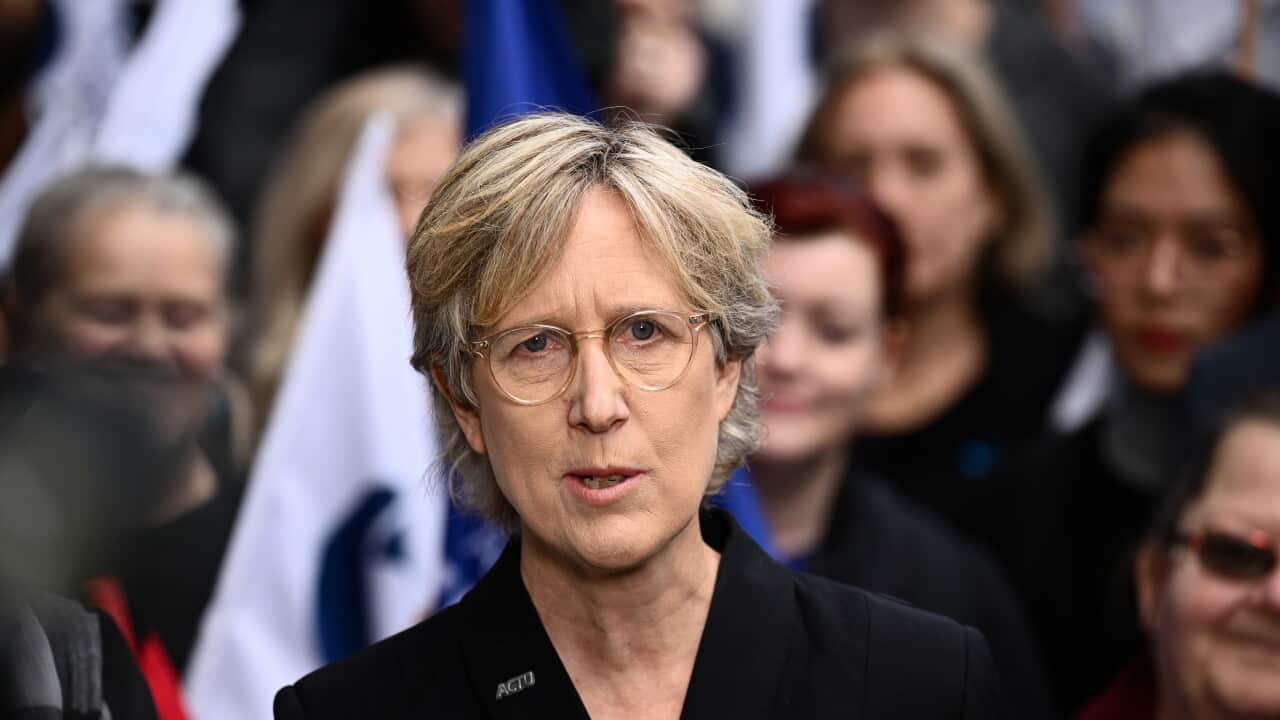
President of the Australian Council of Trade Unions, Sally McManus, has welcomed the decision.
"This is a really good outcome for everyone struggling with cost of living, in particular, of course, lowest paid Aussies are the ones that are struggling the most with cost of living, and they need this pay rise absolutely. This will allow them to not just pay their bills, but to start making up some of what they've lost since 2021. One of the big things that the Fair Work Commission said today is that they recognize that previous inflation after COVID left low-paid workers behind where they were in 2021 and so today they've decided not just that people should keep up with cost of living with inflation, but start to continue to get ahead, and that's really, really welcome."
Meanwhile, employer groups were calling for a more modest increase, arguing that a 6 per cent rise would further pressure businesses and lead to higher insolvencies.
The Australian Chamber of Commerce and Industry was recommending a 3.5 per cent increase, arguing that underlying inflation - which was 3.4 per cent in April - was a better benchmark.
Australian Chamber of Commerce and Industry Policy Chief David Alexander says businesses will struggle with this outcome.
"For some small businesses, this will be too much to bear, so they're being asked to wear an increase in their wage costs of four point seven five percent. So, for some businesses, they will pass that on, and it'll end up in inflation. For others, they'll wear it themselves. It could be the tipping point for some businesses. Others will scale back their investment intentions, so there's not good news for the business community."
Ahead of the decision, the government made calls for a sustainable wage increase, but did not give a specific figure recommendation.
Treasurer Jim Chalmers says this is the wage increase that Australians deserve.
"This is the sustainable real wage increase that the government has called for, and we're pleased to see it delivered in today's decision. This means that the minimum wage is up more than $12,000 a year since we came to office four years ago. It's about a 30 per cent increase in the minimum wage, which is a very good thing. When it comes to these cost of living pressures that Australians are confronting right now w e see decent pay as part of the solution, not part of the problem, and so we're pleased to see those cost of living pressures recognised by the Commission in this very welcome decision."
While the decision impacts around one in five employees and only amounts to 11.2 per cent of the national wages bill, economists say the decision may influence pay rise claims across all sectors.
Shadow Defence Minister James Paterson told Sky News that this decision was necessary but not sustainable.
"I’ll never begrudge a pay rise for Australian workers and I understand why in Labor’s high inflation environment this is necessary to stop Australian workers going even further backwards than they already have over the last four years. This is just about treading water, keeping them at the level that they have been at in recent years. The core of the problem is out of control inflation and we need to get that urgently under control."