
Australia’s inflation rate has eased, but underlying price pressures remain stubbornly high. The figures come as new Reserve Bank research reveals many Australians do not understand why interest rates rise, or how they are meant to bring inflation down.
Listen to Australian and world news and follow trending topics with SBS News Podcasts.
TRANSCRIPT
Australia's headline inflation rate has eased to 3.8 per cent, down from four per cent in May and slightly better than expected.
Lower petrol prices drove much of the decline, helped by easing global oil prices and the federal government's temporary fuel excise relief.
But the Reserve Bank's key measure of inflation remained steady at 3.6 per cent.
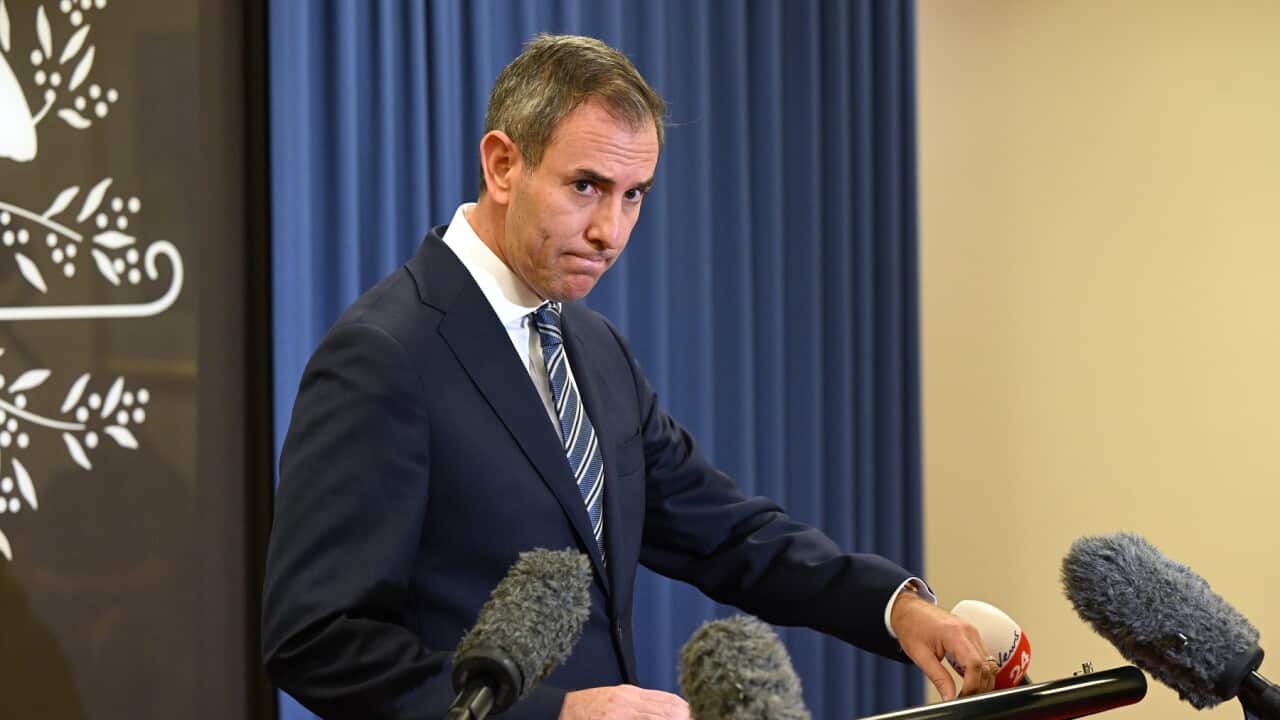
Treasurer Jim Chalmers says the figures show inflation is moving in the right direction.
"We know that people are still under pressure, we know that inflation is still higher than we would like it to be we know that the war in the Middle East and the uncertain developments even in the last couple of weeks but in the circumstances that we find ourselves in these numbers today are encouraging, they have come in lower than what was anticipated and obviously that's positive news even as we recognise the ongoing inflation challenge in our economy turbo charged by a war on the other side of the world."
Shadow Treasurer Tim Wilson says the government has failed to get inflation under control.
“Australians right now every time they go to the supermarket are paying higher prices and getting less in their trolley or their red basket, the problem with inflation persists because the government cannot control its inflation and spending addiction. The government likes to stoke inflation, tax inflation and then spend the inflation in a vicious cycle which is hurting Australians and their hip pockets.”
Independent economist Saul Eslake has been examining the latest figures.
“These are slightly better than expected figures, and so a little bit of heart can be taken from them, although there’s still a long way to go to get inflation back down to where the Reserve Bank wants to get it, at around two-and-a-half per cent per annum.”
The data will now be weighed by the Reserve Bank ahead of next month's interest rate decision.
But beyond that, the RBA has identified a more basic problem.
Many Australians do not understand why interest rates rise in the first place.
More than half of those surveyed believed higher interest rates lead to higher inflation.
Governor Michele Bullock says people are confusing cause and effect.
“It doesn't surprise me in a a way because when inflation is high interest rates tend to be rising so people tend to think - and the other reason I think is because people that have mortgages at least they see increases in interest rates as an increase in the cost of living - but it's not really. So interest rates are the response to high inflation - they're not causing high inflation.”
Higher interest rates are designed to slow spending across the economy.
Economist Michael Hoare says for many households that means cutting back on discretionary purchases.
“For a lot of consumers they can't cut back on mortgage repayments, they can't cut back on insurance and utility bills and so they will cut back probably on consumer discretionary spend.”
Saul Eslake says it is understandable many people get confused.
“I don’t necessarily blame ordinary Australians for thinking the way they do. They’re not trained economists. They're not routinely reading about or listening to news about monetary policy what most of them see is that when prices are rising, which they obviously notice every time they go to the petrol station or the supermarket, or pay their monthly bills the Reserve Bank puts interest rates up, So it’s understandable that people don’t distinguish between cause and effect.”
The survey findings have prompted some reflection at the Reserve Bank.
“I think what it demonstrates is that we need to be doing a better job of getting out there and trying to explain to people in simple terms what's going on and how monetary policy - by raising interest rates impacts the economy.”
The Reserve Bank board will make its next interest rate decision early next month.