

Indigenous rangers from a remote South Australian community are using drones and thermal technology to care for country. The rangers in Yalata on South Australia's far west coast, have rediscovered forgotten cultural sites and found seal populations along the coast. The community has invested the profits from its own roadhouse and other enterprises to fund the technology.
Listen to Australian and world news, and follow trending topics with SBS News Podcasts.
TRANSCRIPT
Rangers from Yalata Aboriginal Community are flying drones at the Great Australian Bight.
Perfectly formed mountains of sand line the coast, and a whale rests in the water not far from the beach.
This is Yalata Country.
“It’s very beautiful, we’ve got white sands and nice water – beautiful beaches.”
That’s Tyson Edwards, one of the community’s five rangers.
When you're taking care of country the size of 200,000 AFL fields, an eye in the sky is a useful addition to the team.
"It’s very helpful. Because the cars can’t really get in through the bushes and all that, so the drone just has an eagle eye view of the land.”
The Anangu people at Yalata were forced off their homelands further inland when Britain began nuclear testing at Maralinga in the 1950s.
“The army pushed us out from where we was to outer lands, like more further away from the bomb, because they were testing it, and yeah they moved us to Yalata which is home but Maralinga is like home for us but this is a home away from home.”
The loss of country and connection has added to the significance of a recent find by the ranger team: an ancient rock-hole north of Yalata.
"We didn’t really know that there was rock holes out there, but the drone found it for us."
Brian Queema says the old people who knew the whereabouts of the rock holes are no longer here.
"Some of the people they lost their memories, they can’t find the rock-holes and now they’re finding everything again.”
Another senior man, Russell Bryant, explains why places like this are important to his people.
"Rock holes is a place where we can survive for my people, if the water runs out they go look for another place."
It’s the first time the community has seen this rock hole.
Back at the Bight, the rangers are preparing to fly a much bigger drone along the cliffs.
They have received specialised training to operate this drone, equipped with thermal technology, and used it to help national parks staff with their annual seal count, as head ranger Andrew Alderson explains.
“We were able to demonstrate instantly that you can fly along and spot the seals and do an accurate count very quickly so that was a big win for the fellas and quite a proud moment and a big eye opener for national parks as well.”
Ranger Jeremy Edwards is operating the controls.
"We just use a thermal – we’ll show you how it works. I'll show you how it works."
Oh, that’s us?"
The drone vision on the control screen shows the rangers lit up in bright yellow.
"The colder the night or the colder the background the more warm-blooded animals like us stand out."
Jeremy Edwards says they are also using the technology for land management and to hunt feral animals.
“Look for feral animals, cats, foxes, camels.”
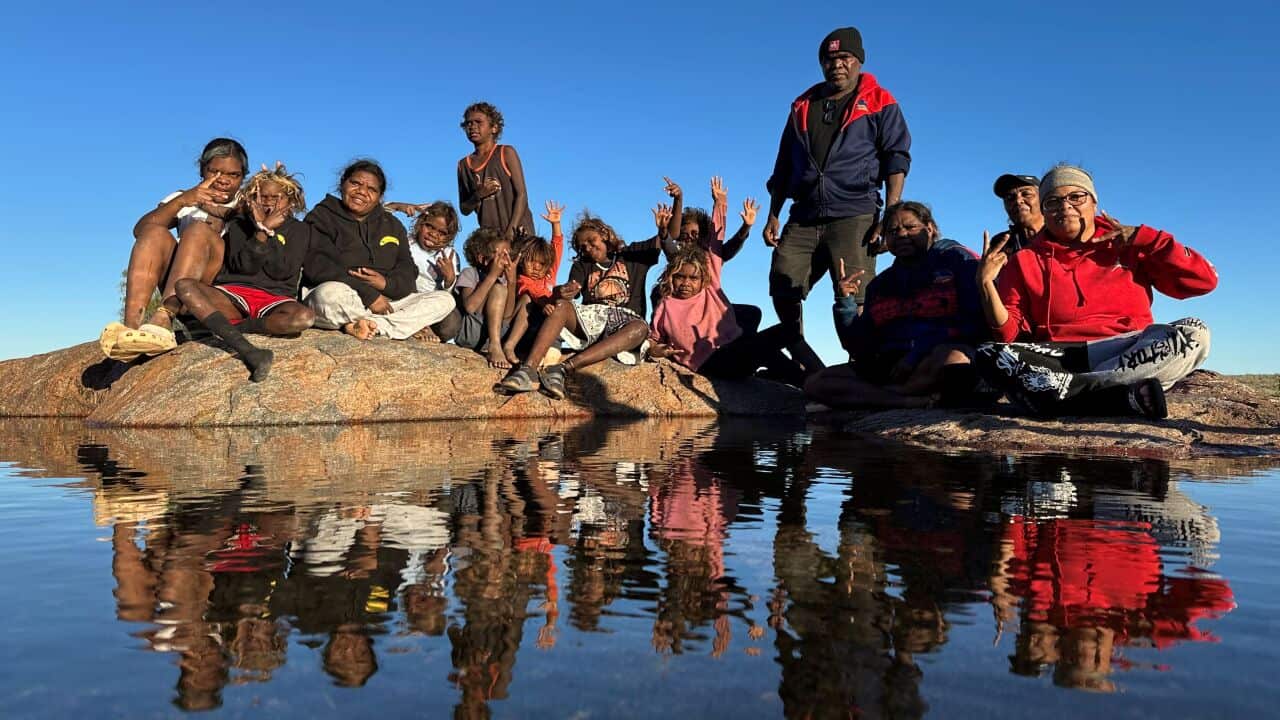
Closer to community is another discovery - a wide shallow rock hole, a bit like a children’s swimming pool, that was completely hidden from sight.
The rangers dug it out of the sand and now it's a summer bathing spot for the local kids.
Jeremy Edwards says it really pleased the community.
"They were so excited that we found the rock-hole and its good for the younger generations to look after the rock-holes an go out and look after the land.”
Nearby the rangers are building a bird hide, which Head ranger Andrew Alderson says is to show the youngest generation more about their country.
"So the ranger team decide to go out on a limb and try out a different strategy for appreciation of the natural world. So we built a bird hide near the rock hole. That’s with the idea to get the kids involved with two-way science programs, junior rangers, with recording local species, developing Anangu or Pitjantjatjara language books around bird names, and that sort of thing."









