

After weeks of pressure over surging petrol prices, the federal government has cut the tax on fuel in half. It's a three-month measure costing the budget billions, as the Prime Minister steps out a four-part plan to respond to the conflict.
Listen to Australian and world news, and follow trending topics with SBS News Podcasts.
TRANSCRIPT:
"It's a bit of a shit go you know with the prices. It's making it hard to live, hard to get to work, you know. It's hard these days. Everything is going up, now the fuel on top of that, it's a nightmare."
As petrol stations across Australia continue to run dry, motorists like this man are frustrated - and advice from the opposition has been freeflowing.
Queensland Senator James McGrath had this to say before a national cabinet meeting on the fuel crisis.
"The prime minister seems to have no plan. He's wombling around the country. We need to get fuel to the servos and we've got to slash the fuel tax. Come on prime minister, this is what you get paid for. Show some leadership."
The Prime Minister had been under pressure from the opposition and business groups to do something about the fuel excise.
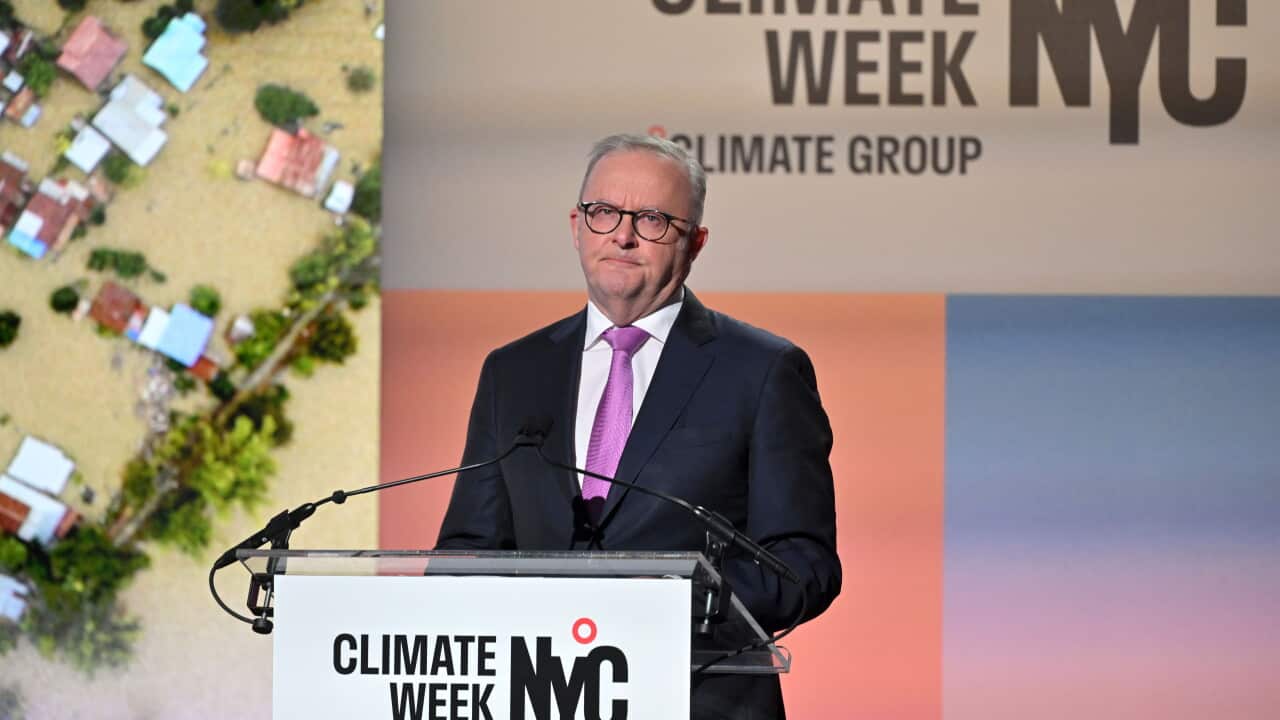
Following the national cabinet meeting, Anthony Albanese has confirmed the government will halve the tax on petrol and diesel for three months.
"We're making fuel cheaper today because we understand that Australians are under serious pressure. However we really also want to encourage Australians who can to take public transport to help save fuel for the areas and industries that need it. And I note, a couple of the jurisdictions have taken action to reduce public transport fares as well. The less fuel we use in the cities, obviously the more we can direct to regional areas that are under pressure."
The move will cut fuel costs by an estimated 26.3 cents per litre, something the government says will save Australians $19 on a 65 litre tank.
The decision is a part of a broader scope of measures under a new National Security Plan, including scrapping the heavy vehicle road user charge for three months.
Overall, the measure is expected to cost the budget more than $2.5 billion dollars
According to Treasurer Jim Chalmers, it's a responsible and necessary expense.
"Now we don't choose these circumstances that are being inflicted on us by events on the other side of the world, but we do choose how we respond. In a cooperative way with the states and territories and also doing what we can to deal with or take some of the sting out of these cost of living pressures. So this relief is temporary, it's timely and it's responsible, it's all about taking some of the edge off these high petrol prices, which are putting such extraordinary pressure on household budgets, right around the country."
But economists like Richard Holden say cutting the excise will fuel demand, with the potential to drive up inflation and interest rates.
"We need, even though it's very painful, and I understand people are under a lot of household financial pressure, we need to be taking demand out of the system, rather than putting it into the system and basically cutting the price of fuel relative to what it would be, you know, increases demand rather than decreases it. So that's a mistake. I think it's also pretty expensive, even if it only runs for three months."
Opposition Leader Angus Taylor had been calling for the fuel excise to be cut since Friday, and on Monday accused the prime minister of being the "last to lead" in a national crisis.
Speaking in Question Time after the announcement, Shadow Treasurer Tim Wilson has suggested the cuts will add to the problem of national debt.
"Can the government confirm, that unlike the Coalition's plan, there are no inflationary offset to the government's excise cut."
Dr Chalmers has told Parliament the costs will be managed responsibly in the upcoming budget.
"We've found 114 billion dollars worth of offsets in less than four years, which is the kind of responsible economic management which would be unrecognisable to those opposite, Mr Speaker. Now when it comes to additional savings in the budget, we're at the end of March now. The budget is in the second week of May, and we'll continue to work through all of those decisions and deliberations in the considered and methodical, but decisive way that has been a hallmark of the responsible economic management under this government."
The government is also introducing emergency legislation to parliament that will allow it to take on the financial risk of importing additional fuel.
Energy Minister Chris Bowen says the measure addresses a rising risk premium for fuel suppliers, amid price volatility and threats to supply chains.
He has called it a vital intervention, and says it showed the government was "one step ahead" of the energy crisis.
"The longer this war goes on, the more severe the impacts will be. This global crisis continues to present new national challenges which is why we'll continue to take new national actions. Today, we take the next step to ensure Australia remains prepared."
In the meantime, Mr Albanese has again urged people not to panic, saying Australia's fuel supply remains secure.
With Victoria and Tasmania announcing a month of free public transport, the government is also encouraging Australians to catch buses and trains and to work from home when possible.
He says Australians can still follow through with their Easter plans.
"We want that to occur, people should enjoy their Easter and it's important as well that we keep the economy going. This is an important time for tourism destinations for jobs, they rely upon that and I wish those people of faith as well a holy Easter, it's an important time."