

There are conflicting reports the United States and Iran are preparing for talks in Doha, aimed at building on a fragile ceasefire and negotiating a broader agreement covering Iran's nuclear program and the Strait of Hormuz. The diplomacy comes as Israeli strikes continue in southern Lebanon, despite a U-S-backed framework agreement that Hezbollah has again rejected.
Listen to Australian and world news and follow trending topics with SBS News Podcasts.
TRANSCRIPT
An envoy from the United States is preparing for another round of talks in Doha, testing whether a fragile ceasefire can become a broader agreement covering Iran's nuclear program and the future security of the Strait of Hormuz.
Senior American negotiators and Iranian officials are expected to meet in Qatar, alongside technical discussions on the recent memorandum of understanding.
Iranian foreign ministry say it is sending a delegation to Doha this week, but staunchly denies any planned sit-down with the Americans.
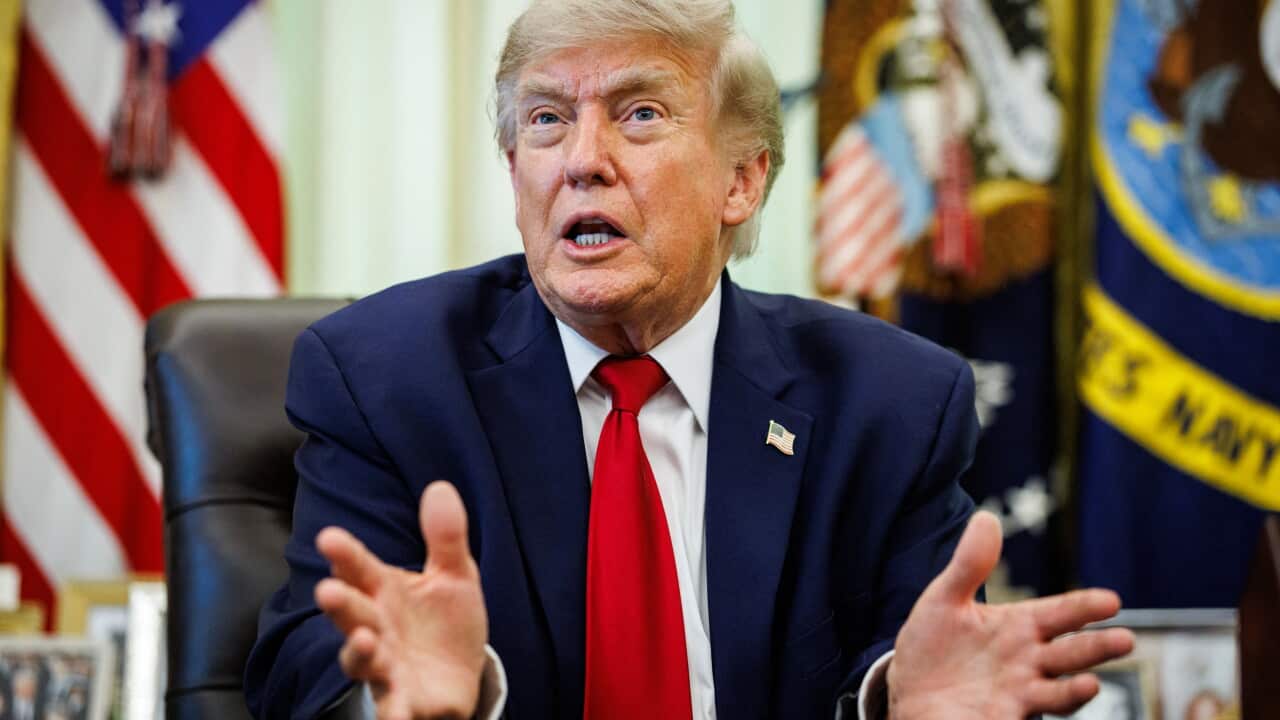
President Donald Trump, however, was adamant the meeting will happen and says it could prove important.
"They're going to Qatar there. I think they've already left, or they're just about getting ready to leave. So we'll see how that goes. But we're doing very well on that front. But the meeting in Doha is going to be, perhaps important, perhaps not. We're going to find out."
The prospective talks come after both sides reportedly halted hostilities, following several days trading strikes that threatened to derail a preliminary agreement aimed at ending the war.
The interim deal calls for the reopening of the Strait of Hormuz and gives both the nations 60 days to negotiate a broader peace deal.
White House Press Secretary Karoline Leavitt says Washington remains committed to the ceasefire, but will use force if necessary.
"The president obviously wants to see the peace process play out, and the Iranians would be best to sign a good deal with the United States of America, because the president has proven he's unafraid to use the might of our military."
She adds that it was Iran that asked for the meeting.
"As far as we're concerned, we're holding up our end of the ceasefire. Violence will be met with violence. ... But again, the memorandum of understanding will continue to be discussed. The cease fire is in place and we hope that we can get to a good deal. The president will sign one that puts our nation's interests first."
Tehran disputes that account, insisting its delegation is travelling to Doha to discuss implementation of the memorandum.
One of the toughest issues is the future of the Strait of Hormuz, through which around one-fifth of the world's traded oil passes.
Deputy Foreign Minister Kazem Gharibabadi says Iran wants a greater role in administering the waterway alongside neighbouring Oman.
"We are firmly determined to reach an understanding with Oman on the arrangements for administering the Strait of Hormuz. Naturally, Oman is the other littoral state. I told the Omani authorities today that our priority is to agree on these arrangements with Oman as the other coastal state. If, for any reason, Oman is not interested in doing so, the Islamic Republic of Iran will proceed on its own.
He says Oman has responded positively to the proposal.
"I found the Omani side to be receptive. As you saw today, Oman’s foreign minister also made a number of remarks referring to these issues. Oman also supports taking part in these arrangements as a littoral state with sovereign rights, so that the Strait of Hormuz is no longer managed as it was in the past, and that fees should be collected in return for the services provided."
The proposal remains contentious.
Iran wants greater control over the Strait, while the US and broader international community maintains it is a global waterway that should be toll-free.
Further west, another deal is being tested.
Israeli strikes reportedly continued in southern Lebanon overnight, despite last week's US-backed framework agreement.
At the same time, Israeli leaders are presenting the deal as the foundation for a broader regional peace.
President Isaac Herzog addressed Romania's parliament.
"Israel ... is a nation that seeks peace. We want to live in peace with our neighbours, all of them, free from the threat of terror and violence. We seek peace with Lebanon. ... We seek peace with Syria and a new chapter between our nations. And we seek peace in Gaza, because the people of Gaza, like the people Israel, deserve a better future. "
Mr Herzog says lasting peace depends on removing what Israel sees as the threat posed by Iran and its allies.
"Iran's desire to become a nuclear threshold state is a tangible threat to Israel. And Iran's audacity to dictate the future of Lebanon undermines the possibility of moving towards peace."
But Hezbollah has rejected the framework, saying it will oppose any agreement linking an Israeli withdrawal from southern Lebanon to the group's disarmament.
The fate of a broader peace for the region will be determined, not only by the outcome of talks in Doha, but whether tensions ease in the Strait of Hormuz... and the new framework between Israel and Lebanon can withstand events on the ground.