
This is the second part of our special series about tuna fishing in the Pacific. According to fisheries officials in the Pacific, one of the most difficult to pin down breaches when it comes to overfishing is the ability to monitor catch - and ensure compliance with fishing licences. In an effort to combat this - fisheries observers are stationed on many commercial fishing vessels to keep watch - but it is also considered one of the most dangerous jobs in the world. And this story was supported by the Pulitzer Centre.
Listen to Australian and world news and follow trending topics with SBS News Podcasts.
TRANSCRIPT
The global tuna industry is valued at about 40 billion US dollars per year - but according to experts, a lack of transparency when it comes to the volume of fish caught at sea
Is the greatest threat to the sustainability of the fishery.
This is Allan Rahari, the Interim Deputy Director General of the Pacific Islands Forum Fisheries Agency and the Director of Fisheries Operations.
“The biggest risk for our regions are mainly what we call unreported fishing, meaning fishing vessels are not providing their catch reports accurately.”
To combat this, most Pacific countries mandate fisheries observers to be stationed on all purse seine vessels - which use a net to target schools of fish like skipjack and yellow fin tuna.
Rahari again:
“Observers have been mainly used to support science work, particularly collection of data, but now observers are being used to collect also compliance information.”
Charlyn Golu is the deputy director of the offshore division for the Ministry of Fisheries and Marine Resources in Solomon Islands.
She oversees the nation's fisheries observer training program.
CHARLYN: "They train on fisheries laws. How to collect accurate data to identify species and also they train on sea safety. They are like a policeman at sea."
REPORTER: "And is it a dangerous role?"
CHARLYN: "I think so, I don't want to go there!"”
According to the Association of Professional Observers, since 2015, at least 14 fisheries observers have gone missing or died at sea - some under what human rights groups identify as suspicious circumstances.
One of those is I-Kirabati observer, Eritara Aati Kaierua, who died aboard a Taiwanese flagged vessel, the Win Far 636 in 2020.
David Hammond, a former UK military seafarer and English barrister, is the founder of Human Rights at Sea International.
“The first coroner who actually saw the body highlighted in the official and publicly available reports that Eritara died from a blunt force trauma to the head.That second, and in fact, the third review from independent coroners, which did it remotely, did not see the body, changed the findings to death by natural causes. Eritara was 40 at the time,was fit to do his work, had been signed off to do his work and was an experienced seafarer.”
Human rights at Sea obtained CCTV footage from the vessel which showed Eritara's final moments:
“And also highlighted masked crew carrying his body along the corridor outside his cabin.”
Six years on - the NGO is still advocating for answers on behalf of Eritara's family.
Hammond again:
“He had a logbook and that logbook was eventually found to be incomplete with sections removed, which was one of the 26 unexplained and outstanding questions that we highlighted from our investigation and to this day still remain outstanding.”
SBS News has contacted Kiribati authorities for comment, including the Ministry of Fisheries and Ocean Resources, the police, the attorney-general's office and the office of the president, but did not receive a response.
SBS News has been unable to contact the owner of the vessel Win Far 636, to put further questions to them.
It's clear being an observer is a job that involves courage - but we're told a fear of retribution while at sea, has rendered some afraid to speak publicly about their experiences.
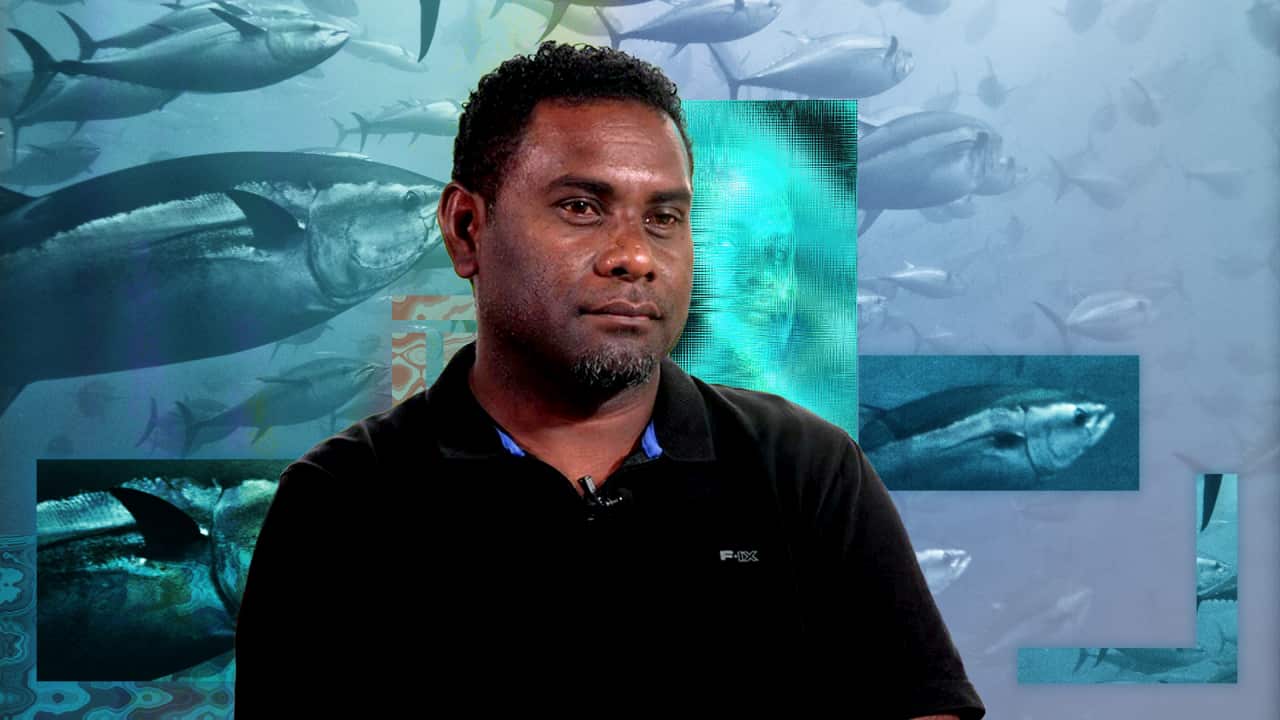
Jude Piruku, is an assistant for the observer program in Solomon Islands
He worked as a fisheries observer for 10 years, until 2019 and says at the time he felt anxious boarding a fishing vessel to do his job.
“The fear of getting shown overboard, the fear of getting murdered, the fear of the boat sinking. Once you've known the crew, get to know the crew after a few weeks and that fear settles down. You can feel safe onboard, you can do your job.”
Observers can spend up to months at sea - Jude says the financial benefit, passion for the ocean and ability to see the world are draw cards to an otherwise challenging profession.
REPORTER: "What compliance breaches did you witness?"
JUDE: "Purse seine vessel setting on whales associated with free schools to the schools, shark finning.On one of my trips on a Chinese longliner, I was obstructed from doing my job by the captain and it was reported."
REPORTER: "Do you feel any changes have occured in the profession to make it safer?"
JUDE: "We now have the observer compensation scheme. Your family gets compensated if you lose a life."
Allan Rahari says safety tools are also used to help with security measures.
“Some of the safety tools include the personal locater beacons, for some reason, they fall overboard, those beacons can be activated Also, they do have safety devices on them. So when they are harassed when on fishing vessels by the crew, they can press the devices that will send out an SOS.”
While fisheries observers play a vital role, it's stressed, they are not the silver bullet when it comes to curtailing overfishing.
According to Solomon Islands Ministry of Fisheries and Marine resources, electronic monitoring technology featuring tools like GPS, video cameras and sensors are increasingly being rolled out on commercial fishing vessels, to support verification of reporting and adherence to the rules.
This is Charlyn Golu again.
“We install the cameras on board so they record 24 hours operations of the activities on board. So it's kind of reducing the illegal activities, knowing that the crews on board will know that the camera, they will be on cameras, might reduce the risk of doing illegal activities as well.”
An effort to keep supply chains honest - and hold the industry's 'big fish' to account.