

The United States says its conflict with Iran will end in the next few weeks. But not all indicators are pointing to that outcome, as economic concerns continue to dominate around the world, alongside the military strikes.
Listen to Australian and world news and follow trending topics with SBS News Podcasts.
TRANSCRIPT
They're the three words that dominate thoughts about the current conflict in the Middle East right around the world.
How much longer?
It's been a little more than two weeks since the targeted strikes that killed Iran's Supreme Leader kicked off the United States and Israel's latest military entanglement with Iran.
It's a conflict that's resulted in more than 2,000 deaths so far- not to mention economic and travel chaos that's seeped into so many areas of day-to-day life.
And, as a trip to a petrol station will show, our ongoing reliance on oil supplies is clear.
U-S Energy Secretary Chris Wright says that the pain at the petrol bowser - and other areas- shouldn't last much longer.
"I think that this conflict will certainly come to an end in the next few weeks, could be sooner than that, but the conflict will come to an end in the next few weeks, and we'll see a rebound in supplies and a pushing down of prices after that. But yes, we were very aware, very aware that we would have short-term disruption."
The Israeli side has a slightly different answer when it comes to the war's conclusion.
Israeli Army spokesman Effie Defrin says they have attacks planned until at least the Jewish Passover, which is on the 1st of April this year.
"We have an orderly, well‑planned combat strategy. We have thousands more targets in Iran, and we generate additional targets every day. The regime is already weakened, and we continue to weaken it more and more each day."
The combatants in this conflict continue to exchange fire, with Iran saying its latest attacks targeted both Israel, and three U-S bases in the Middle East.
Saudi Arabia says it intercepted ten such attacks.
Israel says its latest attacks have been upon roadblocks and bridges used by Iran's Revolutionary Guard.
Iran says it remains stable, strong, and ready to defend itself, even as U-S President Donald Trump threatens more strikes on Iran's main oil export hub, Kharg Island.
Iran also rejects Mr Trump's claims that it is trying to negotiate to end the conflict.
Israel has previously claimed that it is the primary target of the alleged Iranian nuclear programme that is the basis of this conflict - a nuclear programme Iran denies even having.
But Mr Defrin says Israel isn't trying to overthrow the Iranian government that doesn't recognise its existence.
Rather, he claims Israel is taking military action in order to help the Iranian people help themselves.
"As a military, we do not have the goal of toppling a regime. We do not overthrow regimes. We do, however, create the conditions and undermine it so that, over time, the Iranian people will take their fate into their own hands and reclaim this country, which has been taken hostage by this terror regime."
On the ground in Iran, at least or now, it appears to be a very different story.
The country appears to be straddling a fine line between all-out war, and people getting on with daily life.
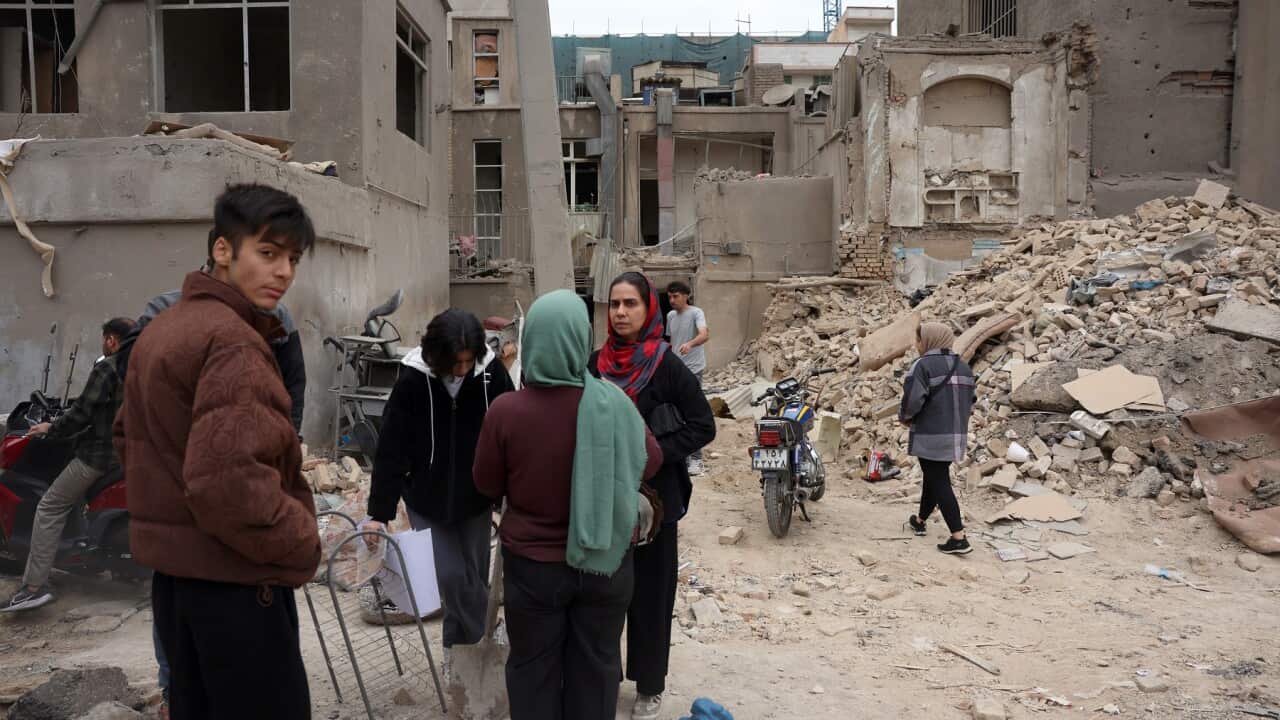
In the capital, Tehran, residents are going through the rubble of their homes damaged by U-S and Israeli strikes last week.
One of them, Mohammad Taheri, says the US and Israeli attacks have galvanised Iranians.
"It's a terrible incident, very bitter. Many people have been killed, and so many have lost their homes and lives. However, because of that heroic spirit that has arisen among all the people of Iran, it is now bearable. That is, that sense of resistance within us has grown, strengthened, and matured. For that reason, we are trying to get through these days, and God willing, we will rebuild everything better from the start—just as we are rebuilding our country and moving closer to our ideals."
The International Energy Agency says emergency oil supplies will begin to flow soon, with member countries agreeing to release more than 411 million barrels to alleviate supply concerns, and get prices down for consumers.
The Wall Street Journal is reporting the United States will announce this week that multiple countries have agreed to form a coalition to escort ships through the Strait of Hormuz at some point.
Around 20 per cent of the world's oil, as well as Liquified Natural Gas, goes through the Strait of Hormuz - a narrow waterway between Iran and Oman.
Iran has shut down freedom of navigation through the Strait since this conflict began.









