
The World Health Organisation says there is low risk to the public, after those on board the hantavirus-hit cruise ship disembarked in Tenerife. Passengers and crew aboard the ship are being repatriated to their home countries, with the W-H-O urging regular health monitoring and 42-day quarantine.
Listen to Australian and world news and follow trending topics with SBS News Podcasts.
TRANSCRIPT
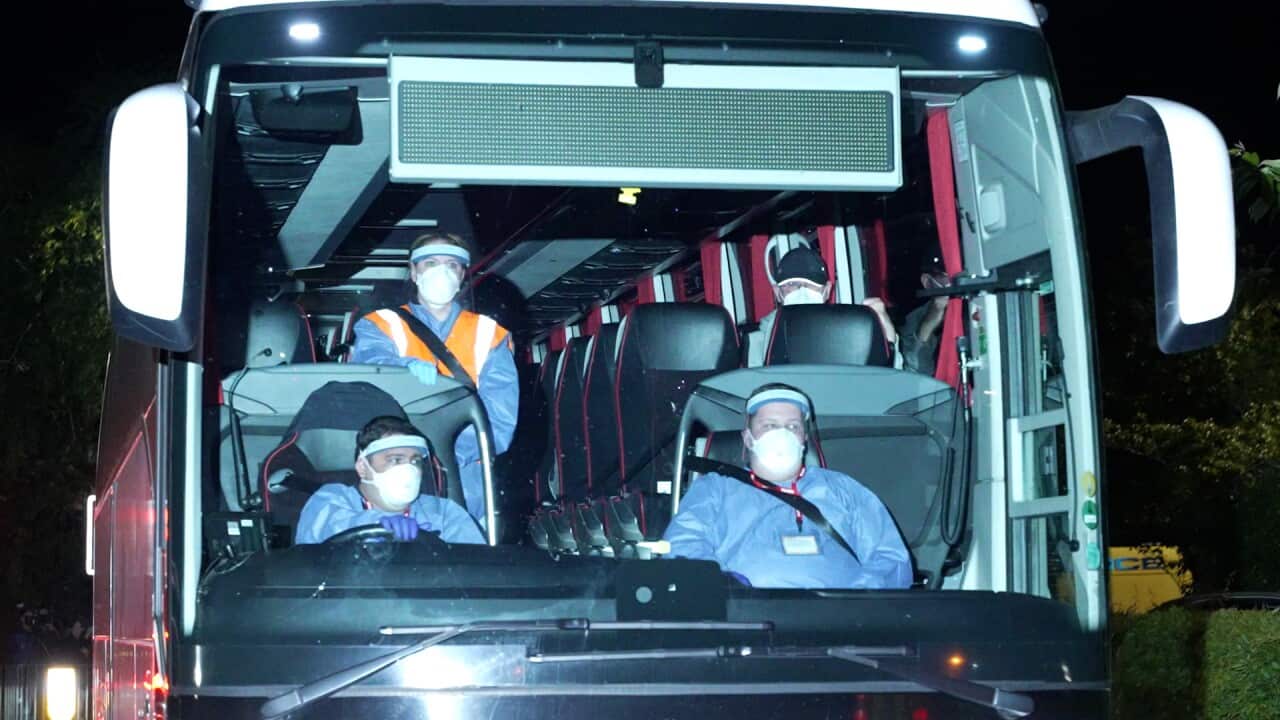
Passengers and crew aboard a cruise ship struck by a deadly hantavirus outbreak have disembarked and will return to their home countries to isolate.
The nearly 150 crew and passengers were evacuated from the ship, after it docked on Tenerife in Spain's Canary Islands.
With evacuees changing into new protective equipment before boarding repatriation flights, Spain's Health Minister, Monica Garcia says that the risk to the public is low.
"The risk of contagion for the general population is low. We believe that alarmism, misinformation, and confusion are measures contrary to the basic principles of public health preservation. Therefore, we once again urge the public to seek information through official channels and to reduce any manifestations of alarmism or misinformation."
Three passengers on board the MV Hondius, a Dutch couple and a German woman, died aboard the cruise ship, while others have fallen sick with the rare disease.
One of five French passengers showed symptoms during the repatriation flight, according to French Prime Minister Sébastien Lecornu.
On Friday, the World Health Organisation reported a total of eight cases, with lab tests confirming six cases as positive for the disease.
The proportion of people diagnosed with a disease who die from hantavirus - what's called the case fatality rate - is between 38 and 50 per cent, depending on factors like location and whether the individual has co-morbidities.
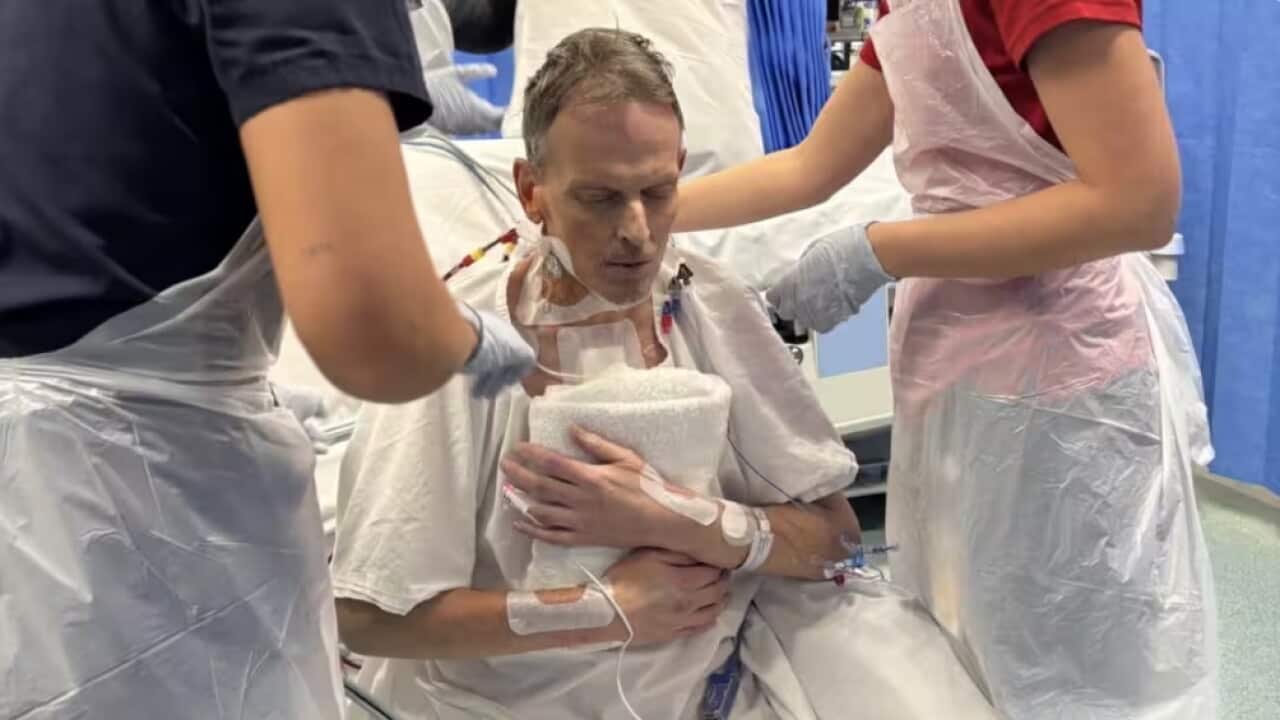
Four people remain hospitalised in South Africa, the Netherlands and Switzerland.
A spokesperson for the federal government says four Australians on board the cruise ship are being assisted to return to Australia on a government-supported flight over the next 48 hours.
They will be accompanied by a permanent resident from Tenerife and a New Zealand citizen who were also on board the MV Hondius.
The arrivals will then go into quarantine managed by state authorities.
Dr Maria Van Kerkhove is the WHO Acting Director of the Department of Epidemic Threat Management.
She says the UN health agency is closely monitoring cases globally - and another suspected case is being treated on a remote British territory.
"There was today also British medics who actually parachuted into one of the British overseas territory to care for a gentleman who was unwell. It's a very, very remote island in the Pacific. It takes two weeks to get there by boat. There's no runway. So, it's actually the only way that they can get people in. So, it's a pretty massive operation to make sure that those who are infected or might be infected are cared for appropriately."
Dr Van Kerkhove says the remaining crew on board the ship will be treated by a nurse in the coming days before docking in the Netherlands.
Once docked, she says there will be a full disinfection of the boat.
The WHO is recommending a 42-day quarantine for all passengers and crew aboard.
"So, our recommendations for the passengers and the crew who are on board is that they have active monitoring and follow up, which means daily health checks either at home or in a specialised facility. We are leaving this up to the countries themselves to actually develop their own policies. But our recommendations are very clear, and this is really a cautionary approach to make sure that we don't have any opportunities for this virus to pass from others."