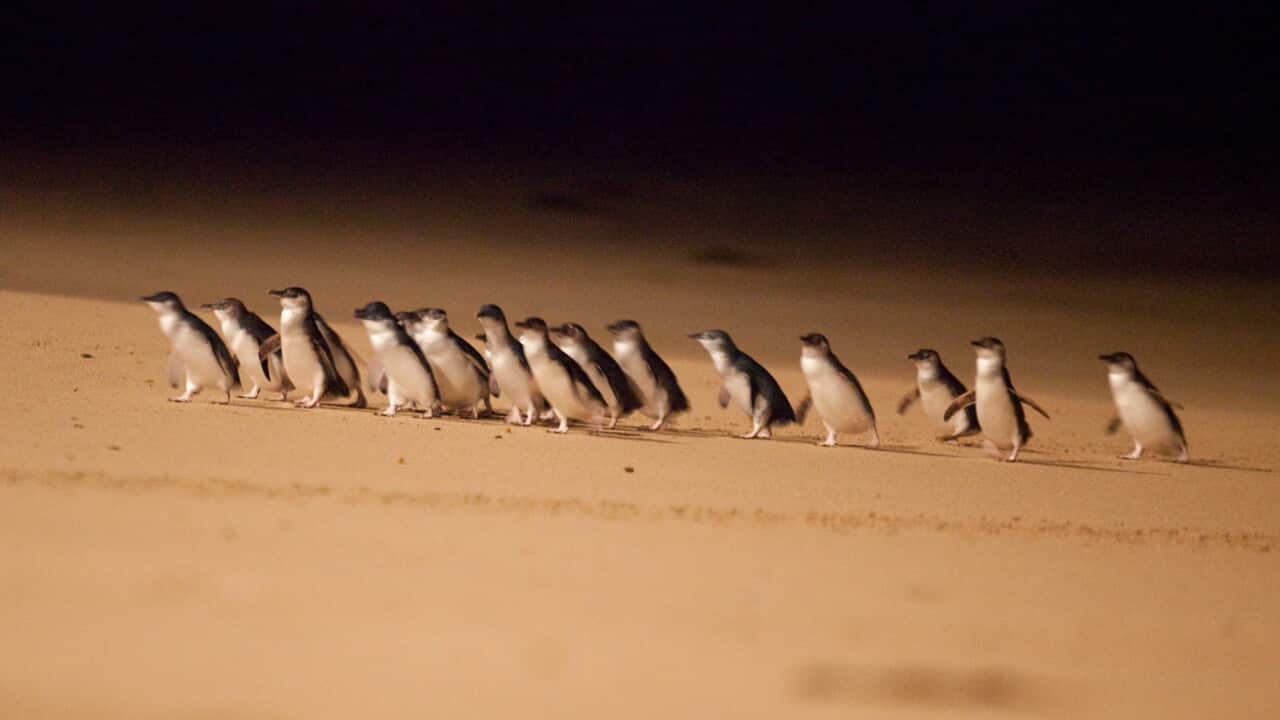

Australia's first confirmed death of a little penguin with H5 bird flu has been recorded on Victoria's Phillip Island. The detection comes as authorities begin a vaccination program targeting thousands of little penguins on the island and at St Kilda. Conservation teams say vaccination is only one part of the response, with habitat protection and biosecurity measures also being stepped up to help vulnerable wildlife withstand the virus
Listen to Australian and world news and follow trending topics with SBS News Podcasts.
TRANSCRIPT
Phillip Island is home to around 40-thousand little penguins - the largest colony of the species in the world.
The detection of H5 bird flu in one of the penguins confirms the virus has reached the population conservationists have been preparing to protect.
Phillip Island Nature Parks chief executive Catherine Basterfield says the threat has been on their radar for years.
"Our team have been looking at the example around the world for many years so we have been planning and preparing for many years. We're not alarmed but we do have some concerns and we do have active plans in place to try and minimise the threat as much as we possibly can."
Phillip Island Nature Parks is responsible for protecting the island's biodiversity hotspot.
And while vaccination is part of the response, teams are also focused on strengthening the habitat wildlife depends on.
Reserves Manager Ben Thomas says it's one of the best defences against the virus.
"For our team the best defence is building resilience into the habitat I guess so what that is, is nuts and bolts land management, it's weed control, it's pest animal control it's re-vegetating with native species, making the habitat on Philip Island as good as it can be so the species can rebound from this virus."
That work includes removing invasive weeds such as African boxthorn, and replacing them with native species.
Pest control is also part of the effort to give wildlife the best chance of recovering if the virus takes hold.
Vaccination is another key part of the response.
A rollout announced by Federal Agriculture Minister Julie Collins last week, now getting underway.
"The first vaccines are expected to roll out in coming days and weeks based on an agreed national approach to the targeted vaccination of native bird species."
Around five thousand little penguins at Phillip Island and St Kilda are being targeted for vaccination.
Each bird requires two doses.
Catherine Basterfield says vaccinating wild birds on this scale will be a major undertaking.
"Yeah. vaccinating 5 thousand wild birds and then catching them and doing it twice is definitely a logistical challenge, but our team are expert penguin handlers and some of them have been doing it for decades."
But the vaccine will not stop H5 bird flu from spreading and conservationists warn the risk extends well beyond Phillip Island's penguin population.
Shannon Hurley from the Victorian National Parks Association says other species around Western Port Bay are also vulnerable.
"We welcome the announcement for the vaccine for the penguins and it's really great for penguins but we're really concerned about all the other species in Western Port Bay that are high risk - we know that western port wet lands is really important for 65 per cent of Victorians threatened bird species."
With the virus now present on Phillip Island, visitors and residents are also being urged to minimise their impact on wildlife.
Ben Thomas says simple precautions can help.
"What we really need the community to do is look after their pets as well as themselves so dogs on leashes, keep your cats at home, indoors if possible, stay on the tracks don't go into the habitats where the wildlife are , let wildlife be wild."
Authorities say monitoring will continue across Phillip Island as the virus moves through wild bird populations.
After years of preparing for its arrival, conservation teams are now putting those plans into action - trying to limit the impact on one of Australia's most important wildlife habitats.