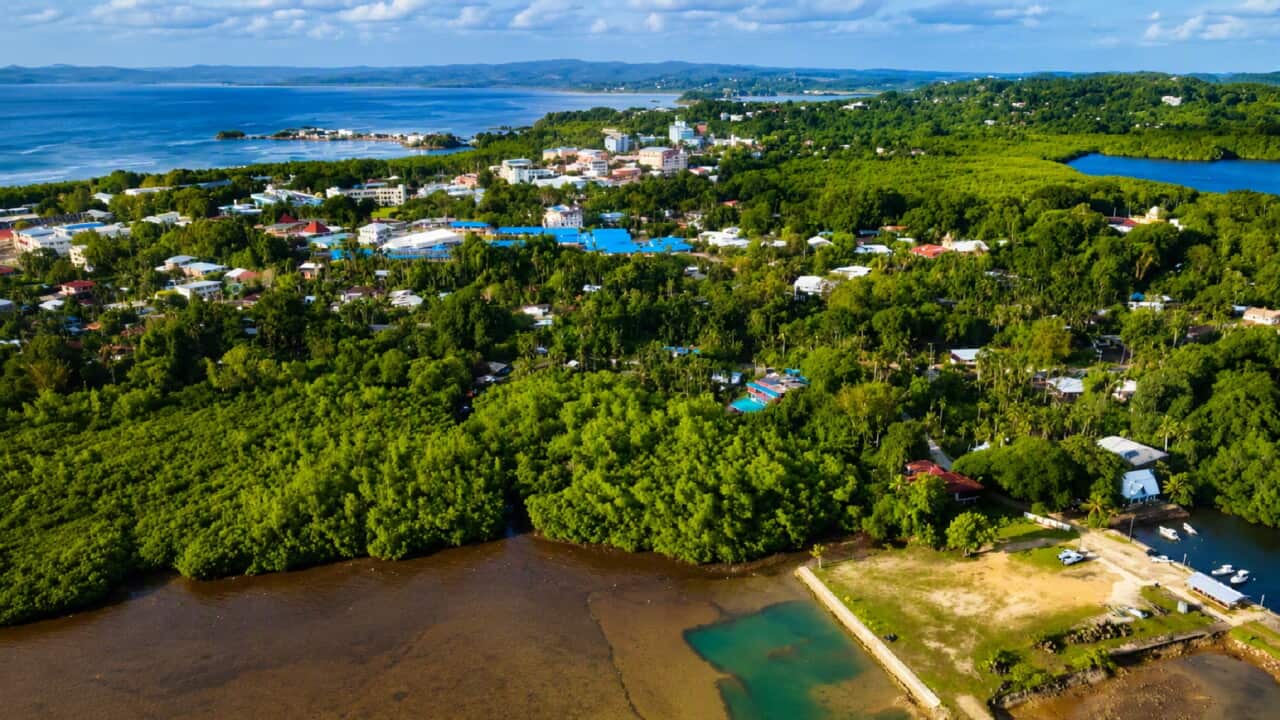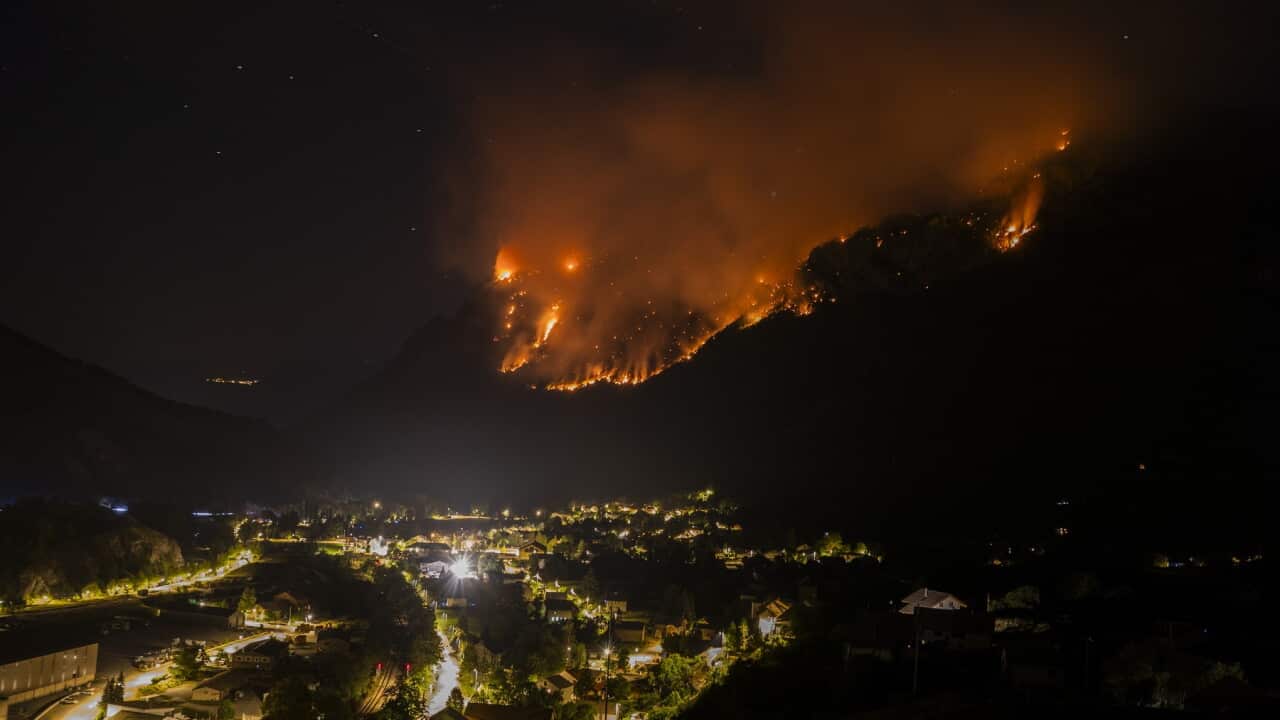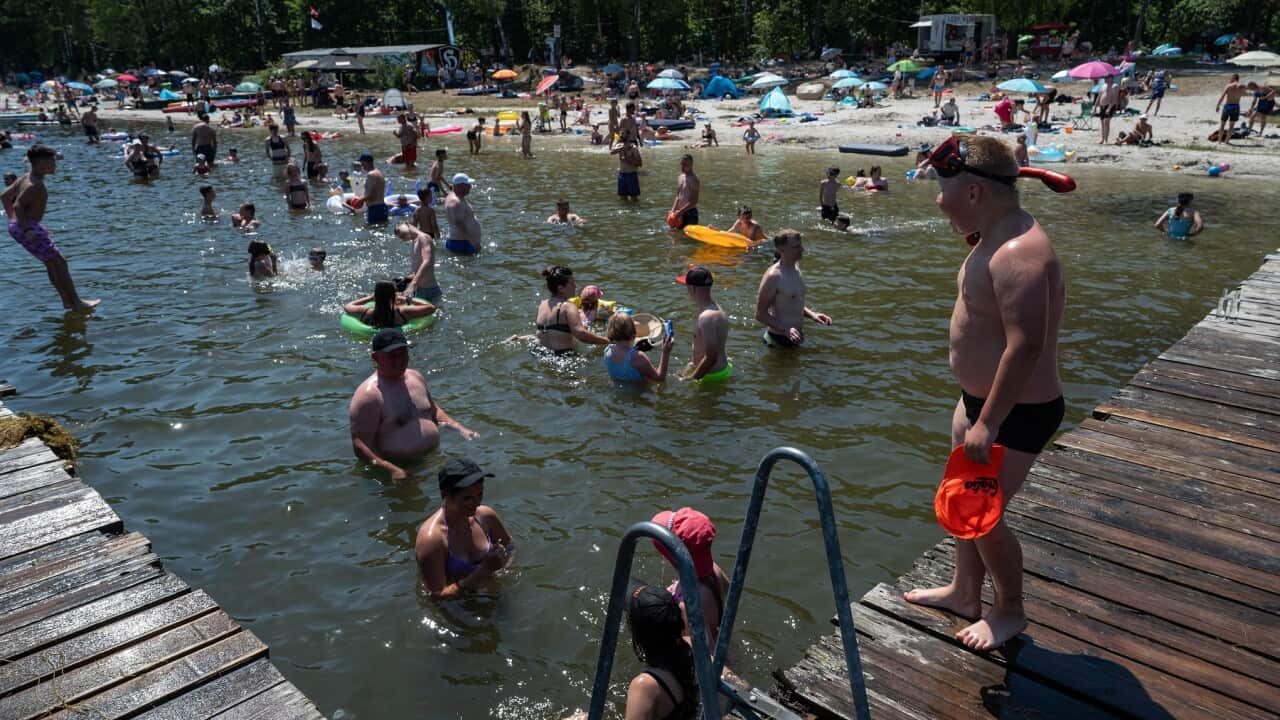


From Europe to the Pacific, extreme weather events are devastating communities and wildlife across the globe as scientists warn of a strengthening El Niño . With the weather system predicted to rapidly emerge in the coming months, experts say no region is immune to the deepening crisis.
Listen to Australian and world news, and follow trending topics with SBS News Podcasts.
TRANSCRIPT:
As people around the world face super typhoons, fires, floods, extreme heatwaves, and devastating earthquakes, UN Secretary-General Antonio Guterres says El Niño is well and truly here.
"El Niño is not just knocking on the door. It risks blowing the house down. Turning up the heat. Disrupting food and water systems. And hitting the vulnerable the hardest."
According to the UN seasonal outlook, El Niño is here and will strengthen between July and September.
Lasting around nine to 12 months, this El Niño is classified as strong, the third-highest level out of four under the UN classification system.
Professor of Climate Risks and Resilience at the University of Reading, Professor Liz Stephens, says this El Niño event could supercharge extreme weather.
"The forecasts are showing that this could be a very strong El Niño event this year, the word Super El Niño have been used but this is not a technical term that's used by the scientific community. What it means is that that anomaly in terms of the sea surface temperatures, is much larger than the normal El Niño events, and we're still not yet sure what that means in terms of impacts and whether we're going to see stronger, a stronger influence of the Pacific Ocean on weather patterns this year than in previous years."
Occurring every two to seven years, El Niño events warm surface temperatures in the Pacific Ocean.
Professor Stephens says this warming brings global shifts in winds, pressures and rainfall patterns.
"When we're looking at the impacts of El Niño, normally we're looking at the typical rainy seasons in the country and how they will be impacted. So it just so happens that the monsoon season in India is is June through to September which is why we're starting to see the impacts, more obviously there at the moment. In general, we'll expect to see drier conditions around the Western Pacific. So that includes Australia, Indonesia, Philippines. And those can actually cascade so it's not just drier conditions where we can then perhaps see wildfires associated with that."
With multiple continents already battling extreme events and El Niño rapidly strengthening, experts warn no region is immune.
Record heatwaves in Europe and the United States have coincided with super typhoons and tropical storms across Asia and the Pacific.
Meanwhile, deadly flooding has hit West Africa as Venezuela works to recover from devastating twin earthquakes.
World Meteorological Organisation scientist Alvaro Silva says preparedness is crucial.
"We have a window for to act for preparedness for early action, and this window is narrowing in some regions as the El Niño will lead to impacts already in some of these of these regions."
But even with preparations, Professor Stephens says the impact on communities could still be devastating.
"Depending on exactly how El Niño plays out this year, it can have a huge impact on communities. If there's very extreme flooding, then you would expect communities to be displaced as a result of those floods and those like their livelihoods interrupted for quite a large period of time. In terms of drought conditions, again, if people are relying on their land and it's not capable of producing food this year, then of course that will impact them quite severely as well."
In 2026, the world's oceans experienced their hottest June on record.
A key regulator of the climate, oceans absorb some 90 per cent of the excess heat caused by greenhouse gases.
The consequences of ocean heatwaves can also be ruinous for marine ecosystems.
Deputy Director of the Copernicus Climate Change Service Dr Samantha Burgess says marine heatwaves were intensifying even before El Niño developed.
"Marine heatwaves are really what causes the devastation to wildlife in particular and we have seen numerous marine heatwaves recently, particularly in the Mediterranean, but also in the North Pacific. So that is not, associated with the El Niño. But as the El Niño event develops, the sea surface temperatures will continue to rise. So we are more likely to see more of those marine heatwave events that lead to consequences, devastating consequences for important ecosystems like coral reefs and seagrass. They also impact the health and quality of fisheries and aquaculture."
That - along with the impacts of El Nino - has caused concern for those keeping watch on the coral reefs that are under growing heat stress in Australia's Great Barrier Reef, home to nearly 9,000 marine species.
Richard Leck is the head of oceans at the World Wildlife Foundation.
"The fact that the system is now switching over into an El Niño type, which is typically much hotter with very little rain, with very little mixing of ocean waters means the reef will become under increasing heat stress."
As El Niño warms the Pacific Ocean, a persistent marine heatwave off the coast of California is also causing havoc for another group of wildlife.
"Birds sick or dying on the beach. Large numbers of dead birds, and it's not abnormal to see dead birds on the beach, but the quantity of dead birds is unusual. We match that with the concern of the marine heatwave. We think these birds are not being able to access the food that is so important for their livelihood."
CEO of International Bird Rescue JD Bergeron says the heatwave has shrunk the band of cold, nutrient-rich surface water where krill, anchovies and sardines thrive near the shore.
"The warmer water drives fish away. Fish do not like warm water, so they either go deeper or they find cooler water somewhere else. If birds hunt in that area, their fish are just not there."
He says wildlife rehabilitation facilities in California saw hundreds of emaciated seabirds during the Spring, and that the worst may be yet to come.
"We should be concerned. The environment is not the way it normally is. At some point that's a concern for us too. Not just for bird lovers, but for people who love the ocean, nature, coral reefs, et cetera. These things are concerning."