
Veterans’ advocate groups have descended on Canberra to protest against a proposed cap on allied health services. A series of decorated former service members laid down their medals in a symbolic show of resistance. The government continues to resist the pressure, as the Coalition throws its weight behind veterans.
Listen to Australian and world news and follow trending topics with SBS News Podcasts.
TRANSCRIPT
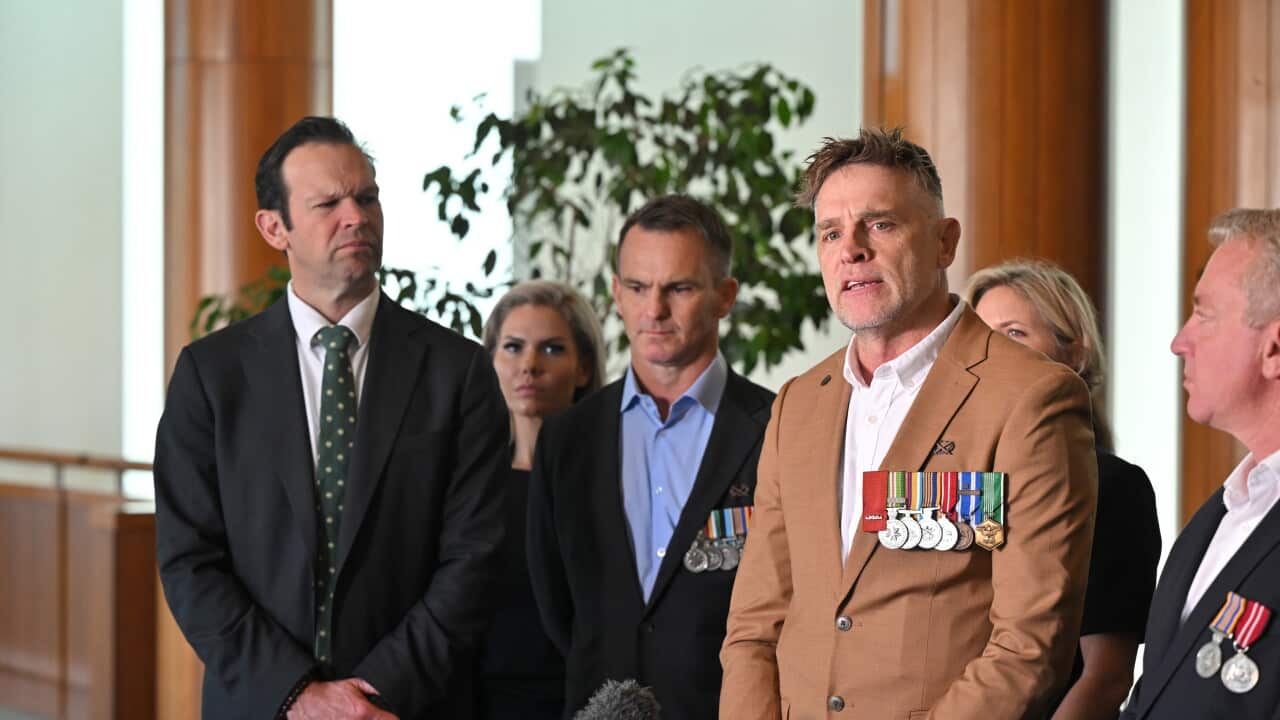
As politicians returned to Parliament for the start of a new sitting fortnight, a decorated group of veterans assembled out front, laying their medals down on a wreath adorned with a photograph of a fallen loved one lost after military service.
"They have not laid them down lightly. Each medal represents deeds of valour, loyalty, and sacrifice - by both the veteran and their families."
John Armfield is a former navy clearance diver, and spokesperson for advocacy group Fair Care for Veterans.
"But the promises these medals represent cannot be honoured in ceremony, and then abandoned in policy. The true measure of that promise is what the government does when service leaves defence personnel injured, unable to serve, and they become a veteran.”
The delegation had come to fight a proposal to impose an annual cap of $5,000 for veteran’s allied health services, starting from July 2027.
First flagged in the federal budget, the plan has sparked outrage across the veteran community, which is marking two years since the Royal Commission into Defence and Veteran Suicide.
It’s the second time in a month veteran advocates have travelled to Canberra - to campaign against the changes.
Dr Tim Nelson is a former RAAF fighter pilot.
“This morning, the Coalition of Veterans’ Voices is calling on the government to take these actions. They are not complicated. Number one, scrap the cap on allied healthcare. This implementation was introduced without a single question or conversation with the people it was going to affect.”
After sustained campaigning from advocates, the Department of Veterans’ Affairs did initiate consultations, and changed the description of the cap to a threshold.
“Number two, end the lowballing. Deliver veterans with their choice of provider they trust to use, in accordance with recommendation 101 of the Royal Commission. Number three, fix the system: an independent inquiry into how veterans' claims are handled, with standards that are published, transparent, and enforced.”
The Coalition has vowed to fight the proposal, with Nationals Leader Matt Canavan saying veterans feel blindsided and disrespected.
“So, what clearly should happen now is the government should take the cap off the table. Scrap this cap. If there are issues of fraud or other things the government is worried about, it should engage in genuine consultation, rather than consultation where they've shot first and asking questions later.”
The government has defended its proposal, saying the changes would increase access to allied health services, and prevent veterans being constantly being sent back to doctors.
They say the changes would save almost $750 million over three years by cracking down on overservicing, where there’s no clinical justification for the volume of appointments and services provided.
Under fire in August, Minister for Defence Personnel and Veterans, Matt Keogh outlined the case for reform.
“It's about making it easier for veterans to be able to access those services by removing the treatment cycle, having to continually go back to doctors to get further reports in order to go backwards and to be able to get back to allied health services, and that when it came to the threshold that we're putting in place instead, for a much smaller proportion of veterans, that we would always ensure that there was continuity of access, and that we would engage with all of the veteran community in relation to how we made sure that we maintained that good access.”
He says veterans who require more than $5,000 in allied health care each year will still be able to receive clinically necessary treatment, and the threshold won’t apply to those who’ve been catastrophically injured.
Minister Keogh also says the government has made record investments into veterans health, and those approaching the threshold will have their treatment reviewed to prevent unnecessary interruptions.
Andy Cullen is the Co-founder of PTSD Resurrected, and part of a delegation that meet with Minister Keogh on Monday.
“He said that he wanted to consult the wider veteran community further, and leaving that meeting, I felt disappointed. To be honest, I feel kind of betrayed. You know, I'm a fourth-generation soldier who served this country proudly. I have an 18-year-old son who's looking to enter the defence force at the moment, who I'm encouraging actively not to do that, because I don't know if this government is going to live up to its promise to look after him if he's injured.”
The pushback has received significant backing from politicians, including Senator Jacqui Lambie, who raised specific issues around women’s health.
The independent MP detailed her own struggle accessing healthcare for injuries sustained while serving in the A-D-F, which led to vaginal prolapse.
“I'm begging you, Prime Minister, we are already suffering enough: drop the bloody cap! Drop it, mate! It is so unfair.”
On Monday, Coalition Senators - including Matt Canavan, Leah Blyth James McGrath, and Michael McCormack - joined the veterans campaigning in Canberra.
Senator Jess Collins says it’s abundantly clear that the system is broken, and people are not only hurting, but dying.
“What we saw this morning, I never, ever, ever, ever want to see again. Now I am sorry that you have had to come here today, all of you, to fight for the veterans and the serving personnel. It is not okay that the government is making them do this.”
Nationals leader Matt Canavan says the Coalition will introduce legislation this sitting fortnight to scrap the veterans’ allied health cap.
The government's consultation on the proposed changes closes at the end of next month.