The Federal Government has announced $7.2 million in funding for the Northern Territory Government and Aboriginal-controlled health organisations, to help curb the nation's worst recorded outbreak of diphtheria.
The National Disease Surveillance System has recorded 230 cases of diphtheria this year alone, with the majority of cases in the NT.
$5.2 million will go towards assisting the National Critical Care and Trauma Response Centre in providing a surge workforce to administer and procure vaccines and antibiotics.
The remaining $2 million will go towards Aboriginal community controlled health organisations in the NT and other states to provide culturally safe communications and on the ground health support.
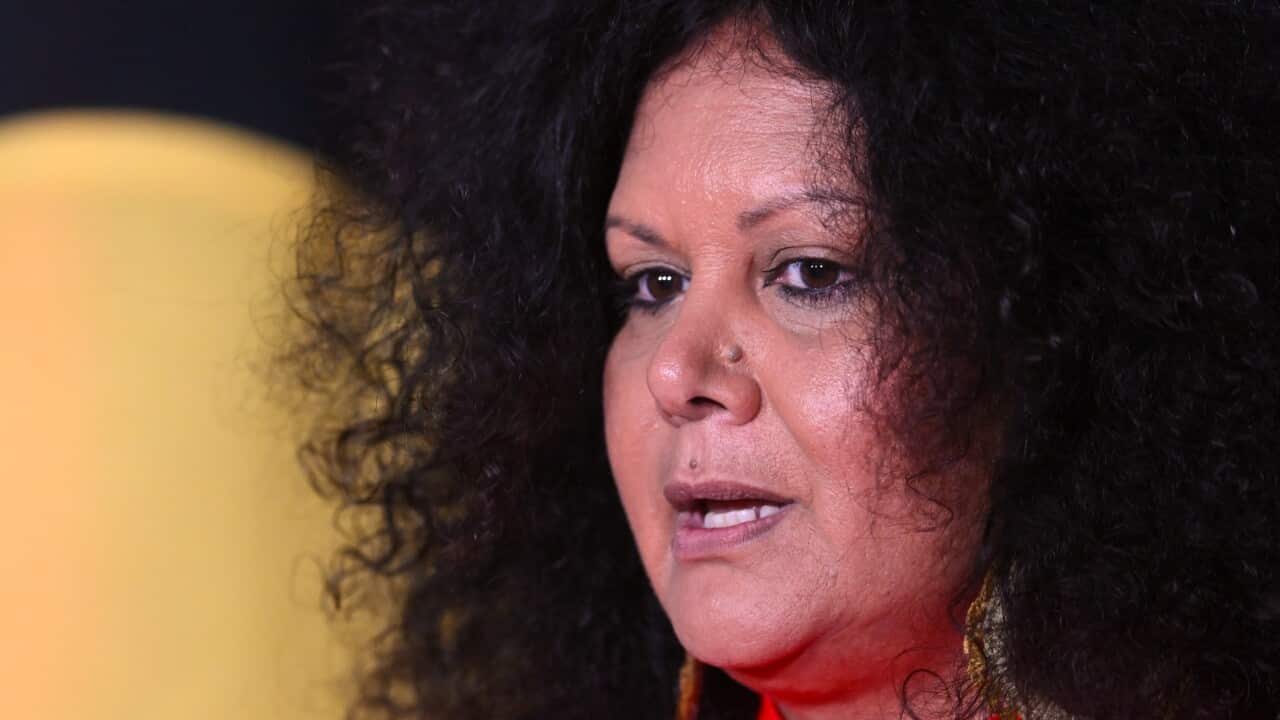
Indigenous Australians minister Malarndirri McCarthy said she was "very concerned" by the outbreak, and that the new funding would roll out "immediately".
"I've been in Alice Springs talking to Congress and the Aboriginal Medical Services Alliance Northern Territory," she told ABC News Breakfast.
"We have seen programs rolling out in places like Yuendumu in language, we know that we've got over 100 Aboriginal languages.
"We need to ensure that the communication is there, not misinformation."
Diphtheria is a vaccine preventable disease, with vaccinations normally included as part of the standard childhood vaccination schedule.
The disease itself is a serious bacterial infection, and can be spread through respiratory droplets via coughing or sneezing, or via direct skin contact with sores.
NT health authorities are awaiting an autopsy report for a possible diphtheria related death - if confirmed, it would be the first death from the disease in Australia since 2018.
Minister McCarthy, herself a Senator from the NT, urged people to get vaccinated.
"We know that the immunisation rates have been there for our children," she said.
"Our call is really to adults to not think that you are immune, make sure you're getting checked. So, it's really important that adults also know that this isn't just about children."
Vaccination rates and housing concerns
Health Minister Mark Butler said about 60 per cent of all cases are in remote parts of the Northern Territory, with about 30 per cent in northern Western Australia. The remaining cases are in the APY Lands in South Australia and some parts of Queensland.
“The number of cases we’ve reported since the beginning of 2026 is about 30 times the average we’ve seen over the last five years," he said.
Mr Butler said it was too early to say whether vaccine rates were a major cause of the outbreak, but did acknowledge it was an issue.
"We need to take some time to examine the causes of this outbreak, there has been a reduction in vaccinations broadly across the community since COVID, we’ve seen that right across the world," he said.
"There is a lingering legacy of vaccine hesitancy that flows from COVID and frankly also from some of the misinformation and disinformation you see online."
He urged Aboriginal adults in remote communities to get a booster every five years, instead of the usual 10 year recommendation.
Megan Campbell, a medical advisor from the National Aboriginal Community Controlled Health Organisation (NACCHO), said there were several possible reasons for the outbreak.
"We know that vaccine coverage has been dropping in recent years … and that will always place communities at risk. We also know that Australia has under invested in appropriate quality housing, particularly for remote communities, so that will also always put communities at risk," she said.
Ms Campbell said appropriate housing was particularly important when dealing with diseases that could spread rapidly.
"There isn’t the necessarily health hardware for people to keep themselves well and their families well, and crowded living circumstances also contribute to the increased chance of transmission when there is an infectious disease," she said.