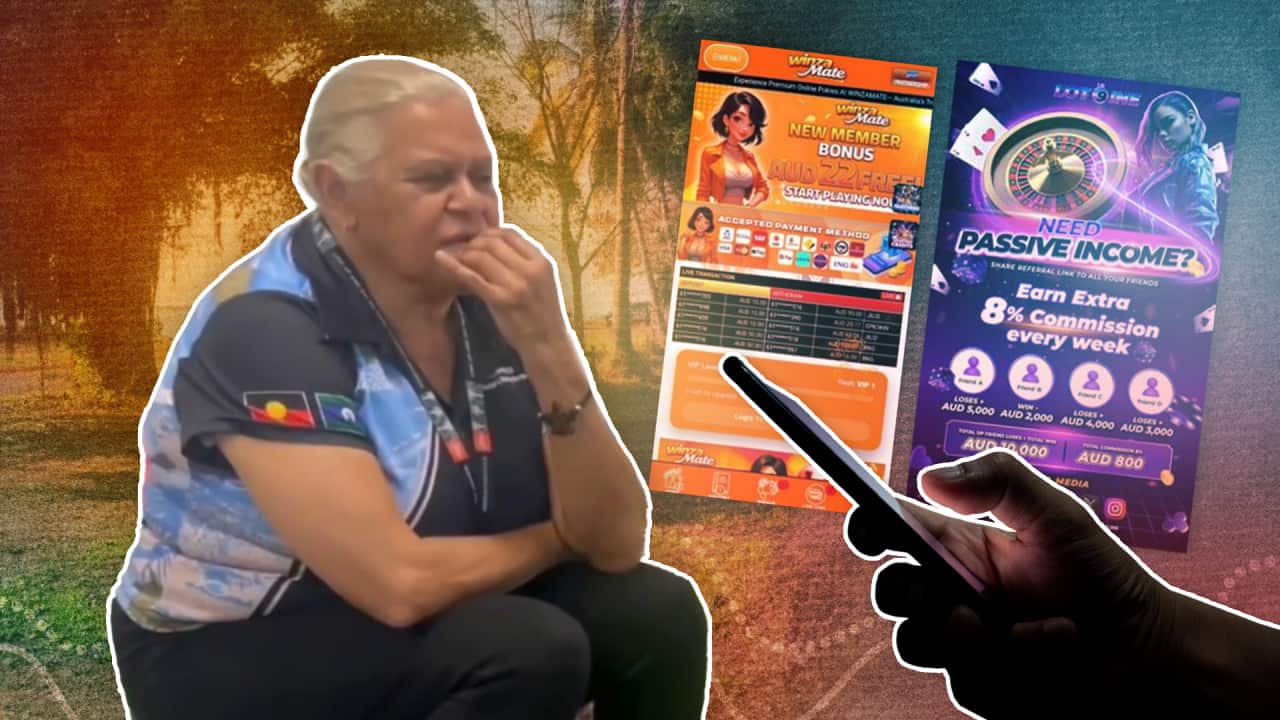
Financial counsellor Lynda Edwards says online gambling scams, known as 'scambling', begin "deceptively simple".
"Someone sees an ad on Facebook or a friend shares a link in a WhatsApp group," she told NITV.
"It’s like a game: it’s very colourful, it's social, it has the promise of winning money and people are invited to download an app and sign up.”
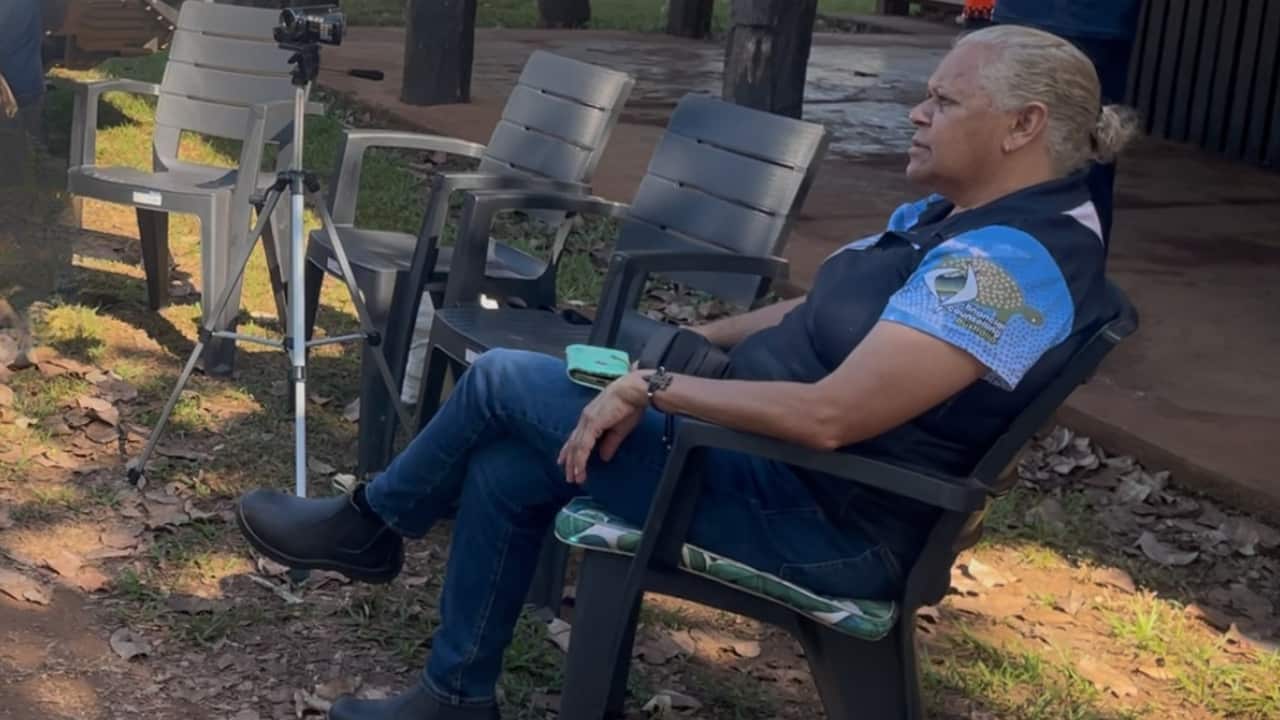
Director of First Nations Policy at Financial Counselling Australia, the Wangkumara and Barkandji woman recently travelled to Wadeye and the Tiwi Islands to hear how mob are being affected by the fake gambling sites.
"It looks like a real gambling site, but the online casinos are fake," she said.
"They keep people's winnings, demand more money and promise cash if people recruit their friends," she said.
Almost half of those targeted are Indigenous
Scamwatch, operated by the ACCC, says in 2025 there were 806 reports of scambling, up from 677 the year before.
Reported losses more than tripled over the same period, from about $449,000 in 2024 to $1.6 million last year.
Almost half the people who have been scammed are Indigenous.
"Some people win small amounts of money ... but the winnings dry up.
"Some of the community members have said they won $10,000, but they never received the cash into their bank account.

Ms Edwards says some people in remote communities want to win money to support their families, but the scam has been hurting families.
“We know that people are losing so much money they are unable to provide food for their families put food on the table," she told NITV.
"They’re actually in debt because they’re not paying their bills. This is a highly addictive game that’s been targeted for First Nations people, so our mob.”
The ACCC is trying to confirm suspicions scammers are using geo-location to target remote communities.
The National Anti-Scam Centre, also run by the ACCC, is launching a six-month-long investigation into scambling, called a fusion cell.
Police, banks, community groups and telecommunications providers and digital experts will collaborate in an attempt to tackle the issue.
"Because of the high proportion of First Nations consumers who are reporting ... there may be geo-targeting of communities," said ACCC Deputy Chair Catriona Lowe.
"We need to find out if that is true and if it is true how it’s being done.”
Ms Edwards says people in the Territory refer to scambling 'ding ding' because of the sound games make when they are promised winnings.
“In some cases, 80 percent of the communities are playing these really bad games and it really is affecting the community," she said.
"This isn’t just the Top End of Australia; we're seeing this behaviour and this horrible scam right across the country.”
Scambling can be reported online at https://www.scamwatch.gov.au/ as well as on the dedicated phone line for First Nations communities, 1300 303 143.