"Bangarra!"
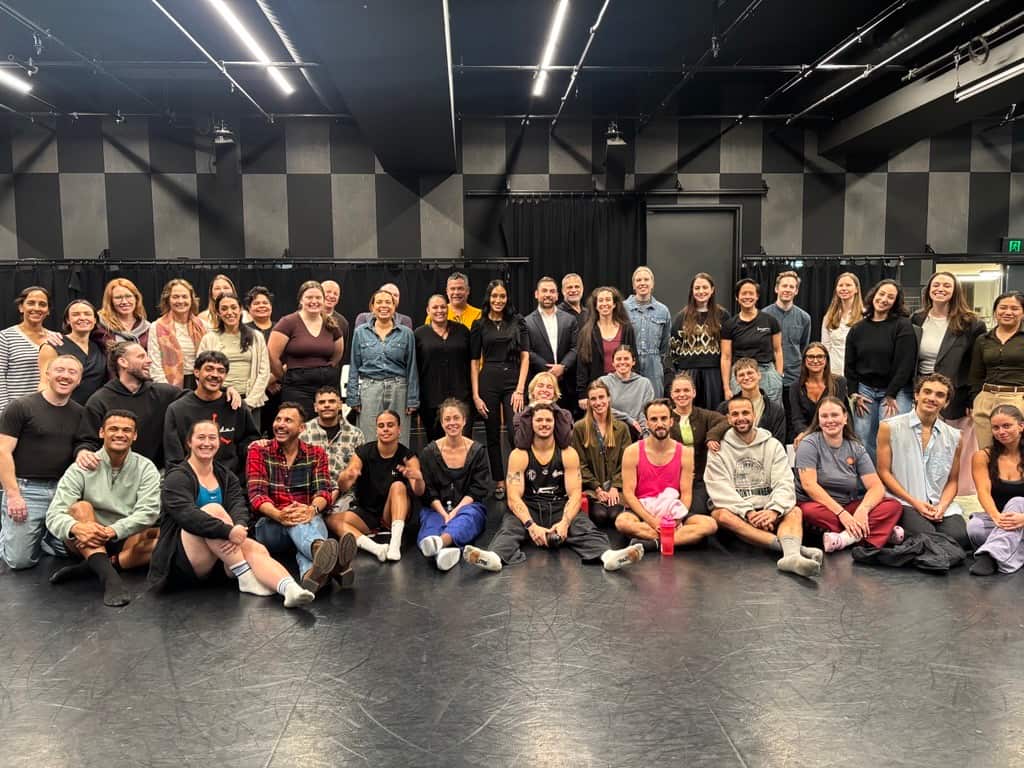
The word is repeated around the room at a Bangarra Dance Theatre cultural workshop; staff, dancers and leadership are learning to properly pronounce the organisation’s Wiradjuri language name.
The recent change has been years in the making.
Watch a video of the pronunciation here:
When Frances Rings became Artistic Director in 2023, it was brought to her attention that the common pronunciation of the name (ban-GAH-ruh), used almost universally, was incorrect.
“I think as First Nations people we have an obligation to keep growing, keep learning and keep ensuring ... that we're able to correct what colonisation has effectively imposed upon us,” the Mirning woman says.
Bangarra began a process of consultation with Wiradjuri knowledge holders to understand the meaning of its, name and how it should be correctly spoken in language.
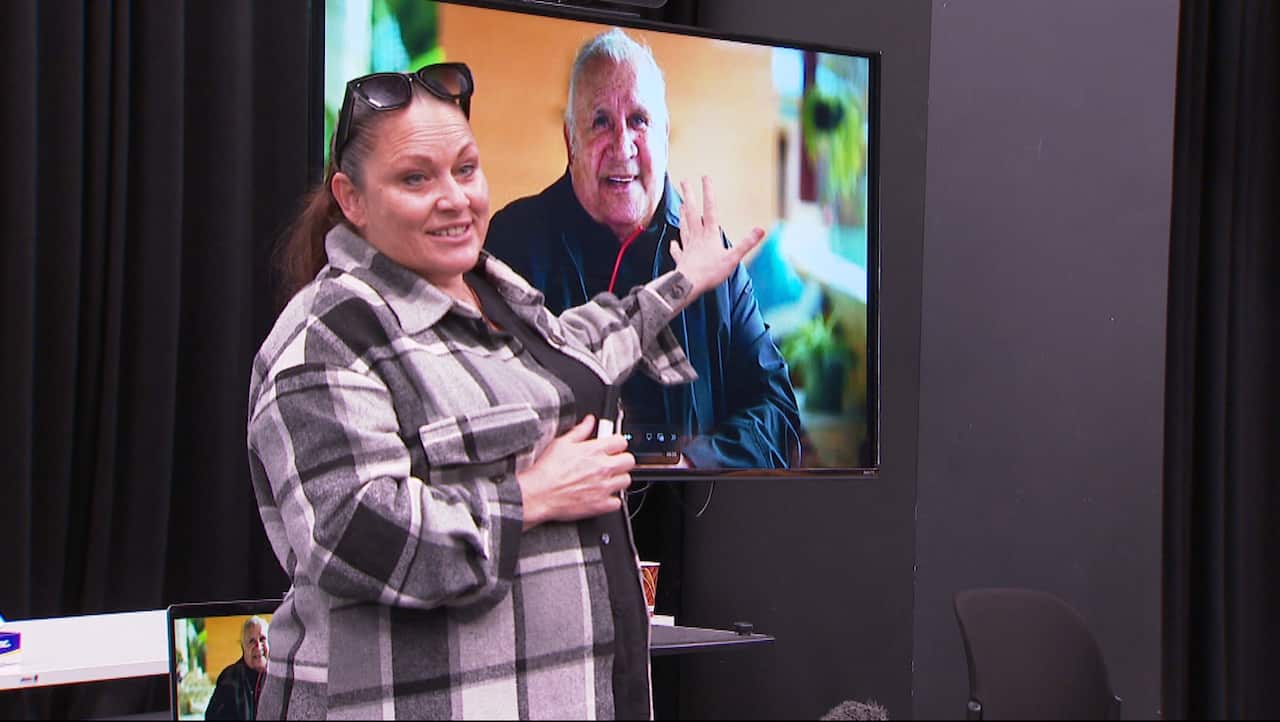
A Wiradjuri word, Bangarra means “to make fire”, and also refers to the fire sticks used to make fire and gift life.
Respected Wiradjuri Elder and cultural leader Uncle Stan Grant Snr AM, who has dedicated his life to Wiradjuri language reclamation and Wiradjuri language teacher Letetia Harris have been central to that consultation process.
Harris says the meaning gives the dance company's name a much deeper cultural significance.
“It’s really important that we get it right because it's our language. Their company holds the identity of that name and that name is Wiradjuri," she said.
“That name is so significant and holds so much connection. It’s a cultural practice. It has so much connected to ... Wiradjuri identity.”
For Rings, reclaiming the pronunciation is also about understanding what the company has been carrying in its name for more than three decades.
“Language isn't just words that you speak: it evokes memory, it has knowledge embedded in it, it gives you a feeling and it connects you somewhere, to something else,” she says.
Rings says learning the history behind the word brought Bangarra back to the moment the name was first gifted to the company when it was established in 1989.
“[It] brought back all of those values of respect, of reciprocity, of understanding, of care but also an obligation to make sure that you're caring for that word and that you're living to the aspirations of what ‘to make fire’ is about.”
Learning from Wiradjuri knowledge holders
The cultural workshop was part of Bangarra’s effort to put that learning into practice.
Led by Harris, the session gave staff, dancers and leadership the opportunity to hear Wiradjuri language, practice the pronunciation and learn about the cultural knowledge within it.
For Harris, it's about more than simply correcting the pronunciation.
“For Bangarra, it allows them to actually celebrate the name properly, know its depth, know its connection and understand its identity is Wiradjuri,” she says.
Rings says working directly with Wiradjuri language teachers and knowledge holders has been central to that process.
“This has been an incredible privilege to work alongside language, particularly Wiradjuri language knowledge holders and teachers, because we're getting it from the source,” she says.
“They've learned from their Elders, they've learned on Country.”
For Bangarra’s Deputy Chair Joshua Duke, the process is also about the organisation taking responsibility for its name and continuing to strengthen its cultural protocols.
“It's at the heart of who we are and what we do,” Duke says.
“We are storytellers. Preserving, celebrating and telling our stories globally. Culture is at the heart of our business, our organisation. Everything that we do.”
A new chapter for the company
The workshop has also given Bangarra’s dancers an opportunity to engage directly with the language and cultural knowledge behind the name they carry.
Rings says she saw a noticeable shift among the dancers throughout the day.
“I could see not only the shift in them and their pride and their awareness but also just in the whole company being able to come together and experience this,” she says.
“There was just this understanding of the privilege that we have, what an incredible honour to be able to hear and listen and be reminded about the power of carrying this word.”
Duke says making time for the workshop was an important part of putting Bangarra’s values into practice.
“It was pretty special to be a part of it,” he says.
“For us as well, it's important that we live our words and our values, by carving out the time in everyone's day to practise culture and to be a part of it.”
Continuing the journey
Bangarra has now formally announced the correct Wiradjuri pronunciation but acknowledges changing a habit that has existed for decades will take time.
Rings says the company now wants its staff, alumni, audiences and communities to walk alongside them in this journey.
“Saying the pronunciation is going to take a long time for us to get that in our habits and in our everyday communication,” she says.
“But it's really special.”
The process is also shining a light on the broader work being done by First Nations language teachers and communities to preserve and revitalise our languages.
“Languages are like libraries,” Rings says.
“They're the doorway to Country, they're the doorway to knowledge and understanding about kinship and family and lore and all of those practices that give us our identity.”
For Bangarra, reclaiming its name is one step in that ongoing journey.
“It will take time but I think it's an important moment,” Rings says.
“It is a responsibility and it's not too late to correct what is wrong.”