
A rare discovery of bone fragments has added to the rich archaeological history in Ngarrindjeri country, South Australia, a new paper in Australian Archaelogy has revealed.
The bones have not been identified as human, but the Murrawong bone point, dated between c. 5,300-3,800 years old, sheds light on traditional Indigenous tool-use going back thousands of years.
It was discovered in a joint project by Flinders University, Griffith University and other experts.
Ngarrindjeri man Dr Christopher Wilson, from Flinders University Archaeology, said the bones were more likely to be from a Kangaroo or Wallaby.
“Every discovery reminds us of the diverse material culture used by Aboriginal peoples in this country.”
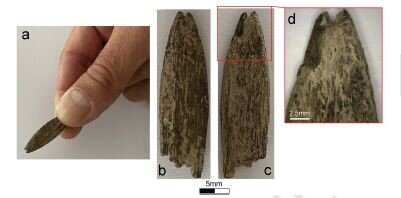
"Even one find of this kind provides us with opportunities to understand the use of bone technologies in the region and how such artefacts were adapted to a riverine environment,” said Mr Wilson.
“Bone artefacts have lacked the same amount of study in comparison to artefacts made of stone.”
Professor Amy Roberts also conducted research on discovery and said the last similar discovery was uncovered in the Lower Murray River Gorge was in the 1970s.
“Bone artefacts have lacked the same amount of study in comparison to artefacts made of stone,” said Ms Roberts.
“Every discovery reminds us of the diverse material culture used by Aboriginal peoples in this country.”
The artefact was found during recent excavation work. The project was undertaken in collaboration with the Ngarrindjeri community.