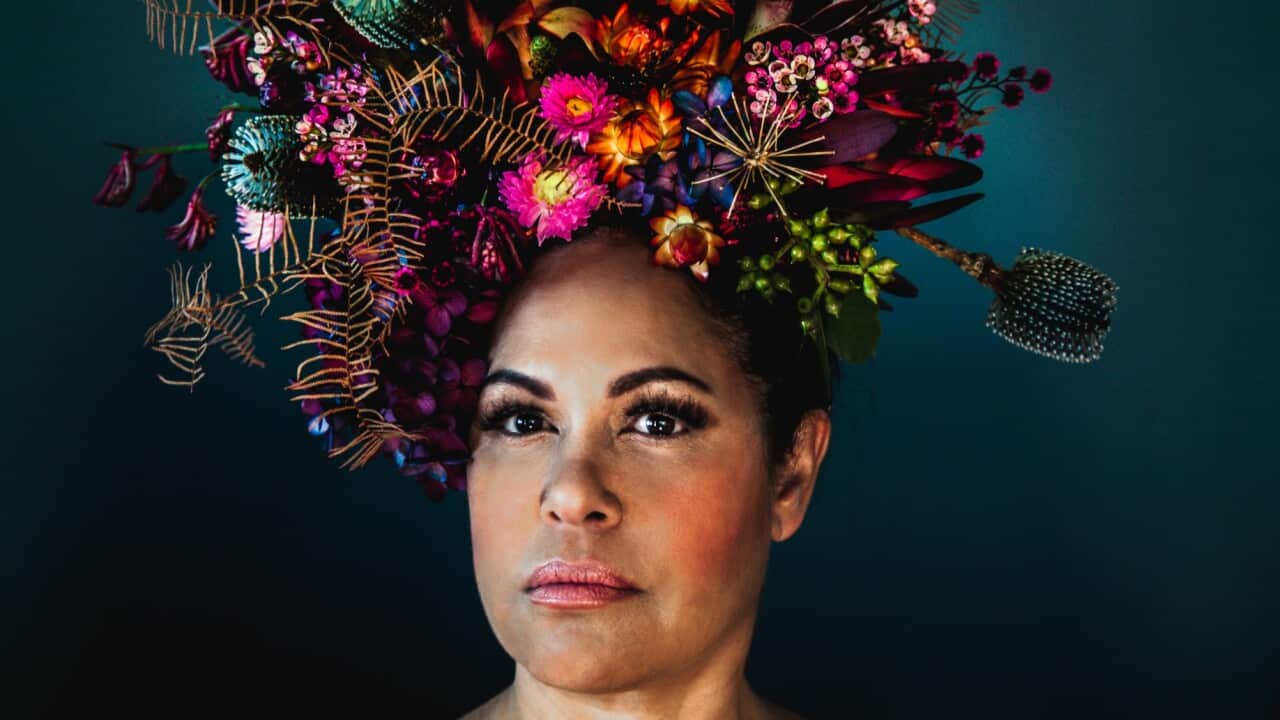
Christine Anu is lending her voice to the ‘It’s Good To Know’ campaign to raise awareness of a new lung cancer screening program, after losing a close family member to the disease.
The Torres Strait Islander singer-songwriter said it was last year when her family noticed her Aunty had been unwell.
“When the diagnosis came with lung cancer it was really quite swift and none of us knew what the symptoms were or the signs to actually know what to do,” she said.
With limited options by the time the cancer was detected, Ms Anu’s Aunty sadly passed away.
“There was no knowledge of a screening program or anything that was promoting lung health in any capacity, to my knowledge, and it’s a remote community in Far North Queensland in the NPA (northern peninsular area), so she was airlifted to hospital and when the diagnosis came she was immediately sent home because there was nothing to be done.”
Ms Anu said it was this loss that propelled her into action to ensure other families don’t have to go through the same heartbreak, especially if it’s preventable.
“When I learnt about the lung cancer screening program I absolutely, one hundred percent knew that I really need to put my voice to it and that everyone all over Australia needs to have access to it and absolutely know that it is something we can do.”
Now she wants mob to know the sooner something is caught, the better.
“If she had it all along and this was end stage, how can we catch this earlier? So I’m really passionate about getting this program awareness out there so that we can catch this early, because if we catch it early we can do something about it,” she said.
Lung cancer is the most common form of cancer among Aboriginal and Torres Strait Islander people and it doesn’t show symptoms until it is at a point that it is harder to treat.
However, a lung cancer screening test can detect lung cancers in the early stages and over 65 per cent of lung cancers can be successfully treated if found early.
Deputy CEO of the National Aboriginal Community Controlled Health Organisation (NACCHO) , Dr Dawn Casey, said lung cancer is “taking too many of our peoples’ lives”.
“We cannot afford to wait; early detection is critical,” she said.
“That is why this program matters. Our people must have care that is effective and culturally safe, delivered in ways that respect community and Country.”
The screening program encourages those aged 50 to 70 with a history of smoking, whether they currently smoke or have quit, to speak to their health worker or doctor and who, if necessary, will provide a referral for a free scan.
The scan itself is quick and straightforward, taking just 10-15 minutes.
Ms Casey emphasised the importance of culturally safe healthcare for Indigenous communities.
“Our people must have care that is effective and culturally safe, delivered in ways that respect community and Country,” she said.
“That’s why the National Lung Cancer Screening Program has been designed in partnership with the National Aboriginal Community Controlled Health Organisation.
“By working together to make screening accessible and culturally inclusive, we can support our people to take control of their health and give families more precious time with their loved ones,"Ms Casey said.
Ms Anu’s message for mob was clear.
“You’ve only got this one [set of] lungs, and you want to be running around with your kids... And your grandkids, if you’re upwards of 50 like myself,” she said.
“I’m right in there, I’m prime age group for screening, it’s better to be safe than sorry … and maybe perhaps do all the right things, get away from the things that are bad for your lung health and get on with the good program because we are, especially 50 plus, we are the role models for the next generation.”