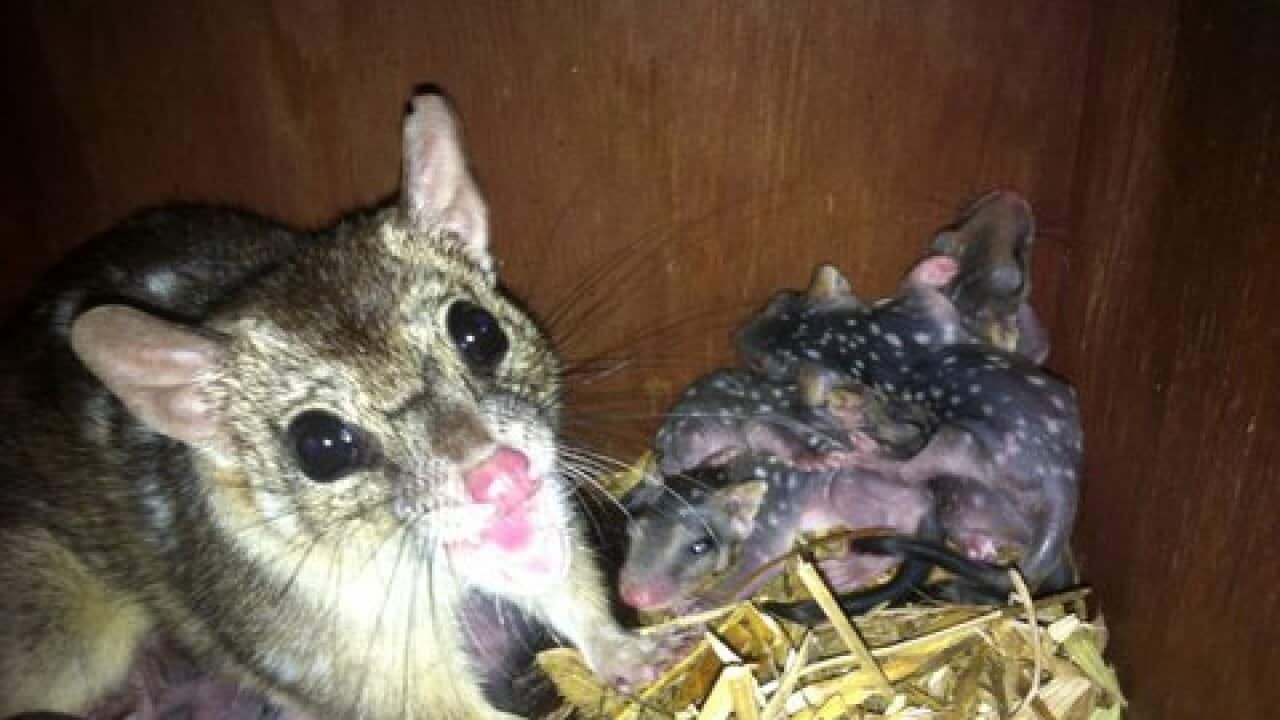
But a program designed to train quolls to resist eating the toxic toads is under way and one researcher is optimistic they will bounce back.
Two populations of quolls were exiled in 2003 to two toad-free islands 50 kilometres northeast of Nhulunbuy in the Top End.
Forty-five quolls were moved to Astell Island and 19 went to neighbouring Pobassoo Island, and 11 years later, a 2014 survey found their combined population had boomed to about 6000.
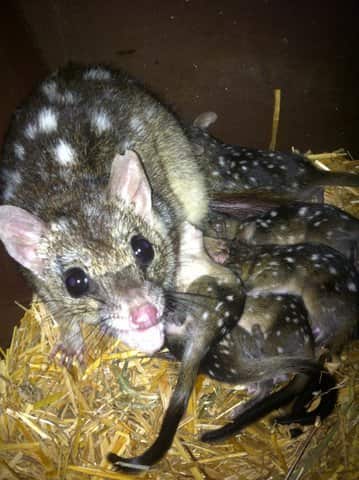
A team of researchers will travel to the islands this weekend to collect a group of quolls that will become subject to anti-toad training before they are released into Kakadu National Park.
"We make the toads taste terrible for the quolls," Territory Wildlife Park curator Dion Wedd told AAP on Friday.
The quolls are fed small toads, with only a bit of toxin, but it is enough to make them sick.
"As soon as they eat it, they try to scratch it out of their mouths ... it really is an unpleasant taste and experience, and makes them feel queasy," Mr Wedd said.
It only takes a few tastes for the quolls to learn not to eat the toads, and mothers pass that knowledge on to their young as they carry them on their backs while foraging for food.
Whatever she does eat - grasshoppers or lizards or mice - she's avoided those toads
"Whatever she does eat - grasshoppers or lizards or mice - she's avoided those toads," he said. "She will carry those bubs on her back for a couple of weeks [and] when they do become independent, when mum kicks them out, they don't eat toads."
Much like the pygmy crocodile of northern Queensland, whose populations were dealt a massive blow before they learnt to eat only the hind legs of cane toads, Mr Wedd is hopeful there will be a resurgence of native creatures adapting around the poisonous introduced amphibians.
"My hope is that at the end of it, I can go out to Kakadu and I can sit in places like Cooinda Lodge and see quolls ripping through the rafters and doing what quolls used to do," he said.