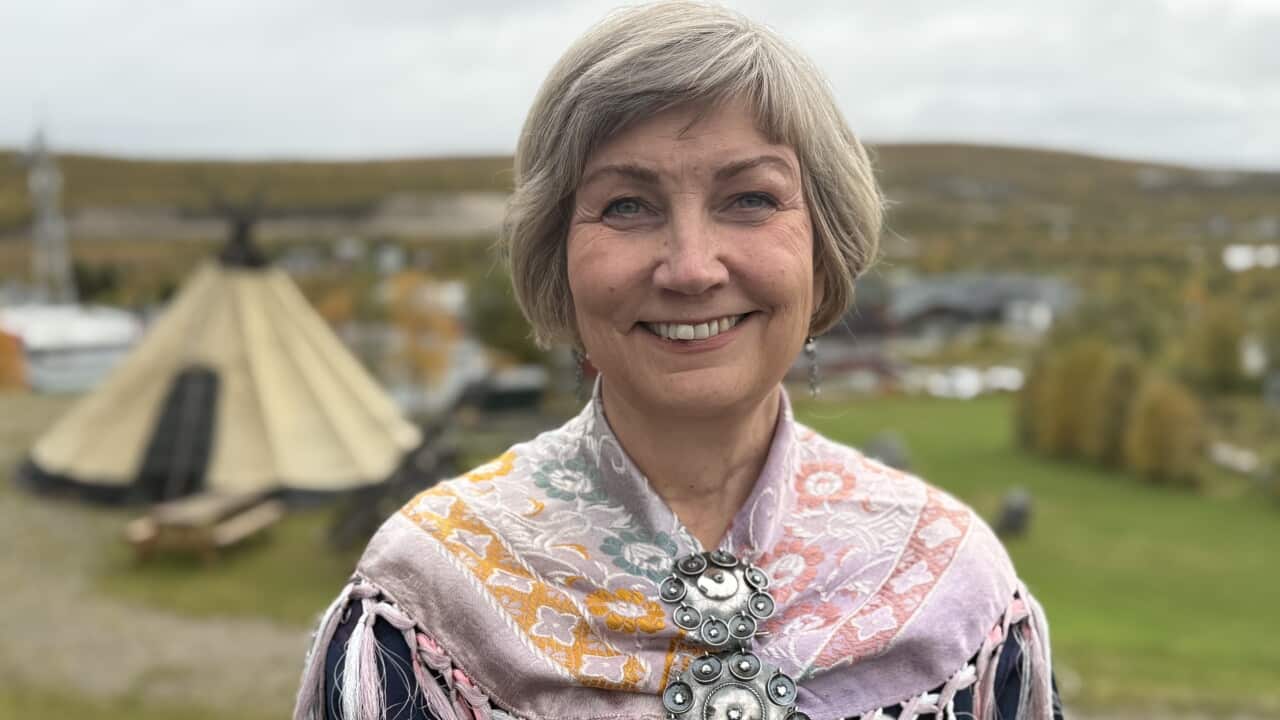
The former President of the Sámi Parliament in Norway has issued a “challenge” to Indigenous journalists and media organisations around the world, to deliver more for their audiences and strengthen democratic institutions.
Aili Keskitalo, now a member of the United Nations Permanent Forum on Indigenous Issues, delivered the opening keynote address at the World Indigenous Broadcasters Network (WIBN) conference - held this year in Guovdageaidnu-Kautokeino, on Sámi land in the Arctic Circle of Norway.
She used her speech to urge Indigenous journalists and broadcasters to be bold, ambitious, and driven by the needs of audiences.
“One of the most important roles of Indigenous media is to demand transparency and offer scrutiny of those who hold power over Indigenous peoples,” Keskitalo said.
“This includes both the majority society, and within our own communities."
She said democracy had a lot to offer Indigenous peoples around the world, and the work of journalists was crucial to supporting such systems.
“It doesn't have to be a democracy shaped like the Western states ... but Indigenous peoples deserve representation and accountability from their leadership," she said.
“Indigenous media plays an essential role in nurturing whatever kind of governance Indigenous peoples have organised. "
Keskitalo also said it was important of Indigenous journalists to hold their own community leaders accountable.
“If Indigenous excellence is our ambition, then it must be examined, it must be questioned, and it must be tested," she said.
“This may, at times, mean that Indigenous media turns their spotlight to Indigenous institutions and leaders.
"That can be hard for our communities and individuals. I've never been a journalist, but I imagine that also that world comes with discomfort and stress ... but if Indigenous excellence is what we strive for, we need the political questions - sometimes, our answers will not be good enough."
The human rights advocate told the WIBN conference it wasn’t just politics, governance and institutions where Indigenous excellence were both seen and required.
“It is also found in the creative power of our peoples,” Keskitalo said.
“Art can be a part of how our peoples handle what is hurtful. Our darkest secrets. The most dysfunctional parts of our cultures. The humiliations of our past, and the present.
“All of this can be managed and processed through art, and through humour."
Keskitalo also had a warning for journalists, urging them not to romanticise the past.
“Indigenous excellence is also about having the courage to look honestly at ourselves,” she said.
“Even if we celebrate our cultures, we shouldn't romanticise the past.
“We should not sugarcoat our pre-colonial societies ... our cultures were not perfect.
“Colonialism explains a lot, but it cannot explain everything ... even before the colonial masters took over, there were people in our societies that were holding power. And this means that power could be abused.”
NRK Sápmi, the Norwegian Sámi national broadcaster, is the 2026 WIBN conference host.
The organisation is marking 80 years of broadcasting as part of the global gathering.
“This conference honours decades of Sámi broadcasting and storytelling while opening new pathways for collaboration among Indigenous content creators worldwide," the broadcaster said.
"Together, we will celebrate the strength of cultural heritage, explore innovative approaches to media, and empower the next generation of Indigenous storytellers.”
NITV and SBS will host the World Indigenous Broadcasters Network Conference in Australia in 2027.