Australia's campaign for a temporary seat on the United Nations Security Council has been met with sharp criticism from Aboriginal and Torres Strait Islander leaders, who say the federal government's promotion of "the world's oldest continuous culture" rings hollow while Indigenous children remain grossly overrepresented in the youth justice system.
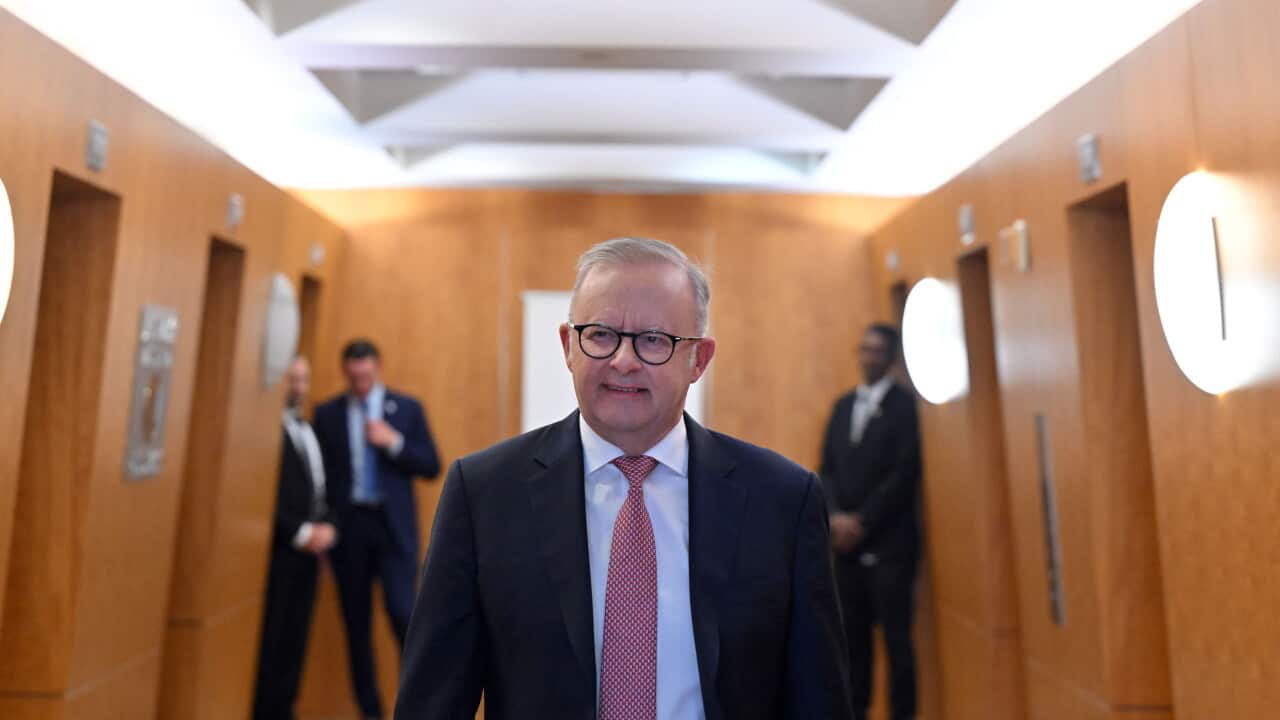
Prime Minister Anthony Albanese launched the bid in New York this week with a video featuring Indigenous Australians Minister Malarndirri McCarthy speaking in her traditional Yanyuwa language, appealing to the international community on the strength of Australia's Indigenous heritage.
The move comes just months after the UN Committee on the Elimination of Racial Discrimination issued a rare "early warning and urgent action" notice, raising grave concerns about the treatment of Aboriginal children in the justice, education, housing and health systems.
For Mililma May, campaigns and advocacy manager at Change the Record and a Danggalaba Kulumbiringin Tiwi woman, the government's approach to that criticism has been telling.
She said the Prime Minister's decision to shift responsibility for child protection onto the states, rather than take ownership federally, undermines any claim to human rights leadership.
"The federal government needs to prioritise its own backyard before looking overseas," she told NITV.
"The federal government needs to ... redirect the time, energy, and money that will go towards this campaign, and put that time, effort, and money into addressing what the community wants, which is community-led solutions led by Traditional Owners and Elders to look after our own communities.
She said Change the Record is calling on the government to "[invest] in community-led programs, investment in therapeutic models of care for children and their families, and investment in everything from stable housing to stable employment to quality education."
That question of federal responsibility is one human rights researcher and advocate Hannah McGlade, a Kurin Minang woman, says goes to the heart of the government's credibility on the world stage.
She told NITV she was stunned by reports that Albanese claimed to be unaware of the UN's concerns about Aboriginal children, given the Committee on the Elimination of Racial Discrimination's warning was issued as recently as May.
McGlade pointed to the persistent failure to lift the age of criminal responsibility to 14, in line with UN advice, noting that children as young as 10 can still be prosecuted under federal law as well as in most states and territories.
"Why they might not be doing that very regularly [is beside the point]," she said, arguing the lack of federal action on its own Crimes Act exposes a deeper reluctance to be bound by the same standards Australia is asking the world to endorse.
She said Australia was welcome to pursue the Security Council seat, but not while being "hypocritical" about commitments already made.
Aboriginal and Torres Strait Islander Social Justice Commissioner Katie Kiss, a Kaanju and Birri/Widi woman, widened the critique to the structural gaps underpinning the government's perceived failures.
In a statement, Kiss noted the irony of Australia promoting itself internationally as home to two of the world's oldest continuous cultures while those same peoples remain over-represented on almost every negative social and human rights indicator.
"Australia should be a global leader on human rights, including the rights of Indigenous Peoples," she said.
"However, there are significant compliance gaps in meeting our voluntary domestic obligations."
She said Australia stands alone among Western democracies in having no Human Rights Act, has not implemented the UN Declaration on the Rights of Indigenous Peoples in law or policy, and has failed to respond favourably to its most recent Universal Periodic Review.
Kiss also pointed to state governments in New South Wales and Queensland recently denying the UN Subcommittee on Prevention of Torture access to inspect detention facilities, and highlighted that Indigenous children have at times made up 100 per cent of the youth detention population in the Northern Territory.
"The Australian Government has the power to ensure the rights of Aboriginal and Torres Strait Islander children and young people are respected and protected.
"It has the power to intervene and override states and territory laws that are locking up our young people instead of investing in their future through evidence-based policy.
"If Australia wants to lead globally, it must first protect the rights of First Peoples and turn its human rights commitments into action."
These accounts sit alongside official figures showing Indigenous children aged 10 to 17 made up 60 per cent of the national youth detention population last year, despite representing just 6.6 per cent of that age group, and are 21 times more likely than non-Indigenous youth to be detained.
Albanese has defended the government's record, pointing to housing investment in remote communities, education funding and healthcare support, and describing intergenerational disadvantage as something that cannot be solved "in a year, or indeed in a term."
"Indigenous disadvantage is something that I'm always concerned with," he said in New York while launching Australia's bid.
"It's something though that Australia we do in the video, we talk about the pride we have in having the oldest continuous culture."
He has also resisted calls to intervene in state-based child protection systems, including in Western Australia, saying such matters are for state governments to manage.
The Indigenous Australians minister has been contacted for comment.
The Security Council is one of the six main bodies of the UN, and is responsible for maintaining international peace and security.
The council has five permanent members - the United States, the United Kingdom, China, Russia, and France - and a further ten nations are elected by the General Assembly to serve two year terms.
The Security Council is powerful and influential, able to impose sanctions, establish peacekeeping operations, and even authorise the use of force.
While Australia would not have a veto vote like the five permanent member states, a seat on the council would still provide a key role in international negotiations.
Australia last served on the Security Council in 2013-14, and led the response to the downing of Malaysia Airlines flight MH17 over eastern Ukraine.