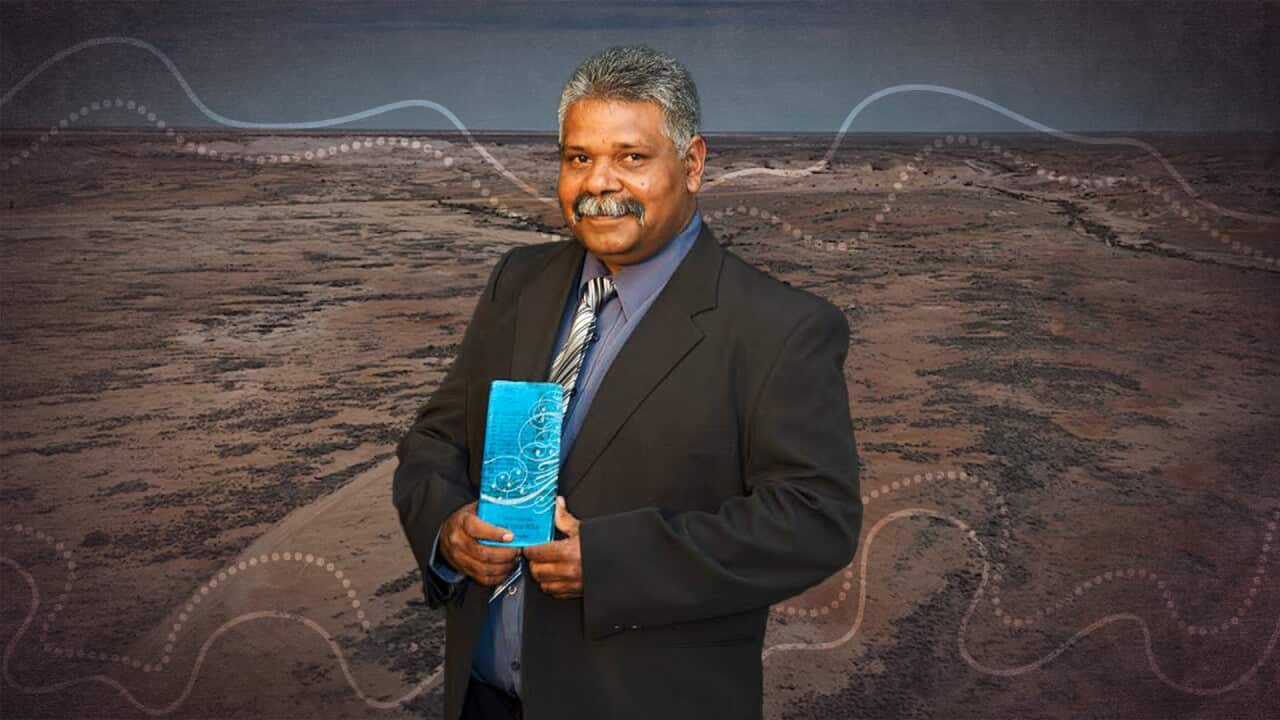
Dean Walker is preparing for the next chapter of his life.
One of South Australia's longest-serving Aboriginal Community Constables, the Yankunytjatjara and Narungga man joined South Australia Police in 2004 and has spent much of his career working with Aboriginal communities across South Australia’s Far North.
For Walker, policing has always been about people.
“You’ve got that connection built in you … it’s about how you treat people as a human being, and you’ve got to show love and kindness to Aboriginal people or to anybody," he said.
Building trust with the community often meant finding a different way to approach policing.
“Instead of them being in the back of the [police vehicle] cage, they’ll be sitting in the front with us.”
He says that approach helped police work with people rather than simply arresting them.
“We look after community and community look after us, especially when you’re this far… and show them that we’re not all bad.”
South Australia’s Deputy Premier and Minister for Aboriginal Affairs, Kyam Maher says Dean’s passion for his community and leadership has left a lasting impact.
“Dean has had a remarkable career for his Aboriginal community, but also for South Australia generally," said Maher.
Maher says Walker has helped bridge the cultural divide between Aboriginal people and police, particularly in remote communities.
“When you know the families involved, when you know the people involved, you can defuse situations. You can stop things escalating.”
History of heroism
The local hero’s career has also included moments of bravery.
Before joining SAPOL, he helped rescue two young girls from floodwaters in the Far North of South Australia.
He says he used a canoe to take the girls across the fast-flowing water, before helping their injured father and another man to safety.
“You don’t know what’s in there … snakes or big logs. So luckily we made it across that time.”
For Dean, the rescue was simply about helping people.
“You don’t really think about it until you get an award, or later on down the track. But it’s just one of those things you do for family and friends … you’re just helping people out.”
His bravery and community work later helped earn him the South Australia’s Local Hero award in 2014.
“It was quite an honour … I didn’t care if I didn’t win that night, but I did.”
Bringing traditional knowledge
Dean has also continued traditional Aboriginal knowledge into his policing career, particularly his skills as a tracker.
He learnt tracking through hunting with family and Elders, learning to read fresh tracks and understand the landscape.
That knowledge was later used during a police search in Oodnadatta, where he and others tracked a man for three days before finding him safe and alive.
“As an Aboriginal person, you’ve got to take all that in - what Elders show you - and carry that knowledge on and pass it on to the younger generation," he said.
Dean says one of his biggest hopes is to see more Aboriginal people become police officers.
“I’d like to see more young Aboriginal people go into the police force because it teaches you self-confidence … it teaches you how to be an individual.”
After 22 years of service, his police career may be coming to an end, but Dean says his commitment to community, culture and helping others will continue.
“Never forget where you come from. That’s the most important thing.”