In 1993, Louis Nowra’s play Radiance hit the stage at Belvoir St Theatre, quickly becoming a box office success.
It would go on to become a defining work of the Blak Theatre movement, marking a turning point in the visibility, voice, and creative control of First Nations storytelling on Australian stages.
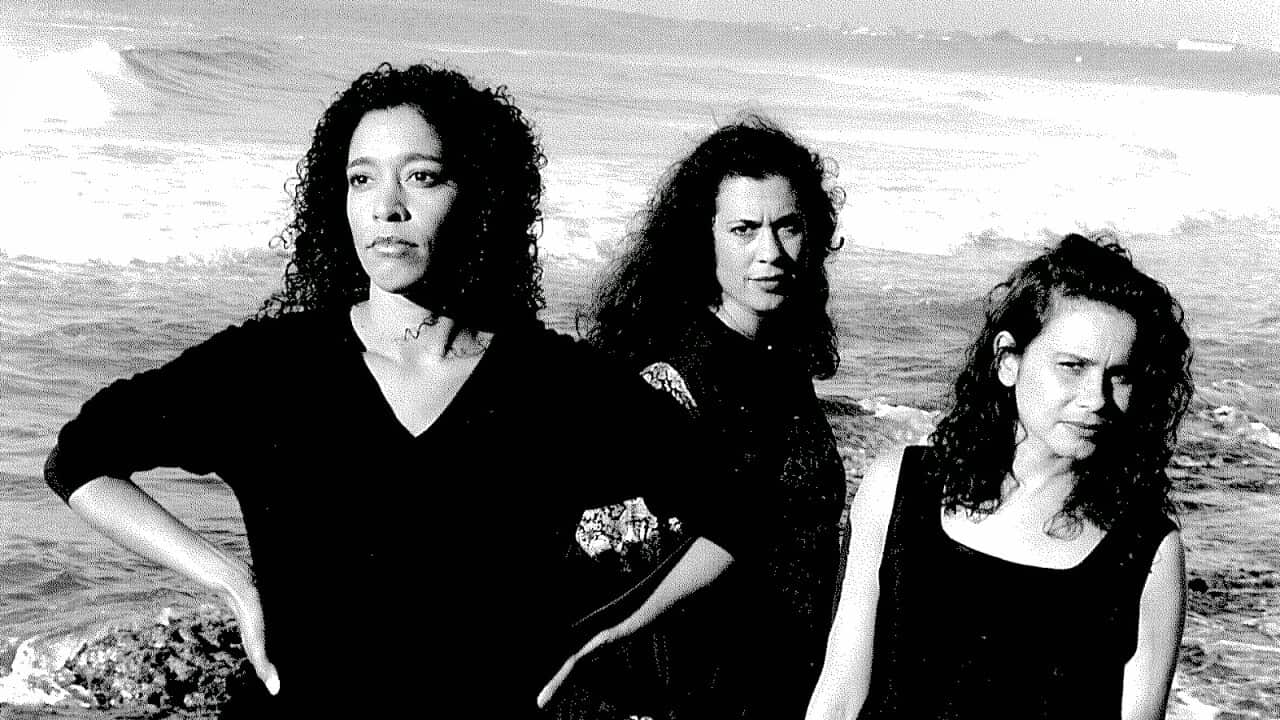
Radiance centred on three Aboriginal women - half-sisters navigating grief, identity, and family and their uneasy reunion at their mother's funeral in Far North Queensland
Starring Rachael Maza, Lydia Miller and Rhoda Roberts AO, it placed complex First Nations female characters at the heart of a major Australian stage production for the first time.
At a time when Indigenous stories were often marginalised or told through non-Indigenous perspectives, this was a significant shift.
That shift was built on the movement: the first Black national playwrights' conference had been held in Canberra in 1987, and the Aboriginal National Theatre Trust was founded in 1988.
(Roberts helped co-found the Aboriginal National Theatre Trust, sitting on an inaugural steering committee that boasted Brian Syron, Kevin Gilbert, Lydia Miller, Suzanne Butt, Vivian Walker, Michael Johnson and Lesley Fogarty and Justine Saunders. Oodgeroo Noonuccal was the Trust’s Patron.)
In 1998, Radiance was adapted to the big screen, directed by Rachel Perkins and starring Deborah Mailman, Rachael Maza and Trisha Morton-Thomas. Nowra also wrote the screenplay, and Radiance featured cinematography by a young Warwick Thornton.
Radiance is a significant Australian film: the first full-length feature directed by Arrernte woman Rachel Perkins and only the third feature film to be directed by a First Nations person after Tracey Moffatt's BeDevil (1993). (It was also only the second to have a commercial release directed by an Indigenous woman)
It also marked a breakthrough moment, with Mailman becoming the first Aboriginal woman to win an AFI Award (1998).
Radiance Friday 3 April at 9:00pm on NITV and SBS on Demand.