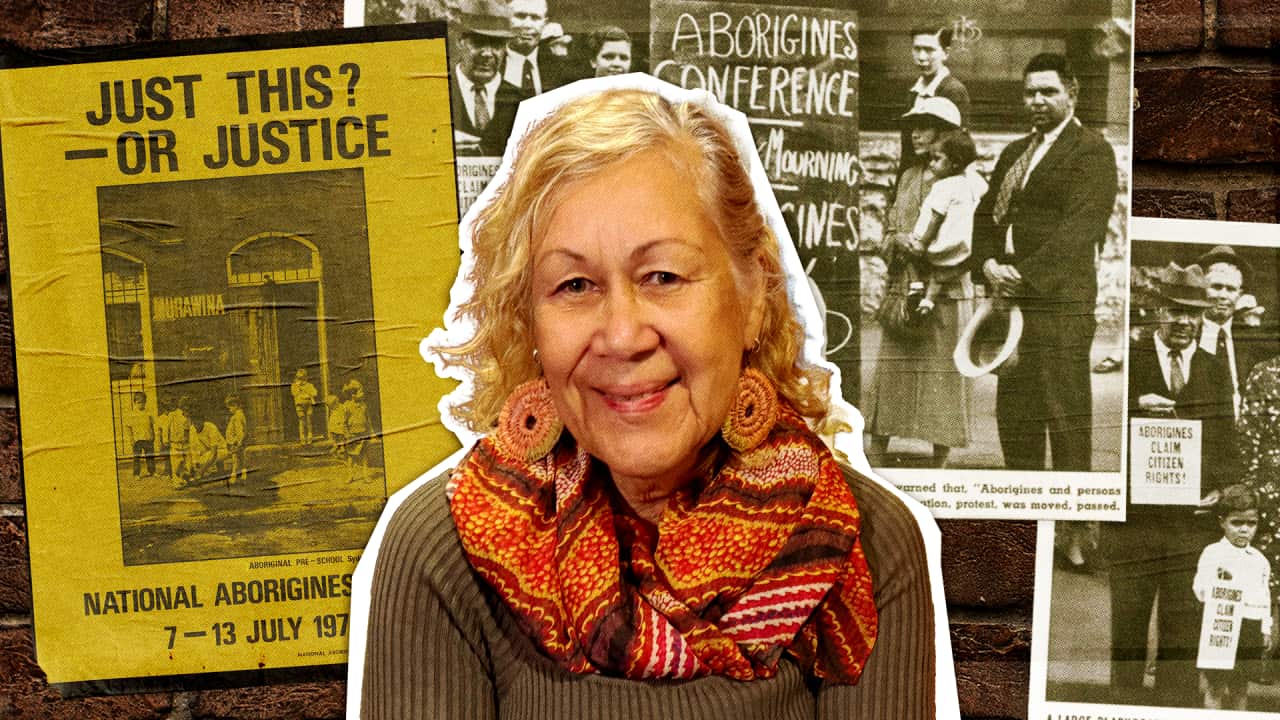
For Aunty Norma Ingram, NAIDOC Week is not just 'Black Christmas' - it's a poignant time to reflect on her family history.
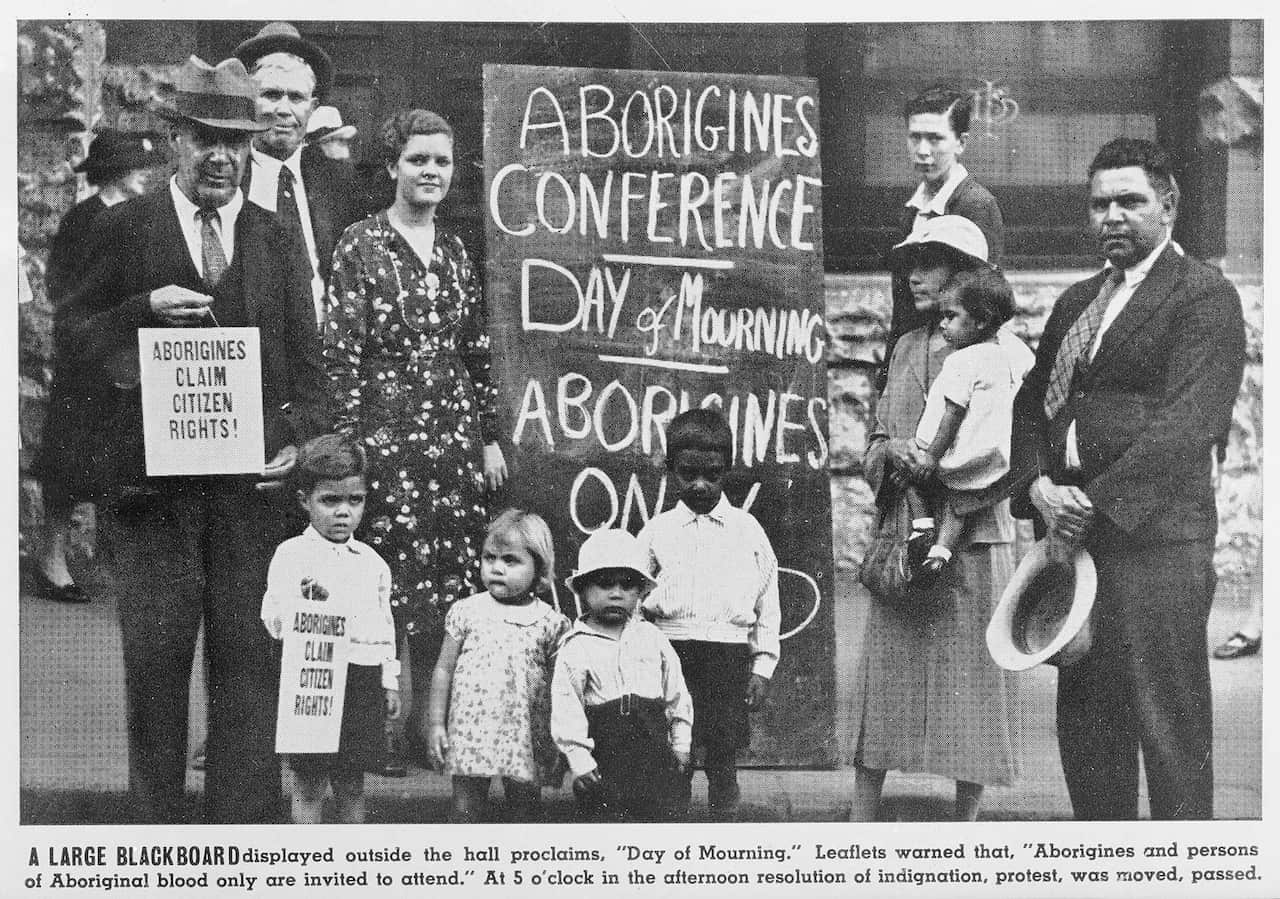
Articles about NAIDOCs origins are often accompanied by a now-famous black and white photograph, which depicts Aboriginal rights campaigners calling for a 'Day of Mourning'.
The Wiradjuri Elder describes the iconic photograph as "filled with family."
Her mother Louisa is holding her daughter Olive, in the front row of children is her sister Esther and two brothers Phillip "Choc" and Isaac.
The woman to the left of the sign is Aunty Norma's Father's niece.
"My parents, Louisa and Locky Ingram, they [were] fighting for Aboriginal citizen's rights," she said.
NAIDOC Week's origins reach further than 50 years ago
The week-long celebration of NAIDOC, as we see it today, has roots in the 1938 Day of Mourning - one of the first major civil rights gatherings in the world.
Protesting the 150th celebrations of the First Fleet landing, the decision by First Nations people to gather and platform Blak issues became part of the long resistance to colonisation that had begun in 1788.
"That fight from our people against colonisation started when the tall ships came into Sydney Harbour, and it's still happening now, but we're doing it in different ways," she told NITV.
"We don't have the guns and the spears and boomerangs, but we have the gift of the gab, and we have that power to stand up.
"We have the power to fight and protest, and to march."
Following 1938, there was a consensus to gather annually in January - with Yorta Yorta leader William Cooper writing to the National Missionary Council of Australia for assistance in supporting and promoting an annual event the following year.
From 1940 to 1955, the Day of Mourning was held annually on the Sunday before Australia Day - known as 'Aborigines Day'.
But from 1955, it was decided that this day would be shifted from January to July - to distinguish the event from being wholly about protesting January 26, and to become more of a celebration of Aboriginal people.
How one 'Aboriginal Day' grew to a 'NAIDOC Week'
From 1956, a National Aborigines Day Observance Committee (NADOC) was formed - with support from community organisations and multiple levels of government.
But it was not until 1974, almost two decades later, that the committee was made up entirely of Aboriginal people for the first time.
This new committee then decided to extend the celebration from a day to to be a week long event in 1975 - taking place from the first to second Sunday of July.
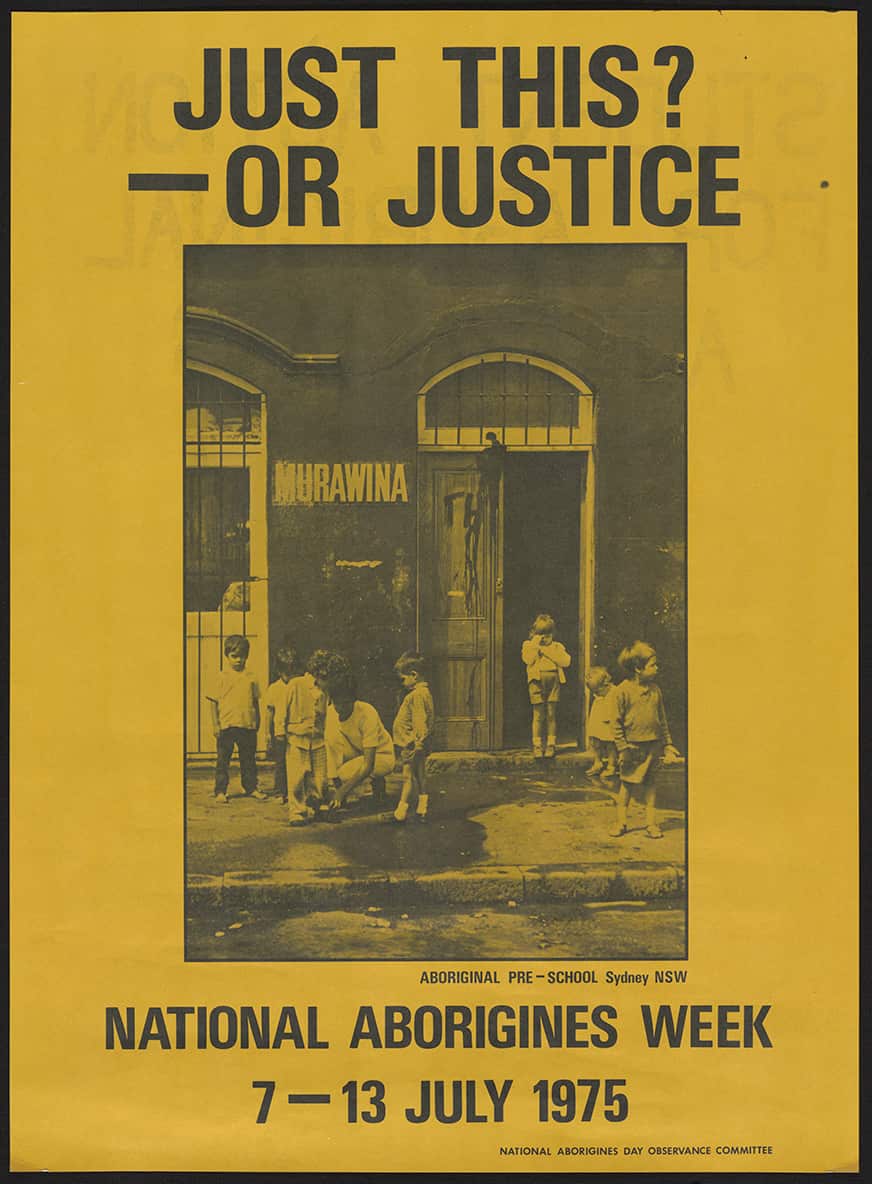
The first NADOC Week had the theme, 'Justice for Urban Aboriginal Children' - with the poster featuring Murawina, Australia's first Aboriginal pre-school.
An organisation started by Aunty Norma Ingram, her sister Millie and a community of First Nations women.
"I remember NAIDOC being one day!" Aunty Norma said.
"It was a one-day celebration, and really it focused more on [Aboriginal people] than the Torres Strait Islanders.
"This building [in the poster] was donated because we didn't have any place, and we didn't have a playground - so we had the footpath."
From this first NADOC Week, it was not until 1991 that NADOC was broaden to distinctly recognise Torres Strait Islander people and culture.
The committee then became known as the National Aborigines and Islanders Day Observance Committee (NAIDOC) and the name for the week was changed.
Celebration, but also connection
As NAIDOC continues to grow and be observed by First Nations communities, the celebration often extends beyond the official week.
Aunty Norma believes that, "in reality it goes for the whole month".
"That's what I love about NAIDOC is that it's so alive, and it's passed on from the Elders to the younger generations," she said.
"We still celebrate, and anybody in this country can go to any one of our communities, any one of our major cities, our main country towns, they can go and see our culture being celebrated."
From having her family in the thick of 1938 to her community organisation being recognised in the first ever poster for a week-long celebration - Aunty Norma says she wants to see more recognition from non-Indigenous people.
"We're not going away anywhere. We will embrace the rest of the nation. We will embrace that, and we hope that the rest of the nation will embrace us," she said.
Aunty Norma message she wants to share with First Nations people beginning their celebrations around the Country.
"Please keep going with your celebrations and showcasing to the rest of the country and the rest of the world our pride of who we are."