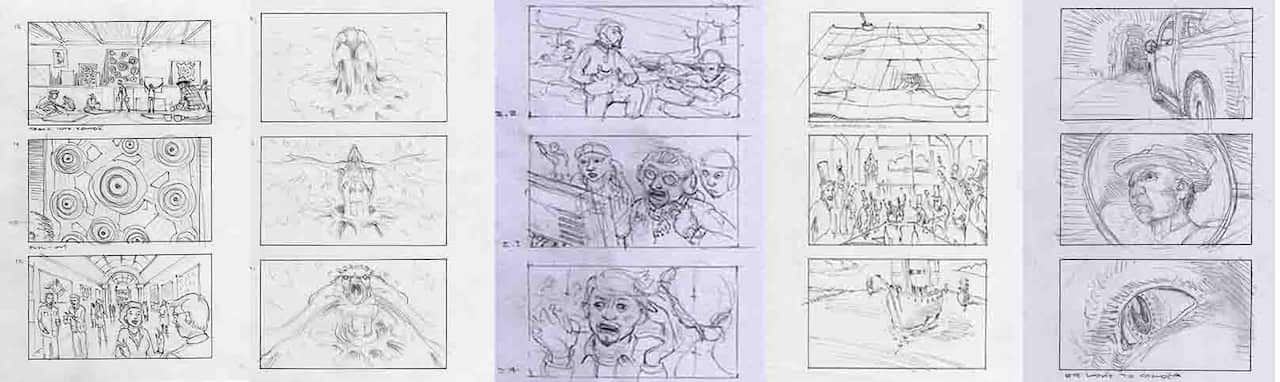
Award winning writer/director Charlie Hill-Smith (Motorkite Dreaming – Redbull/SBS2, Strangebirds in Paradise – A West Papuan Story, Taring Padi – Teeth of the Rice) has just launched a crowd-funding campaign to help create 'Australia's most controversial comic book'.
Through Crime Scene Australia - Terror Australis, Hill-Smith hopes to revise the white-washed history that has been taught for generations and deal out brutal and honest truth through the mixed genre of graphic novel. Combining history and forensic science through a modern lens, the novel's aim is to educate and fill a gap in the curriculum.
Hill-Smith says, ''I’ve always loved history and believe in the power of knowledge that comes from knowing the present and past 'lie of the land'. I had studied Australian history in high school and at Adelaide University, but you could’ve driven a Mack truck through the gaping holes in my ‘early-eighties Oz history knowledge’."
You could’ve driven a Mack truck through the gaping holes in my ‘early-eighties Oz history knowledge
Discussing the inspiration behind creating the novel Hill-Smith says, "We Australians live in an ‘A-historical culture’, a society that doesn’t know its own history. A society that spent its 150 year infancy hiding and denying the events of our colonial invasion."
"Sad old white men like John Howard and Keith Windshuttle have spent many of their last remaining breaths trying to gild this cluster f***ed lily. Despite their flaccid protests we know that Australia was invaded by white, British colonials and yet it’s still almost impossible to use the ‘i-word’ in polite, beer drinking company."
Drawing upon an impressive team of fellow artists, activists and change-makers including Bruce Pascoe, Robbie Thorpe and Carroll Karpany, Crime Scene Australia aims to create interest and discussion. On choosing to use the graphic novel genre, Hill-Smith says it's the crew's preferred and loved way of telling this kind of truth.
"Traditionally ignored by the powers that be, the humble comic book has remained the free-est and least censored world art form. While the god-botherers and prudes have banned movies, books and even people, the comic book/graphic novel has flown under the radar, and like the Poms before it; gets away with murder."
The humble comic book has remained the free-est and least censored world art form
The use of the graphic novel genre can be an effective way of confronting issues and reaching a wider audience.
Patti Laboucane-Benson, a Métis woman and the Director of Research, Training, and Communication at Native Counselling Services of Alberta (NCSA- Canada) recently published The Outside Circle, a graphic novel about 'two Aboriginal brothers surrounded by poverty, drug abuse, and gang violence, who try to overcome centuries of historic trauma in very different ways to bring about positive change in their lives.'
The novel gained critical acclaim, winning the Canadian Organization for Development through Education (CODE) 2016 Burt Award for First Nation, Inuit and Métis Literature and was Short-listed for the In the Margins Top Fiction Award 2016.
When describing why she chose to use the comic/graphic genre, Laboucane-Benson says that she agrees with Hill-Smith's assertion that the genre can get away with a lot in comparison to other styles. "I would be lying if I didn’t say that the first reason I chose the graphic novel format was my love of the medium. Its true – the form allows for so many tricks and techniques in story telling that would otherwise be very difficult."
"The truth is, academics talking in coded, inaccessible language to other academics has yet to make a discernible difference - and I was interested in finding a way to reach a broader Canadian public. To make offender healing matter."
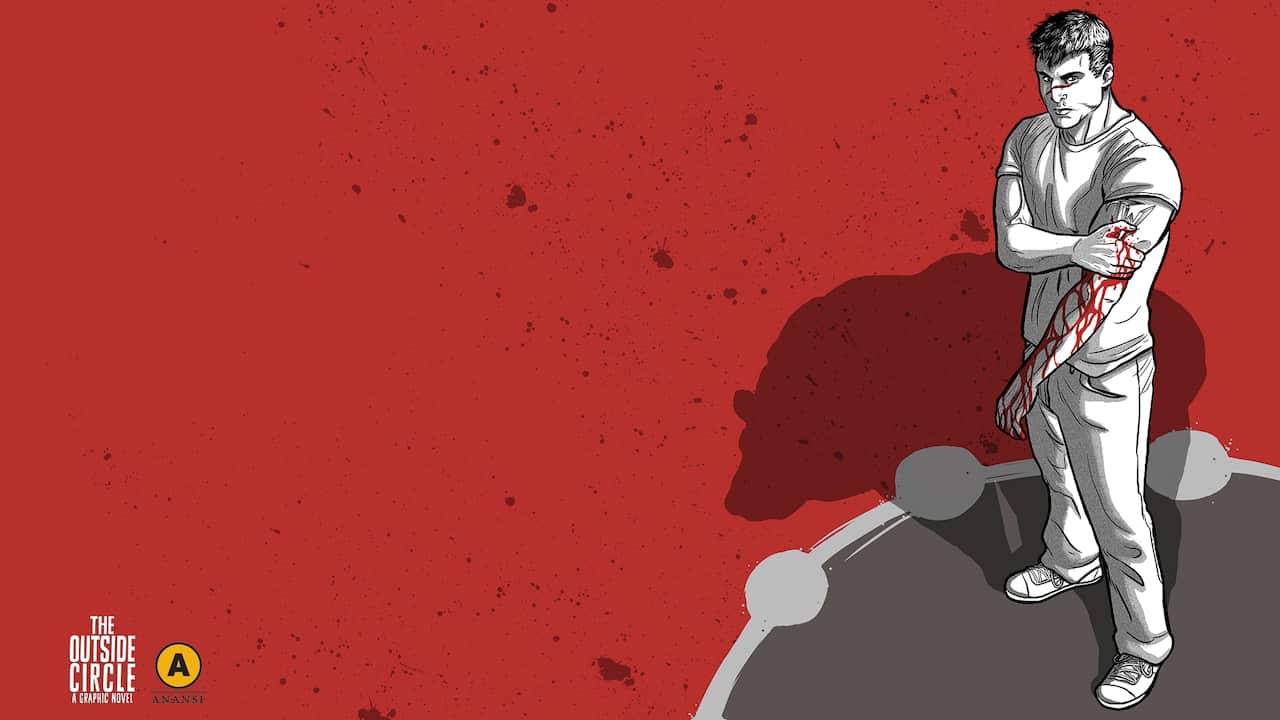
"So, in an act of pure rebellion – and desire to work on a project that made my heart sing – I asked local artist Kelly Mellings, Greg Miller and Allen Benson to work with me on a graphic novel that included the findings of my research and told a story of historic trauma healing."
Laboucane-Benson's goal with The Outside Circle was simply to tell the truth. In the highly effective format, the story reached a wide audience and connected them to the story in ways that still blows Laboucane-Benson's mind.
"I love that I’ve introduced readers to their first (literary) graphic novel and I hope it’s not their last. Graphic novels can be a powerful combination of story and art that evokes strong emotion – they hit you right in the feels, and its hard to forget those stories."
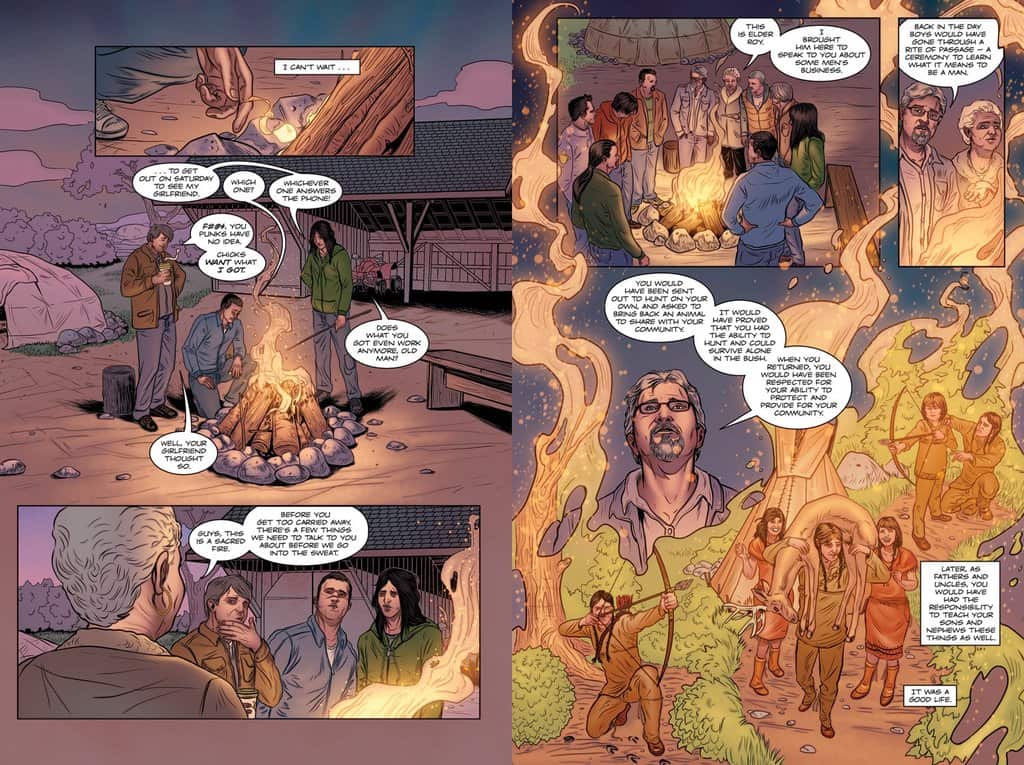
Graphic novels can be a powerful combination of story and art that evokes strong emotion – they hit you right in the feels, and its hard to forget those stories
"On a trip to a Northern Alberta town I was thrilled to meet a group of grade 10 boys – described as resistant readers – who had devoured The Outside Circle in language arts class. They knew the story inside and out, and asked by far the most difficult questions I’ve ever had to field. They seemed to intimately understand the characters of Pete and his bother Joey, and I did my best to focus on the transformational and redemptive aspects of the story. Seeing their art projects displayed on the wall - students had drawn masks of their own lives and challenges – was incredible."
Laboucane-Benson's experience is a great example of utitilising a communication strategy that is able to reach those that need to hear it's message most. For the most resistant of audiences who may have found confronting truths too much, a graphic novel sits neatly in the category of an interesting dialogue opener.
"I remain convinced that truth (evidence), dialogue (connectedness) and story-telling (art) are the most important tools in our collective reconciliation journey," Laboucane-Benson says.
To find out more about the Pozible campaign for Crime Scene Australia- Terror Australis head here.