'Sovereignty was never ceded': it's a central phrase in First Nations advocacy.
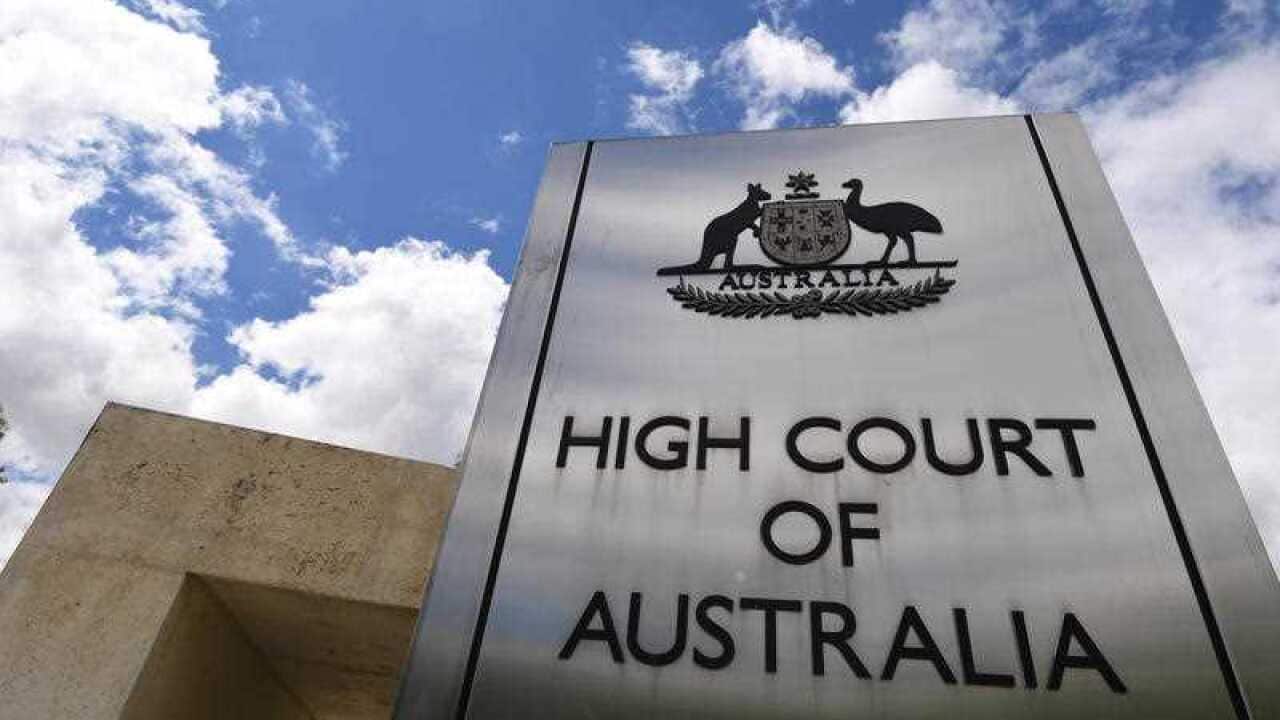
Sovereignty is a political and legal concept but the High Court has maintained for almost half a century that they have no jurisdiction to hear a case on it.
However, new research published in the University of New South Wales Law Journal purports to show a legal error, and also an opportunity.
Professor Barry Judd, University of Melbourne's Deputy Vice-Chancellor Indigenous, says the research is exciting.
"The question of sovereignty goes to the essence of who we are as Indigenous people and our right to be in Australia and maintain cultural traditions and knowledges that go back to the beginning of time," the Pitjantjatjara descendant told NITV.
A near 50 year-old 'deadlock'
In 1979, Coe vs The Commonwealth, a case led by Wiradjuri lawyer and activist Paul Coe, was unsuccessful in the High Court.
Coe and several colleagues were asking the High Court to recognise questions of Aboriginal sovereignty, and to proceed to a trial where evidence could be submitted.
The four judges were split on the judgement and the case was dismissed because a majority could not be reached.
Since then, the result of Coe has been used as a 'precedent' to justify the High Court refusing to hear cases related to Indigenous sovereignty.
Associate Professor Olivia Barr says her research has uncovered a "long-forgotten deadlock rule" from Tasmania v Victoria (1935) - which says that stalemate outcomes, like Coe, are not precedents.
"The consequence of my research is, it's as if ... the case of Coe didn't happen. It's invisible, or there's a clean slate," Barr told NITV.
"My research has identified a legal opportunity that we didn't know was there."
The benefits (and risks) of a High Court route
Barry Keon-Cohen is a retired barrister and was junior counsel for the plaintiffs in the Mabo litigation from 1982-1992.
He says Barr's research is "both scholarly and convincing".
Dr Keon-Cohen also believes a legal pathway could provide "common ground" away from the political arena.
"We've seen following the Voice Referendum, how misinformation, disinformation, the impact of social media carrying ridiculous content can pervert the discussion," he told NITV.
He also believes that a case on sovereignty would have ongoing repercussions, like the Mabo decision.
"With Mabo, it wasn't just one decision that resolved all issues ... Similarly, a sovereignty decision by the High Court would likely leave open various further issues," he said.
For Associate Professor Barr, pursuing a High Court case has the potential of three possible outcomes:
- Status quo: the Court could decide it has no jurisdiction and questions of sovereignty should be left to the parliament;
- The case is heard, which would involve a trial including evidence and witnesses, and the meaning of sovereignty, and specifically Indigenous sovereignty, is established, or;
- A trial is held, but it determines that First Nations sovereignty does not exist within the Australian legal system.
"There is the possibility for both positive and negative change," says Barr.
A community's decision
Whether to push ahead with the new avenue presented by Barr's research is a question for the community, she says.
"In a post-referendum environment where there's been a lot of public backlash, it's really only a question Aboriginal and Torres Strait Islander communities can decide."
"My research and my role as a legal academic is just saying there's an opportunity there."
Pursuing a legal judgement could positively impact treaty negotiations nationally, and in state/territory jurisdictions, lead to self-government arrangements and reparations.
Barr also believes that the Australia has changed significantly since Coe in the 1970s, leading to different possibilities.
"It's an important time to have this conversation. Paul Coe's case was nearly 50 years ago, and it was a different time," she said.
"We have a different High Court now. We have different legal rules around land rights."
"There's an opportunity to really carry on the legacy of Paul Coe and others who have constantly fought for recognition."