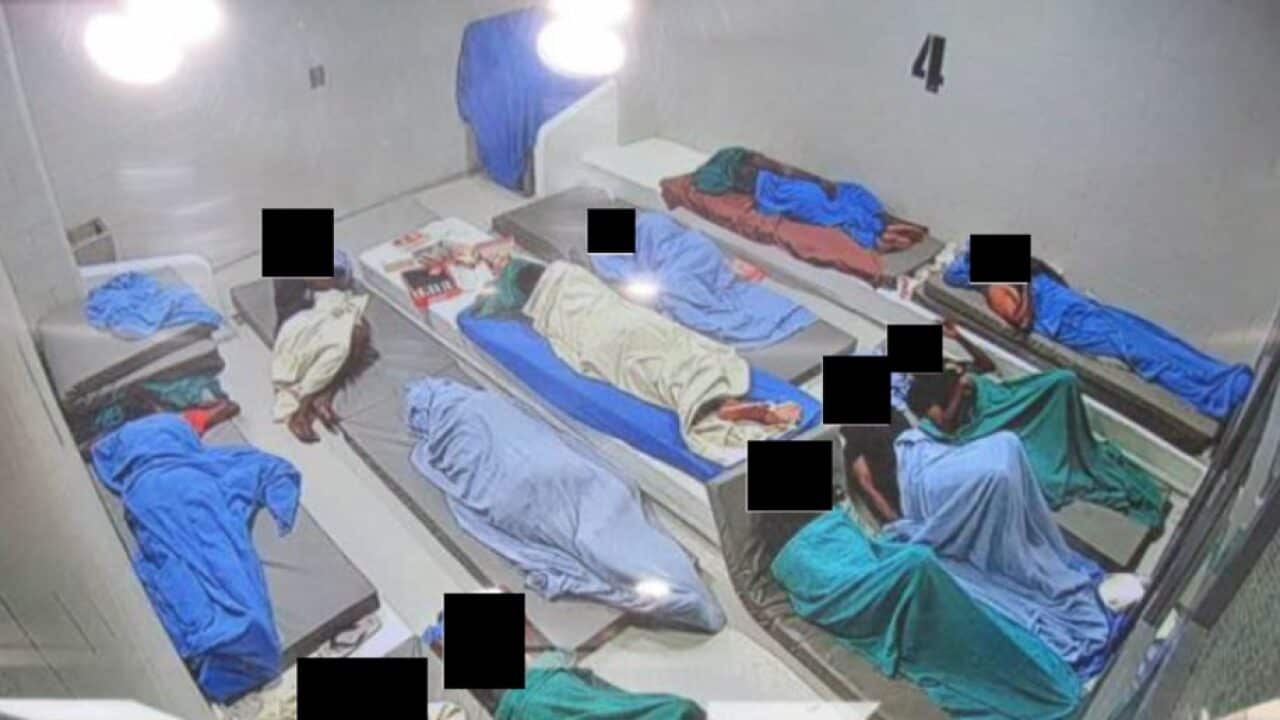
The Northern Territory's top Aboriginal legal service says the NT government's claims that watch houses aren't being used for extended stays is untrue.
The North Australian Aboriginal Justice Agency (NAAJA) says some of their clients have been held for weeks at a time, in conditions described by the territory's ombudsman as "terrible" and "unacceptably poor".
NAAJA is also accusing the government of attempting to obscure the continued use of watch house-style detention by reclassifying part of the Darwin City Watch House as the Darwin Transitional Custody Centre (DTCC).
The facility, now operated under the Department of Corrections, has been described by NAAJA as functionally unchanged despite the new designation.
NAAJA chief executive Ben Grimes said the renaming did not reflect the reality of conditions inside.
“Renaming the facility does not change the reality of what is happening inside it. NAAJA clients are being held in watch-house like cells for four to five weeks at a stretch,” he said.
The organisation says detainees are being held in small cells with multiple occupants for up to 23 hours a day, sometimes without access to sunlight for days. Time outside, it says, is limited to enclosed concrete areas rather than open-air exercise yards.
NAAJA also raised concerns about a lack of on-site medical staff and routine health screening, warning this could increase the risk of serious health outcomes for people in custody.
The claims echo findings from a 2025 investigation by the Northern Territory Ombudsman, which recommended that watch houses not be used for anything beyond short-term detention and called for greater transparency in how such facilities are used.
NAAJA alleges current practices fall short of those recommendations and international standards, including requirements for access to healthcare, family contact and daily outdoor exercise.
The legal service says it is also seeing growing issues with detainees being transferred between facilities without notification to lawyers or family members, leading to missed legal appointments and delays in court proceedings.
In one case cited by NAAJA, a man’s pregnant partner travelled between multiple correctional facilities trying to locate him after he was moved without notice. Other detainees reported being unable to contact family after their contact details were not transferred to the DTCC.
NAAJA is calling on the Northern Territory Government to commit to greater transparency about the use of the facility and to end the use of watch house-like conditions for extended detention.
It is also urging the Commonwealth to fund and oversee the implementation of the National Preventive Mechanism under the Optional Protocol to the Convention Against Torture, which provides independent monitoring of places of detention.
In a statement, the Department of Corrections said the Darwin Transitional Custody Centre is a short-stay facility accommodating prisoners for a maximum of four weeks.
“The model being established will achieve smoother transitions from police custody to corrections and court transfers,” the department said.
It said there is a “strict framework” to ensure prisoners held at the facility do not have serious health concerns and are suitable for the environment.
“Prisoners accommodated at the DTCC have undergone intake and medical screening prior to being received,” the statement said.
“If a person’s circumstances change and they require ongoing healthcare or medication that cannot be self-administered, they are transferred out as soon as possible. Usual emergency protocols apply.”
The department also said detainees have access to phones to contact family and legal representatives, although personal visits are not facilitated at the centre.