Once a pillar of conservation success, the tide has turned for the Southern Right Whale as they face dwindling numbers in the wake of climate change, according to new research done in partnership with Aboriginal communities.
The findings from Flinders and Curtin Universities have identified the species as a crucial indicator for how climate change is impacting ecosystems in the Southern Ocean.
The research, funded by the Minderoo Foundation and done in partnership with the Yalata Anangu Aboriginal Corporation, has identified a significant decline Southern Right Whale populations and breeding habits over the past decade.
“The findings of this research are concerning, and the trends identified around prolonged calving intervals and declining reproductive output are alarming for our community," said David White, the CEO of the Yalata Anangu Aboriginal Corporation.
"From our perspective, this only reinforces the critical need for this long-term research to continue.”
Observing the Bight
The decline in the species correlates to the reduction in Antarctic sea ice and changes in oceanic conditions as proven by the photo-identification data collected across three decades, from 1991 to 2024.
The photos were taken at the Head of the Great Australian Bight, located in the Yalata Indigenous Protected Area in South Australia.
It's a place of deep cultural significance.
“Head of Bight is not only a globally significant whale aggregation site, but also a place of deep cultural, environmental, and economic importance to our People," said Mr White.

He believes "understanding what is changing" in the ocean surrounding the area is "essential" to its preservation and protection.
Adjunct academic at Flinders University and Curtin University researcher Dr Claire Charlton warned the reproductive decline is a "threshold warning for the species".
“[It] highlights the urgent need for coordinated conservation efforts in the Southern Ocean in the face of anthropogenic climate change,” she said.
“These findings add to global evidence showing the sensitivity of southern right whales to climate variability in their offshore foraging grounds, reinforcing their role as effective ecological indicators of environmental change.”
The impact of man
Australia isn't the only place this is happening.
The same patterns have been observed in the species across South American and South Africa, and other krill-dependent ocean life could be in the same boat.
But it isn't just climate change and limited food that's impacting the whale population.
Humans are contributing too, impacting breeding and migration areas and aiding habitat degradation via offshore and coast developments, underwater noise disturbances, vessel strikes, and using fishing and aquaculture equipment that are a tangle risk for the species.
Dr Charlton warns the effects of climate change are already being felt.
“Long-term monitoring in the Great Australian Bight shows how climate impacts are influencing animals that seek sanctuary in our coastal waters, emphasising the value of annual research spanning four decades for detecting changes to population trends.”
The decrease of the southern right whale population is concerning considering the species was hunted to near extinction during the commercial whaling period in the 19th and 20th centuries.
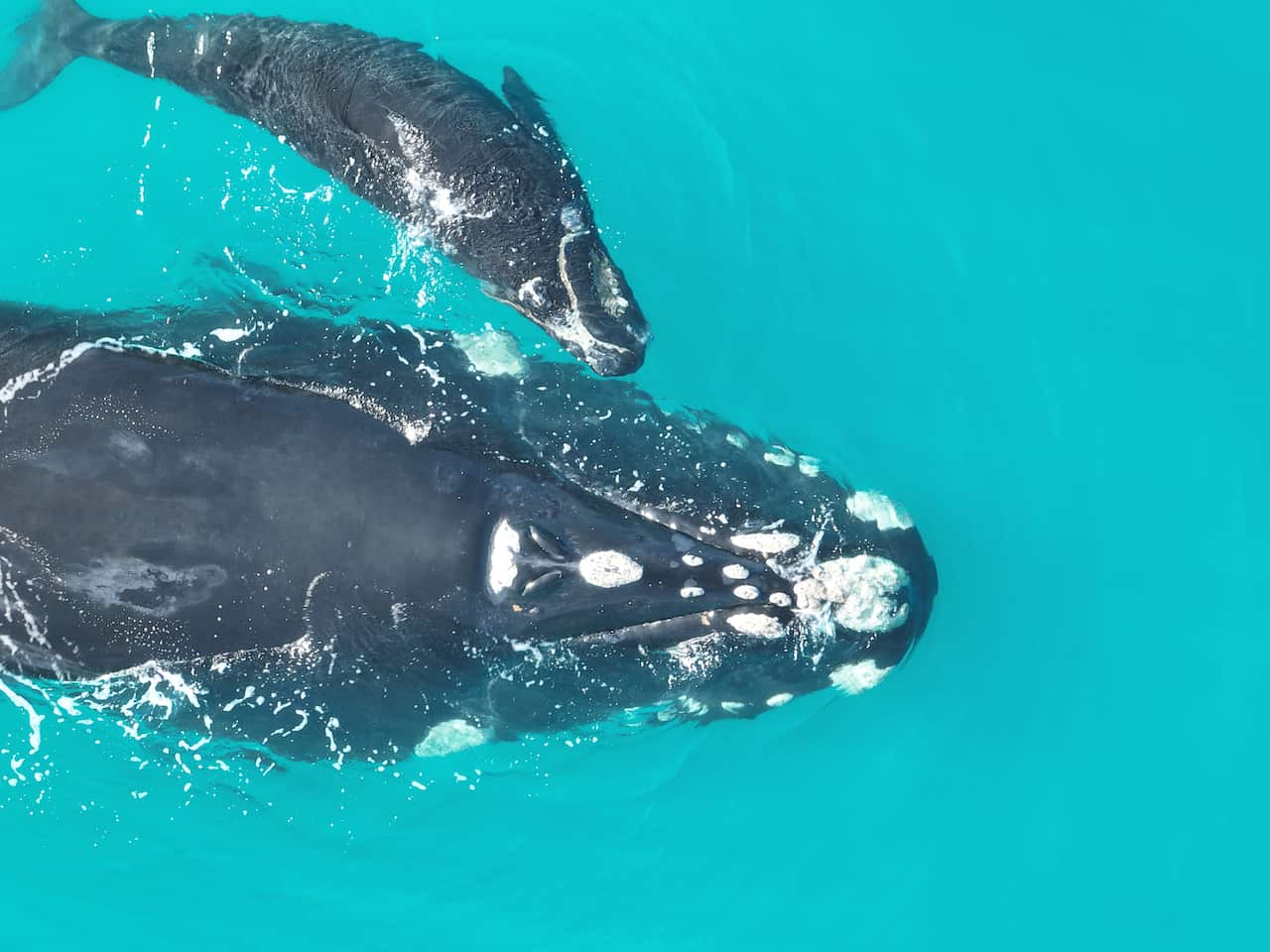
Through careful and consistent care, the whales have managed to recoup under international protection.
Aerial survey data confirms the Australian population sitting between 2,346 and 3,940 whales - less than 26 per cent of pre-whaling numbers.
Despite concerns, researchers are adamant that with the right methods the species can remain in our oceans.
“Ongoing annual research across biologically important areas in Australia is essential to inform population assessments, guide coordinated conservation action to support adaptive strategies to safeguard threatened species into the future,” Dr Charlton said.