An Aboriginal artefact made over two centuries ago has returned from more than 200 years in exile, after a palawa curator came across a picture of it in a book.
Dr Gaye Sculthorpe was working at the British Museum and researching her palawa family's history when she discovered an 1890 illustration of the 'rikawa', a traditional water carrier made of kelp.
Taken from leillateah (Recherche Bay) by a French ship in 1792, the rikawa ended up mislabelled in the collection of the Musée du Quai Branly – Jacques Chirac, where it was discovered by staff after enquiries by Dr Sculthorpe.
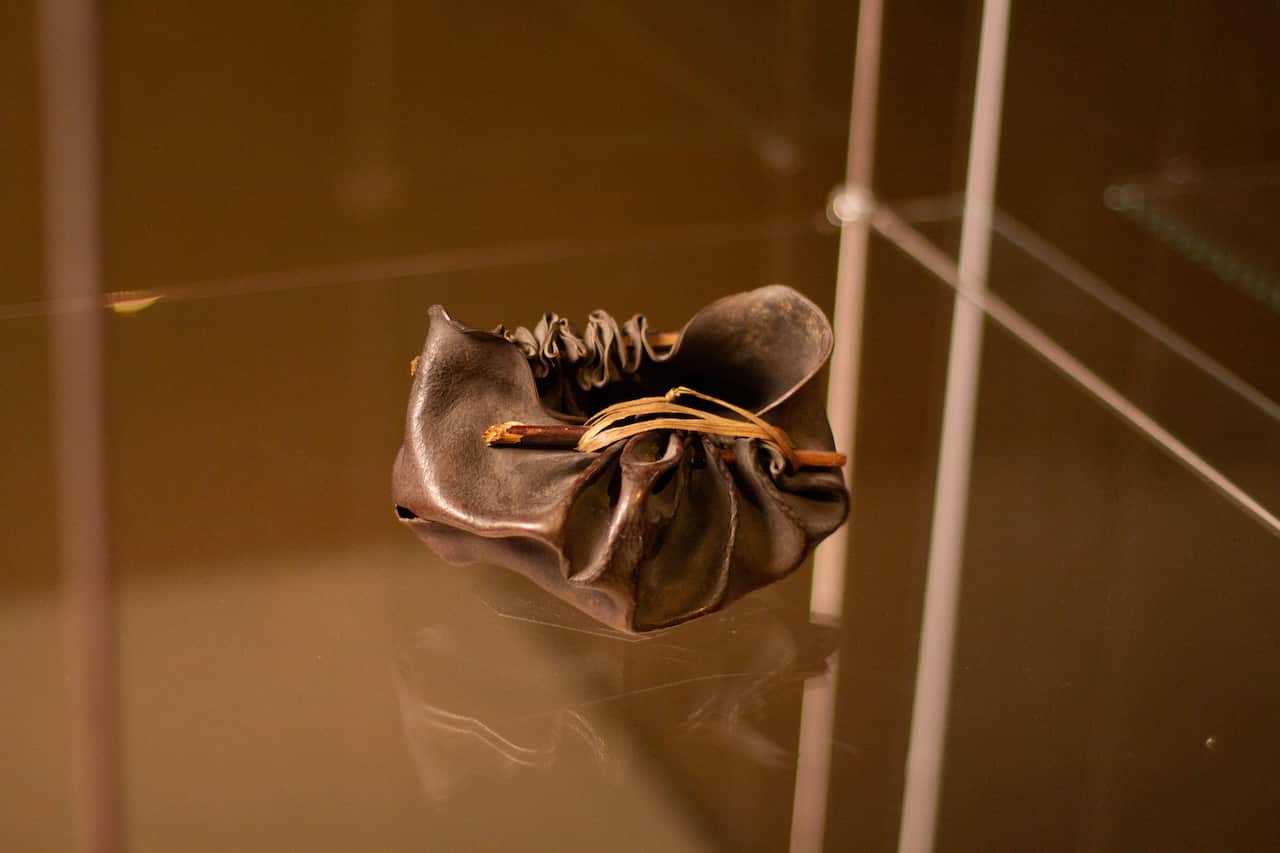
The precious artefact, one of only two in existence, is now on display at the Tasmanian Museum and Art Gallery (TMAG) in an exhibition titlted 'taypani milaythina-tu: Return to Country.'
“It is one of the most significant Aboriginal items in any museum collection and incredibly important for palawa to be able to see it on their Country once again," said Dr Sculthorpe.
"I congratulate all involved who have made this happen.”
An unbroken connection
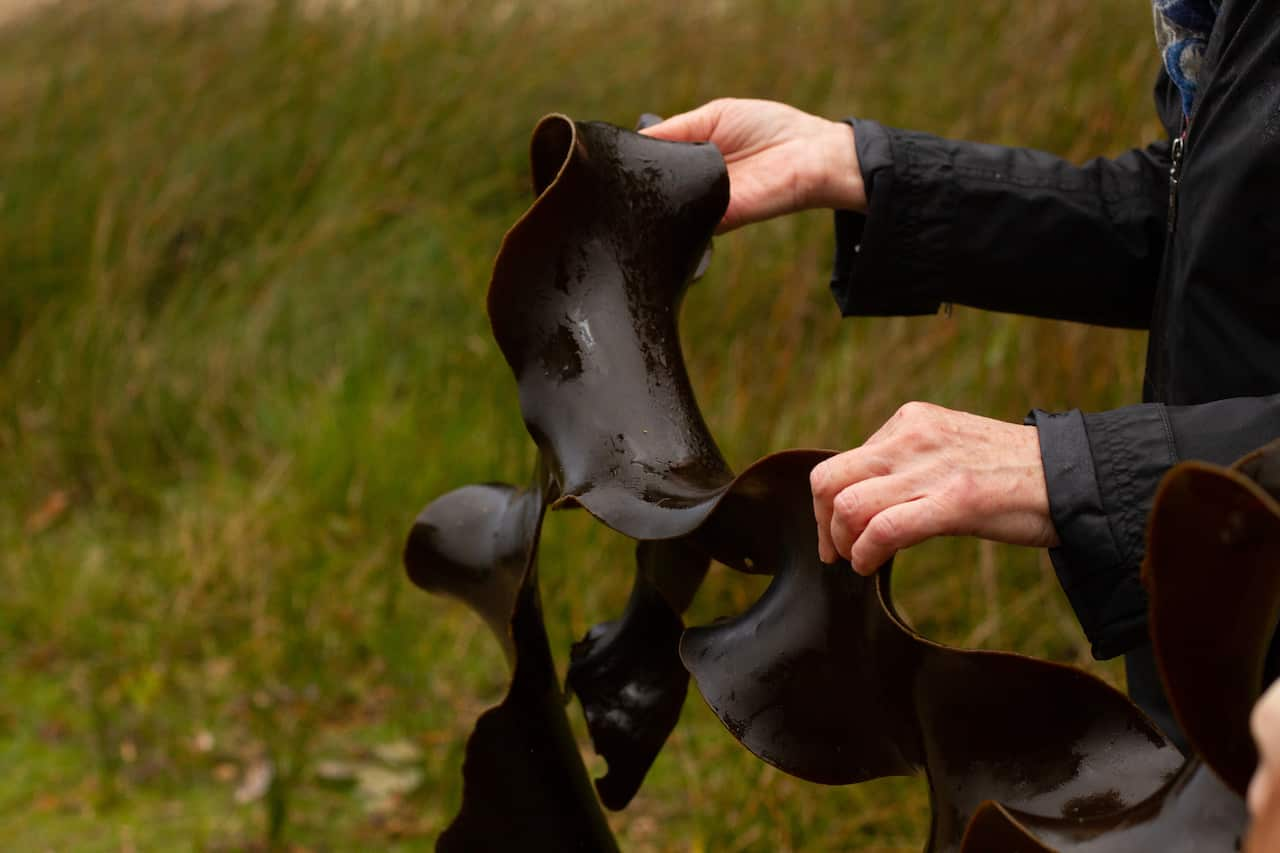
Functioning as excellent water carriers, the rikawa was developed by palawa by using lutruwita's distinctive bull kelp, wooden skewers and plant fibre ties.
The item now on display at TMAG was made just four years after the First Fleet's descent on Warrane Sydney Cove, a time when most of lutruwita was untouched by colonisation, and provides a direct link for palawa descendants to their ancestors culture.
The museum provided the local First Nations community several days to view the object in private.
“It's incredibly special to be in the presence of an object... that was made and used [by ancestors]," palawa woman Zoe Rimmer told NITV.
"We can imagine who made it, who touched it, who drank from it.
"Then it has that whole story of going all the way to France, and being lost and rediscovered, and now returned. It's an incredible thing."
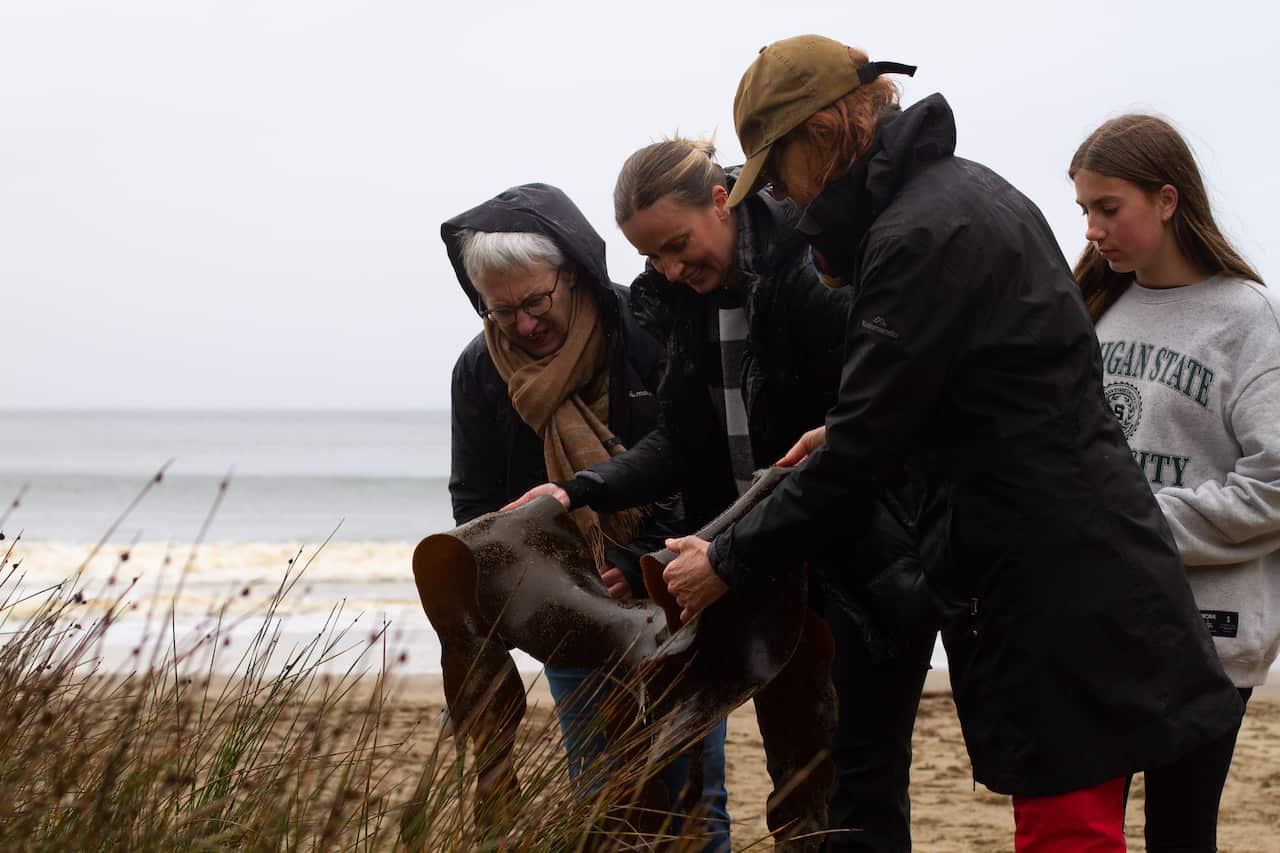
Ms Rimmer, a former Senior Curator of First Peoples Art and Culture at TMAG, is herself a master rikawa maker.
"Some Elders in our community a few years ago started making them again. That was a cultural resurgence through accessing the archival drawings by the French."
To see the object in person had provided the opportunity for "lots of reconnecting," said Ms Rimmer.
She and fellow palawa woman Theresa Sainty took the opportunity to show French conservators who had accompanied the rikawa the ancient method of collecting the bull kelp.
"This is [also] an opportunity to build respectful and collaborative relationships between the Palawa community and the international institutions that hold our cultural belongings."