Traditional Owners from across the continent have come together in Canberra to strengthen a growing national push for Indigenous Data Sovereignty, a movement grounded in cultural authority, community control and long-term self-determination.
The gathering brought representatives from Ngarluma Yindjibarndi Foundation Ltd (NYFL), the Anindilyakwa Land Council Data Unit, Ngurratjuta/Pmara Ntjarra Aboriginal Corporation and the Juukan Gorge Legacy Foundation to the first Indigenous Data Sovereignty Workshop hosted by the Australian National University’s First Nations Portfolio.
Senior representatives from the National Indigenous Australians Agency (NIAA) and the Australian Bureau of Statistics (ABS) later joined the discussions.
At the centre of the workshop was a shared message: Aboriginal and Torres Strait Islander peoples must be at the heart of decisions about data collected on their communities - from how it is gathered and interpreted, to how it is used to shape policy, funding and services.
Participants explored how Indigenous Data Sovereignty principles can support Priority Reform 4 under the National Agreement on Closing the Gap, which focuses on shared access to data.
The conversations also extended to the future of national data systems, including preparations for the 2026 Census.
The meeting marked the early formation of a national alliance led by Traditional Owner organisations, each working to repatriate community data, build local data capability and challenge long-standing power imbalances that have excluded First Nations peoples from meaningful decision-making.
Community voices driving change
NYFL’s contribution focused on the Ieramugadu (Roebourne) Data Sovereignty Project, a community-led initiative designed to retrieve existing data, coordinate local surveys and ensure decisions about Ieramugadu are informed by accurate, community-owned information.
Ngarluma woman and NYFL team member Dolly Samson, who presented at the workshop, said the experience was both affirming and transformative.
“Seeing other Indigenous groups doing the same thing across Australia was powerful,” she said.
“This project is a really big deal for our community. Coming back from Canberra gave me a new perspective on Ieramugadu. This is how we come together and use the power of information.”
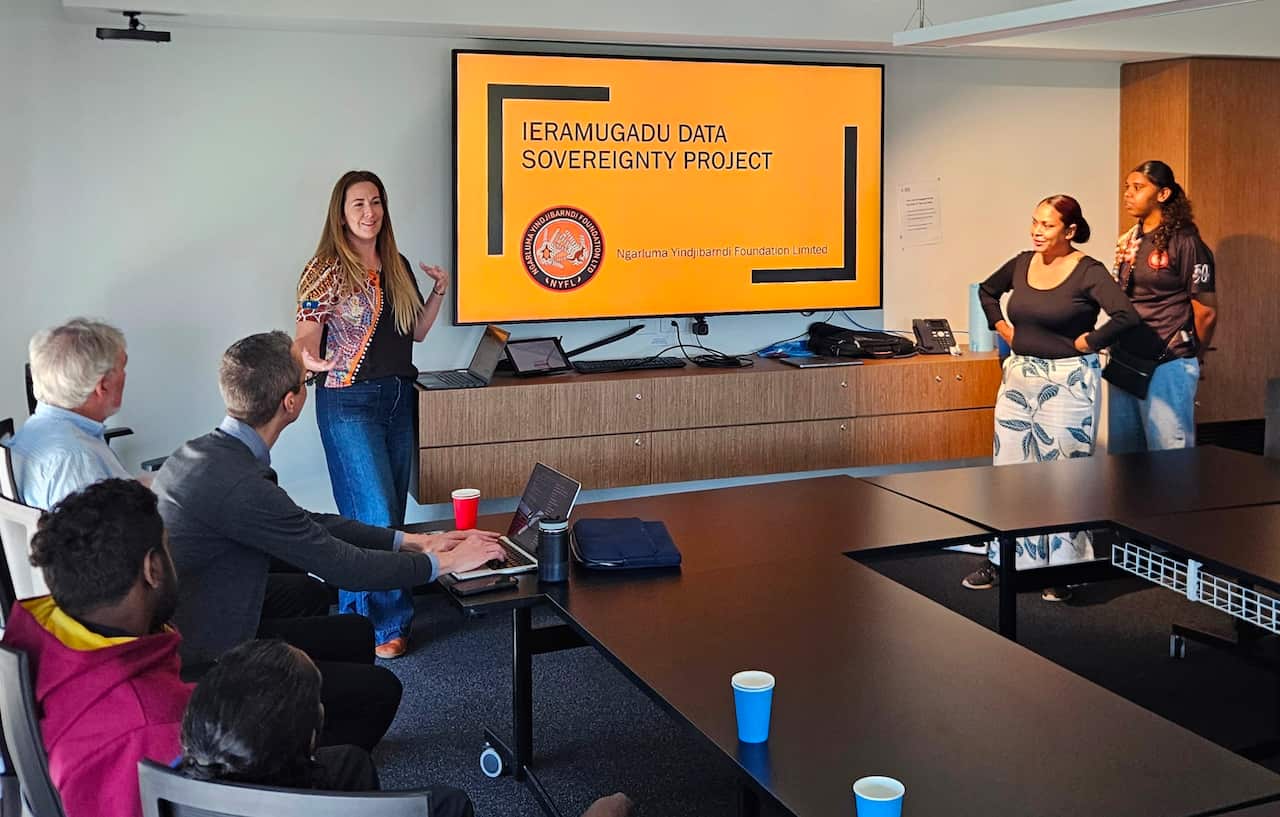
Fellow First Nations community officer Raivyn Moore, who has supported Ngarluma Yindjibarndi members for many years, said reclaiming data is critical for future generations.
“Getting our own data is vital for the survival of our communities,” she said.
“It shapes our future. If we use our data well, it can improve our health, education and social outcomes. It puts the power back in our own hands.”
Ms Moore said the growing national momentum must be met with action from government.
“Seeing this become a movement across communities would benefit Indigenous people across Australia,” she said.
“Governments need to listen and allow us to use our data to determine better outcomes for our people.”
A national movement
The Canberra workshop created space for Traditional Owners to share experiences, reflect on challenges such as retrieving historical data, and explore opportunities for a coordinated national approach.
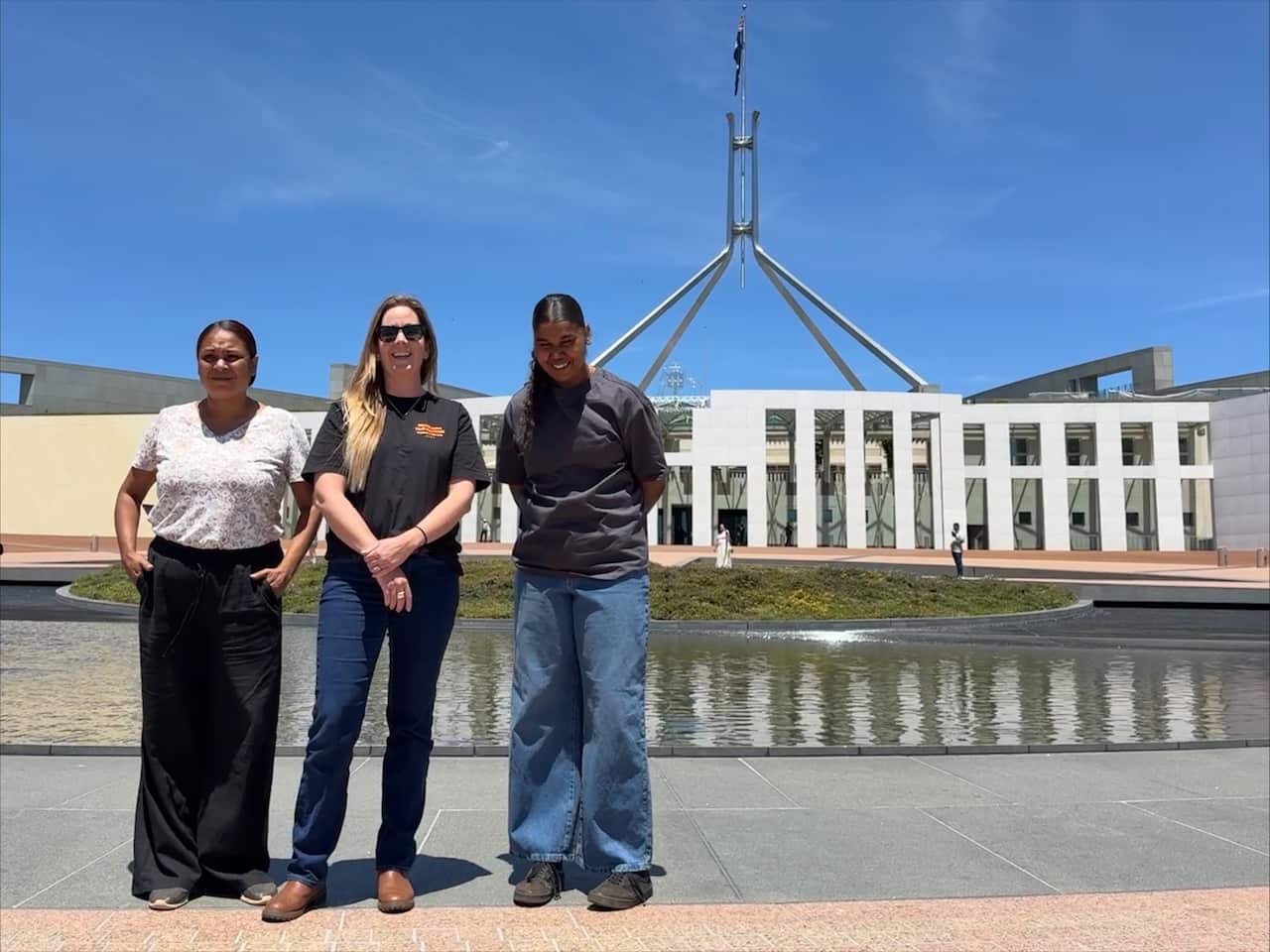
NYFL acknowledged ANU’s Professor Peter Yu, Professor John Taylor, Dr Nick Bainton and the ANU First Nations Portfolio for convening the landmark gathering.
As the alliance continues to take shape, participants say it signals a new era - one where Aboriginal and Torres Strait Islander communities reclaim ownership of their stories, build the evidence needed to drive local solutions, and reshape systems that have too often failed to serve them.
For many, the message from Canberra was clear: Australia will not close the gap while First Nations communities remain locked out of the data that defines them.