11 min read
Explainer
Wave Hill Walk-Off: the birth of the modern Aboriginal Land Rights movement
When the wet season lightning rolls in low over Gurindji Country, it lights up a land that has never forgotten who it belongs to.
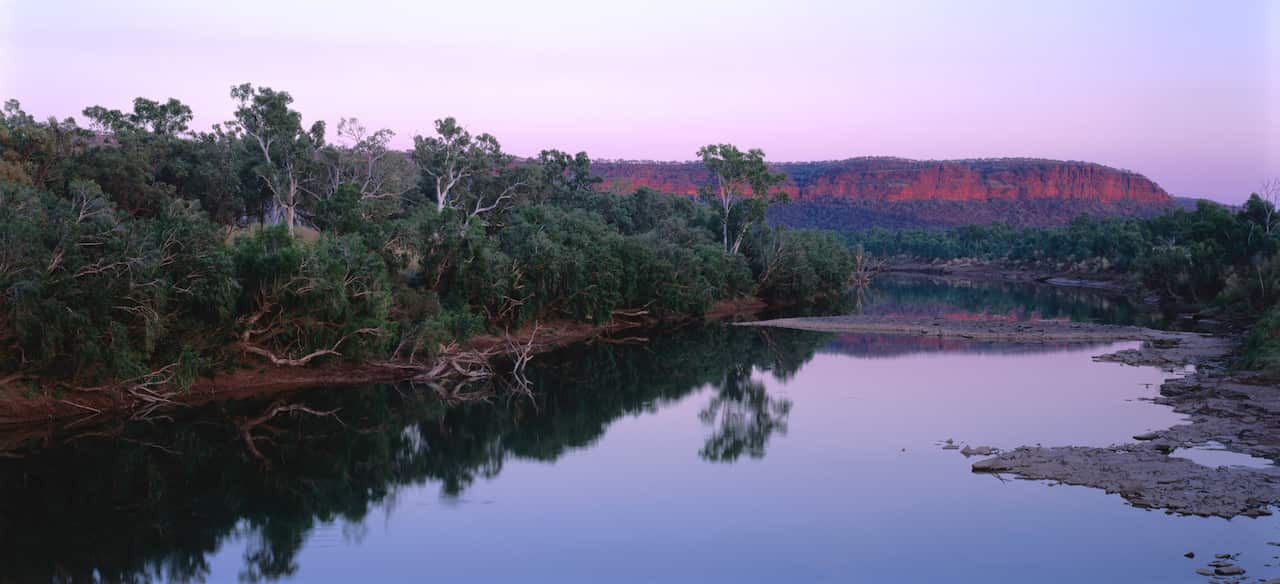
This is Gurindji Country, a vast reach of low, open woodland and black soil plain in the heart of the Northern Territory, where coolibah and bloodwood stand scattered across the grass like old sentries, and river red gums trace the lines of the creeks in ribbons of deeper green.
Elsewhere the limestone rises into low, broken ridges, honeycombed and ancient, and along the permanent waters of the Victoria and Wave Hill Creek systems, stands of pandanus lean out over the banks, their long, saw-edged leaves marking every soak and billabong that has kept people and animals alive since before memory.
It is a Country of many faces, and every one of them is known.
For the Gurindji, that knowing runs tens of thousands of years deep. Every soak, ridge, tree and stone carries story, law and connection. This was never empty land waiting to be found. It was, and is, home: mapped in Songlines, held in ceremony, cared for through generations who read this Country like family.
Occupation here was not simply about living on the land. It was about belonging to it, being made from it, and being responsible for it, a responsibility that did not end when other people arrived to claim it as their own.
The slow vise
Colonisation's worst effects were felt on the continent's coasts decades before they arrived in the Red Centre.
But they began in earnest in the late nineteenth century, when pastoralists pushed cattle out across the region, including the Victoria River District, in search of new country to run stock.
Vast leases were carved out of Gurindji land almost overnight and handed to men who had never set foot on it. Fences went up. Waterholes were claimed. Herds trampled the sacred sites and food-gathering grounds that had sustained Gurindji families for millennia.
Gurindji people were pushed into smaller and smaller corners of their own Country.
Those who did not flee or resist were drawn into the pastoral economy that had dispossessed them, becoming the stockmen, domestic workers and station hands who built the very industry now standing on their land.
It was a brutal irony that would define Gurindji life for the best part of a century: to stay on Country increasingly meant working, unpaid or barely paid, for the very people who had stolen it.
Somewhere in these turbulent decades, a Gurindji boy was born who would carry his people's law and knowledge into the fight of his life.
A child of the Old Law, born into the new order
Vincent Lingiari came into the world on his own ancestral Country, at a place that had recently been renamed Victoria River Gorge.
Government records list his birth year as 1919, but other accounts, including his own recollections passed down through Ted Egan and others who worked closely with him, suggest he may have been born as early as 1908.
The uncertainty is itself a mark of the times: Aboriginal births in this era were rarely recorded with any care by the authorities who controlled Aboriginal lives.
Whichever year is true, Lingiari inherited something far older and far more certain than any government ledger: millennia of Gurindji knowledge, Law and connection to Country, handed down through countless generations.
He grew up at Wave Hill station, put to stock work at around twelve years of age, in bondage in all but name to the white pastoralists who now ran cattle across his own people's Country.
A system indistinguishable from slavery
For the Gurindji and other Aboriginal people across the Territory, the pastoral industry that grew rich on their labour offered almost nothing back.
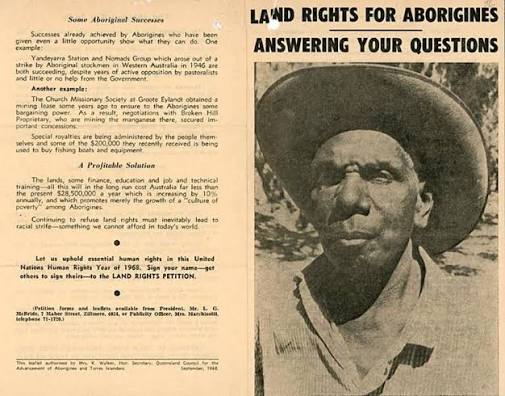
Aboriginal workers built the cattle stations of the north: mustering, branding, droving thousands of head of stock while receiving no wages at all. It was, in the words of Northern Territory officials themselves at the time, a system indistinguishable from slavery.
It was not until 1913 that legislation was introduced requiring pastoralists to provide even the barest return for that labour: food, clothing, tea and tobacco.
It was a low bar, and even that bar was often not met. Rations were meagre and irregular. Housing was makeshift. Sanitation and clean water were frequently absent altogether. Families lived under the constant threat of being moved, separated or punished at their employer's whim.
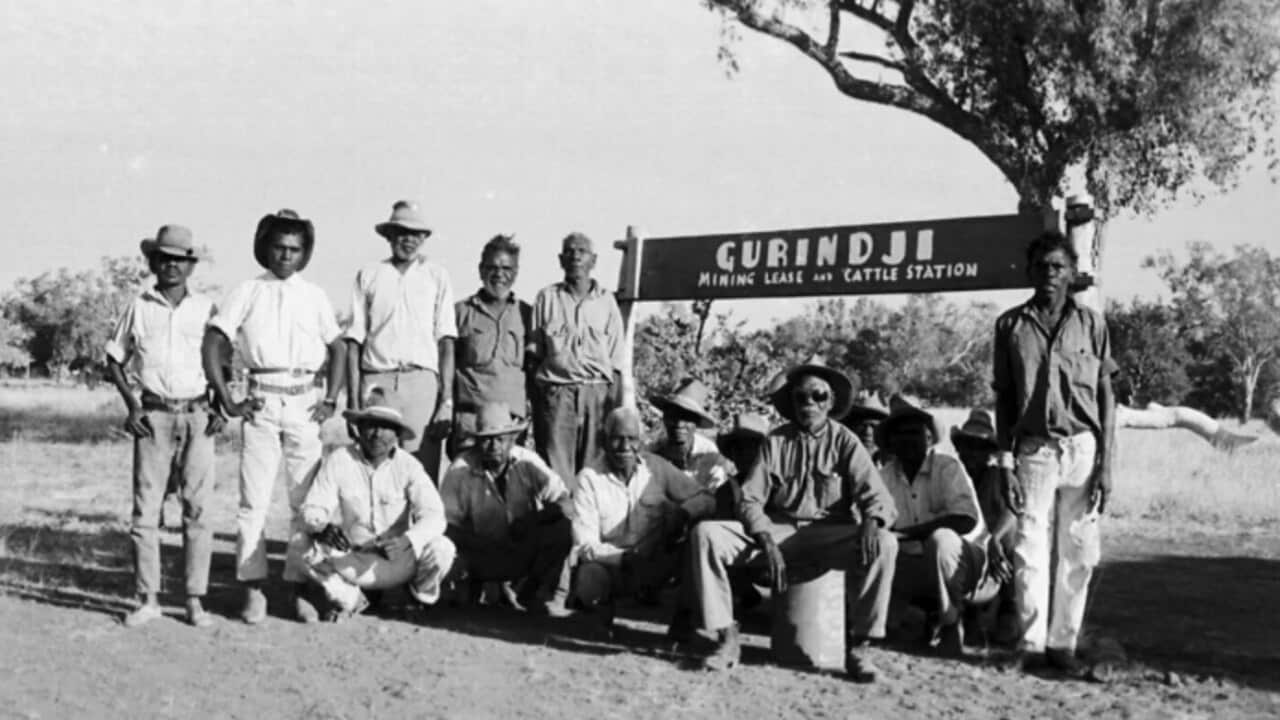
The following year, in 1914, the Buchanan family - who had first taken up Wave Hill as a pastoral lease on Gurindji land - sold the station to Vestey Brothers, a British family and multinational pastoral and meat-processing empire.
The Vesteys were, at the time, among the wealthiest families in England, their fortune surpassed only by the Royal Family itself. From London and Chicago boardrooms, they now controlled a cattle empire built directly on top of sacred Gurindji Country, run day to day on the unpaid and underpaid labour of the people whose land it was.
Even the modest protections legislated in 1913 did little to change conditions on the ground.
A 1946 anthropological report into conditions on Northern Territory pastoral stations found widespread economic exploitation, entrenched sexual exploitation of Aboriginal women, and living conditions that fell far below any acceptable standard: inadequate rations, no proper housing, no safe water.
Decades after the law had supposedly required decent treatment, Gurindji people were still living and working in conditions the Vesteys' own investigators condemned.
Where wages were paid at all, they were kept deliberately small (as little as five shillings a day) and even those meagre earnings were frequently withheld or controlled by the so-called "protection" boards, government bodies that held near-total power over Aboriginal people's money, movements and lives, all in the name of a protection that too rarely arrived.
A Law Boss speaks up
It was against this backdrop of dispossession, exploitation and grinding poverty that Vincent Lingiari began to speak.
By the 1960s he had risen to head stockman at Wave Hill, a position of real skill and standing, earned through decades of work, yet one that still carried none of the pay or respect given automatically to white station hands.
You can keep your gold. We just want our land back.
He had also become something else entirely in the eyes of his own people: a highly respected Gurindji 'Law Boss', a man trusted to carry the old knowledge, and the authority to deal with the growing sense that things could not go on this way.
Quietly, then with growing conviction, Lingiari began talking with his people about standing up.
Not simply for better pay, though decades of underpayment demanded that. Not simply for better conditions, though the conditions were a disgrace.
What was beginning to take shape in these conversations, around campfires and in the quiet hours between stock work, was something the Vesteys and the government of the day were not prepared for: a demand to be recognised, at last, as the rightful owners of the Country their families had never stopped belonging to.
In Lingiari's own immortal words: "You can keep your gold. We just want our land back."
The Walk Off
The morning of 23 August 1966 was already hot on Wave Hill station.
Around 200 Gurindji, Mudburra and Warlpiri stockmen, house servants and their families put down their tools. They did not go to the mustering yards. They did not go to the kitchens or the homestead.
They gathered their swags, their children, and what little they owned, and they walked.
What was before Lord Vestey born and I born? It was Blackfella Country.
It was not the first time Aboriginal workers had walked off Wave Hill (there had been earlier stoppages in 1949, 1952 and 1955) but this time was different. This time it did not end after a few days.
This time it carried the backing of the union movement, and this time it carried something far more permanent underneath it: a demand for the return of the Country itself.
Vincent Lingiari led them.
The mobs set up camp on the bed of the Victoria River, and later moved to Daguragu (Wattie Creek) a place sacred to their people and deliberately, symbolically distant from the homestead they had left behind.
Wave Hill station's owners and managers, and the wider pastoral industry, had expected a wage dispute that could be settled with an improved offer. What they got instead was a people who had simply stopped waiting to be asked, and started telling the country what was true.
Lingiari would capture the essence of their struggle in words spoken on the banks of Daguragu, but which have since travelled the length of the country:
"What was before Lord Vestey born and I born? It was Blackfella Country."
The strike that began that August morning did not end quickly, and it did not end where it started.
What had opened as a stand against unpaid and underpaid labour hardened, within months, into an unambiguous claim for land, expressed in a petition to the Governor-General in 1967 seeking a lease around Daguragu, and refused.
The Gurindji, Mudburra and Warlpiri stayed on regardless, technically "illegal" occupants of their own Country for years, while petitions and delegations moved back and forth between Wattie Creek, Darwin and Canberra with little to show for it.
From little things, big things grow
It took the election of the Whitlam Labor government in 1972, and its commitment to "establish once and for all Aborigines' rights to land," to break the stalemate.
In March 1973 the original Wave Hill lease was surrendered, and new leases drawn up, one for Vestey Brothers, one for the Gurindji through their own Murramulla Gurindji Company.
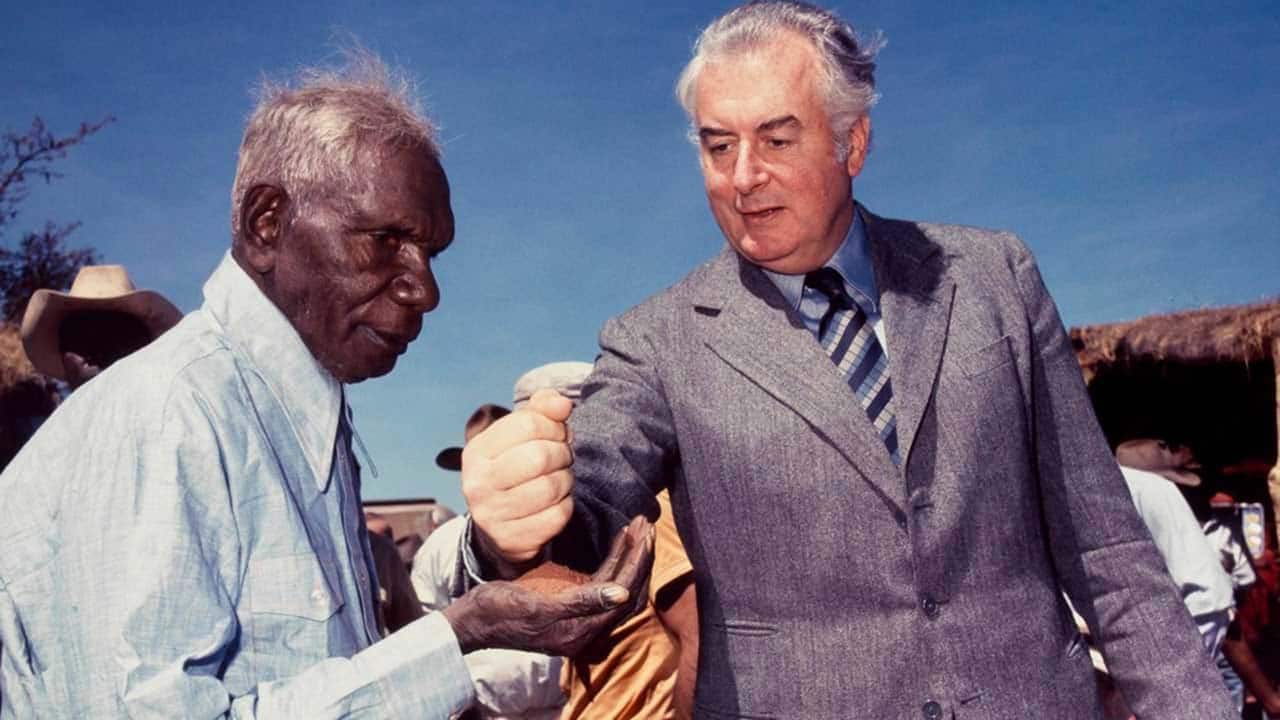
On 16 August 1975, Gough Whitlam travelled to Daguragu and poured a handful of that Country's own soil into Vincent Lingiari's hands, telling him the land was now his people's again in the eyes of Australian law.
A year later, the Aboriginal Land Rights (Northern Territory) Act 1976 - the first legislation in the country allowing Aboriginal claimants to have title recognised on proof of traditional connection to Country - passed into law, built directly on the ground the Gurindji had refused to give up.
None of it undid the theft of the preceding ninety years, or the generations who lived and died in bondage on stolen Country before Lingiari ever raised his voice.
But the walk-off (alongside the historic stand the Yolŋu had already taken at Yirrkala) changed irrevocably what Australia could tell itself about who this Country belonged to, a case that would not be closed in law until the High Court's Mabo decision seventeen years later finally buried the lie of terra nullius for good.
The Gurindji claim for native title, facilitated by the Mabo decision, was granted by the Federal Court in 2020.