Having spent over 20 years away from his home of Taree, filmmaker and academic Grant Saunders has always struggled with his identity. As a fair-skinned, middle-aged Aboriginal man, with a Norwegian wife and two multicultural young children, he felt disconnected from both his Country and his parents.
Filmed over a decade, Teach a Man to Fish finds Grant analysing his own Aboriginality, as well as exploring the cultural identity of his children. He faces the dilemma of figuring out how he will instill pride and understanding in his kids of his Biripi culture, community and Country, whilst also acknowledging both his mother’s and wife’s European heritage.
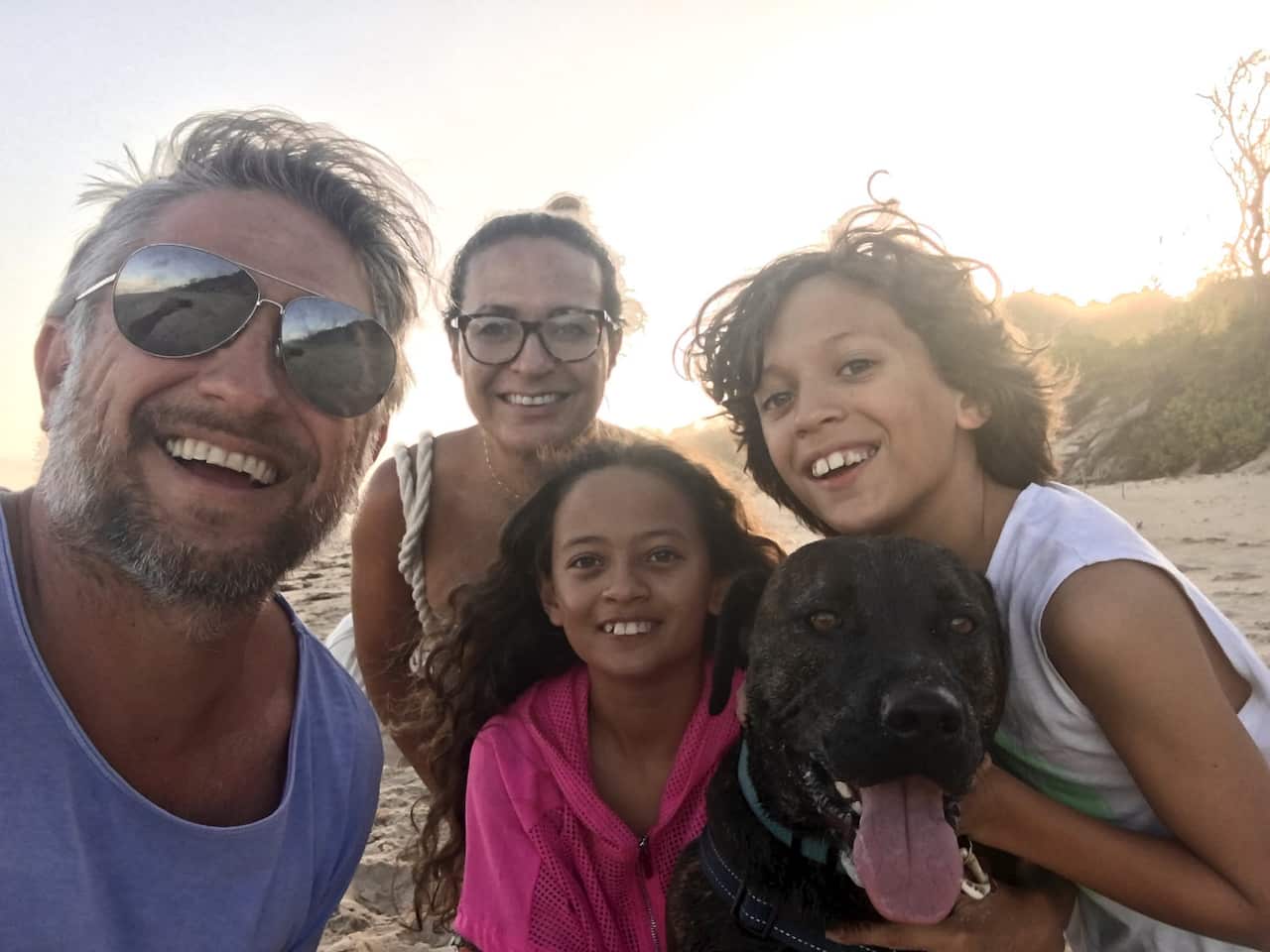
In an interview with NITV Radio, Saunders explained how his film was conceptualised from an initiative at his children’s school called ‘Who’s your Mob?’.
“They were videoing all the Koori kids in the school and just asking them that simple question, ‘Who’s your Mob?’”, he said.
“And my kids, who know who their Mob is but, that’s where it really stops. There’s not that much more than that apart from, other bits and pieces.”
“I wanted to really get them connected to their Country that I grew up with. I left the area 20-odd years ago and so it’s [Teach a Man to Fish] not just about me reconnecting, it’s about building a connection for them as well.”
Saunders' and his immediate family were living in Newcastle at the time, after spending many years based in Sydney. It had been nearly two decades since he initially left his home in quiet Northern NSW. While a young Saunders wanted to escape the issues that comes with living in a small town, over time, he began to feel his heritage and culture escape him also.
"I think we all get disconnected in different ways and one of those is through actual dislocation from Country," he said.
"To be dislocated hours and hours away from your Country, I think that does have a big affect on you and I've really noticed the change just in, I guess, my comfortability with my community again. Y'know, feeling familiar again," he said.
Family Business
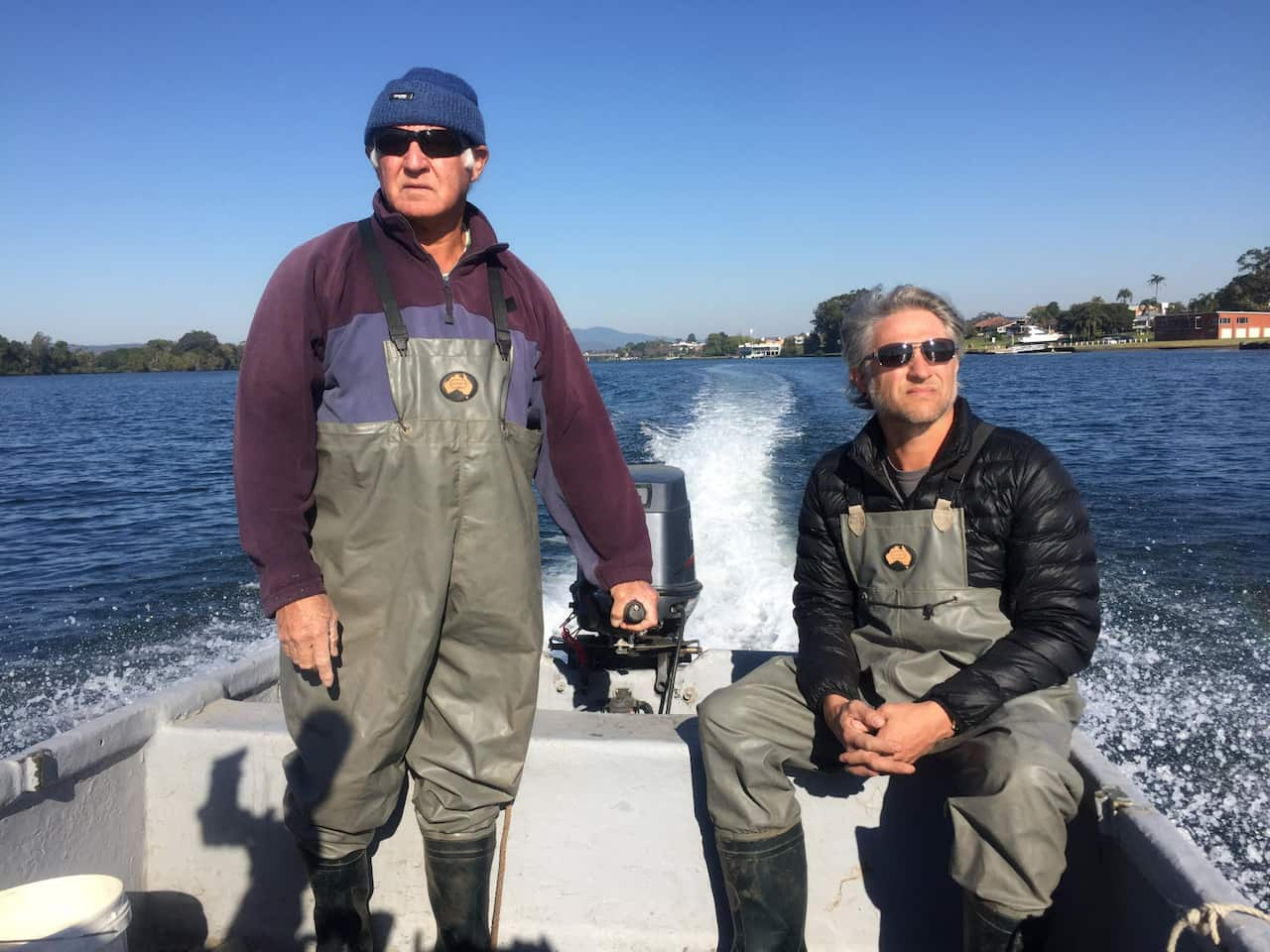
Deep down, Saunders has always wanted to be a fisherman. It’s in his blood. His grandfather, Horry was a fisherman, so was his father, Ray and all his uncles. Saunders would have happily joined a third generation, but his father wanted him to explore other options on dry land.
This devastated Saunders, as the family’s inter-generational fishing business not only meant the world to his mob, but held them together in turbulent times. In the early years, it provided a stable income for Horry and Faith’s (Saunders’ grandmother) for their six sons and three daughters. The fishing business was more than just a job— it was an act of defiance in a time when Aboriginal people had limited work opportunities and lived in a segregated society.
Saunders reflects on his pride, how his grandfather set up an independently owned and operated Aboriginal fishing business back in a time before the 1967 Referendum, as well as other political freedoms for Aboriginal people.
“My grandfather started this fishing business, this family trade way back, in the early 60s. I mean he was fishing on trawlers out at sea, even before that in the 50s,” he told NITV Radio.
“People were getting jobs fruit picking, you know seasonal work, railway, building bridges and stuff like that. So for an Aboriginal person to establish a business was pretty rare and that happened also at a time when my grandfather was standing up for Human Rights for Aboriginal people on Purfleet [Taree Mission]”.
Saunders says his grandfather also fought for better housing conditions for Aboriginal people. He had the opportunity to get work as a builder’s labourer, building homes for working-class white Australians on the first housing commission. At the time, Aboriginal people living on the mission and were paying rent for homes with no electricity and no hot water, and the social disparity caused Saunders’ grandfather Horry much concern.
“He got to see, first-hand the star contrast between living conditions that poor white fellas were having and to what Aboriginal people were experiencing on the mission,” Saunders said.
Teach a Man to Fish
With the fishing business about to end with his Ray’s retirement, Saunders stepped in to partner with his father and fulfill a childhood dream. It was also a chance for them to reconnect after their relationship had broken down some time ago.
Set against the captivating backdrop of Biripi Country (Taree), NITV Channel Manager, Tanya Orman says the film brings audience into a complex world where family legacy and relations, Aboriginal culture, fishing practice and politics combine to pose deep questions about modern identity.

"Teach a Man to Fish is an intimate account of one man’s search for meaning that is at once open, honest and sure to make you feel good. NITV is extremely proud to share this story which says so much about contemporary Aboriginal experience and the lives touched by it.”
When he started filming 10 years ago, Saunders originally intended to tell the story of the politics and family history behind, what is possibly, the oldest Aboriginal commercial fishing business on the East Coast of Australia. However, he found that his own personal story was inextricable from what unfolded before him.
Teach a Man to Fish premieres this Sunday, 28 October at 8.30pm on NITV (Ch. 34.). Catch up is available on SBS On Demand after broadcast.