This time, the journey took me back to Minto in Sydney’s south-west, a place that holds plenty of memories for me. Returning to one of my old stomping grounds to meet Aunty Jenny Khan, founder of The Unexpected Guest, made the day feel like a full-circle moment.
What I quickly realised was that this wasn’t just a story about healthy food. It was a story about purpose, representation and building a business that creates lasting impact.
Aunty Jenny transformed her love of breakfast into a thriving Blak-owned health food brand, producing organic granola, muesli, prebiotic protein bars and snacks infused with Indigenous botanicals like lemon myrtle, wattleseed and Kakadu plum.
While the products are impressive, what stood out most was the intention behind them. For Aunty Jenny, creating healthier food was only part of the vision. She also wanted to see Aboriginal culture represented in a space where it has traditionally been overlooked. The breakfast aisle isn’t somewhere many people expect to find First Nations stories, yet The Unexpected Guest is proving that Indigenous knowledge and native ingredients deserve a place in everyday Australian kitchens.
It’s a simple idea, but one that carries real significance. By incorporating native botanicals into products people can enjoy every morning or throw into their bag before work, The Unexpected Guest is helping make Indigenous flavours part of everyday life rather than something reserved for special occasions.
That visibility also comes with responsibility. For Aunty Jenny, native ingredients are not simply a point of difference; they come with relationships to Country, knowledge and the people who grow and harvest them.
Where possible, The Unexpected Guest sources through Indigenous supply chains, including First Nations wild harvesters and growers. It is a practical way of creating employment and ensuring that when native ingredients are brought into the mainstream, the economic benefit can flow back to the communities connected to them.
That idea of reciprocity is central. If a business draws on the foods, knowledge and stories of this Country, it should also contribute back, by supporting community-led enterprises, creating paid opportunities and making procurement choices that respect where those ingredients come from.
Of course, building a business like this hasn’t come without its challenges. From scaling recipes into commercial production to navigating certification, suppliers and distribution, Aunty Jenny spoke honestly about the realities of growing a product-based business. Like so many entrepreneurs, success has come through persistence, learning and staying true to the reason she started.
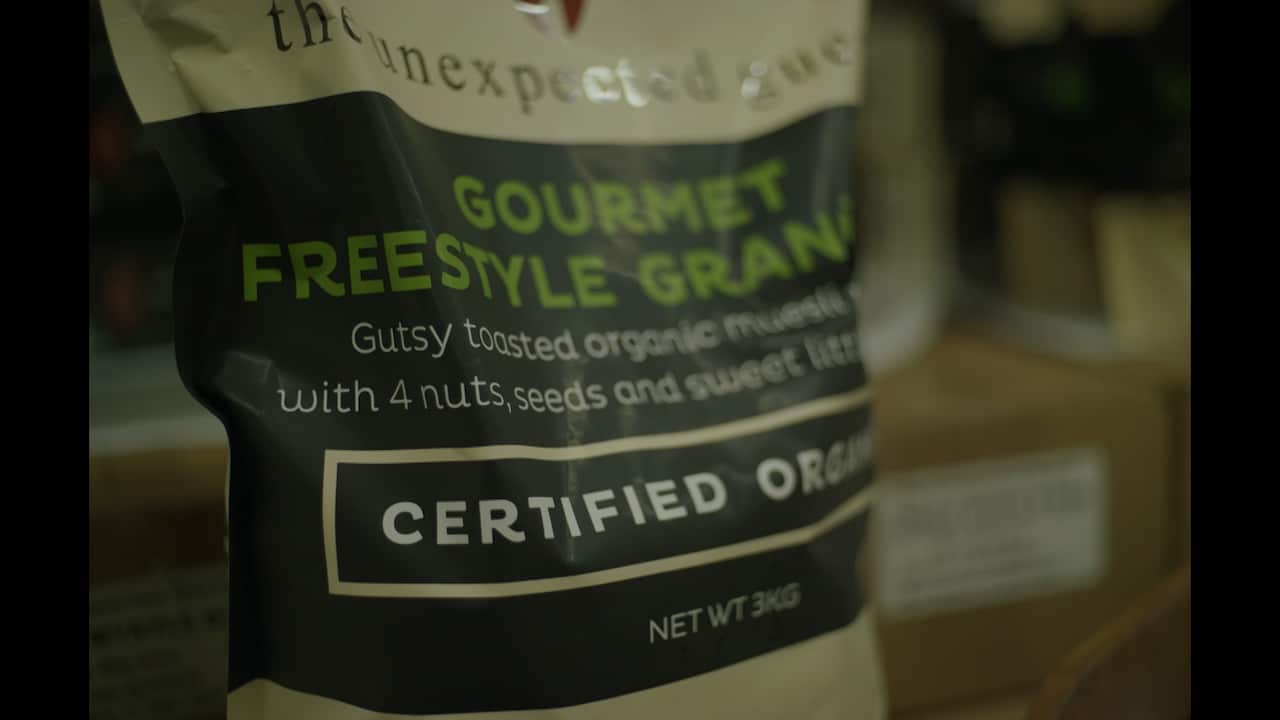
Another part of the business I really admired was its commitment to supporting other First Nations entrepreneurs. Through curated bundles and subscription boxes, customers are introduced to other Blak-owned businesses, creating opportunities for more Indigenous products to reach new audiences. Together with its approach to sourcing, it shows how a small business can build impact beyond its own bottom line, strengthening opportunities across a wider First Nations business ecosystem. It’s a reminder that success doesn’t have to be a solo journey. The strongest businesses often create space for others to grow alongside them.
After filming, I found myself taking home more than just business lessons. The protein bars have become a regular in my backpack when I’m travelling between shoots, and the granola has worked its way into my morning routine. For me, that’s the greatest compliment you can give any business: it becomes part of your everyday life without even thinking about it.
But it is also about more than what ends up in your pantry. It is about changing perceptions, creating representation where it’s needed, and proving that a business built on culture, purpose and authenticity can thrive while creating opportunities for others along the way.
That’s exactly why stories like Aunty Jenny’s deserve to be shared. They don’t just celebrate what’s possible today; they inspire the next generation of First Nations entrepreneurs to believe that their own ideas can grow into something extraordinary.

Advertorial content
https://www.nrma.com.au/business-insurance