The winners of the country's longest-running First Nations art awards have been announced, with a senior Yolngu artist taking out the grand prize.
The Telstra National Aboriginal and Torres Strait Islander Art Awards (NATSIAA) recognise excellence in fine arts, and award prizes totalling $190,000 dollars, making it the richest art prize in the country.
The prize pool, including the major prize of $100,000, has more than doubled on last year's amount.
Traditional Yolngu weaving wins top prize
Margaret Rarru Garrawurra has taken out the prestigious top prize, the Telstra Art Award. Her winning entry, Dhomala, is a woven pandanus sail, dyed with natural pigments.
She said she was with her sisters when she discovered she had been awarded the $100,000 dollars.
"We were very happy. It makes us proud to get first prize," she said.
The traditional Yolngu weaving technique was learnt from Makassan sailors as early as the mid 18th century. The time consuming process involves harvesting the fibrous leaves, as well as the dyeing materials, before painstakingly weaving the sail.
Ms Rarru Garrawurra invoked the memory of her father, who learnt the skill as it had been adopted by the Yolngu.
"I was watching my father making these dhomala. He was making them, and I was watching," she said.
"I thought about how he made them, my father, and I started remembering. And now I'm making these.”
Born in Galiwin’ku, Margaret lives on her mother’s Country of Laŋarra and at Yurrwi/Milingimbi, both off the coast of Northeast Arnhem Land. She's a senior artist and master weaver at Milingimbi Art and Culture, and a respected Elder amongst the community.
The awards also saw more than $90,000 dollars go to six artists, each winning $15,000 dollars for their diverse works. Take a look.
General Painting Award
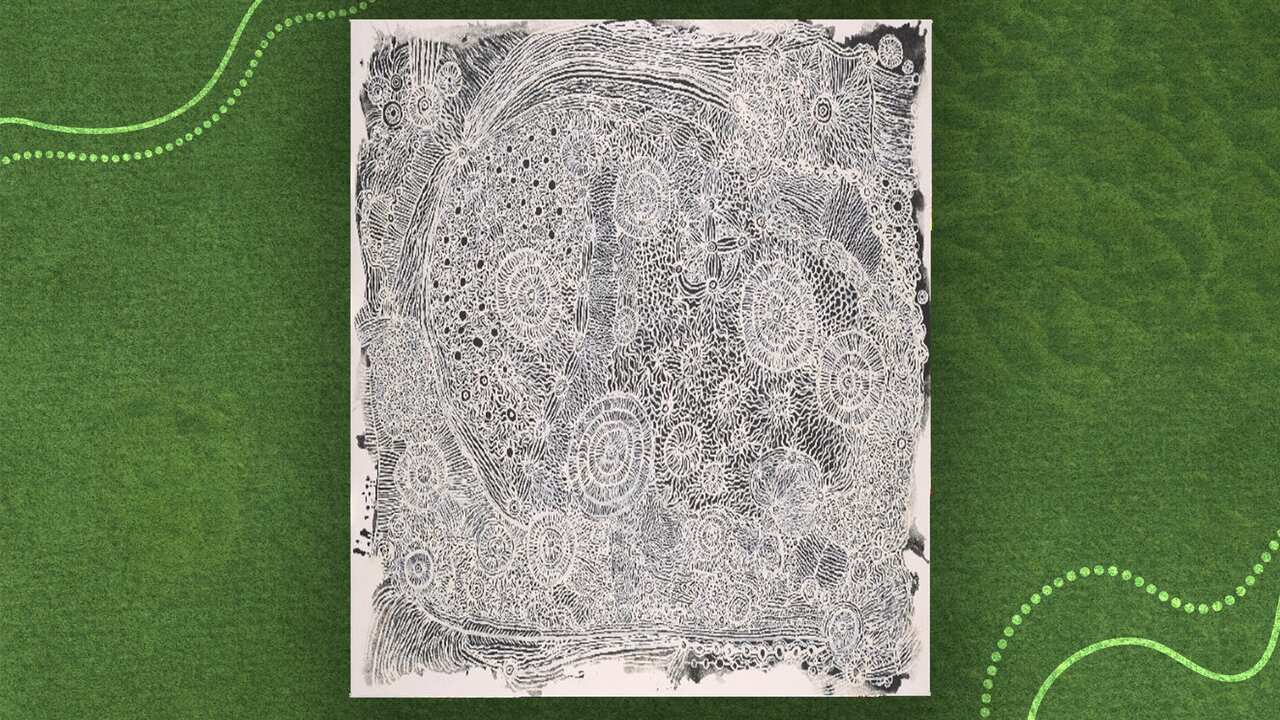
Betty Muffler’s Ngangkari Ngura is characterised by a subtle build-up of muted and monochromatic designs. This soft colour palette has become the artist’s signature and is immediately recognisable.
Muffler started painting in her late seventies and was judged best emerging artist at the National Aboriginal and Torres Strait Islander Art Awards in 2017.
Receiving the Telstra General Painting Award just five years later, in 2022, acknowledges her meteoric trajectory and deserved rise to fame as an artist.
Bark Painting Award
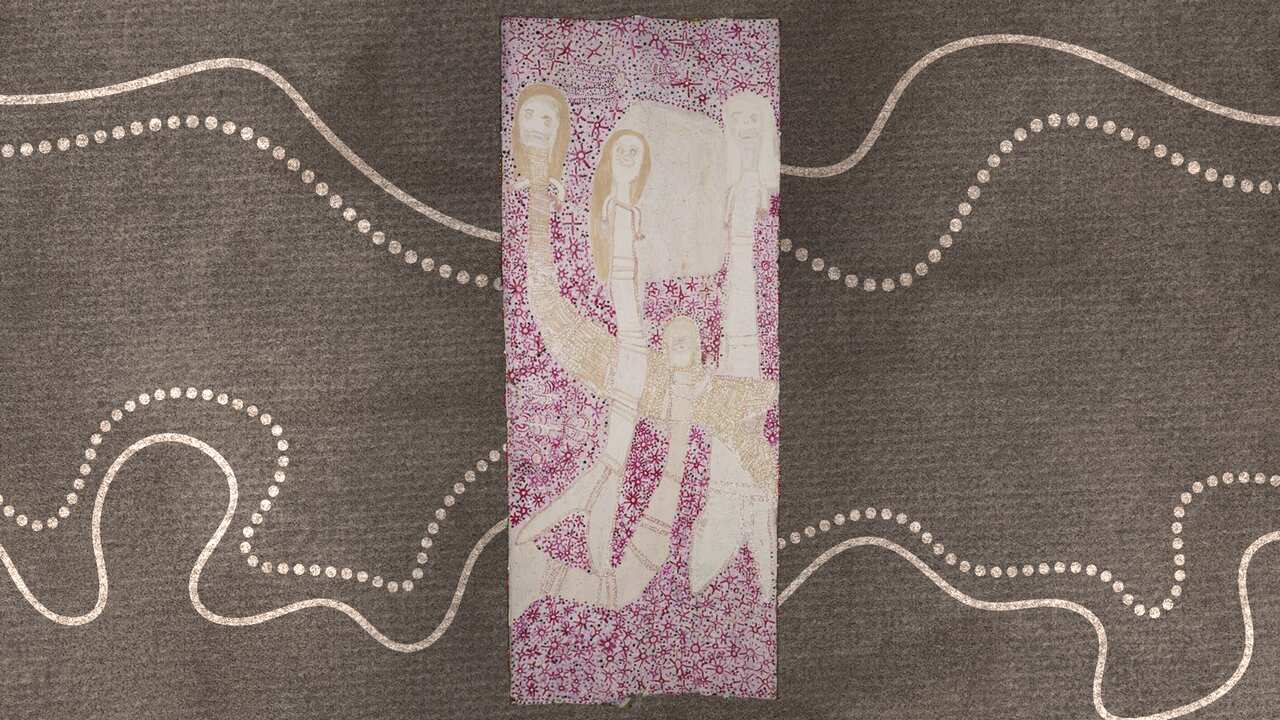
Ms D Yunupiŋu sadly passed away before the awards were announced. The lady who paints mermaids had a short, but impactful career as a painter.
Working in a distinctly lyrical and figurative style, Ms D Yunupiŋu draws on familial iconography to tell the story of her spiritual conception as a mermaid.
This slender bark has been whimsically rendered using a combination of naturally occurring ochres in cream, white, and black; as well as synthetic pigments drawn from recycled printer cartridges to create a brilliant and arresting array of fuchsia, pink and magenta tones.
Works on Paper Award
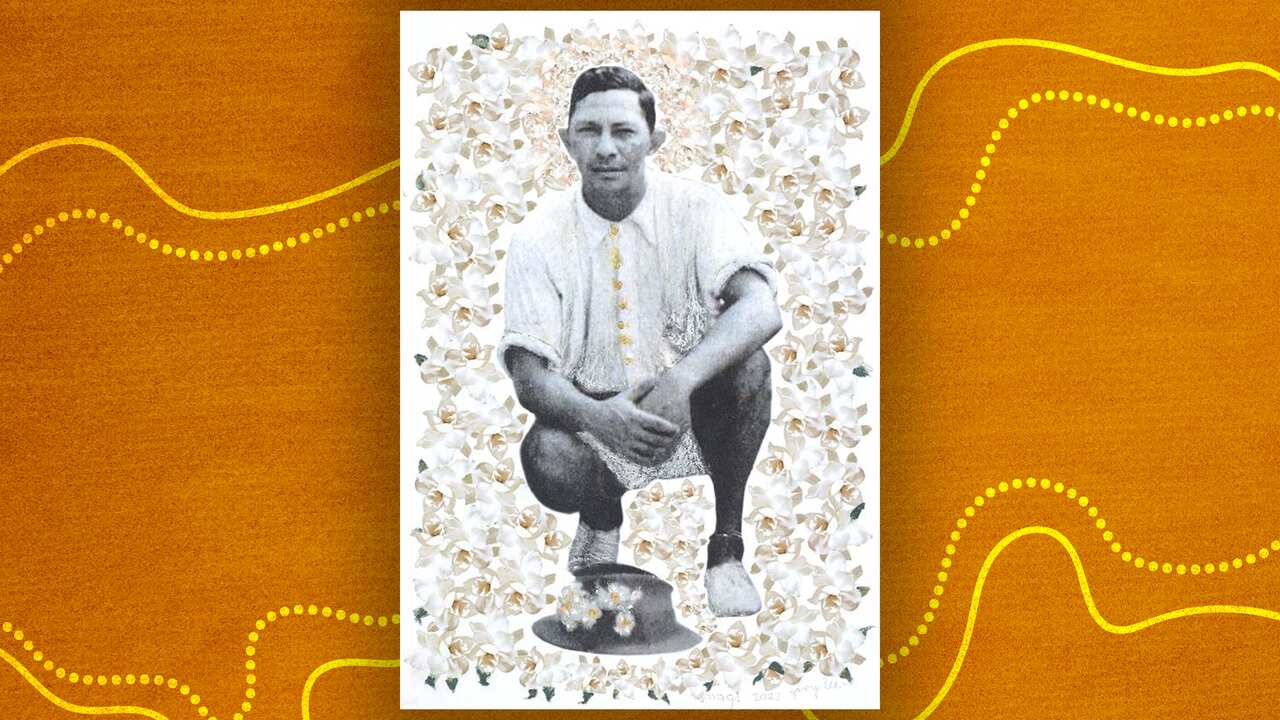
Nagi emanates tenderness and affection. This poignant and intimate depiction of Lee’s grandfather – Juan (John) Roque Cubillo – is a culminating work in this artist’s career.
By reclaiming the historic photographic archive Lee firmly reorients it in the present and personal realm.This work on paper demonstrates a subtle use of mark-making with oil pastel and pencil to adorn the portrait of his grandfather.
These embellishments evoke a sensory and tactile quality to the work. Softly coloured gardenias add another sensory component with the suggestion of a scented halo which softly frames the subject.
Multimedia Award
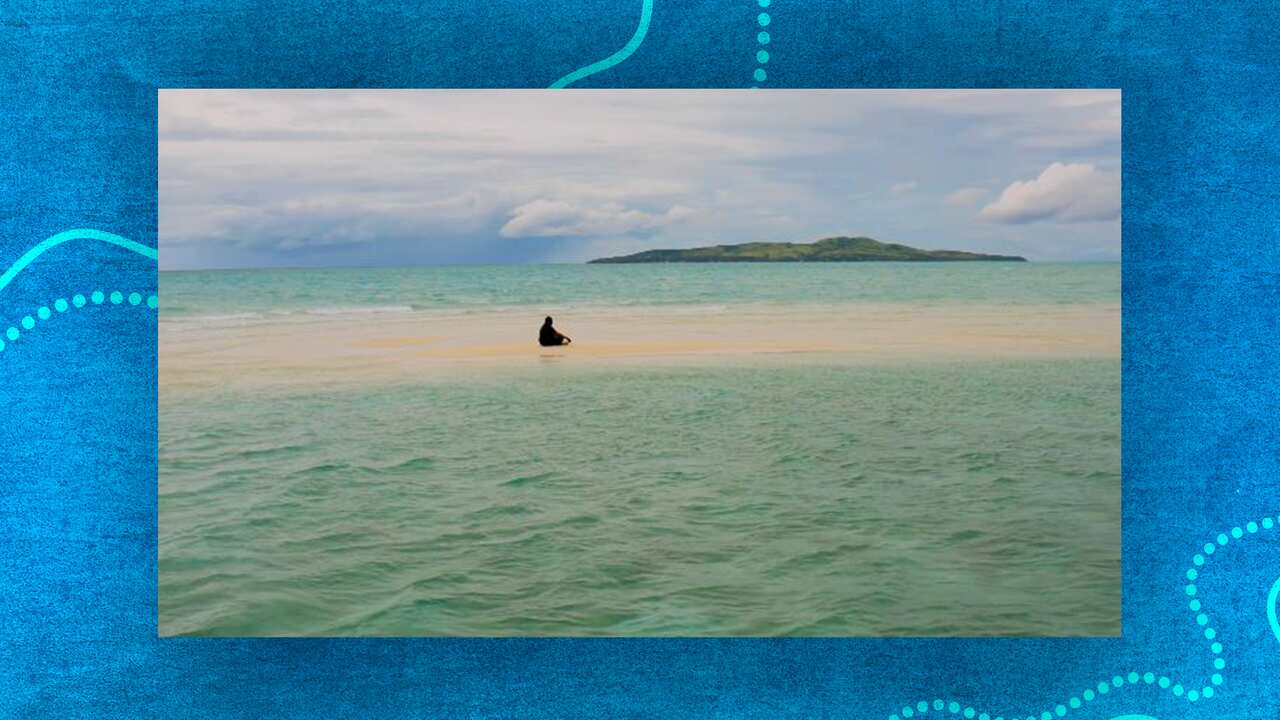
This powerful and emotive work explores the interconnection between the artist to his Country as exemplified by sea, land, sky and wildlife (in the form of the waumer, the frigate bird).
This meditation on the interconnectedness of life, land and sea examines relationships and correlations between naturally occurring patterns, formations, and movements.
Wandjuk Marika Memorial 3D Award
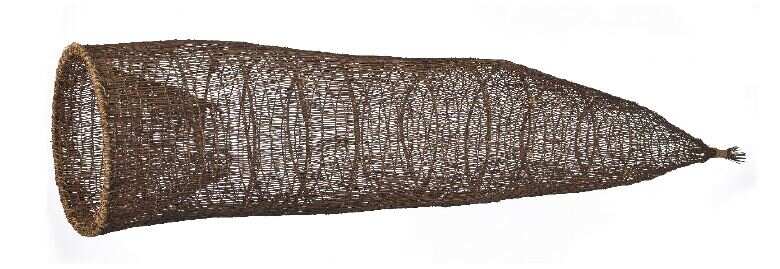
This sophisticated sculpture is an exemplar of contemporary Indigenous fibre practice.
It exudes ingenuity, technical excellence and a commitment to the slow-paced multifarious stages of fibre art production.
The artists’ command of the natural fibres with which they work is noteworthy, as well as their capacity to collaborate.
This an-gujechiya is simultaneously a contemporary work of art and a form of cultural continuity. In selecting this award, the judges acknowledge the importance of fibre production in contemporary Indigenous art practice.
Emerging Artist Award
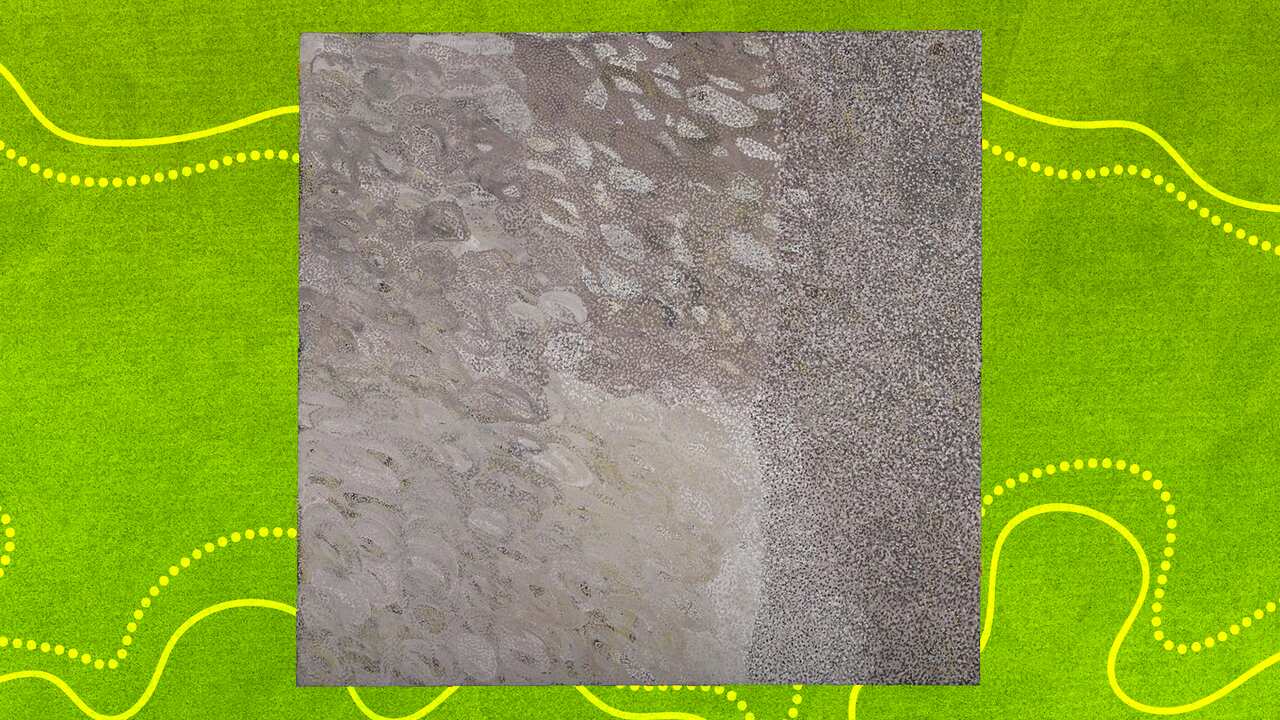
This alluring painting conveys a layered granular texture suggestive of the earth being swept, shifted, and redistributed by the dispersal of rain and floodwater.
This subtle yet commanding work illustrates Malarvie’s capacity for strong composition and her deftness of earth pigment application, which inherently contain the muted colours of her Country.