Watch FIFA World Cup 2026™ LIVE, FREE and EXCLUSIVE

Australian Easter: Exploring social and cultural traditions beyond religion

Blended Family Celebrating Easter

Social and cultural Easter traditions Australians follow, beyond religion Credit: Fly View Productions/Getty Images

Easter holds great significance for Christians. Yet, for those of different faiths or non-religious backgrounds, it presents a chance to relish a four-day weekend, partake in family and social gatherings, engage in outdoor activities, and attend events where children take centre stage. Here's your essential guide to celebrating Easter in Australia.


Key Points
  • Easter is a moveable observance that typically falls in autumn in Australia, often coinciding with school holidays.
  • Beyond its religious significance, Easter is viewed culturally as a time for family gatherings, community connection, travel, festivals, and outdoor activities.
  • The Easter bilby is a uniquely Australian tradition, replacing the Easter bunny as the bearer of chocolate eggs.

In Christianity, Easter commemorates the death and resurrection of Jesus Christ, with Easter Sunday marking one of the most significant celebrations in the Christian calendar, as the culmination of the Holy Week.

When referring to Easter, Australians usually mean the four-day long weekend, as Good Friday, Easter Sunday and Easter Monday are all national public holidays. Easter Saturday is a public holiday across states and territories except for Tasmania and Western Australia.

Danielle Corrie is a Sydneysider of Lebanese heritage who was raised celebrating both Catholic and Orthodox Easter.

She says, many people opt to take time off from work to travel, spend time outdoors or attend festivals.

“There are people of different backgrounds that do celebrate, and they have the school holidays also, so that gives them more time for family or travel to different destinations. It's also autumn in Australia at Easter, so there’s more outdoor activities like barbeques and picnics.”
Australia Explained - Easter
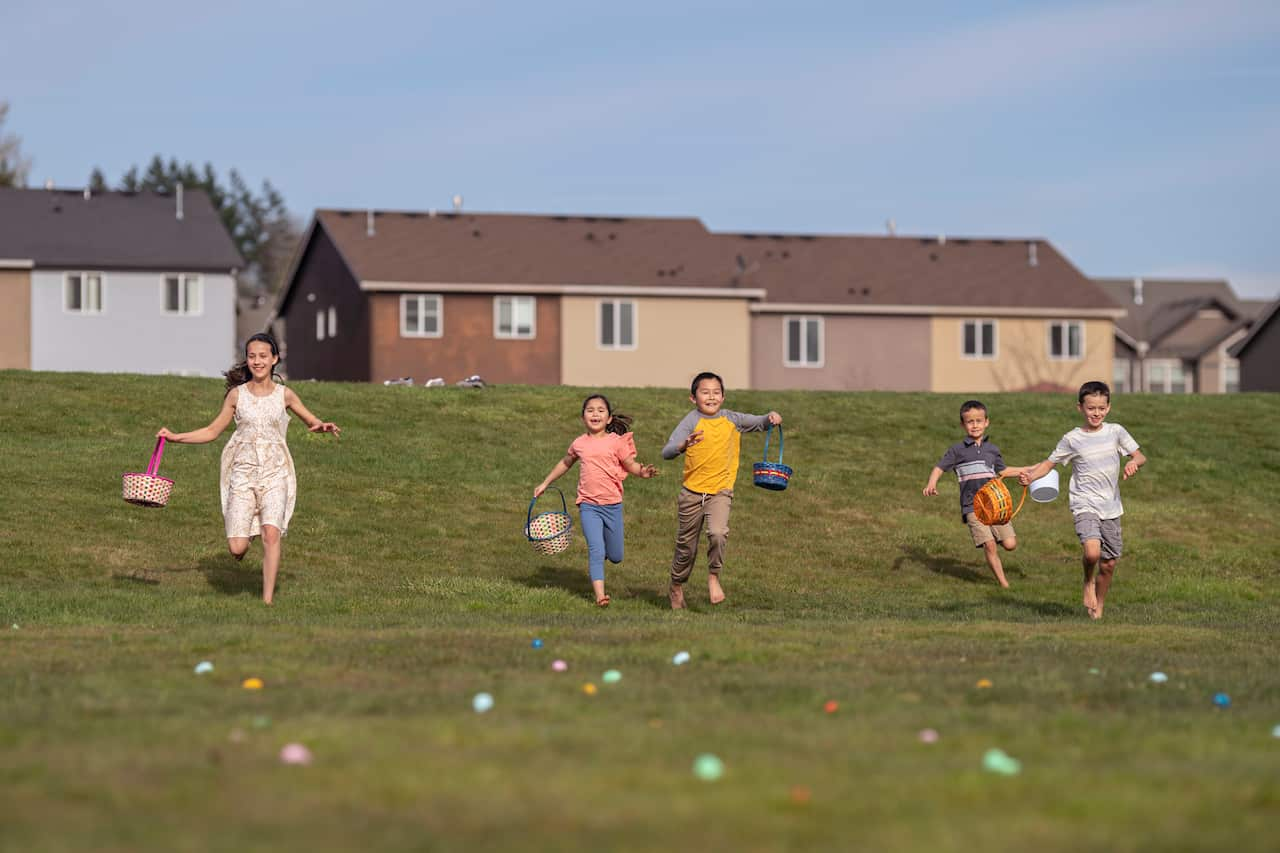
Children can make their own basket as an arts & crafts activity to use for their Easter egg hunt. Credit: Fly View Productions/Getty Images

Easter traditions for kids

Lisa Baker, an early childhood education researcher at the University of Melbourne, says that for younger children, Easter is a time linked with games and activities.

“For preschool children or primary school aged children, the sort of dominant icons of Easter are around Easter eggs and Easter Bunny.

“The classic Easter egg hunt is certainly something that lots of Australian children enjoy.”

Organised by families or community groups in parks and gardens as a typical Easter Sunday game, Easter egg hunts involve searching for egg-shaped chocolate eggs, candy or decorated real and artificial eggs.

As the tale has it, Easter eggs are delivered and hidden by the Easter Bunny.

But an increasing number of Australians nowadays follow the tradition with a twist, replacing the bunny figure with the native bilby, as rabbits are considered a pest in the Australian ecosystem.

“They're obviously an introduced species and have created a bit of havoc on our vegetation and native animals. So, we have adopted the idea of the Easter bilby,” Ms Baker explains.

“You can now buy chocolate Easter bilbies in the same way that you can buy chocolate Easter bunnies.”

As a multicultural country, Australia celebrates Easter in ways that incorporate diverse traditions.

This is evident in schools, Ms Baker notes, particularly in childhood education, with national curriculum frameworks championing inclusion and cultural responsiveness.

Teachers and schools are trying to be sensitive to the many traditions children bring in their classroom and bringing those together in celebrations.
Lisa Baker

“So, for example as well as doing an Easter egg hunt of chocolate Easter eggs, they might be looking at dyeing some Easter eggs, which is an Orthodox tradition, or perhaps for other ways of displaying eggs, on twigs or branches."

Australia Explained - Easter -  mother and child with Easter bonnet
Making an Easter hat and participating in an Easter hat parade is a classic cultural ritual, that many children and schools opt to participate in, says Ms Baker. Credit: OMG/Getty Images

Two Easters, more choice for cultural traditions

Born in Sydney to first- and second-generation Lebanese Australian parents, Ms Corrie was raised celebrating both Catholic and Orthodox Easter.

The two major Christian denominations celebrate Easter on separate dates.

“The Catholic Easter follows the Gregorian calendar, and the Orthodox Easter follows the [Julian] calendar. Sometimes they are together and other times they can be up to five weeks apart,” Ms Corrie explains.

In either tradition, she says, Easter is about coming together as a family and enjoying some Easter staples, including hot cross buns, homemade biscuits and pastry, fish-based soups and meals and a festive roast on Easter Sunday.

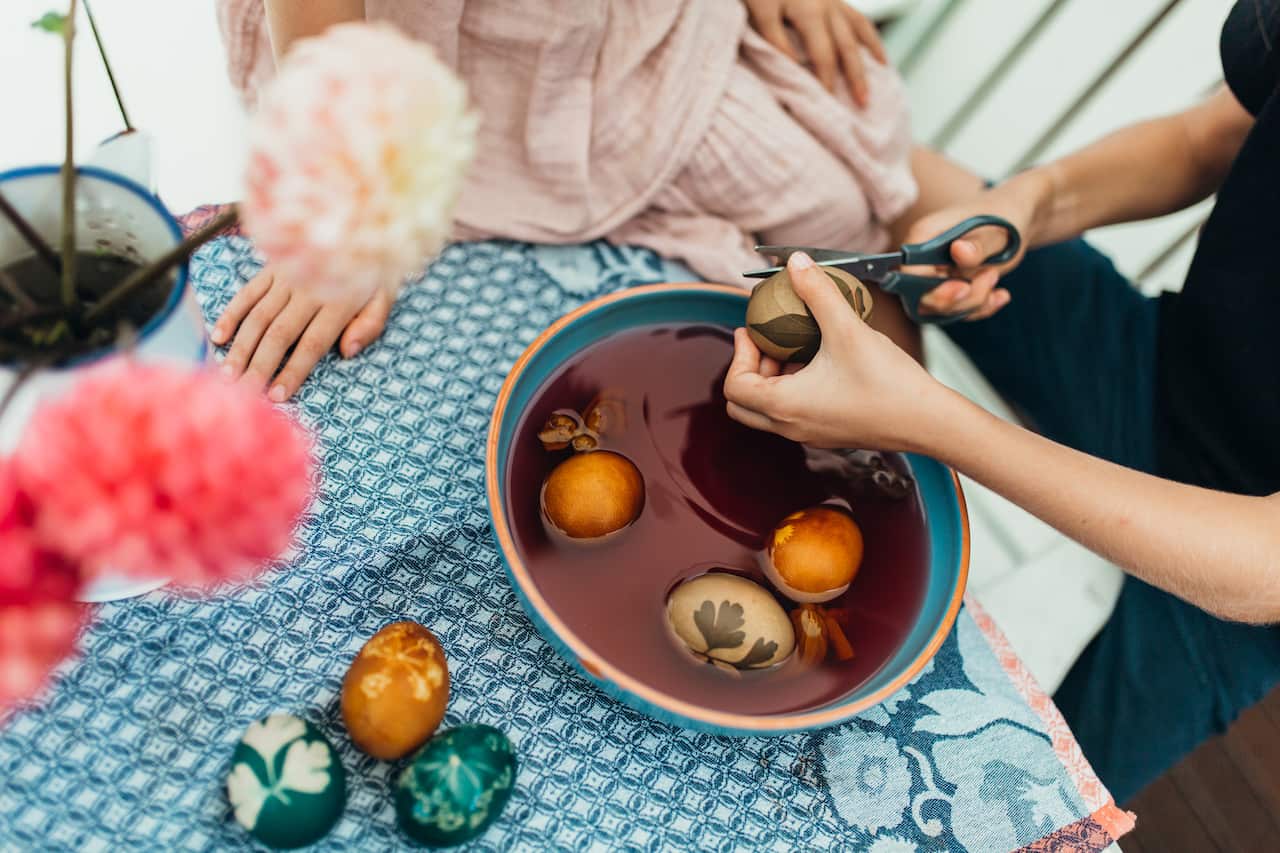
One of the most common Orthodox Easter cultural practices involves the decorative dyeing of eggs with natural ingredients, like onion leaves, and the subsequent egg fight amongst family members.

Ms Corrie recalls how they would go about the egg taping at home.

“It was a spirited competition and involved partnering up with another member of the family. We turn one side of the egg over and tap the other end. So, if both sides of your egg were cracked, you were eliminated and there was a winner at the end who had either no sides of their egg cracked, or one side of their egg cracked.”
Australia Explained - Easter
Different cultural group celebrate Orthodox Easter in Australia, including followers of the Greek Orthodox, Russian Orthodox and Macedonian Orthodox faith. Credit: LOUISE BEAUMONT/Getty Images

‘Shrove Tuesday’ or ‘Pancake Day’ as otherwise known, is another food-based tradition in the lead up to Easter.

“It is based on this sort of tradition of using things in your pantry before going into the Lent period,” Ms Baker explains.

She adds that pancake-making is also a fun activity for children to be involved in.

“It’s usually a family event, but if you feel like inviting people around to have pancakes on the day there’s nothing wrong with that.”

A time of connection

Going camping or attending festivals are common holiday and entertainment choices for Australians during Easter.

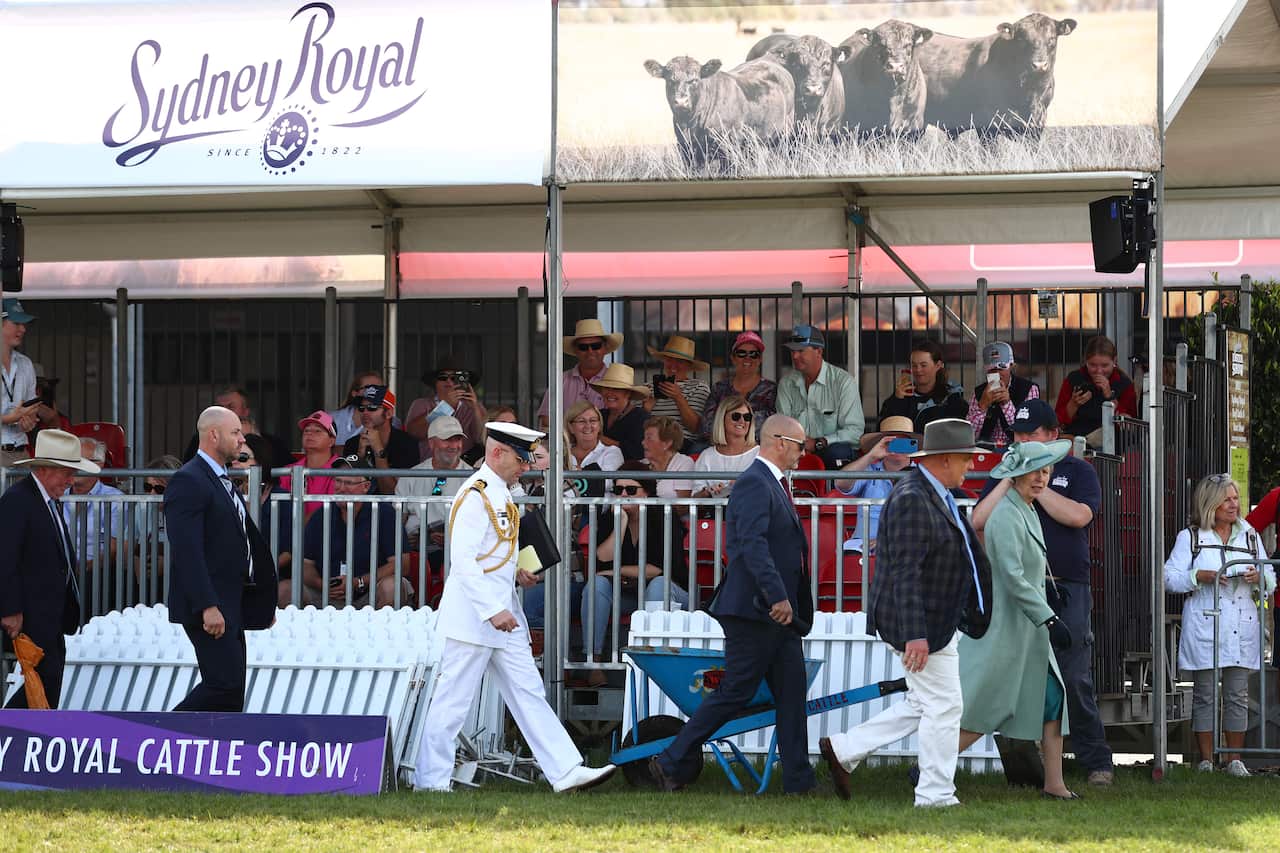
Like many Sydneysiders, Ms Corrie has family memories as a child from attending the Easter Show, a shortened name for the Sydney Royal Easter Show, a festival celebrating agricultural communities.

“It was a captivating experience. We saw rural displays and floral and craft exhibitions and even wood cutting exhibitions and had the opportunity to gather samples of wood for our school projects. And of course, we would get to have Easter show bags filled with excited goodies and lollies and chips.”
Australia Explained - Easter - Princess Anne Visits Sydney
Held over a two-week period around Easter, the Sydney Royal Easter Show is Australia’s largest in size annual event, attracting over 800,000 people. Credit: Mark Metcalfe/Getty Images

The biggest of its kind in the state, the festival has no religious significance and bears the Easter label on its name purely due to the annual timing.

“A decision was made back in the 1890s to hold it over Easter, and the reason why was because of the long weekend. There was an opportunity for people to leave their businesses and leave their farms not just for two days, but for three days. And so, it became the time of the year that we celebrated the Easter Show,” explains Murray  Wilton, General Manager of Agriculture and Sydney Royal Easter Show.

Like other smaller-scale Easter shows in Australia, it features carnival rides, games, activities with farm animals and competitions.

Mr Wilton says the Sydney Royal Easter Show embraces multiculturalism, so organisers have incorporated an Australian Citizenship Day into the annual lineup.

“And they're talking to people that are fourth and fifth generation farmers. It's just lovely to see all these communities come together over a 12-day-period, because it is an absolute snapshot of Australian culture promoting agriculture.

It doesn't matter what country you come from, it doesn't matter what religion you are, the gates are open for you to come to the Sydney Royal Easter Show.
Murray Wilton

According to Ms Baker, Easter is ultimately an opportunity to connect with others and celebrate in a way that fosters our sense of community and well-being.

“There'll be local community groups or school groups, local council, perhaps markets or festivals or events. It's a four-day long weekend, so it's an opportunity to get out in your community and meet other people."

“Easter and any of our celebrations, whether they're religious or social or cultural, it's about bringing people together and about celebrating our connections and our family.”

spk_0

SBS acknowledges the Traditional Custodians of Country and their connections and continuous care for the skies, lands and waterways across Australia.

spk_1

You're listening to Australia Explained, an SBS audio podcast helping you navigate life in Australia.

spk_2

Welcome to a new episode of Australia Explained. I'm Maram Ismail.

spk_3

So they travel to different destinations. They might be a holiday interstate or you know an hour from home.

spk_2

Who doesn't enjoy a long weekend break? I bet most of us do. But what is Easter long weekend about?

spk_3

The Catholic Easter is followed by the Gregorian calendar, and the Orthodox Easter follows the Julian calendar, so that's the different times.

spk_2

Easter is considered the most significant holiday in the Christian calendar. But regardless of religion, Easter is associated with a long weekend break, outdoor activities, and social gatherings for most Australians. School holidays usually overlap with Easter break, but this time of year offers plenty of opportunities for children to participate in cultural traditions and festivities.

spk_2

When Australians celebrate Easter, they typically refer to the entire multi-day event, not just Easter Sunday, which Christians of various sects celebrate. For non-religious individuals and followers of different faiths, Easter is eagerly anticipated

spk_2

for its extended weekend as Good Friday, Easter Sunday, and Easter Monday are all national public holidays. Easter Saturday is also a public holiday across most states and territories except for Tasmania and Western Australia.

spk_2

Lisa Baker is an early childhood education researcher at the University of Melbourne. She says that beyond its religious significance, Easter in Australia is regarded as a time for family and connection. It's associated with games and outdoor activities for younger children, mainly since the weather tends to be mild during the season.

spk_4

Easter and Christmas and any of our celebrations, whether they're religious or whether they're social or cultural,

spk_4

it's about bringing people together and about celebrating our connections and our family. If you're talking about preschool children or primary school aged children, those sort of dominant icons of Easter are around Easter eggs and Easter Bunny. This idea of the classic Easter egg hunt is certainly something that lots of Australian children enjoy.

spk_2

Easter egg hunts are a popular game played by families and community groups on Easter Sunday.

spk_2

The game involves participants searching for egg-shaped chocolate candy or decorated natural and artificial eggs in parks or gardens. As per the story that children hear, the Easter Bunny delivers and hides the eggs. Nowadays, an increasing number of Australians are following the tradition with a twist by replacing the bunny figure with an animal more appropriate for its natural habitat.

spk_2

Ms Baker explains.

spk_4

Rabbits haven't been great for Australia. They're obviously an introduced species and have created a bit of havoc on our vegetation and native animals. So we have adopted the idea of the Easter bilby. The bilby has been here for millions of years, and it's a lovely sort of furry, long-eared, long-tailed creature, so you can now buy chocolate Easter bilbies

spk_4

in the same way that you can buy chocolate Easter bunnies.

spk_2

As a multicultural country, Australia boasts diversity in celebrating Easter. Ms Baker notes that to ensure inclusivity in celebrations, schools mainly aim to incorporate practises from Catholic and Orthodox denominations and cultural traditions not related to religion.

spk_4

So often we're seeing lots of different ways to approach Easter and perhaps joining some traditions and cultures, so as well as perhaps doing an Easter egg hunt of chocolate Easter eggs, they might be looking at dyeing some Easter eggs, decorate actual eggs, blowing eggs, displaying them on twigs or branches. Some families

spk_4

might participate in an Easter hat parade.

spk_2

Danielle Corrie is a Sydneysider of Lebanese heritage who was raised celebrating Catholic and Orthodox Easter.

spk_3

The Catholic Easter is followed by the Gregorian calendar, and the Orthodox Easter follows the Julius calendar, so that's the different times. Sometimes they are together and other times they can be up to 5 weeks apart.

spk_3

There's a lot of countries that celebrate Orthodox Easter, so it's not just Lebanese, but Greek Orthodox, Russian Orthodox, Macedonian Orthodox.

spk_2

Ms Corrie says for many Easter is a time of coming together, much like it was for her family during her upbringing, with a significant emphasis on sharing food.

spk_3

These traditions didn't just create lasting memories of family togetherness, but made Easter a time of cultural connection and heartfelt celebration. And even now,

spk_3

we still have our homemade Easter food at home and we all contribute.

spk_2

One of the most common orthodox Easter cultural practises involves the dyeing of eggs with natural ingredients such as onion leaves, followed by an egg fight among family members.

spk_3

We turn one side of the eggs over and tap the other end, so if both sides of your egg was cracked, you were eliminated and there was a winner at the end who had either no

spk_3

egg cracks or one side of their eggs.

spk_2

Ms Corrie says Easter is also a time that many Australians take off from work to travel, spend time outdoors, or attend festivals.

spk_3

So they travel to different destinations. They might be a holiday interstate or, you know, an hour from home, and they have the Easter show again where the festive atmosphere they can attend. It's also autumn in Australia, so there's more outdoor activities like barbecues and picnics.

spk_2

Like many Sydneysiders, Ms Corrie has family memories from attending the Easter Show, a shortened name for the Sydney Royal Easter Show, a festival celebrating agriculture communities held over two weeks around Easter. The show is Australia's largest annual event, drawing hundreds of thousands of visitors. Despite its name, the event has nothing to do with religious celebration,

spk_2

as Murray Wilton, the general manager of Agriculture and Sydney Royal Easter Show, explains.

spk_5

The reason we hold it at Easter has got no religious significance at all. The decision was made back in the 1890s to hold it over Easter, and the reason why was because of the long weekend. There was an opportunity for people to leave their businesses and leave their farms, not just for two days, but for three days. And so it became the time of the year that we celebrated the Easter Show.

spk_2

A common destination for families in New South Wales and from around Australia, the show features carnival rides, games, activities with farm animals, and competitions. Mr Wilton says the Sydney Royal Easter Show embraces multiculturalism, so organisers have incorporated an Australian Citizenship Day in the annual lineup.

spk_5

It's just a wonderful thing to see hundreds of people turning up in their traditional dress

spk_5

which is a little bit of their home. You know, maybe Australia has not been their first home, but they've decided to make Australia their home. And they're talking to people that are 4th and 5th generation farmers that are here with their sheep and their cattle. And it's just lovely to see all these communities come together over a 12-day period, because it is an absolute snapshot of Australian culture promoting agriculture. And it doesn't matter what country you come from, it doesn't matter what religion you are, the gates are open for you to come to the Sydney Royal Easter Show.

spk_2

Ms Baker from the University of Melbourne says Easter is ultimately an opportunity to connect with others and celebrate in a way that fosters our sense of community and wellbeing.

spk_4

There'll be local community groups or school groups, local council, perhaps markets or festivals or events. It's a four-day long weekend, so it's an opportunity perhaps to get out in your community and meet other people.

spk_2

Thank you for listening to this episode of Australia Explained, written and produced by Zoe Thomaidou and hosted by me, Maram Ismail. Australia Explained managing editor is Roza Germian.

spk_1

This was an SBS audio podcast. For more Australia Explained stories, visit SBS.com.au/Australiaexplained.

END OF TRANSCRIPT

Share